top of page
Home
Bio
Pricing
Merch
Podcast Network
Advertise with Us
Be Our Guest
Academy
Learning Catalog
Learners at a Glance
The ROI of Certification
Corporate L&D Solutions
Research
Research Initiatives
Nexus Institute
Catalyst Center
Adadptive Organization Lab
Future of Work Collective
Renaissance Project
Collaboration Form
Research Models and Tools
Research One Sheets
Research Snapshots
Research Videos
Research Briefs
Free Educational Resources
HCL Review
Contribute to the HCL Review
HCL Review Archive
HCL Review Slide Decks and Infographics
HCL Review Process
HCL Review Reach and Impact
HCI Press
From HCI Academic Press
From HCI Popular Press
Publish with HCI Press
Free OER Texts
Our Impact
Invest with HCI
Industry Recognition
Philanthropic Impact
Kiva Lending Impact
More
Use tab to navigate through the menu items.
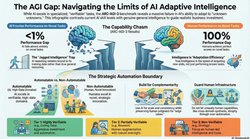
Mind the Gap: Why Understanding AI Error Boundaries Is the Key to Unlocking Human-AI Team Performance
NEXUS INSTITUTE FOR WORK AND AI
9 hours ago
24 min read
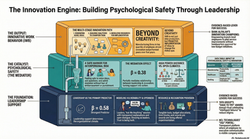
The Creative Advantage: How Organizations Can Future-Proof Their Workforce by Investing in Creativity
CATALYST CENTER FOR WORK INNOVATION
1 day ago
16 min read
Different Speeds, Different Strategies: Mapping AI Adoption Across Career Areas to Prioritize Workforce Preparation
NEXUS INSTITUTE FOR WORK AND AI
2 days ago
24 min read
Quitting Is Contagious: How Turnover Contagion Spreads Through Teams and What Leaders Can Do About It
CATALYST CENTER FOR WORK INNOVATION
3 days ago
19 min read
The Rehiring Trap: Why AI-Era Workforce Strategy Must Shift from Automation to Amplification
NEXUS INSTITUTE FOR WORK AND AI
4 days ago
25 min read
Remote Work, Loneliness, and the Leadership Deficit: Moving Beyond the Return-to-Office Debate
CATALYST CENTER FOR WORK INNOVATION
5 days ago
27 min read
Direct Lines to Loyalty: Why Generation Z's Commitment Is Built in the Daily Experience of Work
CATALYST CENTER FOR WORK INNOVATION
6 days ago
29 min read
The Inflection Point: How Tenure Shapes Academic Research Trajectories and Organizational Strategy
CATALYST CENTER FOR WORK INNOVATION
Oct 5
16 min read
The Architecture of Work Is Collapsing. Most Organizations Are Still Building Ladders.
CATALYST CENTER FOR WORK INNOVATION
Oct 5
24 min read
Navigating the Evolving Landscape of Human Reliance on Generative AI
NEXUS INSTITUTE FOR WORK AND AI
Oct 4
26 min read
Human Capital Leadership Review
Haiqu Unveils AgenticOS, a System of Agents Solving Some of Physics' Toughest Problems
NEXUS INSTITUTE FOR WORK AND AI
4 hours ago
4 min read
These Non-Tech AI Jobs Pay More Than $200K a Year
NEXUS INSTITUTE FOR WORK AND AI
4 hours ago
3 min read
The Workplace Icks Making Office Workers Want to Work From Home
ADAPTIVE ORGANIZATION LAB
4 hours ago
4 min read
From Automation to Augmentation: Leading Service Work in an Era of Persistent Labor Shortages
NEXUS INSTITUTE FOR WORK AND AI
4 hours ago
7 min read
The Scariest Jobs in America That Pay Surprisingly Well
RESEARCH INSIGHTS
4 hours ago
4 min read
New Study Debunks the "January Job Search Myth": June Is the Best Month to Apply, While January and February Pair the Most Competition With Below-Average Hiring
NEXUS INSTITUTE FOR WORK AND AI
4 hours ago
3 min read
Mind the Gap: Why Understanding AI Error Boundaries Is the Key to Unlocking Human-AI Team Performance
NEXUS INSTITUTE FOR WORK AND AI
9 hours ago
24 min read
The Creative Advantage: How Organizations Can Future-Proof Their Workforce by Investing in Creativity
CATALYST CENTER FOR WORK INNOVATION
1 day ago
16 min read
Different Speeds, Different Strategies: Mapping AI Adoption Across Career Areas to Prioritize Workforce Preparation
NEXUS INSTITUTE FOR WORK AND AI
2 days ago
24 min read
1
2
3
4
5
HCL Review Research Videos
HCL Review Research Infographics
Blog: HCI Blog
Human Capital Leadership Review
Featuring scholarly and practitioner insights from HR and people leaders, industry experts, and researchers.
Human Capital Innovations
Play Video
Play Video
08:14
The Architecture of Toxicity
Recent studies highlight a growing empathy deficit within corporate leadership, where executives increasingly acknowledge workplace toxicity despite their self-perceptions of empathy. While some organizations with toxic environments report short-term financial gains, extensive research demonstrates that such cultures ultimately drive high employee attrition, psychological distress, and severe legal and reputational risks. This research examines how pressures from cost-cutting and AI integration exacerbate these issues, often disproportionately harming vulnerable workers. To counter these systemic failures, experts recommend evidence-based interventions such as segmented culture diagnostics, aligned incentives, protected employee voice, and board-level governance. Ultimately, fostering sustainable organizational health requires transforming empathy from a mere rhetorical ideal into a practiced leadership capability.
Play Video
Play Video
03:22
Structural Failure at the Top
Recent studies highlight a growing empathy deficit within corporate leadership, where executives increasingly acknowledge workplace toxicity despite their self-perceptions of empathy. While some organizations with toxic environments report short-term financial gains, extensive research demonstrates that such cultures ultimately drive high employee attrition, psychological distress, and severe legal and reputational risks. This research examines how pressures from cost-cutting and AI integration exacerbate these issues, often disproportionately harming vulnerable workers. To counter these systemic failures, experts recommend evidence-based interventions such as segmented culture diagnostics, aligned incentives, protected employee voice, and board-level governance. Ultimately, fostering sustainable organizational health requires transforming empathy from a mere rhetorical ideal into a practiced leadership capability.
Play Video
Play Video
19:54
A Debate about When it is Toxic at the Top
Recent studies highlight a growing empathy deficit within corporate leadership, where executives increasingly acknowledge workplace toxicity despite their self-perceptions of empathy. While some organizations with toxic environments report short-term financial gains, extensive research demonstrates that such cultures ultimately drive high employee attrition, psychological distress, and severe legal and reputational risks. This research examines how pressures from cost-cutting and AI integration exacerbate these issues, often disproportionately harming vulnerable workers. To counter these systemic failures, experts recommend evidence-based interventions such as segmented culture diagnostics, aligned incentives, protected employee voice, and board-level governance. Ultimately, fostering sustainable organizational health requires transforming empathy from a mere rhetorical ideal into a practiced leadership capability.
Play Video
Play Video
56:26
A Conversation about When it is Toxic at the Top
Recent studies highlight a growing empathy deficit within corporate leadership, where executives increasingly acknowledge workplace toxicity despite their self-perceptions of empathy. While some organizations with toxic environments report short-term financial gains, extensive research demonstrates that such cultures ultimately drive high employee attrition, psychological distress, and severe legal and reputational risks. This research examines how pressures from cost-cutting and AI integration exacerbate these issues, often disproportionately harming vulnerable workers. To counter these systemic failures, experts recommend evidence-based interventions such as segmented culture diagnostics, aligned incentives, protected employee voice, and board-level governance. Ultimately, fostering sustainable organizational health requires transforming empathy from a mere rhetorical ideal into a practiced leadership capability.
Play Video
Play Video
21:19
Toxic at the Top: Why Self-Reported Workplace Toxicity Is Rising and How Leaders Can Close the Em...
Abstract: Businessolver's 2026 State of Workplace Empathy study, fielded with Edelman Data & Intelligence among 300 executives and 1,000 U.S. employees, found that one in three CEOs and 40% of employees now describe their workplace culture as toxic, sharp increases from the prior year, while 61% of CEOs say demonstrating empathy day to day has become difficult. This article treats those vendor findings cautiously, noting that the reported link between toxic cultures and short-term financial growth is associational, and situates them within peer-reviewed research on abusive supervision, destructive leadership, incivility, workplace bullying, psychological contract breach, and psychological safety. Drawing on documented cases from Uber, Wells Fargo, Boeing, Activision Blizzard, Riot Games, Ford, the Confederation of British Industry, and Microsoft, it describes how an empathy deficit between leaders' self-image and employees' experience produces attrition, ill health, silence, and legal and reputational risk. It proposes five evidence-based responses and a long-term agenda centered on board-level culture governance, leadership selection and development, and a humane approach to AI-driven change.
Play Video
Play Video
03:45
The Blueprint for Systemic Safety
Workplace legal standards are shifting internationally from reactive disciplinary measures to proactive preventive duties. Legislation such as the UK Employment Rights Act 2025 requires employers to take all reasonable steps to stop workplace harassment and holds organizations liable for misconduct committed by third parties like customers and clients. Research shows that perceived organizational tolerance is the primary driver of such behavior, meaning traditional compliance policies alone are insufficient. To successfully meet these stricter mandates, leaders must implement an integrated organizational system consisting of comprehensive risk assessments, visible leadership accountability, trusted reporting channels, behavior-focused training, and rigorous performance measurement.
Play Video
Play Video
54:07
A Conversation about All Reasonable Steps to Prevent Workplace Harassment
Workplace legal standards are shifting internationally from reactive disciplinary measures to proactive preventive duties. Legislation such as the UK Employment Rights Act 2025 requires employers to take all reasonable steps to stop workplace harassment and holds organizations liable for misconduct committed by third parties like customers and clients. Research shows that perceived organizational tolerance is the primary driver of such behavior, meaning traditional compliance policies alone are insufficient. To successfully meet these stricter mandates, leaders must implement an integrated organizational system consisting of comprehensive risk assessments, visible leadership accountability, trusted reporting channels, behavior-focused training, and rigorous performance measurement.
Play Video
Play Video
08:55
Architecting Prevention - Why Standard Harassment Policies Fail
Workplace legal standards are shifting internationally from reactive disciplinary measures to proactive preventive duties. Legislation such as the UK Employment Rights Act 2025 requires employers to take all reasonable steps to stop workplace harassment and holds organizations liable for misconduct committed by third parties like customers and clients. Research shows that perceived organizational tolerance is the primary driver of such behavior, meaning traditional compliance policies alone are insufficient. To successfully meet these stricter mandates, leaders must implement an integrated organizational system consisting of comprehensive risk assessments, visible leadership accountability, trusted reporting channels, behavior-focused training, and rigorous performance measurement.
HCL Review Articles
All Articles
Nexus Institute for Work and AI
Catalyst Center for Work Innovation
Adaptive Organization Lab
Work Renaissance Project
Research Briefs
Research Insights
Webinar Recaps
Book Reviews
Transformative Social impact
Search
4 hours ago
4 min read
RESEARCH INSIGHTS
The Scariest Jobs in America That Pay Surprisingly Well
bottom of page