


From Automation to Augmentation: Leading Service Work in an Era of Persistent Labor Shortages

When labor shortages first began to bite into service operations a few years ago, the instinct in many organizations was to automate quickly and ask questions later, often without fully considering the downstream implications for service delivery and workforce experience. Deploy a chatbot, swap in a self-service kiosk, or hand calls off to a phone tree, increasingly powered by early applications of automation tools and AI. The logic was straightforward: if you don't have enough people, replace some of what they do with machines.
The result, in far too many cases, was not relief. It was a redistribution of unresolved queries, rather than a meaningful reduction in service complexity. The routine queries moved, but the pressure didn't.
Frontline workers ended up with a different kind of workload — the easy work had been filtered out, leaving them with the hard stuff: frustrated customers who had already failed at the self-service option, complex multilingual inquiries, emotionally charged conversations, and escalations where the system had lost the thread. Each interaction took more out of them, even as the total number of interactions stayed the same. The result: burnout and turnover. And so, organizations found themselves back at the same staffing problem, only now with the headache of managing systems that had been rolled out too fast to work well.
That’s where a lot of leaders are today. Not in the early stages of automation but cleaning up after automation was implemented without anyone rethinking how the work was structured. The honest question isn't whether to use AI. It’s whether the way AI has been introduced actually changes how work gets done by redesigning the work - or does it just change what's left over for people to deal with?
The Structural Shift Leaders Need to Name
For years, staffing shortages in service-intensive industries were treated as cyclical. Tight labor markets would loosen. Turnover would normalize. The right compensation adjustments would stabilize the workforce. These were temporary conditions requiring temporary measures.
That framing used to be correct. What has changed is that the cycles are no longer temporary.
The labor challenges we’re seeing across hospitality, aviation, healthcare, retail, and facilities management aren’t just leftover effects from the pandemic. They’re being driven by bigger, longer-term shifts: changes in the entry-level workforce, ongoing competition for talent across industries, evolving expectations for frontline jobs, and the relentless growth of service demand.
You can see the scale of this beyond any one sector. The ManpowerGroup Talent Shortage Survey found nearly 75% of U.S. employers struggled to fill roles in 2025 — a sharp rise from a decade ago, and not the kind of number that moves with a single hiring cycle. In hospitality specifically, the American Hotel & Lodging Association reports 65% of hotels are still short-staffed, with industry employment still roughly 10% below pre-pandemic levels even as demand keeps climbing. Whether it's a hotel, an airport, a retail floor, or a facilities team, the pattern is the same: demand is growing regardless of whether staffing capacity has caught up.
These kinds of structural shortages call for a different kind of response, one that goes beyond traditional workforce levers. Hiring faster, ramping up training, or increasing pay can help, but they are not enough on their own. What's really needed is a more fundamental rethink of how service work gets done, especially how responsibilities are shared between people and digital tools, and what helps each perform at their best.
This is the shift from automation to augmentation. And it starts with a question most automation projects never ask: where does human judgment actually belong?
Redesigning the Service Architecture
The key idea behind augmentation is pretty simple: the goal is not to replace human judgment. It’s about removing the conditions that keep people from using it where it actually matters and where it creates the most value.
In most high-traffic service environments, frontline staff spend a significant portion of their time on high-volume, low-complexity interactions: giving directions, checking statuses, or answering routine questions. These interactions are not high-value, but they are high-frequency, and in aggregate create a significant operational burden. And because of that, they take time and attention away from the interactions that genuinely require a human touch: the missed connection that's become a family emergency, the passenger with accessibility needs who requires careful, personalized guidance, the customer whose situation doesn't fit any script.
An effective service model separates these layers, with clearly defined responsibilities for digital and human channels. Digital channels handle the routine, high-volume work at scale, while human agents focus on the exceptions, where judgment, empathy, and the ability to adapt in real-time actually make a difference.
Where things often fall apart is the handoff between the two, which becomes a critical design point in the overall service experience. If moving from a digital channel to a human is clunky, slow, or unclear, customers lose trust in the system. When that happens, customers bypass it entirely to wait for a person, recreating the problem technology was meant to solve. It doesn’t help when human agents don’t have visibility into what has already happened in the digital interaction. So, they’re forced to start from scratch, which adds time and frustration to what was already a difficult situation. If roles haven’t evolved to match this new distribution of work, staff end up operating in the same reactive mode as before, just with different tools.
So, the questions that really determine whether augmentation works aren’t just about technology; they’re leadership decisions. Where does the handoff happen, and what information travels with it? How are human agents' roles reframed to reflect higher-value, exception-based work? How do you prepare employees for a fundamentally different day where they’ll see fewer routine queries and more complex ones?
How Jewel Changi and C&W Services Made It Work
Jewel Changi and C&W Services are good examples for how these design decisions play out in the real world.
Jewel Changi
Jewel Changi Airport — the nature-themed entertainment, retail, and hospitality complex connected to Terminals 1 to 3 — runs a digital concierge service enhanced by AI-powered real-time transcription and translation across six languages. Visitors can connect directly with a human customer service agent, with the system translating conversations in real time when the visitor and agent speak different languages. This allows multilingual queries to be handled seamlessly regardless of any individual staff member’s language skills. By removing the language barrier, Voncierge enables staff to assist a wider range of international visitors while focusing on the interactions that benefit most from a human presence — resolving complex issues, offering personalized recommendations, and attending to guests who need extra care. The service handles 2,000 to 3,000 calls a month with just one staff on shift on average, holds a 4.78-out-of-5 satisfaction rating, and keeps wait times to roughly 10 seconds. Voncierge is also exploring integration with Jewel Changi’s existing information kiosks, which could expand the reach of its AI-powered, human-augmented service to even more visitors in the future.
C&W Services
C&W Services, a facilities management organization and strategic partner, deployed Voncierge at its Chai Chee office in mid-2025. It currently has the ability to handle visitor registration, host notifications, deliveries, meeting-room guidance, IT requests, and general workplace information, and escalates to a member of the workplace team when a request needs a person. The deployment has since become the basis for client tenders, including a six-figure installation for Tampines Hub that just went live in August 2026.
What these examples show
Both deployments demonstrate the parts of augmentation that actually matter: routine work absorbed digitally, a clear handoff to a human when needed, and staff freed to focus on higher-value interactions. C&W's expansion into new tenders shows the model is scalable once it proves out.
What This Requires from Leaders
These examples illustrate a broader principle: the technology decisions in an AI-enabled service transformation are rarely the hardest ones. The harder decisions are organizational.
Escalation design is a strategic choice, not a technical default. How and when a digital channel hands off to a human agent can either build trust or destroy it. Leaders need to be deliberate about this — setting clear escalation triggers, ensuring information continuity across the handoff, and building feedback loops to continuously improve the digital layer.
Role clarity has to precede deployment. Shifting staff from routine questions toward more complex, exception-based work, means redefining the job. That shift needs to be clearly defined: what does the new role look like? What decisions are theirs now to make? What does success look like and how it’s measured in a more complex interaction environment? Ambiguity here drives disengagement faster than the technology change itself.
Employee preparation is not a one-time training event. As digital channels handle more of the routine work, the kind of issues that reach human agents will continue to evolve. This requires ongoing capability building and role refinement other than one-time onboarding. It’s especially important in multilingual environments, where complex interactions can look very different depending on cultural context.
Trust in the digital channel must be actively maintained. For this kind of service model to work, both customers and employees need to believe in it. Customers need to experience it as genuinely useful, not as an obstacle to human help. Employees need to see it as a tool that protects their time and makes their work more meaningful, not as a step toward being replaced. How leaders communicate about purpose and outcomes plays a big role in reinforcing that trust.
The Leadership Work Ahead
Labor shortages aren’t going away anytime soon, and demand across service-intensive sectors is only continuing to grow. The organizations that handle this well won’t just be the ones with the most advanced technology. It’s those whose leaders made thoughtful decisions about how to align technology, work design, and workforce capability effectively.
That means being intentional about how service is designed. It means taking escalation paths seriously as part of the customer experience. It means preparing employees for different work, not just different tools. And it means being honest with employees and leadership that the goal is not to need fewer people. The goal is to make the people you have count more.
The shift from automation to augmentation is ultimately a shift in what leaders are on the hook for. Less focus on buying technology. More building the conditions for it to actually work.
That's the leadership challenge. Are you ready to take it on?

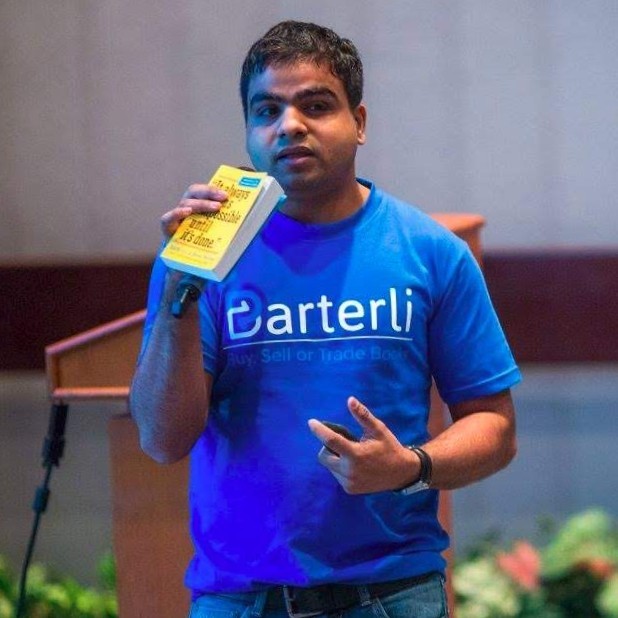
Nikhil Gupta is an experienced entrepreneur, technology leader, and Co-Founder with a strong track record of developing and managing technology products across the Education, Retail, E-commerce, and Food & Beverage industries. With a diverse technical background and entrepreneurial mindset, he consults for and supports startups and SMEs across Asia and global markets, helping them leverage technology to drive innovation and growth. Passionate about building scalable businesses, Nikhil has experience managing global service-based and product-driven ventures. He values collaboration, embraces emerging technologies, and enjoys connecting with aspiring entrepreneurs to explore new ideas and transform innovative concepts into impactful business solutions.