top of page
Home
Bio
Pricing
Merch
Podcast Network
Advertise with Us
Be Our Guest
Academy
Learning Catalog
Learners at a Glance
The ROI of Certification
Corporate L&D Solutions
Research
Research Initiatives
Nexus Institute
Catalyst Center
Adadptive Organization Lab
Future of Work Collective
Renaissance Project
Collaboration Form
Research Models and Tools
Research One Sheets
Research Snapshots
Research Videos
Research Briefs
Free Educational Resources
HCL Review
Contribute to the HCL Review
HCL Review Archive
HCL Review Slide Decks and Infographics
HCL Review Process
HCL Review Reach and Impact
HCI Press
From HCI Academic Press
From HCI Popular Press
Publish with HCI Press
Free OER Texts
Our Impact
Invest with HCI
Industry Recognition
Philanthropic Impact
Kiva Lending Impact
More
Use tab to navigate through the menu items.
The Flexibility Paradox: Why Searching More Broadly for Work Can Narrow Unemployed Jobseekers' Prospects
CATALYST CENTER FOR WORK INNOVATION
22 hours ago
17 min read
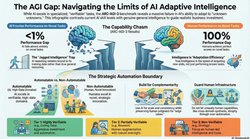
Mind the Gap: Why Understanding AI Error Boundaries Is the Key to Unlocking Human-AI Team Performance
NEXUS INSTITUTE FOR WORK AND AI
2 days ago
24 min read
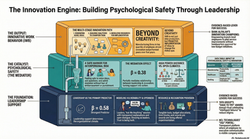
The Creative Advantage: How Organizations Can Future-Proof Their Workforce by Investing in Creativity
CATALYST CENTER FOR WORK INNOVATION
3 days ago
16 min read
Different Speeds, Different Strategies: Mapping AI Adoption Across Career Areas to Prioritize Workforce Preparation
NEXUS INSTITUTE FOR WORK AND AI
4 days ago
24 min read
Quitting Is Contagious: How Turnover Contagion Spreads Through Teams and What Leaders Can Do About It
CATALYST CENTER FOR WORK INNOVATION
5 days ago
19 min read
The Rehiring Trap: Why AI-Era Workforce Strategy Must Shift from Automation to Amplification
NEXUS INSTITUTE FOR WORK AND AI
6 days ago
25 min read
Remote Work, Loneliness, and the Leadership Deficit: Moving Beyond the Return-to-Office Debate
CATALYST CENTER FOR WORK INNOVATION
7 days ago
27 min read
Direct Lines to Loyalty: Why Generation Z's Commitment Is Built in the Daily Experience of Work
CATALYST CENTER FOR WORK INNOVATION
Oct 7
29 min read
The Inflection Point: How Tenure Shapes Academic Research Trajectories and Organizational Strategy
CATALYST CENTER FOR WORK INNOVATION
Oct 5
16 min read
The Architecture of Work Is Collapsing. Most Organizations Are Still Building Ladders.
CATALYST CENTER FOR WORK INNOVATION
Oct 5
24 min read
Human Capital Leadership Review
The Flexibility Paradox: Why Searching More Broadly for Work Can Narrow Unemployed Jobseekers' Prospects
CATALYST CENTER FOR WORK INNOVATION
22 hours ago
17 min read
Haiqu Unveils AgenticOS, a System of Agents Solving Some of Physics' Toughest Problems
NEXUS INSTITUTE FOR WORK AND AI
2 days ago
4 min read
These Non-Tech AI Jobs Pay More Than $200K a Year
NEXUS INSTITUTE FOR WORK AND AI
2 days ago
3 min read
The Workplace Icks Making Office Workers Want to Work From Home
ADAPTIVE ORGANIZATION LAB
2 days ago
4 min read
From Automation to Augmentation: Leading Service Work in an Era of Persistent Labor Shortages
NEXUS INSTITUTE FOR WORK AND AI
2 days ago
7 min read
The Scariest Jobs in America That Pay Surprisingly Well
RESEARCH INSIGHTS
2 days ago
4 min read
New Study Debunks the "January Job Search Myth": June Is the Best Month to Apply, While January and February Pair the Most Competition With Below-Average Hiring
NEXUS INSTITUTE FOR WORK AND AI
2 days ago
3 min read
Mind the Gap: Why Understanding AI Error Boundaries Is the Key to Unlocking Human-AI Team Performance
NEXUS INSTITUTE FOR WORK AND AI
2 days ago
24 min read
The Creative Advantage: How Organizations Can Future-Proof Their Workforce by Investing in Creativity
CATALYST CENTER FOR WORK INNOVATION
3 days ago
16 min read
1
2
3
4
5
HCL Review Research Videos
HCL Review Research Infographics
Blog: HCI Blog
Human Capital Leadership Review
Featuring scholarly and practitioner insights from HR and people leaders, industry experts, and researchers.
Human Capital Innovations
Play Video
Play Video
22:44
The Intersection of Internal Culture and External Mission Shape How You Lead, with Cheryl Yuran
In this HCI Webinar, I talk with Cheryl Yuran about the intersection of internal culture and external mission shape how you lead. Cheryl Yuran is a community builder. That's to say, she's long mastered the skill of ensuring every voice in the room is heard and considered without losing sight of the bigger picture. It's a skill that serves her well in her current role as Chief Human Resources Officer for Absorb Software. Before joining Absorb Software, Cheryl served as CHRO at Plex Systems, falling in love with the software industry while leading the cloud-based manufacturing solution provider's HR and people strategy. Prior to Plex Systems, Cheryl held senior HR roles across multiple industries and disciplines. The common thread among her roles has been a close tie to business operations and enabling success. Cheryl loves to unwind spending time with friends and family, going to new restaurants, concerts and cheering on the Michigan State Spartans at nearly any sporting event. Cheryl holds a Bachelor of Arts in employee relations and psychology from Michigan State University.
Play Video
Play Video
07:34
The Economics of Voice - Navigating the New Labor Reality
This research examines the strategic implications of Great Britain's Employment Rights Act 2025, which grants trade unions statutory physical and digital workplace access starting in October 2026. It highlights how organizational leaders must shift away from defensive union avoidance and instead embrace constructive labor relations and employee voice systems. Drawing on academic research and real-world corporate examples, the research outlines five evidence-based responses—such as adopting principled neutrality, building access-ready protocols, bargaining in good faith, establishing labor-management partnerships, and integrating multiple voice channels. Ultimately, the literature emphasizes that collective worker voice should be treated as vital operational information rather than a threat, urging executives to proactively cultivate collaborative organizational cultures.
Play Video
Play Video
02:49
The Architecture of Constructive Labor Relations
This research examines the strategic implications of Great Britain's Employment Rights Act 2025, which grants trade unions statutory physical and digital workplace access starting in October 2026. It highlights how organizational leaders must shift away from defensive union avoidance and instead embrace constructive labor relations and employee voice systems. Drawing on academic research and real-world corporate examples, the research outlines five evidence-based responses—such as adopting principled neutrality, building access-ready protocols, bargaining in good faith, establishing labor-management partnerships, and integrating multiple voice channels. Ultimately, the literature emphasizes that collective worker voice should be treated as vital operational information rather than a threat, urging executives to proactively cultivate collaborative organizational cultures.
Play Video
Play Video
04:38
The Efficiency Paradox - Escaping AI s Time Dividend Trap
Generative artificial intelligence is frequently advertised as a tool that returns hours to employees, but empirical evidence reveals that these efficiency gains rarely translate into meaningful relaxation or slack. Instead, organizations and workers quickly absorb the saved minutes into expanded task portfolios, accelerated pacing, and heightened output expectations, creating a phenomenon termed the time dividend trap. Because companies typically capture these tech-driven time savings as default volume rather than deliberate allocation, employees often experience increased job demands, boundary erosion, and professional burnout. To counter this upward ratchet in workplace effort, leaders must intentionally measure net efficiency, establish clear reinvestment rules, and direct recovered hours toward human recovery and continuous learning. Ultimately, escaping this productivity trap requires recognizing that technology alone does not dictate how efficiency benefits are distributed; human choices and strategic governance shape the sustainable future of modern work.
Play Video
Play Video
03:02
The AI Time Dividend
Generative artificial intelligence is frequently advertised as a tool that returns hours to employees, but empirical evidence reveals that these efficiency gains rarely translate into meaningful relaxation or slack. Instead, organizations and workers quickly absorb the saved minutes into expanded task portfolios, accelerated pacing, and heightened output expectations, creating a phenomenon termed the time dividend trap. Because companies typically capture these tech-driven time savings as default volume rather than deliberate allocation, employees often experience increased job demands, boundary erosion, and professional burnout. To counter this upward ratchet in workplace effort, leaders must intentionally measure net efficiency, establish clear reinvestment rules, and direct recovered hours toward human recovery and continuous learning. Ultimately, escaping this productivity trap requires recognizing that technology alone does not dictate how efficiency benefits are distributed; human choices and strategic governance shape the sustainable future of modern work.
Play Video
Play Video
01:05:26
A Conversation about Navigating Workplace Union Access and Employee Voice Dynamics
This research examines the strategic implications of Great Britain's Employment Rights Act 2025, which grants trade unions statutory physical and digital workplace access starting in October 2026. It highlights how organizational leaders must shift away from defensive union avoidance and instead embrace constructive labor relations and employee voice systems. Drawing on academic research and real-world corporate examples, the research outlines five evidence-based responses—such as adopting principled neutrality, building access-ready protocols, bargaining in good faith, establishing labor-management partnerships, and integrating multiple voice channels. Ultimately, the literature emphasizes that collective worker voice should be treated as vital operational information rather than a threat, urging executives to proactively cultivate collaborative organizational cultures.
Play Video
Play Video
26:08
Open Doors: Union Access Rights, Employee Voice, and How Leaders Can Build Constructive Labor Rel...
Abstract: From 30 October 2026, trade unions in Great Britain gain a statutory right to access workplaces, physically and digitally, to meet, recruit, organize and support collective bargaining. The change, introduced by the Employment Rights Act 2025, arrives alongside simplified recognition rules, new protections against detriment for industrial action and stronger rights for union representatives. This article explains what the access regime provides, where details still depend on codes of practice and secondary legislation, and why the shift matters for leaders well beyond the United Kingdom. Drawing on research about the voice and monopoly faces of unions, meta-analytic evidence on productivity, studies of employee voice and silence, and labor-management partnership, it argues that organizations face a strategic choice between defensive compliance and the deliberate design of voice systems. Five evidence-based responses are examined through organizational examples from technology, health care, logistics, automotive manufacturing, retail and platform work, followed by guidance on building long-term relational capability.
Play Video
Play Video
20:16
A Debate about Navigating Workplace Union Access and Employee Voice Dynamics
This research examines the strategic implications of Great Britain's Employment Rights Act 2025, which grants trade unions statutory physical and digital workplace access starting in October 2026. It highlights how organizational leaders must shift away from defensive union avoidance and instead embrace constructive labor relations and employee voice systems. Drawing on academic research and real-world corporate examples, the research outlines five evidence-based responses—such as adopting principled neutrality, building access-ready protocols, bargaining in good faith, establishing labor-management partnerships, and integrating multiple voice channels. Ultimately, the literature emphasizes that collective worker voice should be treated as vital operational information rather than a threat, urging executives to proactively cultivate collaborative organizational cultures.
HCL Review Articles
All Articles
Nexus Institute for Work and AI
Catalyst Center for Work Innovation
Adaptive Organization Lab
Work Renaissance Project
Research Briefs
Research Insights
Webinar Recaps
Book Reviews
Transformative Social impact
Search
Jun 30
12 min read
11+ HR Social Media Best Practices for Enterprise Brands
bottom of page