top of page
Home
Bio
Pricing
Merch
Podcast Network
Advertise with Us
Be Our Guest
Academy
Learning Catalog
Learners at a Glance
The ROI of Certification
Corporate L&D Solutions
Research
Research Initiatives
Nexus Institute
Catalyst Center
Adadptive Organization Lab
Future of Work Collective
Renaissance Project
Collaboration Form
Research Models and Tools
Research One Sheets
Research Snapshots
Research Videos
Research Briefs
Free Educational Resources
HCL Review
Contribute to the HCL Review
HCL Review Archive
HCL Review Slide Decks and Infographics
HCL Review Process
HCL Review Reach and Impact
HCI Press
From HCI Academic Press
From HCI Popular Press
Publish with HCI Press
Free OER Texts
Our Impact
Invest with HCI
Industry Recognition
Philanthropic Impact
Kiva Lending Impact
More
Use tab to navigate through the menu items.
Quitting Is Contagious: How Turnover Contagion Spreads Through Teams and What Leaders Can Do About It
CATALYST CENTER FOR WORK INNOVATION
11 hours ago
19 min read
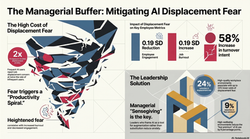
The Rehiring Trap: Why AI-Era Workforce Strategy Must Shift from Automation to Amplification
NEXUS INSTITUTE FOR WORK AND AI
1 day ago
25 min read
Remote Work, Loneliness, and the Leadership Deficit: Moving Beyond the Return-to-Office Debate
CATALYST CENTER FOR WORK INNOVATION
2 days ago
27 min read
Direct Lines to Loyalty: Why Generation Z's Commitment Is Built in the Daily Experience of Work
CATALYST CENTER FOR WORK INNOVATION
3 days ago
29 min read
The Inflection Point: How Tenure Shapes Academic Research Trajectories and Organizational Strategy
CATALYST CENTER FOR WORK INNOVATION
5 days ago
16 min read
The Architecture of Work Is Collapsing. Most Organizations Are Still Building Ladders.
CATALYST CENTER FOR WORK INNOVATION
5 days ago
24 min read
Navigating the Evolving Landscape of Human Reliance on Generative AI
NEXUS INSTITUTE FOR WORK AND AI
6 days ago
26 min read
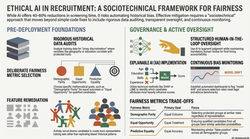
Mitigating Algorithmic Bias in AI-Powered Recruitment: A Practitioner's Guide to Ethical Implementation
NEXUS INSTITUTE FOR WORK AND AI
Oct 3
21 min read
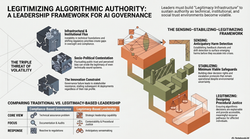
Leading Algorithmic Authority: Why Ethical AI Governance Depends on Legitimacy Infrastructure, Not Compliance Checklists
NEXUS INSTITUTE FOR WORK AND AI
Oct 2
17 min read
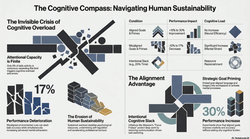
When the Machine Is Ready but the Mind Is Not: Designing Organizations for Human Capacity in the Age of AI
NEXUS INSTITUTE FOR WORK AND AI
Sep 30
26 min read
Human Capital Leadership Review
Quitting Is Contagious: How Turnover Contagion Spreads Through Teams and What Leaders Can Do About It
CATALYST CENTER FOR WORK INNOVATION
11 hours ago
19 min read
The Rehiring Trap: Why AI-Era Workforce Strategy Must Shift from Automation to Amplification
NEXUS INSTITUTE FOR WORK AND AI
1 day ago
25 min read
2027 Trend Story Idea: Beyond Renewal Season - Using Workforce Predictive Intelligence Signals to Act Earlier in Insurance
NEXUS INSTITUTE FOR WORK AND AI
2 days ago
5 min read
Remote Work, Loneliness, and the Leadership Deficit: Moving Beyond the Return-to-Office Debate
CATALYST CENTER FOR WORK INNOVATION
2 days ago
27 min read
Adult Learners: Avoiding the Pitfalls of Returning to Study
WORK RENAISSANCE PROJECT
3 days ago
2 min read
Direct Lines to Loyalty: Why Generation Z's Commitment Is Built in the Daily Experience of Work
CATALYST CENTER FOR WORK INNOVATION
3 days ago
29 min read
Survey: CHRO Confidence Remains in Positive Territory, But Continues to Inch Down
NEXUS INSTITUTE FOR WORK AND AI
4 days ago
4 min read
Why Authenticity Is Becoming Marketing's Scarce Advantage in the AI Era
NEXUS INSTITUTE FOR WORK AND AI
4 days ago
3 min read
New Study Reveals Which US Jobs Have the Most Fun After Work
RESEARCH INSIGHTS
4 days ago
4 min read
1
2
3
4
5
HCL Review Research Videos
HCL Review Research Infographics
Blog: HCI Blog
Human Capital Leadership Review
Featuring scholarly and practitioner insights from HR and people leaders, industry experts, and researchers.
Human Capital Innovations
Play Video
Play Video
41:41
A Conversation about Unlocking Team Potential Through Psychological Safety
Psychological safety, defined as the collective assurance that a group is secure for interpersonal risk-taking, serves as a vital catalyst for organizational learning and high performance. Originally established through Amy Edmondson's seminal research, this shared team climate empowers employees to admit mistakes, ask questions, and offer candid feedback without fearing negative consequences. Organizations across various industries leverage this concept to transform error-embracing cultures and foster innovation by connecting interpersonal security directly to collaborative problem-solving. Leaders actively cultivate these environments through supportive coaching behaviors, structural design adjustments, and consistent micro-actions that promote transparency rather than punishment. Ultimately, combining high psychological safety with rigorous accountability allows teams to navigate modern complexities, prevent catastrophic failures, and sustain long-term resilience.
Play Video
Play Video
08:00
The Engine of Performance - Unpacking the Mechanics of Psychology
Psychological safety, defined as the collective assurance that a group is secure for interpersonal risk-taking, serves as a vital catalyst for organizational learning and high performance. Originally established through Amy Edmondson's seminal research, this shared team climate empowers employees to admit mistakes, ask questions, and offer candid feedback without fearing negative consequences. Organizations across various industries leverage this concept to transform error-embracing cultures and foster innovation by connecting interpersonal security directly to collaborative problem-solving. Leaders actively cultivate these environments through supportive coaching behaviors, structural design adjustments, and consistent micro-actions that promote transparency rather than punishment. Ultimately, combining high psychological safety with rigorous accountability allows teams to navigate modern complexities, prevent catastrophic failures, and sustain long-term resilience.
Play Video
Play Video
02:56
The Engine of Performance
Psychological safety, defined as the collective assurance that a group is secure for interpersonal risk-taking, serves as a vital catalyst for organizational learning and high performance. Originally established through Amy Edmondson's seminal research, this shared team climate empowers employees to admit mistakes, ask questions, and offer candid feedback without fearing negative consequences. Organizations across various industries leverage this concept to transform error-embracing cultures and foster innovation by connecting interpersonal security directly to collaborative problem-solving. Leaders actively cultivate these environments through supportive coaching behaviors, structural design adjustments, and consistent micro-actions that promote transparency rather than punishment. Ultimately, combining high psychological safety with rigorous accountability allows teams to navigate modern complexities, prevent catastrophic failures, and sustain long-term resilience.
Play Video
Play Video
20:41
Unlocking Team Potential: How Psychological Safety Transforms Learning, Performance, and Organiza...
Abstract: This article examines team psychological safety—a shared belief that a team is safe for interpersonal risk taking—and its implications for learning behavior, team performance, and organizational effectiveness. Drawing primarily on Edmondson's (1999) foundational multimethod field study of 51 work teams, along with subsequent meta-analytic, field, and practitioner research, the article traces the evolution of psychological safety from an academic construct to a widely recognized driver of effective teams. It synthesizes evidence that psychologically safe teams are more likely to seek feedback, discuss errors, and experiment, and that these learning behaviors carry the relationship between safety and performance. The article identifies evidence-based organizational responses, including leader coaching and modeling, structural design and context support, error-embracing cultures, team efficacy, and transparent communication, illustrated with examples from technology, creative industries, mining, manufacturing, and healthcare. Finally, it proposes forward-looking pillars for building long-term organizational learning capacity: continuous recalibration of team norms, distributed leadership, and measurement systems that pair safety with accountability.
Play Video
Play Video
20:12
A Debate about Unlocking Team Potential Through Psychological Safety
Psychological safety, defined as the collective assurance that a group is secure for interpersonal risk-taking, serves as a vital catalyst for organizational learning and high performance. Originally established through Amy Edmondson's seminal research, this shared team climate empowers employees to admit mistakes, ask questions, and offer candid feedback without fearing negative consequences. Organizations across various industries leverage this concept to transform error-embracing cultures and foster innovation by connecting interpersonal security directly to collaborative problem-solving. Leaders actively cultivate these environments through supportive coaching behaviors, structural design adjustments, and consistent micro-actions that promote transparency rather than punishment. Ultimately, combining high psychological safety with rigorous accountability allows teams to navigate modern complexities, prevent catastrophic failures, and sustain long-term resilience.
Play Video
Play Video
09:25
The Automation Penalty - Architecting Hybrid Intelligence
Although organizations heavily invest in artificial intelligence, many fail to see meaningful returns because they mistakenly view technology as a human replacement rather than a complement. This research examine the concept of hybrid intelligence, which unites human and artificial intelligence to achieve outcomes superior to what either could accomplish independently. Successfully implementing this approach requires intentional task architecture, ensuring that humans and machines are assigned roles matching their respective strengths. Furthermore, systems must prioritize interpretability and transparency so that users can develop calibrated trust rather than falling into patterns of automation complacency. Ultimately, capturing the full economic and operational value of artificial intelligence depends on thoughtful workflow design and fostering a continuous co-learning process between people and machines.
Play Video
Play Video
03:09
Designing for Hybrid Intelligence
Although organizations heavily invest in artificial intelligence, many fail to see meaningful returns because they mistakenly view technology as a human replacement rather than a complement. This research examine the concept of hybrid intelligence, which unites human and artificial intelligence to achieve outcomes superior to what either could accomplish independently. Successfully implementing this approach requires intentional task architecture, ensuring that humans and machines are assigned roles matching their respective strengths. Furthermore, systems must prioritize interpretability and transparency so that users can develop calibrated trust rather than falling into patterns of automation complacency. Ultimately, capturing the full economic and operational value of artificial intelligence depends on thoughtful workflow design and fostering a continuous co-learning process between people and machines.
Play Video
Play Video
23:04
Designing for Hybrid Intelligence: How Organizations Can Harness the Complementary Strengths of H...
Abstract: The accelerating deployment of artificial intelligence across industries has intensified debate about the optimal division of labor between humans and machines. This article examines the concept of hybrid intelligence—socio-technical systems that combine human and artificial intelligence to achieve outcomes superior to what either could accomplish alone, while both continue to learn from each other. Drawing on the taxonomy of design knowledge proposed by Dellermann, Calma, Lipusch, Weber, Weigel, and Ebel (2019), and integrating recent evidence from a large meta-analysis, field experiments, and documented organizational examples, the article translates scholarly research into actionable guidance for organizational leaders. Five evidence-based intervention strategies are presented—task architecture design, interactive learning integration, human-centered interpretability, incentive-aligned participation, and adaptive workflow orchestration—each illustrated with examples from retail, healthcare, scientific research, and artificial intelligence research. The article concludes by outlining three forward-looking pillars for building sustained hybrid intelligence capability: continuous co-learning systems, trust calibration infrastructure, and organizational design for human-AI complementarity.
HCL Review Articles
All Articles
Nexus Institute for Work and AI
Catalyst Center for Work Innovation
Adaptive Organization Lab
Work Renaissance Project
Research Briefs
Research Insights
Webinar Recaps
Book Reviews
Transformative Social impact
Search
Jan 7, 2025
6 min read
CATALYST CENTER FOR WORK INNOVATION
Fostering a Culture of Vulnerability at Work
bottom of page