top of page
Home
Bio
Pricing
Merch
Podcast Network
Advertise with Us
Be Our Guest
Academy
Learning Catalog
Learners at a Glance
The ROI of Certification
Corporate L&D Solutions
Research
Research Initiatives
Nexus Institute
Catalyst Center
Adadptive Organization Lab
Future of Work Collective
Renaissance Project
Collaboration Form
Research Models and Tools
Research One Sheets
Research Snapshots
Research Videos
Research Briefs
Free Educational Resources
HCL Review
Contribute to the HCL Review
HCL Review Archive
HCL Review Slide Decks and Infographics
HCL Review Process
HCL Review Reach and Impact
HCI Press
From HCI Academic Press
From HCI Popular Press
Publish with HCI Press
Free OER Texts
Our Impact
Invest with HCI
Industry Recognition
Philanthropic Impact
Kiva Lending Impact
More
Use tab to navigate through the menu items.
When Labor Scarcity Meets AI Disruption: Rethinking Talent Strategy in the 2030s
NEXUS INSTITUTE FOR WORK AND AI
10 hours ago
30 min read
Workplace Bullying and Cognitive Decline: A Public Health Crisis in the Making
CATALYST CENTER FOR WORK INNOVATION
1 day ago
30 min read
Bridging the Research-Practice Divide: Insights from HRD Scholars and Scholar-Practitioners
CATALYST CENTER FOR WORK INNOVATION
2 days ago
22 min read
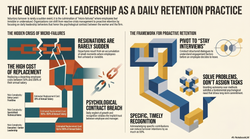
When Speaking Up Breaks Trust: Understanding Voice, Validation, and Voluntary Turnover in Modern Organizations
CATALYST CENTER FOR WORK INNOVATION
3 days ago
20 min read
Confronting Organizational Indifference to Truth: A Strategic Framework for Managing Workplace Bullshit
CATALYST CENTER FOR WORK INNOVATION
4 days ago
23 min read
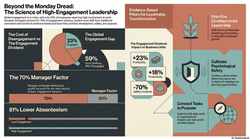
Work Engagement: Building Sustained Motivation and Well-Being in the Modern Workplace
CATALYST CENTER FOR WORK INNOVATION
5 days ago
39 min read
When Targets Pay the Price: The Troubling Job Security of Workplace Bullying Perpetrators
CATALYST CENTER FOR WORK INNOVATION
6 days ago
20 min read
The Strategic Imperative of Psychological Safety: Why High-Performing Organizations Cultivate Dissent
CATALYST CENTER FOR WORK INNOVATION
Sep 15
24 min read
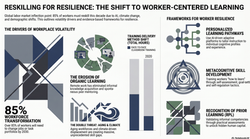
Reimagining Workforce Learning: Building Capability in an Era of Continuous Disruption
CATALYST CENTER FOR WORK INNOVATION
Sep 14
27 min read
AI Adoption and Employment Growth: Evidence from Enterprise Spending Data
NEXUS INSTITUTE FOR WORK AND AI
Sep 13
20 min read
Human Capital Leadership Review
The Missing Contract in Organizational Coaching: How Will Change Transfer to Work?
8 hours ago
6 min read
When Labor Scarcity Meets AI Disruption: Rethinking Talent Strategy in the 2030s
NEXUS INSTITUTE FOR WORK AND AI
10 hours ago
30 min read
Workplace Bullying and Cognitive Decline: A Public Health Crisis in the Making
CATALYST CENTER FOR WORK INNOVATION
1 day ago
30 min read
Bridging the Research-Practice Divide: Insights from HRD Scholars and Scholar-Practitioners
CATALYST CENTER FOR WORK INNOVATION
2 days ago
22 min read
INSEAD Launches Immersive AI Cases As Its AI-Powered Learning Portfolio Passes 40 Experiences
3 days ago
3 min read
When Speaking Up Breaks Trust: Understanding Voice, Validation, and Voluntary Turnover in Modern Organizations
CATALYST CENTER FOR WORK INNOVATION
3 days ago
20 min read
Employers and Universities Must Work Together to Close the AI Readiness Gap
4 days ago
3 min read
Confronting Organizational Indifference to Truth: A Strategic Framework for Managing Workplace Bullshit
CATALYST CENTER FOR WORK INNOVATION
4 days ago
23 min read
Work Engagement: Building Sustained Motivation and Well-Being in the Modern Workplace
CATALYST CENTER FOR WORK INNOVATION
5 days ago
39 min read
1
2
3
4
5
HCL Review Research Videos
HCL Review Research Infographics
Blog: HCI Blog
Human Capital Leadership Review
Featuring scholarly and practitioner insights from HR and people leaders, industry experts, and researchers.
Human Capital Innovations
Play Video
Play Video
07:07
The Goldilocks Regression - Deconstructing the More is Better Narrative
This research examines the Goldilocks Principle in the context of professional growth, arguing that excessive development opportunities can actually diminish employee commitment and learning. Research indicates an inverted U-shaped relationship between human resource investments—such as training and promotions—and worker performance, suggesting that there is an optimal threshold for development beyond which employees feel overwhelmed. This relationship is significantly influenced by age, as younger workers may perceive intensive development as a stressor, while older professionals benefit most from carefully calibrated support that respects their experience and capacity. To maintain a high-performing, age-diverse workforce, organizations must shift away from the "more is better" mindset and focus on personalized career pathways. Strategic success depends on fostering affective organizational commitment by aligning growth initiatives with the specific life stages and motivations of a maturing labor force.
Play Video
Play Video
03:08
Age Calibrated Talent Development
This research examines the Goldilocks Principle in the context of professional growth, arguing that excessive development opportunities can actually diminish employee commitment and learning. Research indicates an inverted U-shaped relationship between human resource investments—such as training and promotions—and worker performance, suggesting that there is an optimal threshold for development beyond which employees feel overwhelmed. This relationship is significantly influenced by age, as younger workers may perceive intensive development as a stressor, while older professionals benefit most from carefully calibrated support that respects their experience and capacity. To maintain a high-performing, age-diverse workforce, organizations must shift away from the "more is better" mindset and focus on personalized career pathways. Strategic success depends on fostering affective organizational commitment by aligning growth initiatives with the specific life stages and motivations of a maturing labor force.
Play Video
Play Video
20:13
The Goldilocks Principle: Why "Too Much" Development Can Backfire in Age-Diverse Workforces
Abstract: Organizations increasingly confront demographic transformation in which populations worldwide work longer, yet investment in workforce development remains age-biased and insufficiently calibrated. Contemporary evidence challenges linear assumptions that more development opportunities invariably produce superior outcomes. Drawing on research by Yue and Huang (2025) and integrating expectancy theory with lifespan developmental psychology, this article demonstrates that development human resource practices (DHRPs)—including training, internal promotion, incentive compensation, and challenging assignments—follow an inverted U-shaped relationship with employee outcomes. The relationship varies nonlinearly across career stages: DHRPs relate negatively to engagement among early-career employees but curvilinearly among mature professionals. Affective organizational commitment mediates these relationships. Organizations operating in contexts where employees aged 55 and older will represent eight to nine percent of the workforce by 2032 must recalibrate development investments, abandon age stereotypes, and recognize that appropriate calibration rather than maximum provision drives performance.
Play Video
Play Video
07:55
Demystifying the Coaching Silver Bullet
This research examines the critical relationship between internal coaching programs and employee performance, specifically highlighting how toxic leadership acts as a destructive barrier to success. While data suggests that peer-delivered coaching significantly boosts productivity, these benefits are notably diminished when managers engage in abusive or unpredictable behaviors. The research emphasizes that organizations often pay a "toxicity tax," where investments in staff development are undermined by a lack of psychological safety and trust. To combat this, the research advocates for systemic changes, such as ethical leadership assessments, anonymous reporting channels, and the decoupling of coaching from formal performance reviews. By studying examples from major corporations like Google and Microsoft, the research illustrates that coaching must be part of a broader, accountable culture to remain resilient. Ultimately, the research argues that for professional development to truly flourish, the underlying organizational climate must be addressed alongside individual skill-building.
Play Video
Play Video
41:19
A Conversation about Coaching Through Toxicity: Sustaining Performance Under Destructive Leadership
This research examines the critical relationship between internal coaching programs and employee performance, specifically highlighting how toxic leadership acts as a destructive barrier to success. While data suggests that peer-delivered coaching significantly boosts productivity, these benefits are notably diminished when managers engage in abusive or unpredictable behaviors. The research emphasizes that organizations often pay a "toxicity tax," where investments in staff development are undermined by a lack of psychological safety and trust. To combat this, the research advocates for systemic changes, such as ethical leadership assessments, anonymous reporting channels, and the decoupling of coaching from formal performance reviews. By studying examples from major corporations like Google and Microsoft, the research illustrates that coaching must be part of a broader, accountable culture to remain resilient. Ultimately, the research argues that for professional development to truly flourish, the underlying organizational climate must be addressed alongside individual skill-building.
Play Video
Play Video
02:46
Engineering Resilient Coaching
This research examines the critical relationship between internal coaching programs and employee performance, specifically highlighting how toxic leadership acts as a destructive barrier to success. While data suggests that peer-delivered coaching significantly boosts productivity, these benefits are notably diminished when managers engage in abusive or unpredictable behaviors. The research emphasizes that organizations often pay a "toxicity tax," where investments in staff development are undermined by a lack of psychological safety and trust. To combat this, the research advocates for systemic changes, such as ethical leadership assessments, anonymous reporting channels, and the decoupling of coaching from formal performance reviews. By studying examples from major corporations like Google and Microsoft, the research illustrates that coaching must be part of a broader, accountable culture to remain resilient. Ultimately, the research argues that for professional development to truly flourish, the underlying organizational climate must be addressed alongside individual skill-building.
Play Video
Play Video
23:27
A Debate about Coaching Through Toxicity: Sustaining Performance Under Destructive Leadership
This research examines the critical relationship between internal coaching programs and employee performance, specifically highlighting how toxic leadership acts as a destructive barrier to success. While data suggests that peer-delivered coaching significantly boosts productivity, these benefits are notably diminished when managers engage in abusive or unpredictable behaviors. The research emphasizes that organizations often pay a "toxicity tax," where investments in staff development are undermined by a lack of psychological safety and trust. To combat this, the research advocates for systemic changes, such as ethical leadership assessments, anonymous reporting channels, and the decoupling of coaching from formal performance reviews. By studying examples from major corporations like Google and Microsoft, the research illustrates that coaching must be part of a broader, accountable culture to remain resilient. Ultimately, the research argues that for professional development to truly flourish, the underlying organizational climate must be addressed alongside individual skill-building.
Play Video
Play Video
21:36
When Coaching Meets Toxicity: Building Internal Coaching Capacity to Sustain Performance Under De...
Abstract: Organizations increasingly invest in internal coaching—structured, peer-delivered development conducted by coaches who belong to the same organization as the coachee—to drive employee learning and performance. Yet emerging evidence suggests that the returns on this investment are not uniform: the leadership climate in which coaching takes place can amplify or attenuate its benefits. This article synthesizes recent research, including a 2026 empirical study of 313 employees in Portuguese organizations, which found that perceived internal coaching positively predicted perceived job performance but that toxic leadership significantly weakened this relationship. The article defines internal coaching and toxic leadership for practitioner audiences, examines their organizational and individual consequences, and presents evidence-based interventions—spanning ethical leadership development, psychological safety architecture, coaching governance, and accountability systems—with illustrative examples from Google, Microsoft, and Intel. Three forward-looking pillars for long-term resilience are proposed: psychological contract recalibration, distributed leadership structures, and continuous learning ecosystems. Practitioners are encouraged to treat internal coaching not as an isolated program but as one element within a broader organizational development strategy that must address both the enabling and constraining forces shaping employee performance.
HCL Review Articles
All Articles
Nexus Institute for Work and AI
Catalyst Center for Work Innovation
Adaptive Organization Lab
Work Renaissance Project
Research Briefs
Research Insights
Webinar Recaps
Book Reviews
Transformative Social impact
Search
Feb 15
7 min read
RESEARCH BRIEFS
Collaborating with People You Don't Like
Dec 27, 2024
8 min read
ADAPTIVE ORGANIZATION LAB
Resolve Conflicts at Work Like a Pro
bottom of page