top of page
Home
Bio
Pricing
Merch
Podcast Network
Advertise with Us
Be Our Guest
Academy
Learning Catalog
Learners at a Glance
The ROI of Certification
Corporate L&D Solutions
Research
Research Initiatives
Nexus Institute
Catalyst Center
Adadptive Organization Lab
Future of Work Collective
Renaissance Project
Collaboration Form
Research Models and Tools
Research One Sheets
Research Snapshots
Research Videos
Research Briefs
Research Articles
Free Educational Resources
HCL Review
Contribute to the HCL Review
HCL Review Archive
HCL Review Slide Decks and Infographics
HCL Review Process
HCL Review Reach and Impact
HCI Press
From HCI Academic Press
From HCI Popular Press
Publish with HCI Press
Free OER Texts
Our Impact
Invest with HCI
Industry Recognition
Philanthropic Impact
Kiva Lending Impact
More
Use tab to navigate through the menu items.
When the Loop Becomes the System: Rethinking Human Control in High-Velocity AI Environments
NEXUS INSTITUTE FOR WORK AND AI
4 hours ago
21 min read
When the Cliff Becomes the Ground: Strategic Portfolio Transformation in U.S. Higher Education
CATALYST CENTER FOR WORK INNOVATION
1 day ago
20 min read
When AI Meets Command-and-Control: Why Traditional Hierarchies Are Failing the Intelligence Revolution
NEXUS INSTITUTE FOR WORK AND AI
2 days ago
24 min read
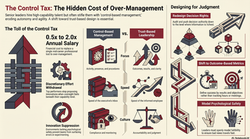
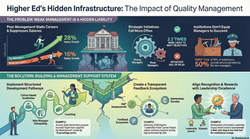
The Control Tax: How Managing by Oversight Costs Senior Leaders Their Strongest Talent
CATALYST CENTER FOR WORK INNOVATION
3 days ago
17 min read
Leading Through Uncertainty: How CEOs Navigate the Dual Challenge of AI Transformation and Stakeholder Trust
NEXUS INSTITUTE FOR WORK AND AI
4 days ago
26 min read
The Evolution of Artificial Intelligence: From Large Language Models to Superintelligence and the Transformation of Work
NEXUS INSTITUTE FOR WORK AND AI
5 days ago
22 min read
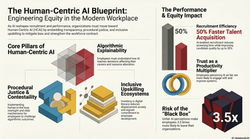
Algorithmic Anxiety in the Modern Workplace: Understanding and Addressing the Human Cost of AI Integration
NEXUS INSTITUTE FOR WORK AND AI
6 days ago
28 min read
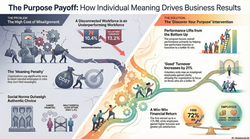
When Being Yourself Works—And When It Doesn't: How Culture Shapes Authentic Leadership
CATALYST CENTER FOR WORK INNOVATION
May 14
18 min read
Leading the 6-Generation Workforce
NEXUS INSTITUTE FOR WORK AND AI
May 13
21 min read
Verification-Centric Leadership: Governing Truth in the Age of Generative Abundance
NEXUS INSTITUTE FOR WORK AND AI
May 12
13 min read
Human Capital Leadership Review
Gen Z Workers Most Worried about AI Job Disruption, New Survey Reveals
3 hours ago
4 min read
When the Loop Becomes the System: Rethinking Human Control in High-Velocity AI Environments
NEXUS INSTITUTE FOR WORK AND AI
4 hours ago
21 min read
How to Save Time and Boost Efficiency with Smart Business Apps
15 hours ago
4 min read
AI Can Make Images in Seconds, but Artist Doddz Says It Still Cannot Replace Emotion
16 hours ago
5 min read
The AI Readiness Problem Isn't Talent Scarcity — It's Organizational Design
16 hours ago
5 min read
Contrario Launches After Reaching $6M Annualized Revenue and Paying $1M+ to Recruiters in Under Six Months
20 hours ago
3 min read
Josh Bersin Company Defines New HR Taxonomy for Frontline Workers, to Improve Hiring, Pay, Retention, and Management
1 day ago
4 min read
When the Cliff Becomes the Ground: Strategic Portfolio Transformation in U.S. Higher Education
CATALYST CENTER FOR WORK INNOVATION
1 day ago
20 min read
Half of Gen Z Want Work Socials Without Alcohol, New Survey Reveals
2 days ago
2 min read
1
2
3
4
5
HCL Review Research Videos
HCL Review Research Infographics
Blog: HCI Blog
Human Capital Leadership Review
Featuring scholarly and practitioner insights from HR and people leaders, industry experts, and researchers.
Human Capital Innovations
Play Video
Play Video
26:30
Neurodiversity in the Workplace, with Shea Belsky
In this podcast episode, Dr. Jonathan H. Westover talks with Shea Belsky about neurodiversity in the workplace. Shea Belsky is an autistic self-advocate. He is a Tech Lead II at HubSpot, and the former Chief Technology Officer of Mentra. Shea brings several unique perspectives to the discussion on neurodiversity: He is the manager of neurodivergent & neurotypical employees, has reported to neurodivergent & neurotypical managers, and has advocated for the needs and wellbeing of all who seek to be heard and understood in the workplace. Shea has championed neurodiversity for organizations like Novartis, the College Autism Summit, Northeastern University, in addition to being featured in Forbes and the New York Post. He also hosts his own podcast, Autistic Techie, empowering neurodivergent self advocates to feel more confident in the workplace and ready to take on the day to day challenges of their job. He's excited to share his perspectives on neurodiversity and how to be a meaningful ally and advocate! https://www.amazon.com/Brainstorm-Guide-Neurodivergent-Talent-Future/dp/1394388772 https://autistic-techie.com/ https://www.linkedin.com/in/sheabelsky/ See Privacy Policy at https://art19.com/privacy and California Privacy Notice at https://art19.com/privacy#do-not-sell-my-info.
Play Video
Play Video
24:25
Achieving Sustainable Leadership Success with Others, by Doug Ladden
In this HCI Webinar, I talk with Doug Ladden about why you can't achieve sustainable leadership success without help from others along the way. Doug is a co-founder and the CEO of Deliveright Logistics, Inc., a technology, logistics, and final-mile delivery provider to retailers of big and bulky goods such as furniture and exercise equipment. Deliveright's patented Grasshopper technology platform offers a complete solution to delivery companies specializing in big and bulky products. Deliveright's nationwide network also powers the U.S. logistics supply chain of major eCommerce and brick-and-mortar retailers, from the manufacturer's dock to the customer's home. Deliveright simplifies complex logistics for hard-to-handle goods and provides best-in-class service to its customers. Before Deliveright, Doug was a co-founder and Senior Partner of DLJ Investment Partners, a private equity manager of middle-market mezzanine funds with $3.5 billion in AUM. As an active investor, he sat on multiple boards of directors for companies, including TransCore, a leader in electronic toll collection systems and owner of DAT digital load boards at truckstops. He currently serves on the Investment Committees of Quilvest Capital Strategies' private debt funds. Doug has expertise in logistics, related technology applications, and private debt investing.
Play Video
Play Video
04:40
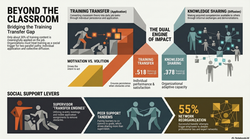
Unlocking Workplace Training - The Secret Sauce of Social Support!
This video addresses a common challenge known as the training transfer gap—the disconnect between the knowledge gained in training sessions and its practical application in the workplace. Despite significant investments in employee training, studies reveal that only about 30% of what is learned is actually applied on the job. The video explains that the traditional focus on individual learning and motivation overlooks a critical factor: persistence or volition, which is the grit required to continually apply new skills amid daily work pressures. This persistence is heavily influenced by the employee’s environment, particularly the support from colleagues and managers. Highlights 🔄 The training transfer gap means most learned skills don't get applied at work. 💡 Only about 30% of training is used on the job due to lack of persistence and support. 🤝 Learning is more effective as a team sport, not a solo mission. 👥 Managers and peers are key to sustaining training transfer and knowledge sharing. 🏆 Peer support can be more powerful than managerial support in encouraging skill application. 📅 Simple practices like follow-ups, peer partnerships, and teach-back sessions boost training impact. 🌱 A culture of continuous learning and sharing drives innovation and team growth. Key Insights 🌟 Volition or persistence is critical to applying new skills: Motivation alone is insufficient. The concept of volition—the sustained effort to use new skills despite obstacles—is crucial. This underlines the psychological dimension of training transfer, emphasizing the need for ongoing encouragement beyond initial learning moments. 🤗 Social environment fuels persistence and learning application: The analogy of learning a dance underscores that skills improve significantly when practiced in a social context. The peer group and workplace culture act as catalysts, reinforcing new behaviors and making the transfer of training more likely to succeed. 👔 Managers as coaches significantly influence training outcomes: Managers who engage before and after training, set clear expectations, and assign practical projects help employees bridge the gap between knowledge and practice. Their active involvement is a strong predictor of training transfer success, demonstrating the managerial role as a critical lever in learning ecosystems. 👥 Peer support often surpasses managerial influence in fostering knowledge sharing: The video cites research showing that peers can have a greater impact on encouraging risk-taking and sharing skills. This insight highlights the importance of horizontal relationships and trust among coworkers in creating a collaborative learning culture. 📊 Structured follow-ups and collaborative activities embed learning into daily work: Practical strategies such as manager check-ins, peer partnerships, teach-back sessions, and digital platforms create multiple touchpoints for reinforcement. These methods reduce the cognitive load of transferring skills by making learning a shared, continuous process rather than a one-time event. 🚀 A learning culture transforms training into sustained organizational growth: Beyond individual gains, embedding learning into everyday work cultivates curiosity, innovation, and stronger professional networks. This systemic approach results in a positive feedback loop where applying skills leads to recognition, which in turn fosters more learning and collaboration. The multiplier effect of this ecosystem approach drives agility and better business outcomes.
Play Video
Play Video
03:56
Engineering Networked Capability
Despite significant investments in workplace training, a stubborn gap often prevents employees from applying new skills to their daily tasks. Recent research suggests that the most effective way to close this gap is to view training transfer and knowledge sharing as parallel social processes rather than individual burdens. Success depends heavily on social support, as active encouragement from supervisors and peers creates a reinforcing environment for learning to take root. Organizations can further improve outcomes by focusing on volition, which helps employees persist through obstacles encountered after a workshop ends. By intentionally fostering knowledge networks, companies can transform isolated training events into a sustainable organizational capability that enhances both performance and satisfaction. Ultimately, evaluating the growth of these professional connections provides a more accurate measure of a program's true strategic impact.
Play Video
Play Video
40:15
A Conversation about Bridging the Transfer Gap Through Social Support and Networks
Despite significant investments in workplace training, a stubborn gap often prevents employees from applying new skills to their daily tasks. Recent research suggests that the most effective way to close this gap is to view training transfer and knowledge sharing as parallel social processes rather than individual burdens. Success depends heavily on social support, as active encouragement from supervisors and peers creates a reinforcing environment for learning to take root. Organizations can further improve outcomes by focusing on volition, which helps employees persist through obstacles encountered after a workshop ends. By intentionally fostering knowledge networks, companies can transform isolated training events into a sustainable organizational capability that enhances both performance and satisfaction. Ultimately, evaluating the growth of these professional connections provides a more accurate measure of a program's true strategic impact. See Privacy Policy at https://art19.com/privacy and California Privacy Notice at https://art19.com/privacy#do-not-sell-my-info.
Play Video
Play Video
23:55
Beyond the Classroom: Turning Workplace Training into Organizational Capability Through Social Su...
Abstract: Workplace training continues to absorb sizeable portions of organizational learning budgets, yet a stubborn gap persists between what employees learn and what they apply, share, and sustain on the job. This brief synthesizes recent empirical work on training transfer, knowledge sharing, and post-training knowledge networks to offer a practitioner-oriented framework for maximizing training impact. Drawing on a mixed-method study by Mehner, Rothenbusch, and Kauffeld (2025) along with foundational and contemporary research in industrial-organizational psychology, the discussion identifies motivation, volition, and social support—particularly from supervisors and peers—as pivotal levers. The brief argues that treating transfer as an individual concern underestimates training's potential; instead, organizations should design for parallel processes of application (transfer) and diffusion (sharing) that ride on intentional knowledge networks. Industry illustrations across construction, financial services, and healthcare demonstrate practical implementation. The closing sections outline forward-looking pillars for embedding learning capability as enduring organizational infrastructure. See Privacy Policy at https://art19.com/privacy and California Privacy Notice at https://art19.com/privacy#do-not-sell-my-info.
Play Video
Play Video
23:40
Why You Can’t Achieve Sustainable Leadership Success Without Help from Others Along the Way, by D...
In this podcast episode, Dr. Jonathan H. Westover talks with Doug Ladden about why you can't achieve sustainable leadership success without help from others along the way. Doug is a co-founder and the CEO of Deliveright Logistics, Inc., a technology, logistics, and final-mile delivery provider to retailers of big and bulky goods such as furniture and exercise equipment. Deliveright's patented Grasshopper technology platform offers a complete solution to delivery companies specializing in big and bulky products. Deliveright's nationwide network also powers the U.S. logistics supply chain of major eCommerce and brick-and-mortar retailers, from the manufacturer's dock to the customer's home. Deliveright simplifies complex logistics for hard-to-handle goods and provides best-in-class service to its customers. Before Deliveright, Doug was a co-founder and Senior Partner of DLJ Investment Partners, a private equity manager of middle-market mezzanine funds with $3.5 billion in AUM. As an active investor, he sat on multiple boards of directors for companies, including TransCore, a leader in electronic toll collection systems and owner of DAT digital load boards at truckstops. He currently serves on the Investment Committees of Quilvest Capital Strategies' private debt funds. Doug has expertise in logistics, related technology applications, and private debt investing. See Privacy Policy at https://art19.com/privacy and California Privacy Notice at https://art19.com/privacy#do-not-sell-my-info.
Play Video
Play Video
22:35
A Debate about Bridging the Transfer Gap Through Social Support and Networks
Despite significant investments in workplace training, a stubborn gap often prevents employees from applying new skills to their daily tasks. Recent research suggests that the most effective way to close this gap is to view training transfer and knowledge sharing as parallel social processes rather than individual burdens. Success depends heavily on social support, as active encouragement from supervisors and peers creates a reinforcing environment for learning to take root. Organizations can further improve outcomes by focusing on volition, which helps employees persist through obstacles encountered after a workshop ends. By intentionally fostering knowledge networks, companies can transform isolated training events into a sustainable organizational capability that enhances both performance and satisfaction. Ultimately, evaluating the growth of these professional connections provides a more accurate measure of a program's true strategic impact. See Privacy Policy at https://art19.com/privacy and California Privacy Notice at https://art19.com/privacy#do-not-sell-my-info.
HCL Review Articles
All Articles
Nexus Institute for Work and AI
Catalyst Center for Work Innovation
Adaptive Organization Lab
Work Renaissance Project
Research Briefs
Research Insights
Webinar Recaps
Book Reviews
Transformative Social impact
Search
Aug 15, 2025
6 min read
ADAPTIVE ORGANIZATION LAB
How to Spot a Really Good Leader
bottom of page