The Remote Work–AI Paradox Why Early Career Hiring is Declining Since late 2022, entry-level job opportunities in key sectors such as technology, finance, and marketing have declined sharply in countries like the US, UK, and Canada. The proportion of these roles awarded to early-career professionals has dropped by up to 11 percentage points. This decline is not a temporary downturn but rather a structural shift in hiring practices. Employers are increasingly seeking candidates who can contribute immediately with minimal training, favoring experienced workers over fresh graduates.
Highlights
🧑💼 Entry-level jobs in tech, finance, and marketing have declined by up to 11 percentage points since late 2022.
🏠 Remote work reduces informal mentorship opportunities, pushing companies to favor experienced hires.
🤖 AI automates traditional entry-level tasks, shrinking roles available for junior employees.
🔄 The interplay of remote work and AI raises the bar for newcomers, requiring immediate productivity and advanced skills.
🚫 Fewer entry-level jobs limit young workers’ experience and growth, with negative long-term effects on talent pipelines.
💸 Poaching mid-level talent raises salaries and destabilizes hiring ecosystems, risking future workforce sustainability.
🌟 Companies are adapting with hybrid onboarding, AI-assisted roles, flexible degree requirements, and apprenticeships.
Key Insights
🧠 Structural hiring shift fueled by AI and remote work: The trend away from entry-level hiring is not temporary but an enduring change. Organizations now demand new hires capable of adding value immediately, largely due to reduced training capacity in remote settings and AI automating routine functions. This recalibration emphasizes readiness and experience over potential, reshaping the labor market entry dynamics.
🤝 Impact of diminished informal learning: Remote work disrupts the informal knowledge transfer that traditionally occurs through spontaneous, in-person interactions. Junior employees depend heavily on mentorship to acquire tacit knowledge and soft skills; without this, their onboarding becomes inefficient, which motivates employers to minimize hiring juniors altogether.
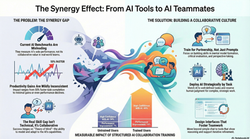
🤖 AI as a labor multiplier and disruptor: Tools like ChatGPT have effectively taken over many tasks once reserved for entry-level roles, such as email drafting, data handling, and basic programming. This efficiency gain means fewer juniors are needed, but it also shifts job descriptions to include more advanced, AI-complementary competencies.
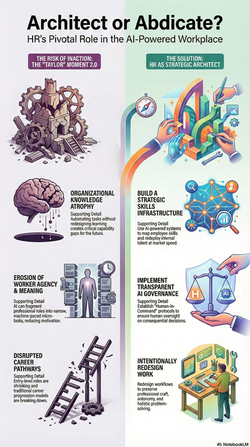
📉 Career bottleneck and talent pipeline risks: As companies increasingly recruit mid-level or senior talent instead of juniors, early-career professionals face a “catch-22” situation: without experience, they cannot move up, and with fewer entry points, they cannot gain experience. This bottleneck undermines the development of future leadership and innovation capacity within firms.
💰 Economic repercussions of talent poaching: The reliance on experienced hires drives competition and salary inflation at mid-levels, which disadvantages recent graduates and startups unable to compete. The result is a talent ecosystem imbalance: short-term gains for some companies, but increased labor costs, inefficiencies, and instability overall.
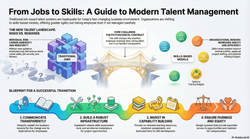
🌐 Hybrid and redesigned onboarding as a solution: Successful adaptation involves reimagining entry-level recruitment and onboarding through hybrid models that combine remote work benefits with focused in-person mentoring. Structured onboarding programs, comprehensive documentation, and AI-augmented roles maintain productivity while supporting junior staff development.
🚀 Inclusive talent strategies for future resilience: Dropping rigid degree requirements and expanding apprenticeships open new pathways for early-career individuals, fostering diversity and accessibility. Companies that proactively invest in these approaches can create a sustainable talent pipeline, better equipping themselves to navigate the evolving demands of technology-driven workplaces.