





What Thirty Years of Coaching Executives Taught Me About the Emptiness of Success
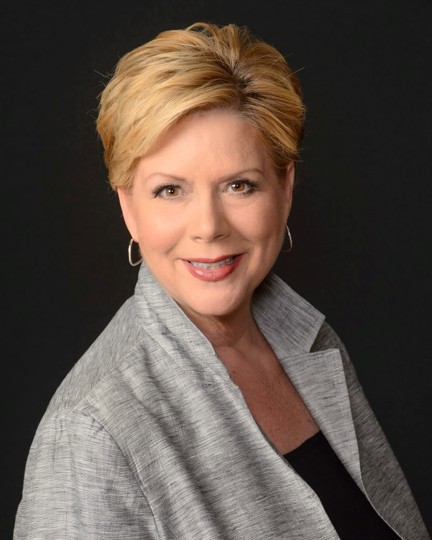

A lot of the leaders who come to me have already hit the goal they thought would finally make everything click. The promotion, the exit, the number they'd been chasing for years. What surprises most of them is what happens next. Not relief, just a strange flatness they can't quite explain. I've spent thirty years working with high-impact leaders on exactly that gap, and it's the reason I started Spano & Company. It shows up more often than people admit, especially among leaders who are supposed to have this all figured out by now.
Here's the part nobody warns you about. The job comes with real guarantees. A salary, a seat at the table, maybe a car if you negotiated well. It doesn't come with a feeling. No one promises you'll recognize yourself once you've hit every goal on your list. And when that feeling doesn't show up, most leaders assume something is wrong with them specifically, instead of seeing it as one of the most well-documented patterns in how people work. Take tenure, for example.
What Research on Career Milestones Actually Shows
Researchers once asked a group of assistant professors to predict how getting tenure would shape their happiness years down the road. Nearly everyone expected it to matter for a long time, which tracks. Tenure means stability, and years of hard work finally paying off.
Years later, when researchers checked back in, the professors who got tenure were no happier than the ones who didn't (Source: Journal of Personality and Social Psychology, 1998). What they expected to feel and what they actually felt had almost nothing in common.
It's the same pattern I see constantly with revenue targets, partnerships, and exits. The goal itself isn't the problem. Working hard toward something you care about is a good thing to do. The problem is expecting that goal to also hand you an identity, or peace of mind, or a reason to stop bracing for whatever comes next. It won't. It was never built to do that. And expecting it to is how capable, driven people end up feeling empty in rooms they spent years trying to get into.
This is where I want to slow down, because two things get confused constantly and the difference matters. Burnout and emptiness are not the same thing, even though they can look alike from the outside. Burnout is running out of gas. Too many hours, too many demands, not enough rest, until your body and mind simply stop keeping up. You can fix a lot of burnout with rest, boundaries, and a calendar that isn't insane. Emptiness is different. You can be well rested, running a healthy business, sleeping fine at night, and still feel like something important is missing. A high achiever can feel completely empty without being burned out at all. Treating those two things as the same problem is a big reason so many wellness efforts fall flat.
Why Rest and Perks Aren't the Whole Answer
Most companies reach for the same tools when leadership stress shows up. More time off. A meditation app. A wellness stipend tucked into the benefits package. Those things do help, to a point. A recent review of workplace programs found that they do reduce exhaustion, just modestly, and the effect gets even smaller once you're talking about small perks rather than real changes to how people actually work (Source: International Archives of Occupational and Environmental Health, 2023). That's useful if what you're treating is burnout. It does almost nothing if what you're actually dealing with is emptiness, because emptiness isn't about your schedule. You can't fix not knowing who you are outside of your job with a better vacation policy.
Leadership burnout keeps climbing, and the numbers back up what I see in my own sessions. More than half of leaders reported burning out last year, and companies lost close to half their leadership teams because of it (Source: LHH, 2025). That's a real problem and it deserves attention. But fixing burnout doesn't automatically fix a leader who feels lost. A lot of my clients come to me having already tried therapy, coaching, and every framework out there, and they're still stuck. That's because nobody ever looked past the exhaustion to what was actually driving it. They treated the symptom. The real pattern stayed exactly the same, which is exactly why the next step has to look different.
What It Actually Takes to Change This
So what does work look like? Not another checklist. The real question is harder to sit with: is the life you built actually the one you want, or is it something you put together years ago to prove a point to people who probably stopped paying attention a long time ago. That's not a throwaway line. It's the actual work I do with clients over twelve weeks in a process I call Potential Unleashed, and it asks people to get honest in ways that aren't always comfortable.
We start by looking at what's really driving someone's choices, not the polished answer they'd give at a networking event, but the real one underneath it. From there, we look at the old habits and beliefs keeping a person stuck in patterns that no longer fit who they've become. It's slower than a productivity trick. It's also the only approach I've seen actually last, because it doesn't ask you to push through with better habits alone. It asks you to build a different relationship with yourself, one where hitting goals isn't the only proof that you matter.
Most company wellness budgets pay for the stress management side and stop there, which makes sense since it's easier to measure. Fewer sick days, better survey scores, a clean slide for the board. The deeper work is harder to put a number on, and it's also where the real change happens. Leaders who go through this kind of work don't usually describe it as picking up new tactics. They describe it as getting themselves back, along with their marriage, their sense of purpose, or whatever else got set aside while they were busy chasing the next milestone. That's not because I gave them a better checklist. It's because we finally dealt with the root of it instead of managing around it one more time.
What to Do With This
If any of this sounds familiar, that's usually a good sign, not a bad one. It means you're paying attention to something most leaders spend their whole career avoiding. You don't have to keep pushing through a version of success that stopped feeling like success a while back, and you don't need another decade of managing symptoms while the real problem goes untouched.
If you're ready to find out what's actually driving the exhaustion, the flatness, or the sense that you've achieved everything and still feel like you're missing something, look into a Systemic Mapping session or the Potential Unleashed Intensive at Spano & Company. Both are built for leaders who are done with quick fixes and ready to do the work that actually holds.
Sources
Gilbert, D. T., Pinel, E. C., Wilson, T. D., Blumberg, S. J., & Wheatley, T. P. (1998). Immune neglect: A source of durability bias in affective forecasting. Journal of Personality and Social Psychology, 75(3), 617- 638. https://dtg.sites.fas.harvard.edu/Gilbert%20et%20al%20(IMMUNE%20NEGLECT).pdf
Bes, I., Shoman, Y., Al-Gobari, M., Rousson, V., & Guseva Canu, I. (2023). Organizational interventions and occupational burnout: a meta-analysis with focus on exhaustion. International Archives of Occupational and Environmental Health. https://www.ncbi.nlm.nih.gov/pmc/articles/PMC10560169/
LHH. (2025). 2025 Views From the C-Suite report. https://www.prnewswire.com/news-releases/lhh-global-data-finds-executives-seek-leadership-support-amid-high-turnover-and-burnout-302387926.html
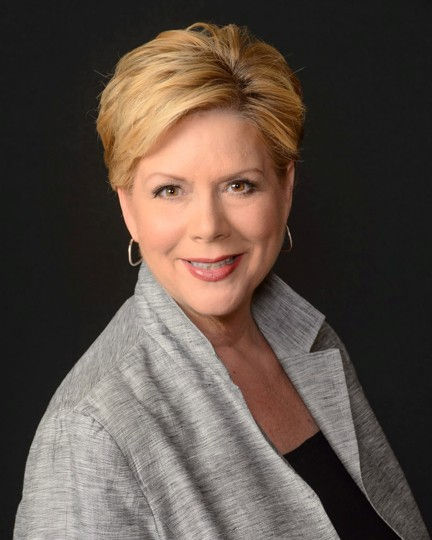
Dr. Sharon Spano is a corporate business strategist, executive coach, and behavioral strategist with a PhD in Human and Organizational Systems. As the founder of Spano & Company, Inc., she has spent more than 25 years helping business leaders, entrepreneurs, and family-owned companies maximize performance, improve employee engagement, and break through the dysfunction that quietly caps growth. She is a Certified Professional Integral Coach, certified by both the Institute for Integrative System Dynamics and the European Institute for Systemic Education and Coaching. Sharon is the author of The Pursuit of Time and Money: Step into Radical Abundance and Discover the Secret to a Meaningful and Prosperous Life, and the creator of Potential Unleashed™ and the Leadership DNA Bootcamp. She hosts the weekly podcast The Other Side of Potential, and previously hosted the radio show WorkSmart Live. Her work centers on a systems-thinking approach to leadership: helping high-impact leaders view their business and their life through a wider lens, so that lasting change actually sticks. Based in the Greater Orlando area, Sharon works with clients ranging from corporate executive teams to multi-generational family businesses, guiding them through what she calls "breakdown to breakthrough," the process of identifying the real source of dysfunction and rebuilding from there.


