top of page
Home
Bio
Pricing
Merch
Podcast Network
Advertise with Us
Be Our Guest
Academy
Learning Catalog
Learners at a Glance
The ROI of Certification
Corporate L&D Solutions
Research
Research Initiatives
Nexus Institute
Catalyst Center
Adadptive Organization Lab
Future of Work Collective
Renaissance Project
Collaboration Form
Research Models and Tools
Research One Sheets
Research Snapshots
Research Videos
Research Briefs
Free Educational Resources
HCL Review
Contribute to the HCL Review
HCL Review Archive
HCL Review Slide Decks and Infographics
HCL Review Process
HCL Review Reach and Impact
HCI Press
From HCI Academic Press
From HCI Popular Press
Publish with HCI Press
Free OER Texts
Our Impact
Invest with HCI
Industry Recognition
Philanthropic Impact
Kiva Lending Impact
More
Use tab to navigate through the menu items.
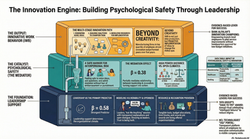
Unlocking Team Potential: How Psychological Safety Transforms Learning, Performance, and Organizational Resilience
CATALYST CENTER FOR WORK INNOVATION
9 hours ago
15 min read
Designing for Hybrid Intelligence: How Organizations Can Harness the Complementary Strengths of Human and Artificial Intelligence
CATALYST CENTER FOR WORK INNOVATION
1 day ago
19 min read
Designing for Predictability: How Mental Models of AI Error Boundaries Shape Human-AI Team Performance in High-Stakes Decision Making
NEXUS INSTITUTE FOR WORK AND AI
2 days ago
20 min read
From Breaking Point to Breakthrough: How AI Is Reinventing Assessment in Higher Education and Corporate Learning
NEXUS INSTITUTE FOR WORK AND AI
3 days ago
28 min read
Beyond the Office Walls: Workplace Bullying as Public Health
CATALYST CENTER FOR WORK INNOVATION
4 days ago
30 min read
Mobility, Not Scarcity: Why Employers Hold the Keys to the AI-Era Workforce Reallocation
NEXUS INSTITUTE FOR WORK AND AI
5 days ago
23 min read
The Flexibility Paradox: Why Searching More Broadly for Work Can Narrow Unemployed Jobseekers' Prospects
CATALYST CENTER FOR WORK INNOVATION
6 days ago
17 min read
Mind the Gap: Why Understanding AI Error Boundaries Is the Key to Unlocking Human-AI Team Performance
NEXUS INSTITUTE FOR WORK AND AI
Oct 13
24 min read
The Creative Advantage: How Organizations Can Future-Proof Their Workforce by Investing in Creativity
CATALYST CENTER FOR WORK INNOVATION
Oct 12
16 min read
Different Speeds, Different Strategies: Mapping AI Adoption Across Career Areas to Prioritize Workforce Preparation
NEXUS INSTITUTE FOR WORK AND AI
Oct 11
24 min read
Human Capital Leadership Review
Unlocking Team Potential: How Psychological Safety Transforms Learning, Performance, and Organizational Resilience
CATALYST CENTER FOR WORK INNOVATION
9 hours ago
15 min read
Study Reveals the States with the Most Future-Proof Workforces
ADAPTIVE ORGANIZATION LAB
1 day ago
5 min read
The Skills You're Trying to Hire For Might Already Be on Your Payroll
NEXUS INSTITUTE FOR WORK AND AI
1 day ago
3 min read
Follow-Through Is the Management Skill Employees Notice Most
ADAPTIVE ORGANIZATION LAB
1 day ago
9 min read
The Missing Trust Layer in Enterprise AI
NEXUS INSTITUTE FOR WORK AND AI
1 day ago
7 min read
Data Challenges Conventional Career Advice: Job Seekers Who Include Resume Photos Are 60% More Likely to Get Hired in the U.S.
CATALYST CENTER FOR WORK INNOVATION
1 day ago
2 min read
U.S. Business Formations Set September Record, Extending Nine-Month Growth Streak
ADAPTIVE ORGANIZATION LAB
1 day ago
2 min read
Designing for Hybrid Intelligence: How Organizations Can Harness the Complementary Strengths of Human and Artificial Intelligence
CATALYST CENTER FOR WORK INNOVATION
1 day ago
19 min read
Designing for Predictability: How Mental Models of AI Error Boundaries Shape Human-AI Team Performance in High-Stakes Decision Making
NEXUS INSTITUTE FOR WORK AND AI
2 days ago
20 min read
1
2
3
4
5
HCL Review Research Videos
HCL Review Research Infographics
Blog: HCI Blog
Human Capital Leadership Review
Featuring scholarly and practitioner insights from HR and people leaders, industry experts, and researchers.
Human Capital Innovations
Play Video
Play Video
09:16
The Efficiency Paradox - Redesigning the Two-Job Job
Modern corporate trends like organizational flattening and generative AI integration have inadvertently created a widespread phenomenon known as the "two-job job," where employees quietly absorb the duties of multiple roles without formal restructuring. Drawing on extensive workforce data, scholarship highlights that this unchecked role sprawl severely diminishes employee motivation, stalls innovation, and sparks burnout by inflating workloads without matching resources. To combat these hidden labor costs, organizations must stop treating overload merely as an individual resilience issue and instead implement deliberate work design strategies. Effective solutions include actively subtracting unnecessary tasks, re-chartering modified positions, treating capacity as a governed budget, and properly recognizing hidden labor. Ultimately, leaders must intentionally architect workflows to prevent employee exhaustion and ensure long-term productivity.
Play Video
Play Video
03:10
The Two-Job Job
Modern corporate trends like organizational flattening and generative AI integration have inadvertently created a widespread phenomenon known as the "two-job job," where employees quietly absorb the duties of multiple roles without formal restructuring. Drawing on extensive workforce data, scholarship highlights that this unchecked role sprawl severely diminishes employee motivation, stalls innovation, and sparks burnout by inflating workloads without matching resources. To combat these hidden labor costs, organizations must stop treating overload merely as an individual resilience issue and instead implement deliberate work design strategies. Effective solutions include actively subtracting unnecessary tasks, re-chartering modified positions, treating capacity as a governed budget, and properly recognizing hidden labor. Ultimately, leaders must intentionally architect workflows to prevent employee exhaustion and ensure long-term productivity.
Play Video
Play Video
54:07
A Conversation about the Two-Job Job
Modern corporate trends like organizational flattening and generative AI integration have inadvertently created a widespread phenomenon known as the "two-job job," where employees quietly absorb the duties of multiple roles without formal restructuring. Drawing on extensive workforce data, scholarship highlights that this unchecked role sprawl severely diminishes employee motivation, stalls innovation, and sparks burnout by inflating workloads without matching resources. To combat these hidden labor costs, organizations must stop treating overload merely as an individual resilience issue and instead implement deliberate work design strategies. Effective solutions include actively subtracting unnecessary tasks, re-chartering modified positions, treating capacity as a governed budget, and properly recognizing hidden labor. Ultimately, leaders must intentionally architect workflows to prevent employee exhaustion and ensure long-term productivity.
Play Video
Play Video
21:28
A Debate about the Two-Job Job
Modern corporate trends like organizational flattening and generative AI integration have inadvertently created a widespread phenomenon known as the "two-job job," where employees quietly absorb the duties of multiple roles without formal restructuring. Drawing on extensive workforce data, scholarship highlights that this unchecked role sprawl severely diminishes employee motivation, stalls innovation, and sparks burnout by inflating workloads without matching resources. To combat these hidden labor costs, organizations must stop treating overload merely as an individual resilience issue and instead implement deliberate work design strategies. Effective solutions include actively subtracting unnecessary tasks, re-chartering modified positions, treating capacity as a governed budget, and properly recognizing hidden labor. Ultimately, leaders must intentionally architect workflows to prevent employee exhaustion and ensure long-term productivity.
Play Video
Play Video
24:12
The Two-Job Job: Role Sprawl, Hidden Workload, and How Leaders Can Redesign Work Before It Breaks...
Abstract: Delayering, hiring restraint, unbackfilled attrition, and generative AI deployment have combined to produce what recent coverage calls the two-job job: roles that quietly absorb the responsibilities of more than one position without being redesigned. Drawing on Korn Ferry's Workforce 2026 survey of more than 16,000 professionals, in which 61% reported doing more than one role and 62% reported significantly heavier workloads, this article examines role sprawl as a work design problem rather than a matter of individual resilience. It integrates role theory, the job demands-resources model, burnout research, work design scholarship, and emerging evidence on the hidden labor created by organization-wide AI initiatives. The article traces organizational costs, including the activity-productivity gap, stalled innovation, and turnover, and individual costs such as exhaustion, declining motivation, and inequitable distribution of invisible work. It then sets out five evidence-based responses, illustrated with examples from technology, finance, pharmaceuticals, healthcare, and professional services, and concludes with three long-term capabilities for governing workload deliberately.
Play Video
Play Video
02:49
Engineering Organizational Trust
Recent data reveals that employee trust in leadership has dropped to historic lows as continuous organizational changes, particularly the integration of artificial intelligence and strategy shifts, create widespread anxiety and uncertainty. This erosion of confidence severely damages strategy execution, employee engagement, and overall performance, with front-line workers and middle managers bearing the heaviest burdens. To counteract these negative impacts, organizations must adopt evidence-based practices such as transparent communication, fair restructuring processes, and clear governance regarding data and technology. Additionally, leaders need to empower direct managers to act as trusted translators, establish reliable channels for employee voice, and actively repair broken trust through systemic changes. Ultimately, maintaining sustainable organizational success requires leaders to cultivate trust continuously before disruptions occur rather than treating it merely as a background condition.
Play Video
Play Video
06:04
The Transformation Paradox
Recent data reveals that employee trust in leadership has dropped to historic lows as continuous organizational changes, particularly the integration of artificial intelligence and strategy shifts, create widespread anxiety and uncertainty. This erosion of confidence severely damages strategy execution, employee engagement, and overall performance, with front-line workers and middle managers bearing the heaviest burdens. To counteract these negative impacts, organizations must adopt evidence-based practices such as transparent communication, fair restructuring processes, and clear governance regarding data and technology. Additionally, leaders need to empower direct managers to act as trusted translators, establish reliable channels for employee voice, and actively repair broken trust through systemic changes. Ultimately, maintaining sustainable organizational success requires leaders to cultivate trust continuously before disruptions occur rather than treating it merely as a background condition.
Play Video
Play Video
58:51
A Conversation about Trust in Freefall: Rebuilding Leadership Confidence in Transformations
Recent data reveals that employee trust in leadership has dropped to historic lows as continuous organizational changes, particularly the integration of artificial intelligence and strategy shifts, create widespread anxiety and uncertainty. This erosion of confidence severely damages strategy execution, employee engagement, and overall performance, with front-line workers and middle managers bearing the heaviest burdens. To counteract these negative impacts, organizations must adopt evidence-based practices such as transparent communication, fair restructuring processes, and clear governance regarding data and technology. Additionally, leaders need to empower direct managers to act as trusted translators, establish reliable channels for employee voice, and actively repair broken trust through systemic changes. Ultimately, maintaining sustainable organizational success requires leaders to cultivate trust continuously before disruptions occur rather than treating it merely as a background condition.
HCL Review Articles
All Articles
Nexus Institute for Work and AI
Catalyst Center for Work Innovation
Adaptive Organization Lab
Work Renaissance Project
Research Briefs
Research Insights
Webinar Recaps
Book Reviews
Transformative Social impact
Search
Mar 4, 2025
4 min read
CATALYST CENTER FOR WORK INNOVATION
Building a Culture Where All Can Thrive
bottom of page