top of page
Home
Bio
Pricing
Merch
Podcast Network
Advertise with Us
Be Our Guest
Academy
Learning Catalog
Learners at a Glance
The ROI of Certification
Corporate L&D Solutions
Research
Research Initiatives
Nexus Institute
Catalyst Center
Adadptive Organization Lab
Future of Work Collective
Renaissance Project
Collaboration Form
Research Models and Tools
Research One Sheets
Research Snapshots
Research Videos
Research Briefs
Free Educational Resources
HCL Review
Contribute to the HCL Review
HCL Review Archive
HCL Review Slide Decks and Infographics
HCL Review Process
HCL Review Reach and Impact
HCI Press
From HCI Academic Press
From HCI Popular Press
Publish with HCI Press
Free OER Texts
Our Impact
Invest with HCI
Industry Recognition
Philanthropic Impact
Kiva Lending Impact
More
Use tab to navigate through the menu items.
Designed for Every Mind: Neuroinclusion, Universal Design, and How Leaders Can Move Beyond Diagnosis-Based Accommodation
CATALYST CENTER FOR WORK INNOVATION
32 minutes ago
32 min read
Standing at the Edge: What the Glass Cliff Evidence Really Says and How Boards Can Set Crisis Leaders Up to Succeed
CATALYST CENTER FOR WORK INNOVATION
1 day ago
31 min read
The AI Dividend Gap: Why the Benefits of AI at Work Are Flowing to Those Who Already Have Good Jobs, and How Leaders Can Share Them More Widely
NEXUS INSTITUTE FOR WORK AND AI
2 days ago
31 min read
Signal Lost: The AI Hiring Arms Race, the Applicant Flood, and How Leaders Can Restore Trust and Validity in Selection
NEXUS INSTITUTE FOR WORK AND AI
3 days ago
28 min read
Change Without End: Why Perpetual Restructuring Is Exhausting Workforces and Eroding Trust, and How Leaders Can Pace Change Wisely
CATALYST CENTER FOR WORK INNOVATION
5 days ago
30 min read
Pay to Leave: Stay-or-Pay Contracts, the New Regulatory Wave, and How Leaders Can Retain Talent Through Investment Rather Than Restraint
CATALYST CENTER FOR WORK INNOVATION
6 days ago
28 min read
Ghostwritten Feedback: Managers' Hidden Use of AI in Performance Conversations, and How Leaders Can Protect Trust and Development
NEXUS INSTITUTE FOR WORK AND AI
Oct 31
29 min read
The Cloned Voice at the Top: Deepfake Executive Impersonation, Authority Bias, and How Leaders Can Build a Culture of Verification
NEXUS INSTITUTE FOR WORK AND AI
Oct 30
28 min read
The Time Dividend Trap: Why AI's Time Savings Are Intensifying Work, and How Leaders Can Reinvest Them Wisely
NEXUS INSTITUTE FOR WORK AND AI
Oct 29
32 min read
Open Doors: Union Access Rights, Employee Voice, and How Leaders Can Build Constructive Labor Relations
CATALYST CENTER FOR WORK INNOVATION
Oct 28
29 min read
Human Capital Leadership Review
VUEniq’s 50 Best U.S. Cities to Start Your Career After College in 2027
RESEARCH BRIEFS
14 minutes ago
11 min read
The Most Dangerous Jobs Nobody Thinks Are Dangerous
RESEARCH INSIGHTS
17 minutes ago
4 min read
Designed for Every Mind: Neuroinclusion, Universal Design, and How Leaders Can Move Beyond Diagnosis-Based Accommodation
CATALYST CENTER FOR WORK INNOVATION
32 minutes ago
32 min read
Standing at the Edge: What the Glass Cliff Evidence Really Says and How Boards Can Set Crisis Leaders Up to Succeed
CATALYST CENTER FOR WORK INNOVATION
1 day ago
31 min read
The AI Dividend Gap: Why the Benefits of AI at Work Are Flowing to Those Who Already Have Good Jobs, and How Leaders Can Share Them More Widely
NEXUS INSTITUTE FOR WORK AND AI
2 days ago
31 min read
The Rewards Without the Hunt
NEXUS INSTITUTE FOR WORK AND AI
3 days ago
8 min read
Working Seniors Are Most Common In These 5 States, Data Shows
RESEARCH INSIGHTS
3 days ago
4 min read
When a Job Becomes an Identity: Helping Capable People Build Room to Grow
CATALYST CENTER FOR WORK INNOVATION
3 days ago
7 min read
82% of Workers Have Skipped Reporting an IT Problem, New Buchanan Technologies Report Finds
RESEARCH BRIEFS
3 days ago
4 min read
1
2
3
4
5
HCL Review Research Videos
HCL Review Research Infographics
Blog: HCI Blog
Human Capital Leadership Review
Featuring scholarly and practitioner insights from HR and people leaders, industry experts, and researchers.
Human Capital Innovations
Play Video
Play Video
How Employer-Sponsored Immigration Fits Into Broader Workforce Planning, with John Dorer
In this HCI Webinar, I talk with John Dorer about how employer-sponsored immigration fits into broader workforce planning. As the CEO of eb3.work, John Dorer leads a team of immigration attorneys and recruiters who specialize in providing effective solutions for employer sponsored green card programs and entry-level labor shortage. With over 23 years of experience, they have extensive knowledge and expertise in the field of global mobility and the EB-3 visa program. Our mission is to partner with employers to help them eliminate their chronic entry-level labor shortages. Their team of recruiters and immigration attorneys leverage proprietary technology and processes to streamline the EB-3 application and approval process, and to ensure compliance and quality. They work with employers across various industries and regions, including construction, manufacturing, hospitality, QSR, janitorial services, multi-unit restaurant franchise groups, warehouses, and distribution centers. They are passionate about creating opportunities for both employers and workers, and contributing to the economic and social development of the country.
Play Video
Play Video
24:02
The Sick Shift: Why Employees Keep Working While Ill, and How Leaders Can Make Recovery Safe, Fai...
Abstract: Sickness presenteeism, the practice of attending work while ill, has moved from a niche occupational health concern to a practical leadership problem. New survey evidence from Belgium shows a sharp rise in employees who work through illness as a matter of routine, U.S. federal data released in September 2026 show that roughly one in five private-sector workers still lacks access to paid sick leave, and a 2026 study in Health Affairs links points-based attendance systems to substantially higher presenteeism even where paid sick leave is legally mandated. This article synthesizes research on the prevalence, drivers, and consequences of working while ill, drawing on peer-reviewed studies, public health investigations, and documented organizational decisions in food service, retail, freight rail, technology, chemicals, health care, and public policy. It then sets out five evidence-based responses: decoupling attendance discipline from illness, making paid sick leave usable, building coverage capacity, setting clear fitness-for-work norms through leader behavior, and supporting voluntary, adjusted work. It closes with guidance for building durable organizational capability for recovery.
Play Video
Play Video
03:03
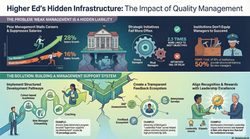
The Promotion Paradox
Organizations routinely promote top-performing employees into management roles for visible traits like confidence and ambition, despite these attributes rarely predicting effective leadership. This systemic error, known as the promotion paradox, leads to diminished team performance, lower employee retention, and widespread workplace burnout. Research indicates that the skills required to excel in individual tasks frequently conflict with the competencies necessary for managing people successfully. Furthermore, subjective promotion criteria often introduce gender biases and protect toxic leaders in positions of authority from facing appropriate consequences. To resolve these issues, institutions must separate financial rewards from managerial tracks, implement structured evaluations, and measure leaders based on team wellbeing. Ultimately, treating management as a distinct professional craft allows organizations to build more accurate, equitable, and durable leadership selection systems.
Play Video
Play Video
08:05
Engineering the Talent Pipeline - Solving the Promotion Paradox
Organizations routinely promote top-performing employees into management roles for visible traits like confidence and ambition, despite these attributes rarely predicting effective leadership. This systemic error, known as the promotion paradox, leads to diminished team performance, lower employee retention, and widespread workplace burnout. Research indicates that the skills required to excel in individual tasks frequently conflict with the competencies necessary for managing people successfully. Furthermore, subjective promotion criteria often introduce gender biases and protect toxic leaders in positions of authority from facing appropriate consequences. To resolve these issues, institutions must separate financial rewards from managerial tracks, implement structured evaluations, and measure leaders based on team wellbeing. Ultimately, treating management as a distinct professional craft allows organizations to build more accurate, equitable, and durable leadership selection systems.
Play Video
Play Video
48:21
A Conversation about the Promotion Paradox
Organizations routinely promote top-performing employees into management roles for visible traits like confidence and ambition, despite these attributes rarely predicting effective leadership. This systemic error, known as the promotion paradox, leads to diminished team performance, lower employee retention, and widespread workplace burnout. Research indicates that the skills required to excel in individual tasks frequently conflict with the competencies necessary for managing people successfully. Furthermore, subjective promotion criteria often introduce gender biases and protect toxic leaders in positions of authority from facing appropriate consequences. To resolve these issues, institutions must separate financial rewards from managerial tracks, implement structured evaluations, and measure leaders based on team wellbeing. Ultimately, treating management as a distinct professional craft allows organizations to build more accurate, equitable, and durable leadership selection systems.
Play Video
Play Video
21:55
A Debate about the Promotion Paradox
Organizations routinely promote top-performing employees into management roles for visible traits like confidence and ambition, despite these attributes rarely predicting effective leadership. This systemic error, known as the promotion paradox, leads to diminished team performance, lower employee retention, and widespread workplace burnout. Research indicates that the skills required to excel in individual tasks frequently conflict with the competencies necessary for managing people successfully. Furthermore, subjective promotion criteria often introduce gender biases and protect toxic leaders in positions of authority from facing appropriate consequences. To resolve these issues, institutions must separate financial rewards from managerial tracks, implement structured evaluations, and measure leaders based on team wellbeing. Ultimately, treating management as a distinct professional craft allows organizations to build more accurate, equitable, and durable leadership selection systems.
Play Video
Play Video
26:07
The HR Leader's Guide to Multiagent HR Architecture, with Josh Bersin
In this HCI Webinar, I talk with Josh Bersin about the latest report out from the Josh Bersin Company report, The HR Leader's Guide to Multiagent HR Architecture (part of the HR 2030™ initiative), which outlines how HR leaders must govern over 151 specialized AI agents and 8 functional "superagents". The core thesis is that orchestration, not agent count, drives value. Josh Bersin is an analyst, author, educator, and thought leader focusing on the global talent market and the challenges and trends impacting business workforces around the world. He studies the world of work, HR and leadership practices, and the broad talent technology market. He is often cited as one of the leading HR and workplace industry analysts in the world.
Play Video
Play Video
21:51
The Promotion Paradox: Why Organizations Keep Choosing Leaders for the Wrong Reasons, and How to ...
Abstract: Organizations routinely promote people into management for reasons that predict little about how well they will lead: strong individual performance, visible confidence, and a willingness to raise a hand. New evidence sharpens the cost of that habit. A 2026 study in the Quarterly Journal of Economics found that teams led by self-nominated managers performed worse than teams with randomly assigned leaders, while a 2026 American Economic Review study showed that subjective "potential" ratings account for roughly half of a large retailer's gender promotion gap. Survey data released in 2026 add that employees and organizations value different leadership qualities, and that misconduct by leaders is less likely than misconduct by junior staff to carry consequences. This article reviews the research on how leaders emerge versus how they perform, describes the organizational and human costs of selection error, and outlines five evidence-based responses: separating reward from role, structured assessment, de-biased potential judgments, team-based leadership measurement, and supported transitions. It closes with three pillars for building durable leadership selection capability.
HCL Review Articles
All Articles
Nexus Institute for Work and AI
Catalyst Center for Work Innovation
Adaptive Organization Lab
Work Renaissance Project
Research Briefs
Research Insights
Webinar Recaps
Book Reviews
Transformative Social impact
Search
17 minutes ago
4 min read
RESEARCH INSIGHTS
The Most Dangerous Jobs Nobody Thinks Are Dangerous
bottom of page