top of page
Home
Bio
Pricing
Merch
Podcast Network
Advertise with Us
Be Our Guest
Academy
Learning Catalog
Learners at a Glance
The ROI of Certification
Corporate L&D Solutions
Research
Research Initiatives
Nexus Institute
Catalyst Center
Adadptive Organization Lab
Future of Work Collective
Renaissance Project
Collaboration Form
Research Models and Tools
Research One Sheets
Research Snapshots
Research Videos
Research Briefs
Research Articles
Free Educational Resources
HCL Review
Contribute to the HCL Review
HCL Review Archive
HCL Review Slide Decks and Infographics
HCL Review Process
HCL Review Reach and Impact
HCI Press
From HCI Academic Press
From HCI Popular Press
Publish with HCI Press
Free OER Texts
Our Impact
Invest with HCI
Industry Recognition
Philanthropic Impact
Kiva Lending Impact
More
Use tab to navigate through the menu items.
Designing Human-Machine Collaboration: Strategic Imperatives for the AI-Powered Workplace
NEXUS INSTITUTE FOR WORK AND AI
22 hours ago
34 min read
Bridging the Education-to-Employment Divide: What Employers Really Want from Higher Education
CATALYST CENTER FOR WORK INNOVATION
2 days ago
15 min read
When Human Judgment Must Lead: Strategic Boundaries for AI in Management
NEXUS INSTITUTE FOR WORK AND AI
3 days ago
24 min read
When the Escape Routes Close: Why AI-Driven Displacement May Break the Historical Pattern
NEXUS INSTITUTE FOR WORK AND AI
4 days ago
33 min read
I-O Psychology and Organized Labor: Bridging a Century-Long Divide to Advance Worker Wellbeing and Organizational Effectiveness
CATALYST CENTER FOR WORK INNOVATION
5 days ago
25 min read
Bridging the Leadership Development Gap: Evidence-Based Strategies for Sustainable Transfer of Learning
CATALYST CENTER FOR WORK INNOVATION
6 days ago
13 min read
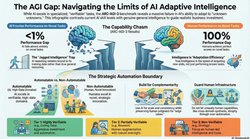
When Artificial Intelligence Confronts the Unknown: ARC-AGI-3 and the Future of Adaptive Intelligence
NEXUS INSTITUTE FOR WORK AND AI
7 days ago
16 min read
The AI Skills Premium: How Artificial Intelligence Competencies Are Reshaping Compensation, Hiring, and Organizational Strategy
NEXUS INSTITUTE FOR WORK AND AI
Jun 10
23 min read
Remote Work and Labor Force Participation: Evidence of Expanded Access Post-Pandemic
NEXUS INSTITUTE FOR WORK AND AI
Jun 9
21 min read
Rethinking Graduate Underemployment: Beyond the Headlines to Nuanced Understanding
CATALYST CENTER FOR WORK INNOVATION
Jun 8
21 min read
Human Capital Leadership Review
Pebl Says the HR Chatbot Era Is Ending as Alfie Evolves from Assistant to Workforce Agent
9 hours ago
3 min read
More Than Half of Young US Hospitality Workers Would Give Up 5% Pay Raise to Feel More Confident
14 hours ago
2 min read
Clarecast Releases ‘The Quiet Restructuring’ Report, Revealing the AI-Driven Workforce Contraction Hidden From Official Jobs Data
15 hours ago
3 min read
Nearly Half of Working Dads Have Used Their Kids as an Excuse to Leave Work Early, New Survey Reveals
15 hours ago
4 min read
10 Jobs Where Your Salary Climbs Fastest Over a Career, Study Reveals
15 hours ago
4 min read
Anticipatory Benefits and the Rise of “Quiet” as HR’s Outcome Metric
15 hours ago
6 min read
95% of Organizations Have No Quantum Roadmap as Cybersecurity Expert Warns Encrypted Data Is Already Being Harvested
15 hours ago
3 min read
Six Ways HR Leaders Can Transform Hidden Tension into Team Trust
15 hours ago
4 min read
How to Use Recruitment Videos to Attract Top Candidates and Showcase Culture
15 hours ago
4 min read
1
2
3
4
5
HCL Review Research Videos
HCL Review Research Infographics
Blog: HCI Blog
Human Capital Leadership Review
Featuring scholarly and practitioner insights from HR and people leaders, industry experts, and researchers.
Human Capital Innovations
Play Video
Play Video
25:24
Returning to the Fundamentals of Leadership, with Derrick Mains
In this HCI Webinar, I talk with Derrick Mains about returning to the fundamentals of leadership. Derrick Mains is an Emmy Award-winning content creator, four-time author, operations podcaster with more than 160,000 monthly listeners, and optimization consultant renowned for his pioneering work in process engineering, design, and transformation. Mains work spans more than 20 years and 150 companies across nearly every industry, from early-stage companies on through the Fortune 10. Mains approach melds essentialism with a keen focus on human-centric system design, emphasizing the need for regular audits, reflection, and reinvestment to achieve optimization. Mains believes that all organizational systems share a fundamental purpose: transforming the input of resources into value, through outputs. He highlights how, without active management, systems degrade, leading to inefficiency and value and margin fade. His philosophy underscores the criticality of understanding the interconnectedness of systems and their natural progression towards entropy.
Play Video
Play Video
04:38
Algorithmic Monoculture - The Hidden Bias in Hiring
This video discusses the growing role of hiring algorithms in recruitment processes, highlighting how these digital tools have replaced humans as the initial gatekeepers in job applications. Over 90% of US employers use some form of algorithm to filter candidates, significantly reducing the pool of applicants before any human ever reviews resumes or interviews. Although these systems are designed to improve efficiency and fairness, they often perpetuate and amplify biases inherent in their training data. This results in discriminatory outcomes, particularly against Black and Asian applicants, with some roles exhibiting over 10% bias against Black candidates. A monoculture of algorithms, where many companies utilize the same platforms like HireVue, means that flaws in one system can affect thousands of applicants across multiple employers. The lack of transparency and feedback leaves candidates in the dark about why they were rejected, with no recourse for appeal or improvement. The system, while ostensibly objective, is biased, demoralizing, and can block career opportunities unfairly. The video concludes with solutions: auditing algorithms for fairness at the job level, embracing transparency about AI usage in hiring, establishing appeals processes, diversifying hiring tools, and empowering government and independent audits. Standardizing evaluation protocols for hiring AI and creating public registries of bias results are critical to making algorithms a force for inclusion rather than exclusion. Highlights 🤖 Over 90% of US employers now use hiring algorithms to screen candidates before human review. ⚠️ Hiring algorithms can filter out up to 70% of applicants, often without transparency or feedback. 📉 Algorithms trained on biased data amplify discrimination, particularly against Black and Asian applicants. 🔄 A monoculture of hiring tools means a single flawed algorithm can negatively impact thousands of candidates across many companies. 🚫 Candidates often face blacklisting with no recourse or explanation, harmed both professionally and emotionally. ✅ Solutions include auditing algorithms for fairness, transparency about AI use, and creating appeals processes for candidates. 🌍 Collective action and governmental oversight, alongside public bias audits, are necessary to ensure fair and just hiring algorithms. Key Insights 🤖 Algorithmic Gatekeeping Has Become the Norm: With more than 90% of US employers adopting automated hiring tools, the recruitment landscape has fundamentally shifted. Algorithms act as the first interviewer, screening candidates via resume keyword matching, video analysis, or gamified personality assessments. This introduces a new layer of institutional filtering that shapes who even gets a chance for human interaction, profoundly impacting employment access on a mass scale. ⚠️ Bias Is Inherent and Amplified, Not Eliminated: Contrary to the belief that AI is objective, hiring algorithms inherit and often exacerbate historical biases because they learn from past hiring data. If previous hiring decisions were biased, the algorithm replicates and scales those biases, disproportionately disadvantaging minority groups. The data reveals that over 10% of job openings show evidence of bias against Black applicants, exposing a clear failure to create equitable hiring practices. 🔄 The Problem Multiplies via Algorithmic Monoculture: Many companies use the same handful of hiring platforms. For instance, HireVue is used by over 60% of Fortune 100 firms. This monoculture results in a widespread propagation of the same biases and errors, instead of diversified approaches that could mitigate risks. A single flawed algorithm can effectively blacklist an individual from multiple opportunities, creating career barriers that are difficult to overcome. 🚫 Lack of Transparency and Feedback Creates a Black Box Effect: Job seekers receive rejection notices without explanations, leaving them with no understanding of their shortcomings. They cannot identify whether their resume keywords, video interview responses, or game-based personality tests caused their rejection. Furthermore, many platforms deny candidates the opportunity to retake assessments for extended periods, closing off pathways to improvement and human review. This opacity frustrates applicants, harms mental health, and perpetuates systemic inequality. ✅ Empowering Candidates and Companies Is Crucial: The system’s faults aren’t immutable. Auditing algorithms for fairness should occur at the level of each job, not just in aggregate, to identify role-specific biases. Transparency laws, such as New York City’s Local Law 144, offer a model for making algorithmic processes visible to candidates. Additionally, appeals mechanisms and human review options can provide recourse for unfair decisions. Companies must diversify their hiring tools and establish committees to continuously monitor fairness and predictive validity.
Play Video
Play Video
02:40
Dismantling Algorithmic Monocultures
This research explores the phenomenon of algorithmic monoculture in the labor market, where a high concentration of employers relies on the same few vendors for automated hiring tools. Research into millions of applications suggests that while vendors may claim overall fairness, disaggregated data reveals significant racial bias at the individual position level. This widespread dependency creates a systemic exclusion effect, where an applicant rejected by one algorithm is likely to be automatically disqualified across many different firms. The research argues that this lack of vendor diversity and transparency undermines legal protections and economic productivity by trapping qualified candidates in a cycle of unemployment. To address these vulnerabilities, the research advocates for regular bias audits, increased regulatory oversight, and the implementation of human-centered oversight in the recruitment process. Ultimately, the research warns that unchecked algorithmic consolidation transforms localized hiring errors into structural barriers for marginalized job seekers.
Play Video
Play Video
04:34
Why Workflows Beat AI Agents in HR!
The current landscape of artificial intelligence (AI) in human resources (HR) is often misunderstood, with many companies marketing AI “agents” that are essentially sophisticated, AI-powered workflows rather than truly autonomous systems. A 2024 Deote survey reveals that although 65% of large enterprises claim to use AI agents in HR, less than 15% deploy real autonomous agents. This distinction is crucial because workflows and agents serve fundamentally different purposes, cost structures, and risk profiles. Highlights 🤖 Many HR “AI agents” are just AI-powered workflows, not truly autonomous systems. 💸 Agents cost 3 to 10 times more than workflows, making cost-benefit analysis critical. 🔄 Workflows excel at structured, rule-based HR tasks like onboarding and promotions. ⚖️ Transparency, fairness, and compliance are stronger with workflows than autonomous agents. 🚨 Johnson & Johnson replaced biased AI agents with human-guided workflows to restore fairness. ✅ Leading companies use agents only for complex, high-stakes HR problems. 🧑💼 The best approach combines human judgment with AI workflows for routine tasks. Key Insights 🤔 Distinguishing AI Workflows from True AI Agents: A Critical Strategic Decision The distinction between AI-powered workflows and autonomous AI agents is essential yet often blurred due to marketing hype. Workflows automate predefined, transparent steps and are predictable and auditable, making them ideal for HR processes that require consistency and fairness. Autonomous agents operate with greater flexibility but introduce unpredictability and opacity. This difference influences cost, compliance risk, and employee trust. Misclassifying workflows as agents can lead to unnecessary expenditure and risk. 💰 Cost Implications and ROI Must Drive AI Adoption in HR The financial impact of substituting workflows with autonomous agents can be substantial, with agent-based systems costing up to five times more initially and additional unpredictable ongoing expenses. This calls for rigorous cost-benefit analysis. Most HR tasks, being routine and rule-based, do not justify the high costs of agents. Only high-value, complex problems warrant the investment in autonomous agents, ensuring return on investment and minimizing waste. 🛠️ Structured Tasks Are Best Served by AI-Powered Workflows Onboarding, promotions, benefits enrollment, and similar processes follow a clear sequence, akin to a recipe. Workflows automate these reliably with human control and predictable outcomes. This approach supports compliance requirements by maintaining clear audit trails and predictable decision-making. AI workflows excel where rules and outcomes are well-defined and repeatable, contributing to operational efficiency without sacrificing transparency. 🔍 Autonomous Agents Can Introduce Risk, Bias, and Erode Employee Trust AI agents, due to their flexible and opaque nature, can generate decisions that are difficult to explain or defend, complicating regulatory compliance. Hidden biases within their models can harm diversity and inclusion efforts, as evidenced by the Johnson & Johnson case, leading to employee disengagement and loss of trust. This risk necessitates keeping humans in the decision loop when autonomy increases the stakes. 👨💼 Human-Guided AI Is the Optimal Balance for Future HR Models The future of HR automation depends on augmenting human judgment with AI tools that preserve control, fairness, and clarity. Human-guided AI workflows combine the efficiency of automation with human oversight, promoting fairness and employee confidence. This balanced model lets humans focus on strategic decisions and complex interpersonal dynamics while delegating repetitive tasks to AI, driving both productivity and employee satisfaction. 🧩 Four Guiding Questions for AI Deployment in HR HR leaders should evaluate AI tools by assessing: (1) task complexity—can it be mapped via clear if-then logic for workflows? (2) cost-value alignment—does the problem’s value justify agent expenses? (3) AI capabilities—can the system handle nuanced or ambiguous decisions autonomously? (4) compliance needs—is transparency and auditability a priority? These questions provide a framework for making data-driven, practical decisions that align technology with organizational goals. 🌟 Industry Leaders Demonstrate Best Practices Companies like IBM, Salesforce, and Unilever showcase effective AI integration by reserving autonomous agents for truly complex scenarios while widely deploying AI workflows for standard HR tasks. Their approach underscores that AI’s power is maximized through strategic application aligned with task nature and human oversight, mitigating risk and optimizing cost. Such examples affirm that sweeping agent adoption for routine tasks is neither necessary nor advisable.
Play Video
Play Video
02:57
Architecting HR AI
This research analyzes the strategic choice between deterministic workflows and autonomous agents within human resources technology. While current market trends favor highly complex agentic AI, the author argues that structured workflows are superior for the vast majority of HR tasks due to their lower costs, greater transparency, and predictable audit trails. To guide technology selection, the research introduces a four-part diagnostic framework assessing task complexity, economic value, AI reliability, and the potential impact of errors. By prioritizing human-supervised workflows for routine processes, organizations can reserve expensive autonomous systems for high-value scenario planning that requires dynamic decision-making. Ultimately, the research cautions that over-engineering AI solutions can lead to budget overruns and a loss of stakeholder trust through opaque, "black-box" results.
Play Video
Play Video
23:27
A Debate about Strategic Architecture: Choosing AI Workflows Over Autonomous Agents
This research analyzes the strategic choice between deterministic workflows and autonomous agents within human resources technology. While current market trends favor highly complex agentic AI, the author argues that structured workflows are superior for the vast majority of HR tasks due to their lower costs, greater transparency, and predictable audit trails. To guide technology selection, the research introduces a four-part diagnostic framework assessing task complexity, economic value, AI reliability, and the potential impact of errors. By prioritizing human-supervised workflows for routine processes, organizations can reserve expensive autonomous systems for high-value scenario planning that requires dynamic decision-making. Ultimately, the research cautions that over-engineering AI solutions can lead to budget overruns and a loss of stakeholder trust through opaque, "black-box" results. See Privacy Policy at https://art19.com/privacy and California Privacy Notice at https://art19.com/privacy#do-not-sell-my-info.
Play Video
Play Video
25:13
Returning to the Fundamentals of Leadership, with Derrick Mains
In this podcast episode, Dr. Jonathan H. Westover talks with Derrick Mains about returning to the fundamentals of leadership. Derrick Mains is an Emmy Award-winning content creator, four-time author, operations podcaster with more than 160,000 monthly listeners, and optimization consultant renowned for his pioneering work in process engineering, design, and transformation. Mains work spans more than 20 years and 150 companies across nearly every industry, from early-stage companies on through the Fortune 10. Mains approach melds essentialism with a keen focus on human-centric system design, emphasizing the need for regular audits, reflection, and reinvestment to achieve optimization. Mains believes that all organizational systems share a fundamental purpose: transforming the input of resources into value, through outputs. He highlights how, without active management, systems degrade, leading to inefficiency and value and margin fade. His philosophy underscores the criticality of understanding the interconnectedness of systems and their natural progression towards entropy. See Privacy Policy at https://art19.com/privacy and California Privacy Notice at https://art19.com/privacy#do-not-sell-my-info.
Play Video
Play Video
23:29
The Unexpected Power of Boundaries, with with Sheri Jacobs
In this HCI Webinar, I talk with Sheri Jacobs about her book, The Unexpected Power of Boundaries. Sheri Jacobs is a keynote speaker, and innovation strategist who helps organizations unlock their creative potential by rethinking boundaries, risks, and leadership. As the founder of Avenue M Group, she has partnered with over three hundred organizations and surveyed over half a million people to uncover what drives real transformation and growth.
HCL Review Articles
All Articles
Nexus Institute for Work and AI
Catalyst Center for Work Innovation
Adaptive Organization Lab
Work Renaissance Project
Research Briefs
Research Insights
Webinar Recaps
Book Reviews
Transformative Social impact
Search
Apr 3
4 min read
1.76 Million Layoffs in December; Some States Hit 2.5x Harder than Others
bottom of page