


AI Expert Warns One Worker Could Soon Replace 100 People as Businesses Enter ‘Great Reshuffling’
- Tabish Ali

- 1 day ago
- 4 min read
McKinsey’s 2025 State of AI survey found that 88% of organizations now use AI in at least one business function, but only around a third have started scaling AI across the enterprise. The same report found that 62% are at least experimenting with AI agents.
Gartner predicts that up to 40% of enterprise applications will include task-specific AI agents by the end of 2026, up from less than 5% in 2025. It also warns that 40% of enterprises could demote or decommission autonomous AI agents by 2027 because of governance failures.
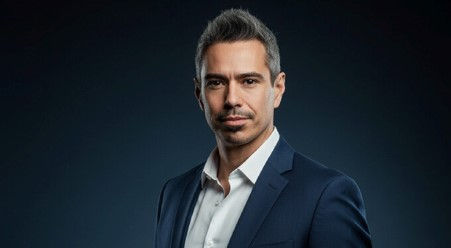
Jason Sosa sits at the center of that debate. A futurism speaker, AI futurist and founder of Sosa Research, he works on agentic intelligence, AI infrastructure, enterprise automation, AI governance, risk management and the future of finance.
In this exclusive interview with the AI Speakers Agency, Jason explains why leaders are still underestimating autonomous AI, from one worker replacing 100 people to AI agents making decisions once left to humans.
Question 1. Where do executives most often misread the impact of autonomous AI on workflows and software development?
Jason Sosa: “There’s a quote that goes around at every AI seminar. They all say the same thing, which is essentially, “AI isn’t going to take your job. Someone who knows AI will take your job.” And I think that is a bit misunderstood.
“It isn’t a one-to-one replacement. It’s more likely that you’ll have one person taking the place of 100 people. So, for example, in my day-to-day, I have six to eight terminal windows open. Each terminal window is running probably what a human being would do in the course of a week, and I have eight of them running.
“That’s how I’m able to produce code. That’s how I’m able to provide workflows. And I think the middle part of what it took to build things goes away. I think the executive mindset, with an ability to speak code, speak finance and speak legal, will help shape the direction of a product faster than an army of engineers.
“That’s something executives don’t fully appreciate: the exponential nature of this. How quickly this is happening and how quickly these giants will be disrupted, because you can now reproduce Salesforce. I can reproduce any app in a matter of time and then leverage that within my company and kill those subscriptions.
“So this is really the beginning of a great reshuffling, I think, for many CEOs, and they have an opportunity to look at this world and say how they want to participate.”
Question 2. How is AI changing the way banks and financial institutions make strategic decisions?
Jason Sosa: “I’ve spoken at a number of different banks related to this particular topic of how it’s driving decision-making. The old way was you would spend months or quarters in conversations and meetings.
“I think that time period has gone. You now have incredible capabilities with multiple agents, also with incredible risks and security vulnerabilities.
“I think it might take some time, but over the next 24 to 36 months, I do see executives using this for executive decision-making. It might even come to the point where, at a consumer level, we will abdicate our decision-making to these agents simply because they’re better at it than us.
“They’ll know who to marry. They’ll know what job to take. They’ll know what place and city to move to. And they’ll know us better than we know ourselves. One of the valuable things of decision-making through these machines is the removal of emotion.
“That is an advantage for humans because we have this ability to have gut instinct, but it can also work against us. So I think people who can wield this tool and leverage it in the right way will have some advantages.
“Again, it’s one of the wildest times to be alive, with a billionfold increase of AI happening over the next decade. I can’t imagine that you would want to sit this out and plan this as if it’s a 2010 to 2020 decade. It’s going to be an entirely new decade of possibilities in an AI-driven environment.”
Question 3. What should organizations now treat as the biggest cybersecurity risks in an AI-driven operating environment?
Jason Sosa: “Cybersecurity completely changes.
“You were talking about agents that are able to inject prompts from résumés. This can come into your system in ways that you wouldn’t expect, from PDFs to social engineering to a number of different threats, from not knowing what’s real to the CFO you’re speaking to, whether you should transfer that because there’s a video call and it looks just like them.
“I’m not sure, Tilly, if you’re really the real Tilly. Maybe you’re an AI. Maybe I’m an AI. We will just have no way of understanding what’s real and what’s not real. Is the voice that’s calling me on the phone really my relative asking for help?
“So there’s the old-world way of doing things and the structures that we use for security, and what worked in that time period, and then there’s what’s going forward. I think we will probably have AI agents working on our behalf, and then AI that are really protecting us against the AI agents that are working as bad actors.”
This exclusive interview with Jason Sosa was conducted by Tabish Ali of the Motivational Speakers Agency.