





Why Global Mindset, Not Geography, Is the Real Leadership Differentiator

When people talk about “global leadership,” they often start with geography.
How many countries has this leader worked in? How many markets do they oversee? How many years did they spend abroad?
Those questions are understandable. International roles and assignments are visible. They fit neatly on a résumé. They make it easy to say, “This person is global.”
But geography is not the whole story.
In fact, as more organizations operate across borders—often without moving people physically—an uncomfortable truth is emerging:
Many leaders have international responsibilities. Far fewer have a truly global mindset.
And in a world defined by overlapping crises, fast-moving markets, and deep cultural complexity, that gap is becoming an enterprise risk.
What “global mindset” actually is (and isn’t)
Global mindset is one of those phrases that shows up easily in strategy decks and leadership competencies, but is rarely defined in operational terms.
It is not:
a passion for travel,
a long list of international assignments,
or a collection of impressive stamps in a passport.
Those can all be helpful. None of them are sufficient.
Global mindset is the capacity to see, think, and act beyond the borders of one’s own default setting.
That includes:
Perspective – Recognizing that your way of working, deciding, and building trust is one valid option, not the universal template.
Curiosity – Wanting to understand how others see the world, especially when it challenges your own assumptions.
Adaptability – Being willing and able to adjust your behavior to be effective in different cultural and organizational contexts.
Integration – Holding local realities and global priorities in view at the same time, without reducing either to a slogan.
This is not “being nice.” It is a practical leadership capacity.
Leaders who lack global mindset will still make decisions. They will still ship strategy. They will still influence people.
They will just do it through a narrow lens—often without realizing it.
Why global mindset matters now
For many organizations, global complexity is no longer optional.
Supply chains span regions.
Customer bases cross borders.
Talent pools are increasingly diverse and distributed.
Political, regulatory, and social dynamics change quickly and unevenly.
Yet the mental models many leaders use were formed in simpler, more local contexts.
That mismatch shows up in several ways:
Strategies that fail locally. A plan that looked right at headquarters stalls in a market because leaders misread local trust, pace, or power dynamics.
Teams that go quiet. In cross-border meetings, some voices dominate while others fall silent—not because they have nothing to add, but because the environment does not make it safe or easy to contribute.
Promotion decisions that don’t travel. High-performing “local heroes” are promoted into regional or global roles and struggle, not because they are weak leaders, but because they were never developed or selected for the demands of true global work.
Diversity without inclusion. Organizations succeed in diversifying their leadership on paper but fail to tap the full contribution of those leaders because the underlying mindset remains narrow.
None of these are simply “HR problems” or “soft issues.” They shape growth, risk, and reputation.
Three myths that keep organizations stuck
In working with executive teams and boards on Global Mindset, I see three recurring myths that quietly undermine global leadership.
Myth 1: International experience equals global readiness
Many boards and CEOs still treat international assignments as the gold standard for global preparation. There is value in that view—but also a limitation.
Some leaders spend years abroad and come back with a deeper understanding of their own home culture, but not necessarily a broader ability to lead across difference.
Others never relocate and yet develop a strong global mindset by:
leading multinational teams,
working across borders virtually,
and deliberately learning from people unlike themselves.
The question is not just, “Where have you worked?” It is also, “What did those experiences actually change in how you lead?”
Myth 2: Global mindset is nice to have, not core to performance
When margins are tight and pressure is high, “mindset” can sound abstract.
But in practice, global mindset affects some very concrete outcomes:
Speed of execution – Leaders who understand cultural dynamics can anticipate friction and build commitment earlier.
Quality of decisions – Leaders who can hold multiple perspectives make better sense of incomplete and conflicting information.
Quality of talent – Leaders who value and include diverse voices retain and develop more of the people their strategy depends on.
Treating global mindset as optional is often a hidden tax on performance.
Myth 3: A single training can “check the box”
It is tempting to believe global mindset can be built in a workshop or an e-learning module.
Those can help create awareness.
But mindset is built over time, through:
repeated exposure to difference,
structured reflection on those experiences,
and ongoing coaching and feedback.
In other words, it is developmental work, not a one-time event.
What global mindset looks like in practice
If global mindset is more than a slogan, what does it actually look like in a leader’s behavior?
A few patterns show up consistently.
1. They ask different questions.
Before making a decision that affects multiple markets, they ask:
“How will this be interpreted in each context?”
“Who is not in the room that this will impact?”
“What assumptions am I bringing from my own background that may not hold here?”
These questions slow the rush to easy answers without paralyzing action.
2. They treat friction as information, not disloyalty.
When local leaders raise concerns, they listen for signal, not just noise.
They distinguish between:
resistance rooted in fear, and
resistance rooted in legitimate local insight.
They may still move forward—but they do so with a fuller understanding of the terrain.
3. They adapt form without losing substance.
Global-minded leaders hold onto intent and principles, but they are flexible with:
language,
pacing,
stakeholder engagement,
and implementation paths.
They do not confuse uniformity with alignment.
4. They narrate their learning.
When they get something wrong in another context—as every leader eventually does—they are willing to say:
“Here’s what I misread.”
“Here’s what I learned.”
“Here’s how I will do this differently next time.”
That vulnerability is not weakness. It is how global organizations learn.
How organizations can cultivate global mindset more deliberately
If global mindset is this important, how can organizations build more of it?
Four moves make a difference.
1. Name it explicitly in your leadership model
If “global mindset” or its equivalent is not clearly articulated as a leadership expectation, it will be easy to overlook in selection, promotion, and development.
Define it in observable terms:
how leaders make decisions across markets,
how they use (or ignore) diverse input,
how they handle cultural complexity.
Then use those definitions in real processes: succession, performance reviews, executive search.
2. Give leaders cross-border work that truly stretches them
Not all “global” experience is created equal.
Look for assignments that require leaders to:
depend on colleagues in other markets,
reconcile conflicting local and global priorities,
and deliver outcomes in unfamiliar environments.
Then support those assignments with coaching and structured reflection, so experience becomes learning—not just survival.
3. Change the questions in promotion and selection
Move beyond:
“What have they delivered here?”
“Where have they worked?”
Ask:
“How have they responded when their usual approach didn’t work in another context?”
“What have they learned from people who see the world differently?”
“Can they describe specific situations where they had to adapt their leadership to be effective across cultures?”
These questions surface global mindset much more clearly than geography alone.
4. Invest in inner work, not only outer skills
Workshops on cross-cultural communication, bias, and inclusion can be useful.
But without inner work—leaders examining their own patterns, triggers, assumptions, and identity—those skills will have limited impact.
Coaching, peer learning groups, and reflective practices are not “extras.” They are mechanisms for growing the inner capacity global leadership demands.
A closing reflection for senior leaders
If you hold an executive role today, there is a good chance your work is more global than your story.
Even if you have never relocated, your decisions:
affect people in multiple markets,
are perceived through different cultural lenses,
and interact with systems far beyond your immediate line of sight.
So a useful question to sit with is this:
Is my mindset still sized for the world I started leading in—or for the one I am leading in now?
If the honest answer is “not yet,” that is not a verdict. It is an invitation.
Because global mindset is not reserved for a small group of naturally “global” people.
It is a capability leaders can cultivate—intentionally, over time—if they are willing to keep learning beyond the borders of what once felt familiar.

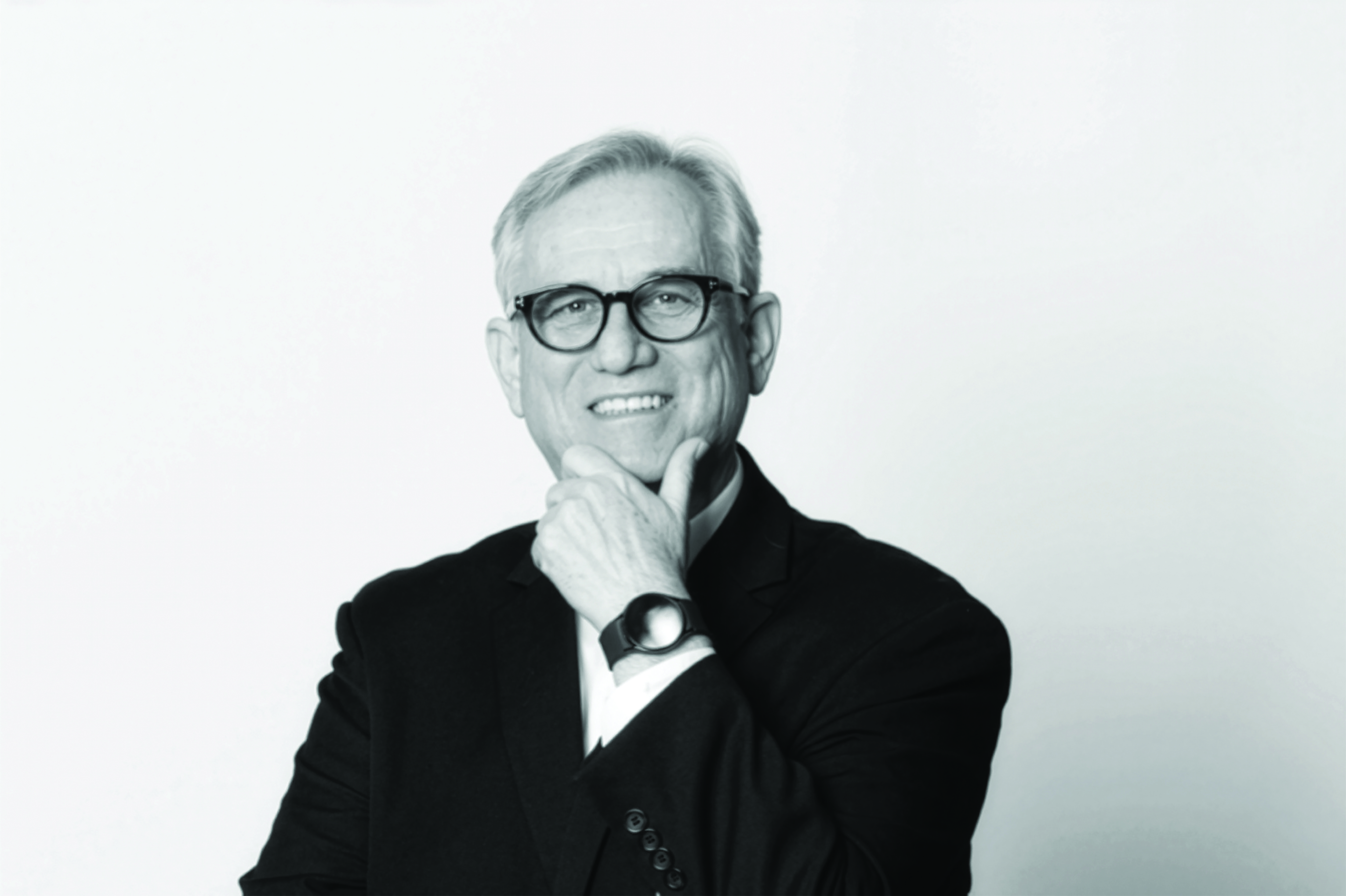
Steve McKinney is an executive search consultant, leadership advisor, and keynote speaker based in Seoul. He has spent more than two decades helping CEOs and senior executives across Asia-Pacific and globally build agile, globally minded leadership teams. Steve is the author of Global Mindset: A Guide for Cross-cultural Leadership, which offers a practical framework for leaders who need to think and lead beyond borders. Learn more at www.stevemckinney.com.


