top of page
Home
Bio
Pricing
Merch
Podcast Network
Advertise with Us
Be Our Guest
Academy
Learning Catalog
Learners at a Glance
The ROI of Certification
Corporate L&D Solutions
Research
Research Initiatives
Nexus Institute
Catalyst Center
Adadptive Organization Lab
Future of Work Collective
Renaissance Project
Collaboration Form
Research Models and Tools
Research One Sheets
Research Snapshots
Research Videos
Research Briefs
Free Educational Resources
HCL Review
Contribute to the HCL Review
HCL Review Archive
HCL Review Slide Decks and Infographics
HCL Review Process
HCL Review Reach and Impact
HCI Press
From HCI Academic Press
From HCI Popular Press
Publish with HCI Press
Free OER Texts
Our Impact
Invest with HCI
Industry Recognition
Philanthropic Impact
Kiva Lending Impact
More
Use tab to navigate through the menu items.
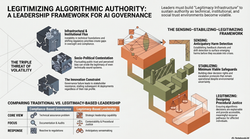
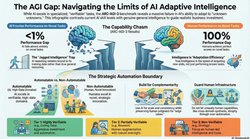
Leading Algorithmic Authority: Why Ethical AI Governance Depends on Legitimacy Infrastructure, Not Compliance Checklists
NEXUS INSTITUTE FOR WORK AND AI
14 hours ago
17 min read
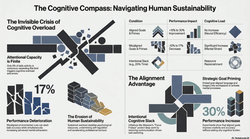
When the Machine Is Ready but the Mind Is Not: Designing Organizations for Human Capacity in the Age of AI
NEXUS INSTITUTE FOR WORK AND AI
3 days ago
26 min read
When Talking Trash About Your Terrible Boss Actually Helps Your Team: The Surprising Organizational Benefits of Leader-Targeted Gossip
CATALYST CENTER FOR WORK INNOVATION
4 days ago
23 min read
The Ratio of Labor to Tech: Navigating Structural Workforce Contraction and AI Adoption in an Era of Dual Disruption
NEXUS INSTITUTE FOR WORK AND AI
5 days ago
23 min read
When Organizations Hire Change Agents They Don't Intend to Support: The Institutional Absorption of Reform Mandates
CATALYST CENTER FOR WORK INNOVATION
6 days ago
26 min read
Evolutionary Mismatch, Stress, and Competition in the Polycrisis Era: A Practitioner's Guide to Understanding Modern Psychosocial Challenges
CATALYST CENTER FOR WORK INNOVATION
7 days ago
26 min read
The Slow Death of Ambition: How Organizations Systematically Extinguish Employee Drive
CATALYST CENTER FOR WORK INNOVATION
Sep 25
27 min read
When Algorithms Organize Themselves: The Rise of Computational Collectives in Organizational Workflows
NEXUS INSTITUTE FOR WORK AND AI
Sep 24
23 min read
Organizational Design in the Age of AI: Navigating the Structural Transformation of Work
NEXUS INSTITUTE FOR WORK AND AI
Sep 23
23 min read
When Labor Scarcity Meets AI Disruption: Rethinking Talent Strategy in the 2030s
NEXUS INSTITUTE FOR WORK AND AI
Sep 22
30 min read
Human Capital Leadership Review
Leading Algorithmic Authority: Why Ethical AI Governance Depends on Legitimacy Infrastructure, Not Compliance Checklists
NEXUS INSTITUTE FOR WORK AND AI
14 hours ago
17 min read
Cognitive Polarization in the AI Era: Organizational Strategies to Prevent a Mental Underclass
NEXUS INSTITUTE FOR WORK AND AI
2 days ago
25 min read
When the Machine Is Ready but the Mind Is Not: Designing Organizations for Human Capacity in the Age of AI
NEXUS INSTITUTE FOR WORK AND AI
3 days ago
26 min read
U.S. Business Formations Projected to Reach Record 6.7 Million in 2026
RESEARCH BRIEFS
3 days ago
3 min read
New Study Reveals Where Americans Are Hunting for New Jobs the Most
RESEARCH INSIGHTS
3 days ago
3 min read
More Than a Quarter of Rejected Job Applications Had Nothing to Do With the Candidate, VA Masters Data Shows
RESEARCH INSIGHTS
3 days ago
3 min read
AI Training More Than Doubled This Year, but 65% of Employees Report No Time at Work to Build the Skills, Workera Research Finds
NEXUS INSTITUTE FOR WORK AND AI
3 days ago
4 min read
Relm and Seraphim Release Space Economy Review, Highlighting Shift From Hype to Commercial Reality Across Key Sectors
RESEARCH INSIGHTS
3 days ago
2 min read
When Talking Trash About Your Terrible Boss Actually Helps Your Team: The Surprising Organizational Benefits of Leader-Targeted Gossip
CATALYST CENTER FOR WORK INNOVATION
4 days ago
23 min read
1
2
3
4
5
HCL Review Research Videos
HCL Review Research Infographics
Blog: HCI Blog
Human Capital Leadership Review
Featuring scholarly and practitioner insights from HR and people leaders, industry experts, and researchers.
Human Capital Innovations
Play Video
Play Video
From Rainmaker to Architect of Your Business, with Bradley Hamner
In this HCI Webinar, I talk with Bradley Hamner about moving from from rainmaker to architect of your business. Bradley is the founder and CEO of BlueprintOS, creator of The S.C.A.L.E. Assessment, author of S.C.A.L.E, and host of the Above The Business Podcast. He guides small business owners doing between $300K to $3M in annual revenue to transition from being the Rainmaker – where everything depends on them – to becoming the Architect of a scalable, self-sustaining, and profitable business. The ultimate outcome? Business owners have a successful business that creates the freedom and flexibility they desired from the start.
Play Video
Play Video
40:46
A Conversation about the Contagious Career: How Relationships Shape Workplace Well-Being
This research highlights crossover theory, which demonstrates how emotional states, health conditions, and work behaviors transmit between closely related individuals. Drawing on a comprehensive meta-analysis of 183 studies, the research reveals that spouses, supervisors, and coworkers significantly influence an employee's happiness, health, and productivity. Distinct stakeholders exert varying degrees of influence on specific outcomes, with spouses most strongly affecting happiness, supervisors impacting health, and peers shaping productivity. Furthermore, the research refutes traditional management models that view employee well-being as strictly isolated by proving that empathy, social support, and toxic interactions act as primary transmission channels. Ultimately, organizations must treat career sustainability as a shared, relational responsibility and cultivate supportive workplace environments to harness these powerful contagion effects
Play Video
Play Video
07:46
Architecting Contagion - Decoding the 2026 Nguyen Meta Analysis
This research highlights crossover theory, which demonstrates how emotional states, health conditions, and work behaviors transmit between closely related individuals. Drawing on a comprehensive meta-analysis of 183 studies, the research reveals that spouses, supervisors, and coworkers significantly influence an employee's happiness, health, and productivity. Distinct stakeholders exert varying degrees of influence on specific outcomes, with spouses most strongly affecting happiness, supervisors impacting health, and peers shaping productivity. Furthermore, the research refutes traditional management models that view employee well-being as strictly isolated by proving that empathy, social support, and toxic interactions act as primary transmission channels. Ultimately, organizations must treat career sustainability as a shared, relational responsibility and cultivate supportive workplace environments to harness these powerful contagion effects
Play Video
Play Video
03:20
The Contagious Career
This research highlights crossover theory, which demonstrates how emotional states, health conditions, and work behaviors transmit between closely related individuals. Drawing on a comprehensive meta-analysis of 183 studies, the research reveals that spouses, supervisors, and coworkers significantly influence an employee's happiness, health, and productivity. Distinct stakeholders exert varying degrees of influence on specific outcomes, with spouses most strongly affecting happiness, supervisors impacting health, and peers shaping productivity. Furthermore, the research refutes traditional management models that view employee well-being as strictly isolated by proving that empathy, social support, and toxic interactions act as primary transmission channels. Ultimately, organizations must treat career sustainability as a shared, relational responsibility and cultivate supportive workplace environments to harness these powerful contagion effects
Play Video
Play Video
22:57
The Contagious Career: How Supervisors, Coworkers, and Spouses Shape Employee Happiness, Health, ...
Abstract: This article examines the phenomenon of crossover—the interpersonal transmission of experiences between closely related individuals—and its implications for employee happiness, health, and productivity. Drawing on a landmark meta-analysis of 183 studies by Nguyen et al. (2026), the article translates crossover theory and sustainable career research into actionable guidance for organizational leaders, HR professionals, and career practitioners. The evidence demonstrates that stakeholders including supervisors, coworkers, and spouses meaningfully influence employee outcomes through empathic reactions, social support, and social undermining. Importantly, different stakeholders exert differential influence: spouses are most strongly linked to employee happiness, supervisors to health, and coworkers to productivity. These findings challenge conventional people-management approaches that treat employee outcomes as individually determined. The article outlines evidence-based organizational responses—spanning empathy cultivation, social support infrastructure, relationship-quality monitoring, team composition design, and work–family boundary management—and proposes long-term strategies for building contagion-positive organizational cultures. Practitioner implications are grounded in both academic research and industry examples.
Play Video
Play Video
20:03
A Debate about the Contagious Career: How Relationships Shape Workplace Well-Being
This research highlights crossover theory, which demonstrates how emotional states, health conditions, and work behaviors transmit between closely related individuals. Drawing on a comprehensive meta-analysis of 183 studies, the research reveals that spouses, supervisors, and coworkers significantly influence an employee's happiness, health, and productivity. Distinct stakeholders exert varying degrees of influence on specific outcomes, with spouses most strongly affecting happiness, supervisors impacting health, and peers shaping productivity. Furthermore, the research refutes traditional management models that view employee well-being as strictly isolated by proving that empathy, social support, and toxic interactions act as primary transmission channels. Ultimately, organizations must treat career sustainability as a shared, relational responsibility and cultivate supportive workplace environments to harness these powerful contagion effects.
Play Video
Play Video
New Data Shows Immigration Policy is Slowing Jobs Market, with Guy Berger
In this HCI Webinar, I talk with Guy Berger about new data that shows that immigration policy is slowing the jobs market. Guy Berger is a macroeconomist with expertise in US labor markets. Aside from his role as Chief Economist at Homebase, he is currently Senior Advisor on Labor Markets at Access/Macro. He was previously the Principal Economist at LinkedIn, and has also worked as an economist at Bank of America and the Royal Bank of Scotland. His work includes the creation of novel economic indicators, the development of models linking the macroeconomy to business performance, and the design of economic reports. His commentary has been featured frequently in the media, including the New York Times, Wall Street Journal, Washington Post, Marketplace, CNBC, Bloomberg, Yahoo! Finance, and Axios. Guy holds a doctorate in economics from Yale University.
Play Video
Play Video
52:13
A Conversation about Beyond the Job Seeker: Managing Household Job Search Spillover
Recent research highlights how a household member's active job search creates spillover effects that negatively impact an employed professional's focus and productivity. When family career transitions occur independently without coordination, they trigger family-work conflict and drain valuable personal resources. Conversely, high levels of planning and communication can transform these household career pursuits into shared, supportive projects. To mitigate these hidden workplace stresses, organizations must implement proactive strategies such as flexible scheduling, boundary management training, and family-supportive leadership. Ultimately, employers who acknowledge this broader ecosystem of home demands can build long-term resilience while improving overall employee retention and wellbeing.
HCL Review Articles
All Articles
Nexus Institute for Work and AI
Catalyst Center for Work Innovation
Adaptive Organization Lab
Work Renaissance Project
Research Briefs
Research Insights
Webinar Recaps
Book Reviews
Transformative Social impact
Search
Dec 4, 2024
4 min read
ADAPTIVE ORGANIZATION LAB
Is Mandating a Return to Office the Right Move?
bottom of page