top of page
Home
Bio
Pricing
Merch
Podcast Network
Advertise with Us
Be Our Guest
Academy
Learning Catalog
Learners at a Glance
The ROI of Certification
Corporate L&D Solutions
Research
Research Initiatives
Nexus Institute
Catalyst Center
Adadptive Organization Lab
Future of Work Collective
Renaissance Project
Collaboration Form
Research Models and Tools
Research One Sheets
Research Snapshots
Research Videos
Research Briefs
Free Educational Resources
HCL Review
Contribute to the HCL Review
HCL Review Archive
HCL Review Slide Decks and Infographics
HCL Review Process
HCL Review Reach and Impact
HCI Press
From HCI Academic Press
From HCI Popular Press
Publish with HCI Press
Free OER Texts
Our Impact
Invest with HCI
Industry Recognition
Philanthropic Impact
Kiva Lending Impact
More
Use tab to navigate through the menu items.
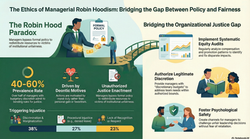
When Targets Pay the Price: The Troubling Job Security of Workplace Bullying Perpetrators
CATALYST CENTER FOR WORK INNOVATION
4 hours ago
20 min read
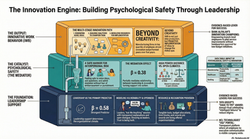
The Strategic Imperative of Psychological Safety: Why High-Performing Organizations Cultivate Dissent
CATALYST CENTER FOR WORK INNOVATION
1 day ago
24 min read
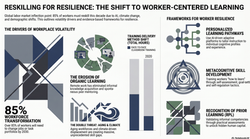
Reimagining Workforce Learning: Building Capability in an Era of Continuous Disruption
CATALYST CENTER FOR WORK INNOVATION
2 days ago
27 min read
AI Adoption and Employment Growth: Evidence from Enterprise Spending Data
NEXUS INSTITUTE FOR WORK AND AI
3 days ago
20 min read
When Leadership Vacancies Signal Organizational Distress: Moving Beyond the "Stronger Leader" Fallacy
CATALYST CENTER FOR WORK INNOVATION
4 days ago
19 min read
Beyond Payroll: How AI Automation Reshapes Job Design When Workers Enjoy Their Tasks
NEXUS INSTITUTE FOR WORK AND AI
5 days ago
18 min read
Why Peer Networks Drive AI Adoption More Than Leadership Mandates
NEXUS INSTITUTE FOR WORK AND AI
6 days ago
19 min read
When Professional Identity Becomes Professional Crisis: The Hidden Cost of Workplace Inauthenticity
CATALYST CENTER FOR WORK INNOVATION
Sep 9
22 min read
Designing Work for the Age of AI: Strategic Responses to Human-Machine Complementarity
NEXUS INSTITUTE FOR WORK AND AI
Sep 8
19 min read
Bridging Science and Practice: Reimagining the Knowledge Ecosystem in Applied Psychology and Beyond
CATALYST CENTER FOR WORK INNOVATION
Sep 7
22 min read
Human Capital Leadership Review
Expert Warns: These Are The Tasks AI Shouldn't Do For Your Business Yet
1 hour ago
2 min read
Harris Poll Survey: 70% of Gen Z Healthcare Workers Look to Leave as U.S. Projects Critical Healthcare Workforce Shortage
2 hours ago
5 min read
When Targets Pay the Price: The Troubling Job Security of Workplace Bullying Perpetrators
CATALYST CENTER FOR WORK INNOVATION
4 hours ago
20 min read
Report: AI Could Reshape the US Workforce in 4 Very Different Ways
22 hours ago
3 min read
Millennials, Gen Z Agree AI Certifications Career-Changing
1 day ago
3 min read
The Most Overused Phrases On Resumes, Finds New Study
1 day ago
3 min read
With a Quantum Leap in AI Speed and Accuracy, Galileo Jupiter Delivers Enterprise HR Intelligence
1 day ago
7 min read
Why Continuous Learning Is the Missing Piece of AI Adoption
1 day ago
4 min read
The Strategic Imperative of Psychological Safety: Why High-Performing Organizations Cultivate Dissent
CATALYST CENTER FOR WORK INNOVATION
1 day ago
24 min read
1
2
3
4
5
HCL Review Research Videos
HCL Review Research Infographics
Blog: HCI Blog
Human Capital Leadership Review
Featuring scholarly and practitioner insights from HR and people leaders, industry experts, and researchers.
Human Capital Innovations
Play Video
Play Video
08:08
The Atomic Unit of Work - A Task Level Framework for Post AI Organizations
This research outlines a strategic framework for redesigning organizational workflows following workforce reductions driven by artificial intelligence. Rather than focusing solely on cost-cutting, the research advocates for a three-step rebuilding process that involves mapping current workforce capabilities, modeling future task-level needs, and empowering managers to execute these changes. By analyzing real-world examples from companies like IKEA and Schneider Electric, the research illustrates how businesses can move beyond simple headcount reduction toward sustainable capability development. The framework emphasizes that successful AI integration requires investments in human judgment, psychological safety, and rigorous data governance to ensure quality and reliability. Ultimately, the research argues that leaders must evaluate success based on long-term business outcomes and employee experience rather than immediate savings.
Play Video
Play Video
03:21
AI Redesign Blueprint
This research outlines a strategic framework for redesigning organizational workflows following workforce reductions driven by artificial intelligence. Rather than focusing solely on cost-cutting, the research advocates for a three-step rebuilding process that involves mapping current workforce capabilities, modeling future task-level needs, and empowering managers to execute these changes. By analyzing real-world examples from companies like IKEA and Schneider Electric, the research illustrates how businesses can move beyond simple headcount reduction toward sustainable capability development. The framework emphasizes that successful AI integration requires investments in human judgment, psychological safety, and rigorous data governance to ensure quality and reliability. Ultimately, the research argues that leaders must evaluate success based on long-term business outcomes and employee experience rather than immediate savings.
Play Video
Play Video
54:21
A Conversation about Rebuilding Resilience: Three Steps After AI Workforce Reductions
This research outlines a strategic framework for redesigning organizational workflows following workforce reductions driven by artificial intelligence. Rather than focusing solely on cost-cutting, the research advocates for a three-step rebuilding process that involves mapping current workforce capabilities, modeling future task-level needs, and empowering managers to execute these changes. By analyzing real-world examples from companies like IKEA and Schneider Electric, the research illustrates how businesses can move beyond simple headcount reduction toward sustainable capability development. The framework emphasizes that successful AI integration requires investments in human judgment, psychological safety, and rigorous data governance to ensure quality and reliability. Ultimately, the research argues that leaders must evaluate success based on long-term business outcomes and employee experience rather than immediate savings.
Play Video
Play Video
24:28
A Debate about Rebuilding Resilience: Three Steps After AI Workforce Reductions
This research outlines a strategic framework for redesigning organizational workflows following workforce reductions driven by artificial intelligence. Rather than focusing solely on cost-cutting, the research advocates for a three-step rebuilding process that involves mapping current workforce capabilities, modeling future task-level needs, and empowering managers to execute these changes. By analyzing real-world examples from companies like IKEA and Schneider Electric, the research illustrates how businesses can move beyond simple headcount reduction toward sustainable capability development. The framework emphasizes that successful AI integration requires investments in human judgment, psychological safety, and rigorous data governance to ensure quality and reliability. Ultimately, the research argues that leaders must evaluate success based on long-term business outcomes and employee experience rather than immediate savings.
Play Video
Play Video
22:49
After the AI Layoffs: Three Steps to Rebuild Work, Not Just the Org Chart
Abstract: Workforce reductions associated with artificial intelligence raise an important question: how should organizations redesign work afterward? This article develops a practical framework around three priorities: understanding the workforce that remains, modeling future work at the task level, and equipping managers to translate redesign into results. Drawing on research on downsizing, AI-assisted productivity, organizational learning, and responsible AI governance, it distinguishes reductions in employment costs from improvements in organizational capability. Examples from Schneider Electric, IKEA’s Ingka Group, and Boston Consulting Group illustrate relevant approaches to internal mobility, task redesign, and evidence-led implementation. These examples demonstrate useful practices rather than establish that layoffs caused subsequent improvement. The proposed approach combines workforce mapping, continuous scenario planning, manager decision support, and employee participation. Its central argument is that organizations should evaluate rebuilding through sustainable business outcomes, service quality, capability development, and employee experience—not headcount reduction alone.
Play Video
Play Video
07:07
The Burnout Paradox - Why Wellness Initiatives Fail Universities
This research explores a severe talent crisis within UK higher education, characterized by a massive departure of both academic and professional staff. The research argues that this exodus is driven by "knotted tensions," where systemic issues like crushing workloads, declining pay, and poor management conflict with the meaningful, mission-driven nature of university work. Beyond just identifying problems, the research outlines evidence-based strategies for institutional recovery, such as creating transparent workload models and fostering inclusive leadership. It emphasizes that retaining talent requires more than superficial wellness programs; instead, universities must fix the structural contradictions that make academic careers increasingly unsustainable. Ultimately, the research calls for a recalibration of the psychological contract between institutions and their employees to restore trust and institutional purpose.
Play Video
Play Video
03:32
Reversing the Higher Education Talent Crisis
This research explores a severe talent crisis within UK higher education, characterized by a massive departure of both academic and professional staff. The research argues that this exodus is driven by "knotted tensions," where systemic issues like crushing workloads, declining pay, and poor management conflict with the meaningful, mission-driven nature of university work. Beyond just identifying problems, the research outlines evidence-based strategies for institutional recovery, such as creating transparent workload models and fostering inclusive leadership. It emphasizes that retaining talent requires more than superficial wellness programs; instead, universities must fix the structural contradictions that make academic careers increasingly unsustainable. Ultimately, the research calls for a recalibration of the psychological contract between institutions and their employees to restore trust and institutional purpose.
Play Video
Play Video
48:35
A Conversation about Navigating the Crossroads: Reversing the Higher Education Talent Crisis
This research explores a severe talent crisis within UK higher education, characterized by a massive departure of both academic and professional staff. The research argues that this exodus is driven by "knotted tensions," where systemic issues like crushing workloads, declining pay, and poor management conflict with the meaningful, mission-driven nature of university work. Beyond just identifying problems, the research outlines evidence-based strategies for institutional recovery, such as creating transparent workload models and fostering inclusive leadership. It emphasizes that retaining talent requires more than superficial wellness programs; instead, universities must fix the structural contradictions that make academic careers increasingly unsustainable. Ultimately, the research calls for a recalibration of the psychological contract between institutions and their employees to restore trust and institutional purpose.
HCL Review Articles
All Articles
Nexus Institute for Work and AI
Catalyst Center for Work Innovation
Adaptive Organization Lab
Work Renaissance Project
Research Briefs
Research Insights
Webinar Recaps
Book Reviews
Transformative Social impact
Search
Dec 1, 2024
5 min read
ADAPTIVE ORGANIZATION LAB
When Leadership Fails: Red Flags to Watch For
bottom of page