top of page
Home
Bio
Pricing
Merch
Podcast Network
Advertise with Us
Be Our Guest
Academy
Learning Catalog
Learners at a Glance
The ROI of Certification
Corporate L&D Solutions
Research
Research Initiatives
Nexus Institute
Catalyst Center
Adadptive Organization Lab
Future of Work Collective
Renaissance Project
Collaboration Form
Research Models and Tools
Research One Sheets
Research Snapshots
Research Videos
Research Briefs
Free Educational Resources
HCL Review
Contribute to the HCL Review
HCL Review Archive
HCL Review Slide Decks and Infographics
HCL Review Process
HCL Review Reach and Impact
HCI Press
From HCI Academic Press
From HCI Popular Press
Publish with HCI Press
Free OER Texts
Our Impact
Invest with HCI
Industry Recognition
Philanthropic Impact
Kiva Lending Impact
More
Use tab to navigate through the menu items.
Remote Work, Loneliness, and the Leadership Deficit: Moving Beyond the Return-to-Office Debate
CATALYST CENTER FOR WORK INNOVATION
11 hours ago
27 min read
Direct Lines to Loyalty: Why Generation Z's Commitment Is Built in the Daily Experience of Work
CATALYST CENTER FOR WORK INNOVATION
1 day ago
29 min read
The Inflection Point: How Tenure Shapes Academic Research Trajectories and Organizational Strategy
CATALYST CENTER FOR WORK INNOVATION
3 days ago
16 min read
The Architecture of Work Is Collapsing. Most Organizations Are Still Building Ladders.
CATALYST CENTER FOR WORK INNOVATION
3 days ago
24 min read
Navigating the Evolving Landscape of Human Reliance on Generative AI
NEXUS INSTITUTE FOR WORK AND AI
4 days ago
26 min read
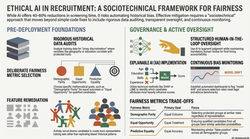
Mitigating Algorithmic Bias in AI-Powered Recruitment: A Practitioner's Guide to Ethical Implementation
NEXUS INSTITUTE FOR WORK AND AI
5 days ago
21 min read
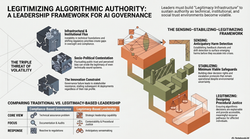
Leading Algorithmic Authority: Why Ethical AI Governance Depends on Legitimacy Infrastructure, Not Compliance Checklists
NEXUS INSTITUTE FOR WORK AND AI
6 days ago
17 min read
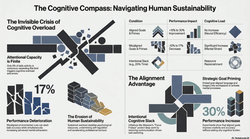
When the Machine Is Ready but the Mind Is Not: Designing Organizations for Human Capacity in the Age of AI
NEXUS INSTITUTE FOR WORK AND AI
Sep 30
26 min read
When Talking Trash About Your Terrible Boss Actually Helps Your Team: The Surprising Organizational Benefits of Leader-Targeted Gossip
CATALYST CENTER FOR WORK INNOVATION
Sep 29
23 min read
The Ratio of Labor to Tech: Navigating Structural Workforce Contraction and AI Adoption in an Era of Dual Disruption
NEXUS INSTITUTE FOR WORK AND AI
Sep 28
23 min read
Human Capital Leadership Review
2027 Trend Story Idea: Beyond Renewal Season - Using Workforce Predictive Intelligence Signals to Act Earlier in Insurance
NEXUS INSTITUTE FOR WORK AND AI
7 hours ago
5 min read
Remote Work, Loneliness, and the Leadership Deficit: Moving Beyond the Return-to-Office Debate
CATALYST CENTER FOR WORK INNOVATION
11 hours ago
27 min read
Adult Learners: Avoiding the Pitfalls of Returning to Study
WORK RENAISSANCE PROJECT
1 day ago
2 min read
Direct Lines to Loyalty: Why Generation Z's Commitment Is Built in the Daily Experience of Work
CATALYST CENTER FOR WORK INNOVATION
1 day ago
29 min read
Survey: CHRO Confidence Remains in Positive Territory, But Continues to Inch Down
NEXUS INSTITUTE FOR WORK AND AI
2 days ago
4 min read
Why Authenticity Is Becoming Marketing's Scarce Advantage in the AI Era
NEXUS INSTITUTE FOR WORK AND AI
2 days ago
3 min read
New Study Reveals Which US Jobs Have the Most Fun After Work
RESEARCH INSIGHTS
2 days ago
4 min read
The Death of SaaS Has Been Greatly Exaggerated, and Workday is Proof
NEXUS INSTITUTE FOR WORK AND AI
2 days ago
3 min read
The Inflection Point: How Tenure Shapes Academic Research Trajectories and Organizational Strategy
CATALYST CENTER FOR WORK INNOVATION
3 days ago
16 min read
1
2
3
4
5
HCL Review Research Videos
HCL Review Research Infographics
Blog: HCI Blog
Human Capital Leadership Review
Featuring scholarly and practitioner insights from HR and people leaders, industry experts, and researchers.
Human Capital Innovations
Play Video
Play Video
05:55
The Zero Percent Anomaly
The future of work is being fundamentally reshaped by artificial intelligence and automation, with a landmark 2017 Oxford study revealing that 47% of U.S. jobs face high automation risk, particularly routine white-collar positions involving tasks like email management and report generation. As generative AI accelerates this transformation, the labor market is polarizing—middle-skill routine jobs are disappearing while demand grows for both high-skill creative roles and low-skill manual work. Creativity has emerged as the most powerful shield against automation, with follow-up research showing that occupations requiring original thinking and unstructured problem-solving—from biochemical engineers to software developers—exhibit near-zero automation risk. The highest-earning positions are hybrid roles that blend creativity with technical expertise, exemplifying "structural complementarity" where humans provide imaginative judgment while AI handles data processing and repetitive tasks. Forward-thinking organizations like Disney, Moderna, and Amazon are abandoning rigid hierarchies in favor of decentralized, autonomous teams that foster innovation through design thinking and full product ownership. The fundamental insight is clear: success in the AI era depends not on matching software efficiency but on cultivating creative intensity—the capacity to generate original ideas, navigate ambiguity, and synthesize novel frameworks. While AI excels at processing existing information, it remains entirely dependent on human creativity to chart new directions, making the cultivation of creative capabilities the essential strategy for individuals and organizations seeking long-term competitive advantage and economic resilience.
Play Video
Play Video
02:59
Architecting AI Workforce Mobility
This research examines workforce reallocation driven by artificial intelligence and automation through 2035, challenging the common narrative of widespread job destruction by highlighting that net labor demand will actually expand. Drawing on research from the McKinsey Global Institute, the text emphasizes that while millions of employees must transition to new careers, the principal hurdle is mobility rather than scarcity. It underscores that businesses possess significant control over this transition because nearly half of all growing jobs require employer-preferred credentials rather than strict legal mandates. To successfully navigate this decade of transformation, organizations must overhaul outdated hiring requirements, prioritize internal mobility, and design targeted training pathways. Ultimately, the literature asserts that the success of future labor shifts depends on how effectively leadership removes artificial barriers and actively supports employee reinvention.
Play Video
Play Video
08:33
The Scarcity Myth - Decoding the AI Workforce Reallocation
This research examines workforce reallocation driven by artificial intelligence and automation through 2035, challenging the common narrative of widespread job destruction by highlighting that net labor demand will actually expand. Drawing on research from the McKinsey Global Institute, the text emphasizes that while millions of employees must transition to new careers, the principal hurdle is mobility rather than scarcity. It underscores that businesses possess significant control over this transition because nearly half of all growing jobs require employer-preferred credentials rather than strict legal mandates. To successfully navigate this decade of transformation, organizations must overhaul outdated hiring requirements, prioritize internal mobility, and design targeted training pathways. Ultimately, the literature asserts that the success of future labor shifts depends on how effectively leadership removes artificial barriers and actively supports employee reinvention.
Play Video
Play Video
23:54
Mobility, Not Scarcity: Why Employers Hold the Keys to the AI-Era Workforce Reallocation
Abstract: Much public commentary on artificial intelligence and employment forecasts large-scale job loss. A September 2026 report from the McKinsey Global Institute offers a more hopeful and more demanding picture (Ramírez et al., 2026). Its base estimate suggests that automation could reduce U.S. labor demand by the equivalent of about 36 million jobs by 2035, while demographic change, rising living standards, infrastructure investment, and AI itself could generate demand for about 41 million. Roughly 25 million affected workers could remain in their occupations as the work changes, but about 11 million, around 7% of the workforce, may need to move into different occupations entirely. This article examines that reallocation through the lens of pathway quality, skills, and barriers, with particular attention to credential requirements that employers impose voluntarily. Drawing on research on job displacement, skills-based hiring, internal labor markets, sectoral training, and occupational licensing, it presents five evidence-based organizational responses illustrated with examples from government, telecommunications, workforce development, healthcare, and software, and proposes three long-term capabilities for organizations navigating a decade defined by mobility rather than scarcity.
Play Video
Play Video
22:06
The Creative Advantage: How Organizations Can Future-Proof Their Workforce by Investing in Creati...
Abstract: This article examines the relationship between occupational creativity and resilience to automation, drawing on a landmark study by Bakhshi, Frey, and Osborne (2015) which found that 86–87 percent of workers in highly creative occupations face low or no risk of computerization. The article situates these findings within the broader landscape of workforce disruption, including recent advances in generative artificial intelligence, and explores both organizational and individual consequences of the accelerating automation trend. Five evidence-based organizational responses are identified—creative skills development, human–AI collaboration models, design-thinking integration, creative industry ecosystem investment, and workforce transition support—each illustrated with practitioner examples spanning technology, entertainment, and professional services. The article concludes by articulating three forward-looking pillars for building long-term creative resilience: continuous creative learning systems, adaptive organizational design, and purpose-driven talent strategies. Implications for leaders seeking to future-proof their organizations against technological displacement are discussed throughout.
Play Video
Play Video
21:33
A Debate about the Creative Advantage: Future-Proofing the Workforce Through Creativity
This research examines how occupational creativity serves as a vital shield against technological displacement and the rapid rise of automation. Drawing heavily on foundational research by Bakhshi, Frey, and Osborne, the literature highlights that jobs requiring original thought and imagination face remarkably low risks of computerization. Rather than replacing human ingenuity, modern tools like generative artificial intelligence are shown to powerfully augment creative workers across diverse industries. To future-proof their operations, organizational leaders are encouraged to implement evidence-based strategies such as design-thinking integration, continuous upskilling, and adaptive team structures. Ultimately, fostering human-centric capabilities provides the most durable competitive advantage in an evolving global economy.
Play Video
Play Video
49:25
A Conversation about the Creative Advantage: Future-Proofing the Workforce Through Creativity
This research examines how occupational creativity serves as a vital shield against technological displacement and the rapid rise of automation. Drawing heavily on foundational research by Bakhshi, Frey, and Osborne, the literature highlights that jobs requiring original thought and imagination face remarkably low risks of computerization. Rather than replacing human ingenuity, modern tools like generative artificial intelligence are shown to powerfully augment creative workers across diverse industries. To future-proof their operations, organizational leaders are encouraged to implement evidence-based strategies such as design-thinking integration, continuous upskilling, and adaptive team structures. Ultimately, fostering human-centric capabilities provides the most durable competitive advantage in an evolving global economy.
Play Video
Play Video
03:15
Multi Speed AI Strategy
Labor market data reveals that artificial intelligence adoption is unevenly distributed across the economy rather than advancing uniformly. To effectively prioritize workforce preparation, the research categorizes career areas into four distinct adoption climates: AI hotspots, emerging frontiers, established hubs, and cold zones. By examining the unique growth rates and adoption levels of each quadrant, organizations can tailor their strategies to accelerate capability, invest early, manage evolution, or build readiness. Furthermore, distinguishing between potential exposure, realized hiring demand, and actual job displacement prevents premature workforce reductions and misallocated resources. Ultimately, treating education and training as a crucial downstream multiplier ensures that learners and employees alike are properly prepared for a multi-speed technological transition.
HCL Review Articles
All Articles
Nexus Institute for Work and AI
Catalyst Center for Work Innovation
Adaptive Organization Lab
Work Renaissance Project
Research Briefs
Research Insights
Webinar Recaps
Book Reviews
Transformative Social impact
Search
Apr 25, 2025
3 min read
WEBINAR RECAPS
HCI Webinar Recap: Turn Your Fear Into Fuel, with John Addison
bottom of page