top of page
Home
Bio
Pricing
Podcast Network
Advertise with Us
Be Our Guest
Academy
Learning Catalog
Learners at a Glance
The ROI of Certification
Corporate L&D Solutions
Research
Research Initiatives
Nexus Institute
Catalyst Center
Adadptive Organization Lab
Future of Work Collective
Renaissance Project
Collaboration Form
Research Models and Tools
Research One Sheets
Research Snapshots
Research Videos
Research Briefs
Research Articles
Free Educational Resources
HCL Review
Contribute to the HCL Review
HCL Review Archive
HCL Review Slide Decks and Infographics
HCL Review Process
HCL Review Reach and Impact
HCI Press
From HCI Academic Press
From HCI Popular Press
Publish with HCI Press
Free OER Texts
Our Impact
Invest with HCI
Industry Recognition
Philanthropic Impact
Kiva Lending Impact
Merch
More
Use tab to navigate through the menu items.
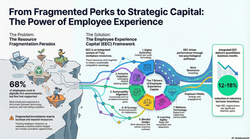
Unlocking Performance Through Integrated Workplace Resources: A Strategic Guide to Employee Experience Capital
CATALYST CENTER FOR WORK INNOVATION
3 hours ago
21 min read
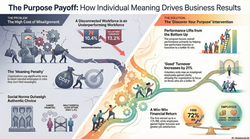
The Personal Meaning Penalty: When Success Feels Empty
CATALYST CENTER FOR WORK INNOVATION
1 day ago
22 min read
Closing the Digital Skills Gap: Building Organizational Capability for the AI Era
RESEARCH BRIEFS
1 day ago
17 min read
The Adaptive Imperative: Why Organizational Survival Depends on Learning, Wellbeing, and Purpose
CATALYST CENTER FOR WORK INNOVATION
2 days ago
24 min read
Clio: Privacy-Preserving Insights into Real-World AI Use
RESEARCH BRIEFS
3 days ago
22 min read
The Artificial Hivemind: Rethinking Work Design and Leadership in the Age of Homogenized AI
NEXUS INSTITUTE FOR WORK AND AI
4 days ago
17 min read
HR-Led Co-Design for Neuroinclusion: Transforming Neuronormative Organizations Through Critical Pragmatism and Sociotechnical Systems
RESEARCH BRIEFS
5 days ago
22 min read
AI Adoption as Screening Design: When Candidate Choice Becomes Signal
NEXUS INSTITUTE FOR WORK AND AI
6 days ago
23 min read
The End of DEI? The Evolution from Demographic Metrics to Potential, Synergy, and Inclusion
RESEARCH BRIEFS
Jan 18
30 min read
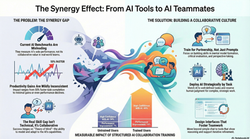
Quantifying and Optimizing Human-AI Synergy: Evidence-Based Strategies for Adaptive Collaboration
RESEARCH BRIEFS
Jan 17
28 min read
Human Capital Leadership Review
These Are the Jobs Where You're Most Likely to Get Ghosted in 2026, Expert Says
3 hours ago
4 min read
Unlocking Performance Through Integrated Workplace Resources: A Strategic Guide to Employee Experience Capital
CATALYST CENTER FOR WORK INNOVATION
3 hours ago
21 min read
The Personal Meaning Penalty: When Success Feels Empty
CATALYST CENTER FOR WORK INNOVATION
1 day ago
22 min read
Closing the Digital Skills Gap: Building Organizational Capability for the AI Era
RESEARCH BRIEFS
1 day ago
17 min read
The Adaptive Imperative: Why Organizational Survival Depends on Learning, Wellbeing, and Purpose
CATALYST CENTER FOR WORK INNOVATION
2 days ago
24 min read
Clio: Privacy-Preserving Insights into Real-World AI Use
RESEARCH BRIEFS
3 days ago
22 min read
Do Employees Feel Protected at Work? TalentLMS Survey Reveals Gaps Driven by Fear and Unequal Accountability
4 days ago
3 min read
The Hidden Costs of Employee Financial Stress on Productivity and Retention
4 days ago
4 min read
The Artificial Hivemind: Rethinking Work Design and Leadership in the Age of Homogenized AI
NEXUS INSTITUTE FOR WORK AND AI
4 days ago
17 min read
1
2
3
4
5
HCL Review Research Videos
Human Capital Innovations
Play Video
Play Video
06:53
You’re Successful—So Why Does Work Feel Empty
The video explores the concept of the “personal meaning penalty,” a phenomenon where individuals, despite outward career success, experience deep internal conflict because their work clashes with their core values and sense of purpose. This conflict often arises in high-achieving professionals who have attained financial security and status but feel empty or disillusioned because their job does not align with what they truly believe or care about. The personal meaning penalty is not about lack of skills or compensation but about a misalignment between one’s identity and daily work tasks. Highlights 🌱 The personal meaning penalty causes internal conflict despite external career success. 💼 High achievers often feel empty when their work contradicts their core values. 🎯 Modern workplaces emphasize metrics and profit, sidelining purpose. 🔄 Mid-career professionals frequently re-evaluate their work’s meaning. 🛠️ Job crafting empowers employees to reshape roles for greater purpose. 🌍 Companies benefit from integrating social and environmental impact goals. 🤝 Honest leadership and open conversations restore meaning at work. Key Insights 🌟 The Personal Meaning Penalty Is a Silent Tax on Success: The video highlights a paradox where individuals who appear most successful on paper suffer the deepest internal dissatisfaction. This “penalty” is a psychological burden that can erode motivation, engagement, and overall well-being, underscoring the importance of aligning career accomplishments with personal values rather than just external markers of success. 🎓 Cultural Shifts Drive Demand for Meaningful Work: Societal changes, particularly among younger generations, have redefined work’s role in life. Beyond financial security, people now seek work that reflects their identity and provides fulfillment. This shift challenges traditional corporate cultures that prioritize outputs over human-centered purpose, creating tension for many professionals. 📊 Profit and Metrics Can Undermine Purpose: The video emphasizes how hyper-focus on short-term financial metrics in many organizations reduces employees’ work to transactional activities. When “how much” eclipses “why,” employees lose sight of the broader impact of their efforts, fostering disconnection and dissatisfaction. 🔍 Expectation vs. Reality Mismatches Are Common: Many workers enter roles with optimistic assumptions about a company’s mission or culture, only to find daily tasks or organizational values misaligned with their ideals. This gap fuels the meaning penalty and highlights the need for realistic job previews and transparent leadership. ⏳ Mid-Career Reflection Intensifies Meaning Gaps: The mid-career stage is a critical period where professionals reassess their purpose after achieving competence and financial stability. This introspection can lead to existential questions about life’s direction and greater sensitivity to misalignment between work and values. 🔧 Job Crafting as a Practical Solution: Allowing employees to modify and personalize elements of their work—whether through changing tasks, building new relationships, or focusing on impactful projects—restores a sense of agency and purpose. Even small adjustments can significantly enhance engagement and satisfaction. 🌐 Leadership’s Role in Building Purposeful Workplaces: Effective leaders go beyond slogans to communicate authentic purpose through real stories and tangible examples of impact. By fostering open dialogue, supporting employee autonomy, and embedding social and environmental goals into business strategies, leaders can bridge the gap between corporate objectives and individual values, enhancing retention and innovation. #AIWorkplace #EmployeeCreativity #OrganizationalResilience #HumanAICollab #LeadershipTips OUTLINE: 00:00:00 - Understanding the AI Displacement Threat 00:01:20 - How Threat Can Fuel Creativity 00:04:08 - The Roles of Intrinsic Motivation and Supervisor Support 00:06:12 - Turning Threat into Advantage Through Support 00:08:50 - Building a Human-Centric Future of Work
Play Video
Play Video
03:22
Harnessing AI Displacement Threats to Catalyze Employee Creativity
This research explores the paradoxical phenomenon where perceived threats of AI job displacement can actually stimulate employee creativity rather than just causing demotivation. While the fear of being replaced by technology is widespread, the study demonstrates that this pressure often motivates workers to highlight their unique human value through innovative problem-solving. This positive outcome is not universal, as it depends heavily on high levels of intrinsic motivation and strong supportive leadership. To successfully manage this transition, the research suggests that organizations should prioritize transparent communication, psychological safety, and the development of skills that complement automated systems. Ultimately, the findings provide a framework for leaders to turn technological anxiety into a catalyst for organizational innovation and resilience.
Play Video
Play Video
03:51
The Personal Meaning Penalty
This research explores the personal meaning penalty, a psychological burden occurring when a professional's daily work clashes with their core values and sense of purpose. This phenomenon often strikes high-achieving, mid-career professionals who find that external markers of success, like high salaries and prestigious titles, cannot compensate for a lack of intrinsic fulfillment. The consequences of this misalignment are severe, leading to reduced innovation and high turnover for organizations, as well as chronic distress and identity erosion for individuals. To combat these costs, the source suggests that businesses should implement structural job crafting, transparent communication regarding impact, and values-alignment assessments. Ultimately, the research argues that sustainable success requires a meaning infrastructure that treats employees as purpose-seeking individuals rather than just economic tools.
Play Video
Play Video
10:56
AI Might Replace You—Unless You Do This
Artificial intelligence (AI) is rapidly transforming workplaces, automating tasks once performed exclusively by humans, and triggering widespread anxiety about job security—this is known as the AI displacement threat. This anxiety, while real and potentially debilitating, can either suppress or stimulate creativity depending on how it is managed. Psychological research, particularly threat rigidity theory, shows that fear often causes people to cling to familiar routines, which is counterproductive in an AI-driven environment. However, if the threat is perceived as a manageable challenge rather than an immediate danger, it can motivate proactive learning, innovation, and the development of uniquely human skills such as empathy, strategic thinking, and complex communication. Highlights 🤖 AI is reshaping work by automating tasks, causing widespread job security fears. ⚠️ The AI displacement threat creates anxiety that can either stifle or stimulate creativity. 💡 Intrinsic motivation drives employees to innovate and adapt amidst AI disruption. 🤝 Supervisor support provides a psychological safety net crucial for creative risk-taking. 📢 Transparent communication from leaders reduces uncertainty and builds trust. 🎓 Tailored reskilling programs focused on human skills are essential for future readiness. 🔄 The shift from lifelong employment to lifelong employability is key for organizational success. Key Insights 🤔 The dual nature of AI displacement threat: While AI-induced job insecurity can trigger fear and threat rigidity, leading employees to cling to outdated methods, it can also act as a powerful motivator for creative adaptation if the threat is perceived as manageable rather than immediate. This duality highlights the psychological complexity of technological disruption, emphasizing that the emotional context shapes outcomes as much as the technology itself. 🧠 Threat rigidity theory and its workplace implications: The theory explains why fear often causes cognitive narrowing and reliance on habitual behaviors, which is counterproductive in a rapidly changing AI landscape. For organizations, understanding this can guide interventions to prevent employees from falling into unproductive patterns and instead encourage exploration and innovation. 🔥 Intrinsic motivation as a resilience factor: Employees driven by internal passion for their work are more likely to respond to AI threats by enhancing their uniquely human skills rather than resisting or fearing change. This intrinsic motivation transforms anxiety into a creative force, underscoring the importance of meaningful work and personal fulfillment in workforce resilience. 🤗 Supervisor support as a psychological buffer: Supportive management mitigates stress and fear by fostering open communication, providing resources, and encouraging safe experimentation. This shifts the organizational culture from one of fear and competition to one of collaboration and growth, directly impacting employee morale and innovative capacity. 📈 The synergy of motivation and support: Neither intrinsic motivation nor supervisor support alone is sufficient; their interaction produces the best outcomes. Motivated employees without support may become demoralized, while supportive environments without motivated employees may lack initiative. This synergy points to a holistic approach for leaders aiming to cultivate innovation under AI pressures. 🗣️ Leadership’s role in managing AI transition: Transparent, honest communication about AI’s impact is crucial to reduce anxiety and build trust. Vague reassurances worsen fears. Leaders must also invest aggressively in customized reskilling initiatives that emphasize human skills which AI cannot replicate, such as creativity and emotional intelligence, ensuring employees are prepared to collaborate with AI tools rather than compete against them. 🔄 Redefining the employer-employee contract: The traditional promise of lifelong employment is obsolete in the AI era. Instead, organizations must commit to lifelong employability through continuous learning, skill development, and internal mobility. This approach fosters a culture of trust and partnership, positioning employees as valued contributors capable of evolving alongside technological change rather than disposable labor. #AIWorkplace #EmployeeCreativity #OrganizationalResilience #HumanAICollab #LeadershipTips OUTLINE: 00:00:00 - Understanding the AI Displacement Threat 00:01:20 - How Threat Can Fuel Creativity 00:04:08 - The Roles of Intrinsic Motivation and Supervisor Support 00:06:12 - Turning Threat into Advantage Through Support 00:08:50 - Building a Human-Centric Future of Work
Play Video
Play Video
34:16
Navigating AI Displacement Threats: Evidence-Based Strategies for Organizational Resilience and E...
Abstract: Artificial intelligence adoption is reshaping workplaces at an unprecedented pace, creating significant concerns about job displacement among employees across industries and skill levels. This article examines recent empirical research demonstrating that perceived AI displacement threats can paradoxically enhance employee creativity under specific organizational conditions. Drawing on a multi-study investigation spanning laboratory experiments and field studies across Chinese organizations, we explore how supervisory support and employees' intrinsic motivation interact with displacement concerns to influence creative performance. The findings reveal that while AI threats can motivate creative problem-solving, this relationship depends critically on supportive leadership and employees' baseline motivation levels. Organizations can leverage these insights through evidence-based interventions including transparent communication, capability development programs, and leadership practices that emphasize psychological safety and autonomy. This analysis provides practical frameworks for leaders navigating technological transitions while maintaining workforce engagement and innovation capacity.
Play Video
Play Video
16:17
A Conversation about Harnessing AI Displacement and Threats to Catalyzing Employee Creativity
This conversation explores the paradoxical relationship between the fear of being replaced by artificial intelligence and its impact on workplace innovation. While technological displacement often causes anxiety, it can actually stimulate creativity when employees are driven by intrinsic motivation and receive strong leadership support. They emphasize that managers must provide psychological safety and transparent communication to help staff view AI as a tool for augmentation rather than a threat. Organizations can further build resilience by redesigning roles to highlight uniquely human strengths like ethical judgment and complex problem-solving. Ultimately, the source provides a framework for turning technological uncertainty into a catalyst for professional growth and collaborative innovation. See Privacy Policy at https://art19.com/privacy and California Privacy Notice at https://art19.com/privacy#do-not-sell-my-info.
Play Video
Play Video
Creating a Magnetic Culture in Your Organization, with Cyndi Wenninghoff
In this HCI Webinar, I talk with Cyndi Wenninghoff about creating a magnetic culture in your organization. Cyndi Wenninghoff has over 10 years of experience working in human resources in various industries including advertising, insurance, and technology. She currently works as the Director of Employee Success at Quantum Workplace in Omaha where she oversees employee engagement, recruiting, DE&I, onboarding, and retention efforts. Previously she was the Director of Human Resources at SilverStone Group, a HUB International company as well as the Head of Talent at Bailey Lauerman. Outside of work, she is a member of the Human Resources Association of the Midlands (HRAM) and the Society for Human Resource Management (SHRM). Additionally, she serves as the Director-Elect for the HR Nebraska State Council. She is also the Communications and PR Coordinator for RISE Omaha, a motivating speaker series designed to inspire and unite women throughout Omaha, helping to connect women leaders and build the next generation of female business leaders.
Play Video
Play Video
20:49
How Companies Can Tap into the Humanity of their People in the Era of AI, with Lauren Tropeano
In this HCI Webinar, I talk with Lauren Tropeano about how companies can tap into the humanity of their people in the era of AI. Lauren Tropeano is the Chief People Officer at Docebo. She brings over 20 years of Human Resources expertise to Docebo, having led diverse, multinational teams for several global, high growth tech organizations. Prior to Docebo, Lauren was the Chief People Officer at Skillshare, a leader in creative learning, from 2022 to 2024. She also held several executive roles leading global People teams at tech companies such as DraftKings from 2018 to 2022, and Cogito, Pivotal Software and Dell/EMC prior. In those leadership roles, she led teams and organizations through several periods of rapid growth and transformation. She is also the founder of Destination People, a boutique human resources consulting firm. Lauren received her MBA from the University of Massachusetts at Amherst and B.A. in Organizational Behavior from Boston College.
Blog: HCI Blog
Human Capital Leadership Review
Featuring scholarly and practitioner insights from HR and people leaders, industry experts, and researchers.
HCL Review Research Infographics
HCL Review Articles
All Articles
Nexus Institute for Work and AI
Catalyst Center for Work Innovation
Adaptive Organization Lab
Work Renaissance Project
Research Briefs
Research Insights
Webinar Recaps
Book Reviews
Transformative Social impact
Search
bottom of page