top of page
Home
Bio
Pricing
Podcast Network
Advertise with Us
Be Our Guest
Academy
Learning Catalog
Learners at a Glance
The ROI of Certification
Corporate L&D Solutions
Research
Research Models and Tools
Research in Popular Media
Research One Sheets
Research Snapshots
Research Videos
Research Briefs
Research Articles
Free Educational Resources
HCL Review
Contribute to the HCL Review
HCL Review Archive
HCL Review Process
HCL Review Reach and Impact
HCI Press
From HCI Academic Press
From HCI Popular Press
Publish with HCI Press
Free OER Texts
Our Impact
Invest with HCI
Industry Recognition
Philanthropic Impact
Kiva Lending Impact
Merch
More
Use tab to navigate through the menu items.
Restructuring for AI: The Power of Small, High-Agency Teams and the Path to Enterprise-Scale Coordination
RESEARCH BRIEFS
2 hours ago
17 min read
Beyond Credentials: How Skills-Based Hiring Drives Organizational Performance and Social Equity
RESEARCH BRIEFS
1 day ago
19 min read
The Hidden Costs of Return-to-Office Mandates: How Policy Enforcement Erodes Talent, Trust, and Competitive Advantage
RESEARCH BRIEFS
2 days ago
17 min read
Unlocking Sustainable Performance Through Psychologically Informed Workplace Coaching
RESEARCH BRIEFS
3 days ago
13 min read
Skills Marketplaces and the Shift from Credentials to Verified Capabilities: Reimagining Workforce Development in the Digital Economy
RESEARCH BRIEFS
4 days ago
23 min read
AI Transformation in Higher Education: Balancing Operational Efficiency with Academic Integrity
RESEARCH INSIGHTS
5 days ago
14 min read
Managing Digital Distraction: Evidence-Based Strategies for Organizational Performance
RESEARCH BRIEFS
6 days ago
10 min read
When Simple Levers Fail: Why Management Interventions Require Strategic Coherence
RESEARCH BRIEFS
Nov 25
16 min read
Bridging Formal and Informal Learning: A Strategic Imperative for Modern Organizations
RESEARCH BRIEFS
Nov 24
18 min read
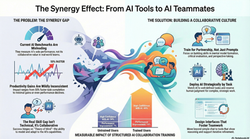
When Artificial Intelligence Becomes the Teammate: Rethinking Innovation, Collaboration, and Organizational Design in the GenAI Era
RESEARCH BRIEFS
Nov 23
21 min read
Human Capital Leadership Review
Restructuring for AI: The Power of Small, High-Agency Teams and the Path to Enterprise-Scale Coordination
RESEARCH BRIEFS
2 hours ago
17 min read
5 Subtle Signs Candidates Are Using AI During Job Interviews
24 hours ago
4 min read
How to Use AI for Internal Talent Mobility and Career Pathing
1 day ago
4 min read
Beyond Credentials: How Skills-Based Hiring Drives Organizational Performance and Social Equity
RESEARCH BRIEFS
1 day ago
19 min read
The Hidden Costs of Return-to-Office Mandates: How Policy Enforcement Erodes Talent, Trust, and Competitive Advantage
RESEARCH BRIEFS
2 days ago
17 min read
Unlocking Sustainable Performance Through Psychologically Informed Workplace Coaching
RESEARCH BRIEFS
3 days ago
13 min read
Skills Marketplaces and the Shift from Credentials to Verified Capabilities: Reimagining Workforce Development in the Digital Economy
RESEARCH BRIEFS
4 days ago
23 min read
World Talent Powerhouses
5 days ago
4 min read
AI Transformation in Higher Education: Balancing Operational Efficiency with Academic Integrity
RESEARCH INSIGHTS
5 days ago
14 min read
1
2
3
4
5
HCL Review Videos
Play Video
Play Video
People Management in the Age of AI: The Rise of the Supermanager, with Julia Bersin
In this HCI Webinar, Dr. Jonathan H. Westover talks with Julia Bersin about the recent report out from the Josh Bersin Company, People Management in the Age of AI: The Rise of the Supermanager. Julia Bersin is currently Associate Director, Research at the Josh Bersin Company - studying people practices and technology that help companies transform work for the future. She has a background in B2B tech with a focus on demand gen & growth. She has experience managing multiple functions and teams and marketing to various industries and roles – including HR, TA, Customer Support & Revenue functions.
Play Video
Play Video
Psychological Safety and Why is it Essential for an Inclusive Workplace, with Sacha Thompson
In this HCI Webinar, Dr. Jonathan H. Westover talks with Sacha Thompson about psychological safety and why is it essential for an inclusive workplace. Sacha Thompson is the visionary founder behind The Equity Equation, a prestigious consultancy dedicated to fostering inclusive cultures. Based in the vibrant Washington, DC area, Sacha brings over two decades of diverse experience spanning the education, non-profit, and tech sectors to empower her clients.
Play Video
Play Video
10:47
Only 5% Win with AI—Here’s How CEOs Close the Gap
This video presents a comprehensive analysis of how companies are currently investing in artificial intelligence (AI) and why most fail to realize substantial business value from these investments. Research involving 1,250 firms reveals a stark divide, termed the “AI value gap,” where only about 5% of companies—labeled as “future-built”—capture the majority of AI-generated value. These elite firms have integrated AI across their entire enterprises, fundamentally transforming operations and market competition, while 60% of companies see minimal returns despite significant AI spending. Highlights 🤖 Only 5% of companies, termed “future-built,” capture the majority of AI value. 📉 60% of firms see little return on AI investments, creating a widening AI value gap. 🚀 Future-built firms achieve 1.7x revenue growth and 3.6x shareholder returns over three years. 🛠️ AI value creation occurs through three levels: simple deployment, workflow reshaping, and enterprise-wide integration. 👩💼 CEO and board ownership of AI is critical for success. 🔄 Redesigning workflows end-to-end with AI as a core driver unlocks exponential gains. 📊 Building a strong data and technology foundation accelerates AI scaling and impact. Key Insights 🔍 AI Value Gap Highlights Strategic Divide: The research underscores a fundamental split in AI success. The fact that a small elite group of firms outperforms the rest by such large margins signals that AI is not just a technological upgrade but a strategic transformation. Companies that fail to move beyond pilot projects risk becoming irrelevant as competitors gain sustainable advantages. 🎯 Leadership Engagement is Non-Negotiable: CEO and board involvement is not just symbolic; it sets the tone for organizational priorities and resource allocation. Leaders who personally champion AI initiatives create a culture of urgency and accountability, which drives faster adoption and integration across functions. 🔄 Workflow Redesign is the Key to Unlocking AI’s Full Potential: Simply automating existing processes yields incremental gains. Future-built firms rethink workflows entirely, designing them from the ground up with AI capabilities embedded. This approach leads to dramatic improvements in speed, quality, and customer responsiveness, which in turn fuel competitive differentiation. 🤝 Breaking Down Silos Enables Cross-Functional Innovation: Adopting an AI-first operating model involves integrating business and IT teams, fostering collaboration and shared ownership of AI outcomes. This alignment ensures that AI projects address real business challenges rather than being technology experiments, thus maximizing ROI. 📚 Investment in Workforce Upskilling is a Catalyst for Adoption: Technology alone cannot drive transformation. Training large portions of the workforce reduces fear and resistance, empowering employees to use AI tools effectively and contribute to innovation. This human element is critical for scaling AI benefits across the enterprise. 🗃️ Data and Technology Foundations Determine Scalability: Future-built companies prioritize building clean, interoperable data systems and reusable AI model libraries. This foundation reduces duplication, accelerates development, and lowers costs. Firms mired in data silos face slower, costlier AI adoption and limited impact. ⏳ Urgency to Act is Paramount: The AI value gap is not static; it is growing. Firms that delay comprehensive AI transformation risk losing market share and shareholder value. The choice for CEOs and boards is clear: treat AI as a strategic imperative with bold leadership and a multi-year, funded plan, or face obsolescence in a rapidly evolving business landscape. Like and share if you find this useful for executive strategy and digital transformation conversations. #AIValueGap #FutureBuilt #AgenticAI #AIMaturity #BusinessStrategy #DigitalTransformation #CEOInsights OUTLINE: 00:00:00 - The Stark Reality of AI Returns 00:01:55 - How AI Creates Tangible Value 00:03:23 - Moves One and Two 00:04:48 - S004: Moves Three, Four, and Five + Closing the AI Value Gap 00:06:29 - S005: Operating Model, Upskilling, Tech Foundation, and Call to Action 00:07:59 - S006: Tech Foundation, Measurement, Urgent Close 00:09:17 - Final Metrics, Stakes, and Action 00:10:21 - Final Prompt To Act
Play Video
Play Video
01:00:13
The Widening AI Value Gap: Strategic Imperatives for Business Leaders, by Jonathan H. Westover PhD
Abstract: This analysis examines the growing divergence in value creation from artificial intelligence investments across global enterprises. Drawing on empirical research of over 1,250 organizations worldwide, the study reveals that only 5% of companies—termed "future-built"—achieve substantial bottom-line value from AI at scale, while 60% generate minimal returns despite significant investment. Future-built companies demonstrate 1.7 times greater revenue growth and 3.6 times higher three-year total shareholder return compared to laggards. The value gap widens as leading firms reinvest AI-generated returns into enhanced capabilities, creating compounding competitive advantages. Evidence indicates that 70% of AI value concentrates in core business functions, with agentic AI emerging as a critical accelerator. Organizations can close this gap by following a proven playbook: establishing ambitious multiyear AI strategies with CEO-level ownership, reshaping workflows end-to-end rather than automating incrementally, adopting AI-first operating models with joint business-IT governance, systematically upskilling workforce talent, and building interoperable technology architectures. The analysis provides actionable frameworks for executives seeking to accelerate AI maturity and capture transformative value before competitive positioning becomes irreversible.
Play Video
Play Video
11:39
Stop Guessing HR ROI: 6 Moves CFOs Can’t Ignore
This video presents a compelling argument for transforming workforce spending from being viewed as a cost burden to a strategic investment that drives measurable business value. It emphasizes the critical need for HR leaders to adopt a financial mindset, speaking the language of CFOs by quantifying the return on investment (ROI) of talent decisions. The narrative is structured around the challenge of bridging the gap between HR and finance, followed by practical methods to measure workforce value, and concludes with actionable strategies for proactive talent management and data-driven HR decision-making. Highlights 💰 Workforce spending should be seen as a strategic investment, not a mere cost. 🔍 HR must learn to communicate in financial terms to prove the ROI of talent initiatives. 📊 Six practical measures help quantify workforce value, linking talent to revenue and cost savings. 🚀 Proactive talent management, especially during mergers, safeguards business continuity and deal value. ⚠️ Modeling talent risks like market risks enables targeted, data-driven interventions. 🎯 Start small with focused pilots addressing key business pain points to build credibility. 📈 Data-driven HR decisions transform organizations into more agile, competitive entities. Key Insights 💡 Workforce as Growth Lever: Treating employee-related expenses as investments shifts organizational mindset, unlocking potential for innovation and competitive advantage. This reframing requires HR to present workforce spending with the same rigor as capital expenditures, demanding robust financial modeling and measurable outcomes. It moves HR from a reactive, cost-focused function to a proactive, strategic growth partner. 📉 Bridging HR-Finance Divide: The disconnect between HR and finance often derives from difference in language and metrics. HR’s traditional focus on qualitative benefits like culture and engagement lacks the hard data CFOs require. By integrating financial analysis into HR initiatives—linking retention rates to revenue, or training programs to error reduction—HR can align more closely with business priorities and secure budgetary support. 📈 Quantifying Retention’s Financial Impact: Employee retention, particularly in customer-facing roles, has a direct and measurable effect on customer loyalty and revenue. Tracking which employees manage key accounts and correlating tenure with customer retention or upsell potential allows companies to calculate the dollar value of turnover reduction, transforming retention efforts into clear financial propositions. ⏳ Onboarding Efficiency and Productivity Gains: Slow ramp-up times for new hires directly translate into lost revenue or productivity. Quantifying the ‘time to full productivity’ and modeling improvements through enhanced training or mentoring programs reveals significant financial upside. This approach justifies investments in onboarding as a clear revenue accelerator, rather than a soft HR benefit. ⚠️ Cost of Skill Gaps and Vacancies: Skill gaps are not abstract HR problems but tangible business risks that slow projects, lead to errors, or cause wasted spend. By assigning dollar values to mistakes or missed opportunities due to these gaps, HR can advocate for targeted training or hiring. Similarly, vacant roles—especially revenue-critical ones—have a calculable cost in lost output and delayed projects, spotlighting the urgency of efficient recruitment. 🔍 Talent Risk Modeling as Strategic Practice: Adopting scenario-based risk modeling for talent is a novel but crucial step. By projecting outcomes of turnover or skill shortages, organizations can prioritize interventions that protect critical revenue streams or product timelines. This analytical approach parallels financial risk management practices, elevating how workforce planning is integrated into broader business strategy. 🚀 Pilot Programs Build Trust and Drive Adoption: Starting with focused, small-scale pilots addressing well-recognized pain points allows HR to generate credible, data-backed evidence of ROI. This iterative approach minimizes risk, builds stakeholder confidence, and paves the way for scaling successful initiatives. It emphasizes transparency and simplicity in modeling, making the business case impossible for CFOs to ignore. If this helped, please like and share. #HROI #HumanCapital #WorkforceAnalytics #TalentStrategy
Play Video
Play Video
41:36
The Strategic ROI of Human Capital: Translating Workforce Investments into Business Value, by Jon...
Abstract: Organizations increasingly recognize that workforce costs represent strategic investments rather than mere operating expenses, yet many struggle to articulate human capital decisions in financial terms that resonate with executive leadership. This article examines six evidence-based approaches for quantifying the return on investment of strategic human resource initiatives: connecting employee attrition to customer outcomes, pricing upskilling gaps, integrating talent strategy into mergers and acquisitions, modeling workforce risk scenarios, quantifying opportunity costs of unfilled roles, and forecasting people costs as growth drivers. Drawing on organizational behavior research, financial analytics, and cross-industry applications, we demonstrate how HR functions can shift from reactive cost centers to proactive value creators. Implementation examples span technology, healthcare, professional services, manufacturing, retail, and financial services sectors. Organizations that successfully translate workforce metrics into business language strengthen their competitive positioning, improve capital allocation decisions, and build sustainable talent advantages.
Play Video
Play Video
07:52
Your AI Is Frozen: Nested Learning Unfreezes It
The video discusses the inherent limitations of current artificial intelligence (AI) models, which are typically trained extensively in controlled environments but remain static once deployed. This static nature means they become outdated as the world changes, leading to costly and disruptive retraining cycles. The urgency to overcome these challenges is driven by three converging trends: skyrocketing training costs, the rapid pace of real-world changes, and evolving user expectations for dynamic, adaptive AI systems. Highlights 🔄 Current AI models are static and become outdated quickly, leading to costly retraining. 💸 Training large AI models requires enormous computational resources and financial investment. ⏳ Nested learning introduces multi-layered memory systems that operate at different timescales for dynamic knowledge updating. 🧠 Deep optimizers enable models to learn how to learn better over time, reducing fine-tuning costs. 🔧 Self-modifying sequence models adapt internal learning mechanisms automatically in response to changing data. ⚙️ Continuum Memory System links fast, medium, and slow caches to balance immediate context and long-term knowledge. 🚀 Incremental adoption, starting with small pilot projects, is crucial for successful nested learning implementation. Key Insights 🔄 Static AI Models Are Becoming Obsolete in a Dynamic World: Traditional AI models are trained once on a fixed dataset and then deployed without the ability to adapt. This static approach is akin to a “digital photograph” in a world that demands “streaming video” — models quickly fall behind as new data and contexts evolve. This gap between training and real-world changes creates a pressing need for continuous learning architectures. 💰 The Cost of Retraining AI Models Is Unsustainable: Training large language models and other AI systems requires vast computational power and financial investment. As models grow in size and complexity, the cost of retraining from scratch becomes prohibitive for most organizations. This economic pressure necessitates novel solutions that enable incremental updates without full retraining cycles. ⏳ Nested Learning’s Temporal Hierarchy Mirrors Human Memory: The nested learning framework mimics cognitive memory structures by dividing knowledge retention into layers with different decay rates — fast (seconds), medium (hours to weeks), and slow (permanent). This hierarchical design enables AI to maintain real-time coherence, consolidate recent trends, and preserve foundational knowledge, thus balancing adaptability with stability. 🧠 Deep Optimizers as Learning Meta-Agents: By extending optimizers with memory and parameters, deep optimizers act as meta-learners that improve their own update strategies over time. This innovation reduces the amount of data and computational resources needed for fine-tuning, as the optimizer “remembers” recurring patterns and anticipates future changes, leading to faster, more efficient model adaptation. 🔄 Self-Modifying Sequence Models Enable Rule-Level Adaptation: Unlike conventional models that only update knowledge, self-modifying models can adjust their own learning algorithms in response to new inputs. This capability allows AI systems to autonomously refine how they learn, improving their responsiveness to novel phenomena such as emerging slang or shifting market terminology, thereby reducing the need for human intervention. ⚙️ Continuum Memory System Replaces Rigid Memory Boundaries: Traditional AI often separates short-term and long-term memory rigidly, but the Continuum Memory System introduces chained memory caches with different decay rates. This structure supports a seamless flow of information from immediate context to long-term knowledge, ensuring that important insights are retained and integrated appropriately across timescales. 🚀 Incremental and Domain-Specific Adoption Is Critical: Organizations should begin by analyzing the temporal nature of their data and selecting pilot projects with clear, time-sensitive information flows. Implementing a two-tier memory system in targeted applications reduces complexity and risk, allowing teams to develop necessary infrastructure and skills gradually. Defining success metrics upfront ensures measurable progress and continuous improvement. If this helped, please like and share. #NestedLearning #ContinualLearning #AdaptiveAI #FoundationModels #HOPE OUTLINE: 00:00:00 - The Problem of Frozen Intelligence 00:01:41 - A Temporal Hierarchy for AI 00:03:04 - The Three Pillars of Nested Learning 00:04:57 - Practical Adoption and Governance Frameworks 00:06:19 - From Static Models to Living Systems
Play Video
Play Video
32:45
Nested Learning: A New Paradigm for Adaptive AI Systems, by Jonathan H. Westover PhD
Abstract: This article examines Nested Learning (NL), a novel framework that reconceptualizes neural networks as hierarchical systems of interconnected optimization problems operating at multiple temporal scales. Drawing from neuroscientific principles of memory consolidation and Google Research's recent theoretical work, we explore how NL addresses fundamental limitations in current deep learning systems—particularly their static nature after deployment and inability to continually acquire new capabilities. The framework reveals that existing architectures like Transformers and optimizers such as Adam are special cases of nested associative memory systems, each compressing information within distinct "context flows." We analyze NL's implications for organizational AI strategy, examining three core innovations: deep optimizers with enhanced memory architectures, self-modifying sequence models, and continuum memory systems. Through practitioner-oriented analysis of experimental results and architectural patterns, we demonstrate how NL principles enable more adaptive, efficient, and cognitively plausible AI systems. This synthesis connects theoretical advances to practical deployment considerations for enterprises navigating the evolving landscape of foundation models and continuous learning requirements.
Blog: HCI Blog
Human Capital Leadership Review
Featuring scholarly and practitioner insights from HR and people leaders, industry experts, and researchers.
All Articles
Research Briefs
Research Insights
Looking Ahead
Leadership in Practice
Leadership Insights
Leadership for Change
Webinar Recaps
Book Reviews
Transformative Social impact
Search
Sep 29
12 min read
RESEARCH BRIEFS
The Möbius Effect: A Framework for Sustainable Leadership Impact
bottom of page