top of page
Home
Bio
Pricing
Merch
Podcast Network
Advertise with Us
Be Our Guest
Academy
Learning Catalog
Learners at a Glance
The ROI of Certification
Corporate L&D Solutions
Research
Research Initiatives
Nexus Institute
Catalyst Center
Adadptive Organization Lab
Future of Work Collective
Renaissance Project
Collaboration Form
Research Models and Tools
Research One Sheets
Research Snapshots
Research Videos
Research Briefs
Research Articles
Free Educational Resources
HCL Review
Contribute to the HCL Review
HCL Review Archive
HCL Review Slide Decks and Infographics
HCL Review Process
HCL Review Reach and Impact
HCI Press
From HCI Academic Press
From HCI Popular Press
Publish with HCI Press
Free OER Texts
Our Impact
Invest with HCI
Industry Recognition
Philanthropic Impact
Kiva Lending Impact
More
Use tab to navigate through the menu items.
The Epistemic Transformation: Reimagining Higher Education in the Age of Generative AI
NEXUS INSTITUTE FOR WORK AND AI
19 hours ago
22 min read
Preparing Organizations for AI's Economic Disruption: Evidence-Based Strategies for Workforce Transition and Strategic Adaptation
NEXUS INSTITUTE FOR WORK AND AI
2 days ago
31 min read
Designing Human-Machine Collaboration: Strategic Imperatives for the AI-Powered Workplace
NEXUS INSTITUTE FOR WORK AND AI
3 days ago
34 min read
Bridging the Education-to-Employment Divide: What Employers Really Want from Higher Education
CATALYST CENTER FOR WORK INNOVATION
4 days ago
15 min read
When Human Judgment Must Lead: Strategic Boundaries for AI in Management
NEXUS INSTITUTE FOR WORK AND AI
5 days ago
24 min read
When the Escape Routes Close: Why AI-Driven Displacement May Break the Historical Pattern
NEXUS INSTITUTE FOR WORK AND AI
6 days ago
33 min read
I-O Psychology and Organized Labor: Bridging a Century-Long Divide to Advance Worker Wellbeing and Organizational Effectiveness
CATALYST CENTER FOR WORK INNOVATION
7 days ago
25 min read
Bridging the Leadership Development Gap: Evidence-Based Strategies for Sustainable Transfer of Learning
CATALYST CENTER FOR WORK INNOVATION
Jun 12
13 min read
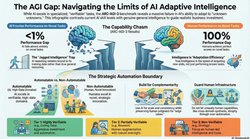
When Artificial Intelligence Confronts the Unknown: ARC-AGI-3 and the Future of Adaptive Intelligence
NEXUS INSTITUTE FOR WORK AND AI
Jun 11
16 min read
The AI Skills Premium: How Artificial Intelligence Competencies Are Reshaping Compensation, Hiring, and Organizational Strategy
NEXUS INSTITUTE FOR WORK AND AI
Jun 10
23 min read
Human Capital Leadership Review
The Epistemic Transformation: Reimagining Higher Education in the Age of Generative AI
NEXUS INSTITUTE FOR WORK AND AI
19 hours ago
22 min read
Preparing Organizations for AI's Economic Disruption: Evidence-Based Strategies for Workforce Transition and Strategic Adaptation
NEXUS INSTITUTE FOR WORK AND AI
2 days ago
31 min read
Pebl Says the HR Chatbot Era Is Ending as Alfie Evolves from Assistant to Workforce Agent
2 days ago
3 min read
More Than Half of Young US Hospitality Workers Would Give Up 5% Pay Raise to Feel More Confident
2 days ago
2 min read
Clarecast Releases ‘The Quiet Restructuring’ Report, Revealing the AI-Driven Workforce Contraction Hidden From Official Jobs Data
2 days ago
3 min read
Nearly Half of Working Dads Have Used Their Kids as an Excuse to Leave Work Early, New Survey Reveals
2 days ago
4 min read
10 Jobs Where Your Salary Climbs Fastest Over a Career, Study Reveals
2 days ago
4 min read
Anticipatory Benefits and the Rise of “Quiet” as HR’s Outcome Metric
2 days ago
6 min read
95% of Organizations Have No Quantum Roadmap as Cybersecurity Expert Warns Encrypted Data Is Already Being Harvested
2 days ago
3 min read
1
2
3
4
5
HCL Review Research Videos
HCL Review Research Infographics
Blog: HCI Blog
Human Capital Leadership Review
Featuring scholarly and practitioner insights from HR and people leaders, industry experts, and researchers.
Human Capital Innovations
Play Video
Play Video
Personalized Adaptive Workplace Learning and Assessment, with Luis Garcia
In this HCI Webinar, I talk with Luis Garcia about personalized adaptive workplace learning and assessment. Luis Garcia is a seasoned international executive with over 25 years of experience in technology, digital media, and education. He specializes in driving new ventures and products to rapid growth by building effective teams that harness innovation, technology, and creativity to solve complex problems. He is the president of PETE, an Orlando-based tech startup that offers a suite of cost-effective and customizable solutions that enable organizations to deliver personalized workforce learning at scale. The PETE team is dedicated to harnessing the power of AI to help organizations of all sizes optimize their training initiatives, spanning from onboarding to regulatory compliance, product knowledge, technical skills, and more, without hiring additional training resources.
Play Video
Play Video
04:17
The Remote Work–AI Paradox Why Early Career Hiring is Declining
Since late 2022, entry-level job opportunities in key sectors such as technology, finance, and marketing have declined sharply in countries like the US, UK, and Canada. The proportion of these roles awarded to early-career professionals has dropped by up to 11 percentage points. This decline is not a temporary downturn but rather a structural shift in hiring practices. Employers are increasingly seeking candidates who can contribute immediately with minimal training, favoring experienced workers over fresh graduates. Highlights 🧑💼 Entry-level jobs in tech, finance, and marketing have declined by up to 11 percentage points since late 2022. 🏠 Remote work reduces informal mentorship opportunities, pushing companies to favor experienced hires. 🤖 AI automates traditional entry-level tasks, shrinking roles available for junior employees. 🔄 The interplay of remote work and AI raises the bar for newcomers, requiring immediate productivity and advanced skills. 🚫 Fewer entry-level jobs limit young workers’ experience and growth, with negative long-term effects on talent pipelines. 💸 Poaching mid-level talent raises salaries and destabilizes hiring ecosystems, risking future workforce sustainability. 🌟 Companies are adapting with hybrid onboarding, AI-assisted roles, flexible degree requirements, and apprenticeships. Key Insights 🧠 Structural hiring shift fueled by AI and remote work: The trend away from entry-level hiring is not temporary but an enduring change. Organizations now demand new hires capable of adding value immediately, largely due to reduced training capacity in remote settings and AI automating routine functions. This recalibration emphasizes readiness and experience over potential, reshaping the labor market entry dynamics. 🤝 Impact of diminished informal learning: Remote work disrupts the informal knowledge transfer that traditionally occurs through spontaneous, in-person interactions. Junior employees depend heavily on mentorship to acquire tacit knowledge and soft skills; without this, their onboarding becomes inefficient, which motivates employers to minimize hiring juniors altogether. 🤖 AI as a labor multiplier and disruptor: Tools like ChatGPT have effectively taken over many tasks once reserved for entry-level roles, such as email drafting, data handling, and basic programming. This efficiency gain means fewer juniors are needed, but it also shifts job descriptions to include more advanced, AI-complementary competencies. 📉 Career bottleneck and talent pipeline risks: As companies increasingly recruit mid-level or senior talent instead of juniors, early-career professionals face a “catch-22” situation: without experience, they cannot move up, and with fewer entry points, they cannot gain experience. This bottleneck undermines the development of future leadership and innovation capacity within firms. 💰 Economic repercussions of talent poaching: The reliance on experienced hires drives competition and salary inflation at mid-levels, which disadvantages recent graduates and startups unable to compete. The result is a talent ecosystem imbalance: short-term gains for some companies, but increased labor costs, inefficiencies, and instability overall. 🌐 Hybrid and redesigned onboarding as a solution: Successful adaptation involves reimagining entry-level recruitment and onboarding through hybrid models that combine remote work benefits with focused in-person mentoring. Structured onboarding programs, comprehensive documentation, and AI-augmented roles maintain productivity while supporting junior staff development. 🚀 Inclusive talent strategies for future resilience: Dropping rigid degree requirements and expanding apprenticeships open new pathways for early-career individuals, fostering diversity and accessibility. Companies that proactively invest in these approaches can create a sustainable talent pipeline, better equipping themselves to navigate the evolving demands of technology-driven workplaces.
Play Video
Play Video
03:32
The New Career Blueprint
This research examines a significant decline in early-career hiring across advanced economies, investigating whether generative AI or remote work is the primary cause. While AI automates entry-level tasks, remote environments create mentorship friction and higher supervision costs that discourage firms from recruiting inexperienced talent. Research suggests these two forces often overlap, making it difficult for analysts to isolate a single culprit for the shrinking opportunities available to new graduates. To combat this "broken ladder," the research advocates for intentional organizational shifts, such as structured virtual onboarding and AI-augmented training programs. Ultimately, the research argues that proactive management choices and redesigned career pathways are essential to preserving long-term workforce development in a changing technological landscape.
Play Video
Play Video
23:26
The Remote Work–AI Paradox: Rethinking the Decline in Early-Career Hiring
Abstract: Recent evidence shows significant declines in early-career hiring across advanced economies since 2022, prompting urgent questions about workforce development and productivity. While emerging research attempts to isolate generative AI as the primary driver, the relationship between technological change, organizational structure, and junior talent acquisition remains poorly understood. This analysis examines the methodological foundations underpinning claims about AI versus remote work impacts on entry-level employment. Drawing on labor economics, organizational behavior, and technology adoption research, we argue that univariate explanations oversimplify a multifaceted phenomenon involving measurement challenges, correlated exposures, and context-dependent mechanisms. The evidence suggests both forces operate simultaneously through distinct channels—AI through task automation and skill polarization, remote work through supervision costs and learning friction—with their relative importance varying by occupation, firm capability, and implementation approach. Practitioners and policymakers require more nuanced frameworks that acknowledge uncertainty, emphasize organizational adaptation, and avoid premature dismissal of either explanation. See Privacy Policy at https://art19.com/privacy and California Privacy Notice at https://art19.com/privacy#do-not-sell-my-info.
Play Video
Play Video
41:41
A Conversation about the Remote Work–AI Paradox: Navigating the Early-Career Hiring Decline
This research examines a significant decline in early-career hiring across advanced economies, investigating whether generative AI or remote work is the primary cause. While AI automates entry-level tasks, remote environments create mentorship friction and higher supervision costs that discourage firms from recruiting inexperienced talent. Research suggests these two forces often overlap, making it difficult for analysts to isolate a single culprit for the shrinking opportunities available to new graduates. To combat this "broken ladder," the research advocates for intentional organizational shifts, such as structured virtual onboarding and AI-augmented training programs. Ultimately, the research argues that proactive management choices and redesigned career pathways are essential to preserving long-term workforce development in a changing technological landscape. See Privacy Policy at https://art19.com/privacy and California Privacy Notice at https://art19.com/privacy#do-not-sell-my-info.
Play Video
Play Video
20:10
A Debate about the Remote Work–AI Paradox: Navigating the Early-Career Hiring Decline
This research examines a significant decline in early-career hiring across advanced economies, investigating whether generative AI or remote work is the primary cause. While AI automates entry-level tasks, remote environments create mentorship friction and higher supervision costs that discourage firms from recruiting inexperienced talent. Research suggests these two forces often overlap, making it difficult for analysts to isolate a single culprit for the shrinking opportunities available to new graduates. To combat this "broken ladder," the research advocates for intentional organizational shifts, such as structured virtual onboarding and AI-augmented training programs. Ultimately, the research argues that proactive management choices and redesigned career pathways are essential to preserving long-term workforce development in a changing technological landscape. See Privacy Policy at https://art19.com/privacy and California Privacy Notice at https://art19.com/privacy#do-not-sell-my-info.
Play Video
Play Video
23:26
A Conversation about the Remote Work–AI Paradox: Navigating the Early-Career Hiring Decline
This research examines a significant decline in early-career hiring across advanced economies, investigating whether generative AI or remote work is the primary cause. While AI automates entry-level tasks, remote environments create mentorship friction and higher supervision costs that discourage firms from recruiting inexperienced talent. Research suggests these two forces often overlap, making it difficult for analysts to isolate a single culprit for the shrinking opportunities available to new graduates. To combat this "broken ladder," the research advocates for intentional organizational shifts, such as structured virtual onboarding and AI-augmented training programs. Ultimately, the research argues that proactive management choices and redesigned career pathways are essential to preserving long-term workforce development in a changing technological landscape. See Privacy Policy at https://art19.com/privacy and California Privacy Notice at https://art19.com/privacy#do-not-sell-my-info.
Play Video
Play Video
23:25
The Intersection Between For-Profit and Non-Profit Organizations and Leadership, with Tom Ulbrich
In this HCI Webinar, I talk with Tom Ulbrich about the intersection between for-profit and non-profit organizations and leadership. Tom Ulbrich is an entrepreneur, educator, speaker, author, social sector CEO at Goodwill of Western New York, a member of the Forbes Non-Profit Council and Executive in Residence for Entrepreneurship at the University at Buffalo School of Management. He is an entrepreneurial leader with broad-based management experience in both the for-profit and non-profit sectors. His passion for social innovation is focused on nurturing strong relationships and building consensus across diverse groups of stakeholders in the academic, for-profit, non-profit and government sectors.
HCL Review Articles
All Articles
Nexus Institute for Work and AI
Catalyst Center for Work Innovation
Adaptive Organization Lab
Work Renaissance Project
Research Briefs
Research Insights
Webinar Recaps
Book Reviews
Transformative Social impact
Search
Jan 15, 2025
7 min read
ADAPTIVE ORGANIZATION LAB
Scaling for Success: Organizing for Rapid Growth
bottom of page