top of page
Home
Bio
Pricing
Merch
Podcast Network
Advertise with Us
Be Our Guest
Academy
Learning Catalog
Learners at a Glance
The ROI of Certification
Corporate L&D Solutions
Research
Research Initiatives
Nexus Institute
Catalyst Center
Adadptive Organization Lab
Future of Work Collective
Renaissance Project
Collaboration Form
Research Models and Tools
Research One Sheets
Research Snapshots
Research Videos
Research Briefs
Free Educational Resources
HCL Review
Contribute to the HCL Review
HCL Review Archive
HCL Review Slide Decks and Infographics
HCL Review Process
HCL Review Reach and Impact
HCI Press
From HCI Academic Press
From HCI Popular Press
Publish with HCI Press
Free OER Texts
Our Impact
Invest with HCI
Industry Recognition
Philanthropic Impact
Kiva Lending Impact
More
Use tab to navigate through the menu items.
The Inflection Point: How Tenure Shapes Academic Research Trajectories and Organizational Strategy
CATALYST CENTER FOR WORK INNOVATION
3 hours ago
16 min read
The Architecture of Work Is Collapsing. Most Organizations Are Still Building Ladders.
CATALYST CENTER FOR WORK INNOVATION
8 hours ago
24 min read
Navigating the Evolving Landscape of Human Reliance on Generative AI
NEXUS INSTITUTE FOR WORK AND AI
1 day ago
26 min read
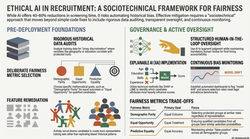
Mitigating Algorithmic Bias in AI-Powered Recruitment: A Practitioner's Guide to Ethical Implementation
NEXUS INSTITUTE FOR WORK AND AI
2 days ago
21 min read
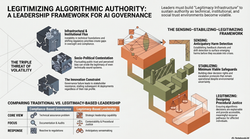
Leading Algorithmic Authority: Why Ethical AI Governance Depends on Legitimacy Infrastructure, Not Compliance Checklists
NEXUS INSTITUTE FOR WORK AND AI
3 days ago
17 min read
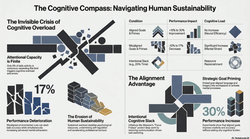
When the Machine Is Ready but the Mind Is Not: Designing Organizations for Human Capacity in the Age of AI
NEXUS INSTITUTE FOR WORK AND AI
5 days ago
26 min read
When Talking Trash About Your Terrible Boss Actually Helps Your Team: The Surprising Organizational Benefits of Leader-Targeted Gossip
CATALYST CENTER FOR WORK INNOVATION
6 days ago
23 min read
The Ratio of Labor to Tech: Navigating Structural Workforce Contraction and AI Adoption in an Era of Dual Disruption
NEXUS INSTITUTE FOR WORK AND AI
Sep 28
23 min read
When Organizations Hire Change Agents They Don't Intend to Support: The Institutional Absorption of Reform Mandates
CATALYST CENTER FOR WORK INNOVATION
Sep 27
26 min read
Evolutionary Mismatch, Stress, and Competition in the Polycrisis Era: A Practitioner's Guide to Understanding Modern Psychosocial Challenges
CATALYST CENTER FOR WORK INNOVATION
Sep 26
26 min read
Human Capital Leadership Review
The Inflection Point: How Tenure Shapes Academic Research Trajectories and Organizational Strategy
CATALYST CENTER FOR WORK INNOVATION
3 hours ago
16 min read
Office Workers "Career Cushioning" in Case They Lose Their Jobs
RESEARCH INSIGHTS
6 hours ago
3 min read
What Happens After Someone Speaks Up?
ADAPTIVE ORGANIZATION LAB
6 hours ago
4 min read
How to Use Storytelling to Engage Clients, Investors, and Teams
WORK RENAISSANCE PROJECT
6 hours ago
4 min read
Burnout in High Performers: The Peak-Performance Blind Spot
CATALYST CENTER FOR WORK INNOVATION
6 hours ago
8 min read
Conflict Is a Design Problem: What Workplace Conflict Data Reveals About How We Organize Work
CATALYST CENTER FOR WORK INNOVATION
6 hours ago
10 min read
The Architecture of Work Is Collapsing. Most Organizations Are Still Building Ladders.
CATALYST CENTER FOR WORK INNOVATION
8 hours ago
24 min read
Report: Companies Need a New Playbook to Unlock the Value of AI Agents
NEXUS INSTITUTE FOR WORK AND AI
1 day ago
3 min read
Navigating the Evolving Landscape of Human Reliance on Generative AI
NEXUS INSTITUTE FOR WORK AND AI
1 day ago
26 min read
1
2
3
4
5
HCL Review Research Videos
HCL Review Research Infographics
Blog: HCI Blog
Human Capital Leadership Review
Featuring scholarly and practitioner insights from HR and people leaders, industry experts, and researchers.
Human Capital Innovations
Play Video
Play Video
37:34
A Conversation on Forging Generation Z Workplace Loyalty
Recent research examining Generation Z workers in Surabaya demonstrates that younger employees forge work commitment directly from everyday experiences like flexibility and workplace quality rather than relying on general job satisfaction as a stepping stone. Drawing on social exchange theory, studies reveal that tangible organizational support, constructive supervisory behaviors, and psychological safety heavily influence employee retention and performance. To successfully secure early-career loyalty, organizations must move beyond traditional annual surveys and instead focus on redesigning daily work experiences, providing authentic onboarding, and establishing predictable schedule controls. Ultimately, fostering genuine employee commitment requires leaders to consistently honor reciprocal psychological contracts through practical, everyday actions rather than relying on generational stereotypes.
Play Video
Play Video
09:25
The Satisfaction Fallacy - Why Direct Experience Drives Gen Z Commitment
Recent research examining Generation Z workers in Surabaya demonstrates that younger employees forge work commitment directly from everyday experiences like flexibility and workplace quality rather than relying on general job satisfaction as a stepping stone. Drawing on social exchange theory, studies reveal that tangible organizational support, constructive supervisory behaviors, and psychological safety heavily influence employee retention and performance. To successfully secure early-career loyalty, organizations must move beyond traditional annual surveys and instead focus on redesigning daily work experiences, providing authentic onboarding, and establishing predictable schedule controls. Ultimately, fostering genuine employee commitment requires leaders to consistently honor reciprocal psychological contracts through practical, everyday actions rather than relying on generational stereotypes.
Play Video
Play Video
03:02
Architecting Gen Z Commitment
Recent research examining Generation Z workers in Surabaya demonstrates that younger employees forge work commitment directly from everyday experiences like flexibility and workplace quality rather than relying on general job satisfaction as a stepping stone. Drawing on social exchange theory, studies reveal that tangible organizational support, constructive supervisory behaviors, and psychological safety heavily influence employee retention and performance. To successfully secure early-career loyalty, organizations must move beyond traditional annual surveys and instead focus on redesigning daily work experiences, providing authentic onboarding, and establishing predictable schedule controls. Ultimately, fostering genuine employee commitment requires leaders to consistently honor reciprocal psychological contracts through practical, everyday actions rather than relying on generational stereotypes.
Play Video
Play Video
13:07
A Debate on Forging Generation Z Workplace Loyalty
Recent research examining Generation Z workers in Surabaya demonstrates that younger employees forge work commitment directly from everyday experiences like flexibility and workplace quality rather than relying on general job satisfaction as a stepping stone. Drawing on social exchange theory, studies reveal that tangible organizational support, constructive supervisory behaviors, and psychological safety heavily influence employee retention and performance. To successfully secure early-career loyalty, organizations must move beyond traditional annual surveys and instead focus on redesigning daily work experiences, providing authentic onboarding, and establishing predictable schedule controls. Ultimately, fostering genuine employee commitment requires leaders to consistently honor reciprocal psychological contracts through practical, everyday actions rather than relying on generational stereotypes.
Play Video
Play Video
16:46
Direct Lines to Loyalty: Why Generation Z's Commitment Is Built in the Daily Experience of Work
Abstract: Generation Z now makes up a large and growing share of the workforce, and organizations are searching for reliable ways to earn and keep its commitment. This article draws on a recent study of 150 Generation Z employees in Surabaya, Indonesia (Noerchoidah et al., 2026), which found that work-life balance, the work environment, and job satisfaction each had positive, significant effects on work commitment, yet job satisfaction did not carry those effects indirectly. The pattern suggests that younger employees form commitment through direct, lived experiences of flexibility, support, and workplace quality rather than through a general sense of contentment alone. Integrating that finding with social exchange theory, perceived organizational support research, and field experiments on flexibility, supervisor training, psychological safety, and onboarding, the article outlines four evidence-based organizational responses and three long-term capabilities. It concludes that commitment among early-career employees is best treated as an ongoing exchange that organizations demonstrate daily, and it notes limits in generalizing from single-site, cross-sectional evidence.
Play Video
Play Video
49:31
A Conversation about the Vehicle and the Road: Systemic Roots of Workplace Bullying
Workplace bullying is extensively examined not merely as an issue of isolated bad actors, but as a systemic failure driven by toxic organizational infrastructure. Rather than focusing solely on removing individual perpetrators, the text argues that companies must address structural conditions such as unchecked power imbalances, institutional silence, and poor complaint-response mechanisms. Research demonstrates that mistreatment severely damages mental health and organizational performance, leading to widespread psychological distress, high turnover rates, and massive financial losses. To build true resilience, institutions are urged to implement comprehensive evidence-based interventions, including psychosocial safety climates, accountability architecture, and active bystander training. Ultimately, lasting improvement requires organizations to fundamentally redesign their foundational environments rather than simply treating surface-level behavioral symptoms.
Play Video
Play Video
07:21
The Systemic Enablers of Workplace Mistreatment
Workplace bullying is extensively examined not merely as an issue of isolated bad actors, but as a systemic failure driven by toxic organizational infrastructure. Rather than focusing solely on removing individual perpetrators, the text argues that companies must address structural conditions such as unchecked power imbalances, institutional silence, and poor complaint-response mechanisms. Research demonstrates that mistreatment severely damages mental health and organizational performance, leading to widespread psychological distress, high turnover rates, and massive financial losses. To build true resilience, institutions are urged to implement comprehensive evidence-based interventions, including psychosocial safety climates, accountability architecture, and active bystander training. Ultimately, lasting improvement requires organizations to fundamentally redesign their foundational environments rather than simply treating surface-level behavioral symptoms.
Play Video
Play Video
02:53
Engineering Systemic Safety
Workplace bullying is extensively examined not merely as an issue of isolated bad actors, but as a systemic failure driven by toxic organizational infrastructure. Rather than focusing solely on removing individual perpetrators, the text argues that companies must address structural conditions such as unchecked power imbalances, institutional silence, and poor complaint-response mechanisms. Research demonstrates that mistreatment severely damages mental health and organizational performance, leading to widespread psychological distress, high turnover rates, and massive financial losses. To build true resilience, institutions are urged to implement comprehensive evidence-based interventions, including psychosocial safety climates, accountability architecture, and active bystander training. Ultimately, lasting improvement requires organizations to fundamentally redesign their foundational environments rather than simply treating surface-level behavioral symptoms.
HCL Review Articles
All Articles
Nexus Institute for Work and AI
Catalyst Center for Work Innovation
Adaptive Organization Lab
Work Renaissance Project
Research Briefs
Research Insights
Webinar Recaps
Book Reviews
Transformative Social impact
Search
Apr 2, 2025
2 min read
RESEARCH INSIGHTS
Want to Stand Out at Work? Forget Authenticity—It’s a Myth
bottom of page