top of page
Home
Bio
Pricing
Merch
Podcast Network
Advertise with Us
Be Our Guest
Academy
Learning Catalog
Learners at a Glance
The ROI of Certification
Corporate L&D Solutions
Research
Research Initiatives
Nexus Institute
Catalyst Center
Adadptive Organization Lab
Future of Work Collective
Renaissance Project
Collaboration Form
Research Models and Tools
Research One Sheets
Research Snapshots
Research Videos
Research Briefs
Research Articles
Free Educational Resources
HCL Review
Contribute to the HCL Review
HCL Review Archive
HCL Review Slide Decks and Infographics
HCL Review Process
HCL Review Reach and Impact
HCI Press
From HCI Academic Press
From HCI Popular Press
Publish with HCI Press
Free OER Texts
Our Impact
Invest with HCI
Industry Recognition
Philanthropic Impact
Kiva Lending Impact
More
Use tab to navigate through the menu items.
Where the Pipeline Breaks: AI, Early-Career Workforce Development, and the Future of Organizational Talent Strategy
NEXUS INSTITUTE FOR WORK AND AI
56 minutes ago
19 min read
The Psychological Architecture of Teacher Engagement: How Well-Being Shapes Professional Commitment Through Work Ethic
CATALYST CENTER FOR WORK INNOVATION
1 day ago
27 min read
The Rise of Job Stacking: Managing Multiple Remote Roles in the Post-Pandemic Workplace
CATALYST CENTER FOR WORK INNOVATION
2 days ago
22 min read
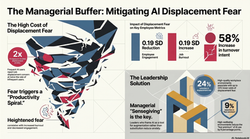
Managers as Mediators: How Organizational Leadership Shapes Workers' Fear of AI Displacement
NEXUS INSTITUTE FOR WORK AND AI
3 days ago
28 min read
When AI Becomes a Crutch: How Instant Help Erodes Human Capability and Persistence
NEXUS INSTITUTE FOR WORK AND AI
5 days ago
20 min read
When Algorithms Replace Credentials: Navigating Labor Commoditization in the AI Era
NEXUS INSTITUTE FOR WORK AND AI
5 days ago
19 min read
AI Agents and the Future of Work: How Early Adopters Are Building Competitive Moats Through Intelligent Collaboration
NEXUS INSTITUTE FOR WORK AND AI
6 days ago
22 min read
The Workforce AI Literacy Imperative: Building Competitive Advantage Through Evidence-Based Upskilling
NEXUS INSTITUTE FOR WORK AND AI
Jun 28
23 min read
Cognitive Surrender in the Age of AI: How Organizations Can Navigate the Rise of Artificial Reasoning
NEXUS INSTITUTE FOR WORK AND AI
Jun 27
19 min read
Rebuilding Campus Dialogue: Evidence-Based Strategies for Higher Education in a Polarized Era
CATALYST CENTER FOR WORK INNOVATION
Jun 26
22 min read
Human Capital Leadership Review
Where the Pipeline Breaks: AI, Early-Career Workforce Development, and the Future of Organizational Talent Strategy
NEXUS INSTITUTE FOR WORK AND AI
56 minutes ago
19 min read
The Psychological Architecture of Teacher Engagement: How Well-Being Shapes Professional Commitment Through Work Ethic
CATALYST CENTER FOR WORK INNOVATION
1 day ago
27 min read
The Rise of Job Stacking: Managing Multiple Remote Roles in the Post-Pandemic Workplace
CATALYST CENTER FOR WORK INNOVATION
2 days ago
22 min read
The Silent Productivity Drain: Why Employees Stop Asking for IT Help
3 days ago
4 min read
America Works Launches “250 Hires Initiative” to Celebrate America 250 and Expand Workforce Opportunity Nationwide
3 days ago
2 min read
Managers as Mediators: How Organizational Leadership Shapes Workers' Fear of AI Displacement
NEXUS INSTITUTE FOR WORK AND AI
3 days ago
28 min read
The Retention Risk Your Engagement Survey Cannot See
4 days ago
6 min read
Why Growth Problems Are Often Process Problems
4 days ago
6 min read
AI won’t steal your job, but it will expose whether you can think, warns former MF Global executive
4 days ago
4 min read
1
2
3
4
5
HCL Review Research Videos
HCL Review Research Infographics
Blog: HCI Blog
Human Capital Leadership Review
Featuring scholarly and practitioner insights from HR and people leaders, industry experts, and researchers.
Human Capital Innovations
Play Video
Play Video
06:27
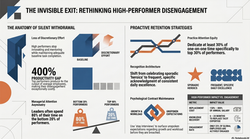
The Slow Death of Ambition Reviving Employee Drive
This video explores the pitfalls of relying solely on employee retention as a measure of organizational health, emphasizing that high retention rates can mask a deeper and more pervasive problem called ambient disengagement. This phenomenon occurs when employees remain physically present but emotionally detached from their work, leading to a gradual erosion of ambition, creativity, and innovation. Employees in this state no longer strive for excellence but instead perform only the minimum required, driven by obligation rather than passion. This disengagement stems from organizational cultures that prioritize stability over growth, suppress autonomy, and fail to recognize or reward extra effort. Such environments stifle individual initiative, discourage risk-taking, and ultimately result in reduced productivity, diminished innovation, and a toxic workplace culture. The human toll is profound: employees feel stuck, experience loss of self-worth, and their professional and personal ambitions fade. However, the decline of ambition is not irreversible. Leaders can reverse this trend by making effort and reward clearly linked and visible, granting autonomy, investing in growth opportunities, and connecting employees’ work to a meaningful purpose, thereby cultivating genuine passion and engagement. Highlights 🔥 High retention rates can mask disengagement and lack of ambition. 💡 Ambient disengagement means employees are physically present but emotionally absent. ⚠️ Organizations that prioritize stability over growth risk cultural stagnation. 🎯 Lack of autonomy and unrecognized effort extinguishes innovation and drive. 📉 Disengagement leads to decreased productivity, innovation, and profitability. ❤️ The emotional toll includes diminished confidence, stress, and loss of personal ambition. 🌱 Leadership can revive ambition through recognition, autonomy, and purpose-driven work.
Play Video
Play Video
02:52
Hardwiring Ambition
This research explores ambient disengagement, a critical phenomenon where employees remain on the payroll while gradually withdrawing their creativity, initiative, and discretionary effort. This research argues that traditional metrics like low turnover often mask this erosion of drive, which is typically induced by organizational systems rather than individual laziness. The research identifies structural failures, such as centralized authority and opaque reward systems, as primary drivers that transform once-engaged contributors into passive performers. To combat this "slow death of ambition," the research suggests fostering transparent effort-outcome linkages, distributed decision-making, and a genuine connection to purpose. Ultimately, the research warns that failing to address this invisible withdrawal compromises an organization’s long-term innovation and ability to adapt to change.
Play Video
Play Video
24:51
A Conversation about the Slow Death of Ambition
This research explores ambient disengagement, a critical phenomenon where employees remain on the payroll while gradually withdrawing their creativity, initiative, and discretionary effort. This research argues that traditional metrics like low turnover often mask this erosion of drive, which is typically induced by organizational systems rather than individual laziness. The research identifies structural failures, such as centralized authority and opaque reward systems, as primary drivers that transform once-engaged contributors into passive performers. To combat this "slow death of ambition," the research suggests fostering transparent effort-outcome linkages, distributed decision-making, and a genuine connection to purpose. Ultimately, the research warns that failing to address this invisible withdrawal compromises an organization’s long-term innovation and ability to adapt to change. See Privacy Policy at https://art19.com/privacy and California Privacy Notice at https://art19.com/privacy#do-not-sell-my-info.
Play Video
Play Video
24:51
The Slow Death of Ambition: How Organizations Systematically Extinguish Employee Drive
Abstract: Organizations frequently celebrate low turnover as evidence of healthy workplace culture, yet retention metrics can mask a more insidious problem: the gradual erosion of employee ambition and discretionary effort. This article examines how organizational systems, leadership practices, and structural factors systematically diminish the drive that initially made employees valuable contributors. Drawing on research in organizational behavior, motivation theory, and workplace psychology, we explore the mechanisms through which engaged employees transform into disengaged performers who meet minimum requirements while withholding creativity, initiative, and genuine commitment. The article synthesizes evidence on the organizational and individual consequences of ambient disengagement, presents research-based interventions for reversing this trajectory, and offers frameworks for building workplace cultures that sustain rather than extinguish employee ambition. Unlike acute disengagement events such as mass resignations, this phenomenon operates gradually and invisibly, making it particularly dangerous for organizational performance and adaptability. See Privacy Policy at https://art19.com/privacy and California Privacy Notice at https://art19.com/privacy#do-not-sell-my-info.
Play Video
Play Video
53:49
A Conversation about the Slow Death of Ambition
This research explores ambient disengagement, a critical phenomenon where employees remain on the payroll while gradually withdrawing their creativity, initiative, and discretionary effort. This research argues that traditional metrics like low turnover often mask this erosion of drive, which is typically induced by organizational systems rather than individual laziness. The research identifies structural failures, such as centralized authority and opaque reward systems, as primary drivers that transform once-engaged contributors into passive performers. To combat this "slow death of ambition," the research suggests fostering transparent effort-outcome linkages, distributed decision-making, and a genuine connection to purpose. Ultimately, the research warns that failing to address this invisible withdrawal compromises an organization’s long-term innovation and ability to adapt to change. See Privacy Policy at https://art19.com/privacy and California Privacy Notice at https://art19.com/privacy#do-not-sell-my-info.
Play Video
Play Video
23:04
A Conversation about the Slow Death of Ambition
This research explores ambient disengagement, a critical phenomenon where employees remain on the payroll while gradually withdrawing their creativity, initiative, and discretionary effort. This research argues that traditional metrics like low turnover often mask this erosion of drive, which is typically induced by organizational systems rather than individual laziness. The research identifies structural failures, such as centralized authority and opaque reward systems, as primary drivers that transform once-engaged contributors into passive performers. To combat this "slow death of ambition," the research suggests fostering transparent effort-outcome linkages, distributed decision-making, and a genuine connection to purpose. Ultimately, the research warns that failing to address this invisible withdrawal compromises an organization’s long-term innovation and ability to adapt to change. See Privacy Policy at https://art19.com/privacy and California Privacy Notice at https://art19.com/privacy#do-not-sell-my-info.
Play Video
Play Video
04:17
Unlocking the Power of Organization Development
We are all too familiar with the constant flux and evolution that characterizes the modern business landscape. In this module introduction, we'll delve into the transformative power of Organization Development (OD) and Change Management, a field that has become increasingly vital in helping organizations adapt, innovate, and thrive in the face of ever-changing challenges. Organization Development is a powerful and versatile discipline that can help organizations of all sizes and industries navigate the challenges of the modern business environment. By embracing a strategic, data-driven, and collaborative approach to organizational change, leaders can unlock the full potential of their organizations, driving meaningful and lasting improvements in performance, employee well-being, and overall competitiveness. Whether you're a seasoned executive, a change management consultant, or an aspiring organizational leader, the principles of OD offer a roadmap for transforming your organization and propelling it towards a more innovative, resilient, and successful future. By leveraging the power of OD, you can empower your organization to adapt, innovate, and thrive in the face of ever-changing challenges, cementing its position as a true industry leader.
Play Video
Play Video
05:06
Module 1 - Strategic Organizational Development Slides Overview Video
We are all too familiar with the constant flux and evolution that characterizes the modern business landscape. In this module introduction, we'll delve into the transformative power of Organization Development (OD) and Change Management, a field that has become increasingly vital in helping organizations adapt, innovate, and thrive in the face of ever-changing challenges. Organization Development is a powerful and versatile discipline that can help organizations of all sizes and industries navigate the challenges of the modern business environment. By embracing a strategic, data-driven, and collaborative approach to organizational change, leaders can unlock the full potential of their organizations, driving meaningful and lasting improvements in performance, employee well-being, and overall competitiveness. Whether you're a seasoned executive, a change management consultant, or an aspiring organizational leader, the principles of OD offer a roadmap for transforming your organization and propelling it towards a more innovative, resilient, and successful future. By leveraging the power of OD, you can empower your organization to adapt, innovate, and thrive in the face of ever-changing challenges, cementing its position as a true industry leader.
HCL Review Articles
All Articles
Nexus Institute for Work and AI
Catalyst Center for Work Innovation
Adaptive Organization Lab
Work Renaissance Project
Research Briefs
Research Insights
Webinar Recaps
Book Reviews
Transformative Social impact
Search
bottom of page