top of page
Home
Bio
Pricing
Merch
Podcast Network
Advertise with Us
Be Our Guest
Academy
Learning Catalog
Learners at a Glance
The ROI of Certification
Corporate L&D Solutions
Research
Research Initiatives
Nexus Institute
Catalyst Center
Adadptive Organization Lab
Future of Work Collective
Renaissance Project
Collaboration Form
Research Models and Tools
Research One Sheets
Research Snapshots
Research Videos
Research Briefs
Free Educational Resources
HCL Review
Contribute to the HCL Review
HCL Review Archive
HCL Review Slide Decks and Infographics
HCL Review Process
HCL Review Reach and Impact
HCI Press
From HCI Academic Press
From HCI Popular Press
Publish with HCI Press
Free OER Texts
Our Impact
Invest with HCI
Industry Recognition
Philanthropic Impact
Kiva Lending Impact
More
Use tab to navigate through the menu items.
All Reasonable Steps: Preventing Sexual and Third-Party Harassment as the Legal Duty Shifts From Response to Prevention
CATALYST CENTER FOR WORK INNOVATION
12 hours ago
31 min read
Fix the Work, Not the Worker: Managing Psychosocial Risk as an Occupational Safety Duty
CATALYST CENTER FOR WORK INNOVATION
2 days ago
30 min read
Past the Prompt: Why AI Skill Demand Is Shifting From Using to Building, and How Leaders Can Close the Skills-Support Gap
NEXUS INSTITUTE FOR WORK AND AI
3 days ago
30 min read
Beyond the Whole: How Configurational Thinking and Causal Core-Periphery Theory Reshape Organizational Strategy
CATALYST CENTER FOR WORK INNOVATION
4 days ago
17 min read
Beyond the Buzzword: Why the Type of Demographic Diversity Determines Whether Your Teams Win or Lose
CATALYST CENTER FOR WORK INNOVATION
5 days ago
17 min read
Designing for Dynamism: How Organizational Architecture Unlocks the Capacity to Sense, Shape, and Seize Opportunities
CATALYST CENTER FOR WORK INNOVATION
6 days ago
17 min read
Unlocking Team Potential: How Psychological Safety Transforms Learning, Performance, and Organizational Resilience
CATALYST CENTER FOR WORK INNOVATION
7 days ago
15 min read
Designing for Hybrid Intelligence: How Organizations Can Harness the Complementary Strengths of Human and Artificial Intelligence
CATALYST CENTER FOR WORK INNOVATION
Oct 19
19 min read
Designing for Predictability: How Mental Models of AI Error Boundaries Shape Human-AI Team Performance in High-Stakes Decision Making
NEXUS INSTITUTE FOR WORK AND AI
Oct 18
20 min read
From Breaking Point to Breakthrough: How AI Is Reinventing Assessment in Higher Education and Corporate Learning
NEXUS INSTITUTE FOR WORK AND AI
Oct 17
28 min read
Human Capital Leadership Review
All Reasonable Steps: Preventing Sexual and Third-Party Harassment as the Legal Duty Shifts From Response to Prevention
CATALYST CENTER FOR WORK INNOVATION
12 hours ago
31 min read
76% of Daily AI Users Whose AI Has Challenged Them Say It Has Made Their Thinking Sharper, Vesela Survey Finds
NEXUS INSTITUTE FOR WORK AND AI
1 day ago
3 min read
AI at the Decision Table: How Teams Keep Ownership of Decision
NEXUS INSTITUTE FOR WORK AND AI
1 day ago
7 min read
G-P's 2026 World at Work Report Reveals a Confident, but Restless, Global Workforce
WORK RENAISSANCE PROJECT
1 day ago
3 min read
Reading a Team's Pushback on AI as an Early Warning
NEXUS INSTITUTE FOR WORK AND AI
1 day ago
8 min read
Generation Misery? Gen X Hate Their Jobs More Than Millennials and Gen Z
RESEARCH INSIGHTS
1 day ago
4 min read
Personal AI Agents Including Meta's Muse Identify Themselves Less Than 3% of Time While Handling Sensitive Transactions at Scale
NEXUS INSTITUTE FOR WORK AND AI
1 day ago
3 min read
AI Is Changing Leadership Faster Than Organizations Are Adapting
NEXUS INSTITUTE FOR WORK AND AI
1 day ago
3 min read
Emapta Launches the Emapta Talent Heatmap, Revealing the World's Most In-Demand Jobs
ADAPTIVE ORGANIZATION LAB
1 day ago
3 min read
1
2
3
4
5
HCL Review Research Videos
HCL Review Research Infographics
Blog: HCI Blog
Human Capital Leadership Review
Featuring scholarly and practitioner insights from HR and people leaders, industry experts, and researchers.
Human Capital Innovations
Play Video
Play Video
02:58
AI Enrichment Strategy
AI Enrichment Strategy Organizations frequently deploy artificial intelligence with a productivity-first approach that focuses strictly on maximizing output and reducing headcount, which often leads to employee fear, hidden usage, and stagnant adoption. Field research demonstrates that framing artificial intelligence instead as an enrichment tool to eliminate tedious tasks and enhance meaningful work dramatically increases engagement, experimentation, and valuable outcomes. To successfully implement this philosophy, leaders must co-diagnose tasks with their teams, support exploration with dedicated learning time, and reinvest saved capacity into more rewarding responsibilities. Furthermore, organizations need to redesign performance metrics around true value instead of raw volume while ensuring that employees feel safe to openly disclose usage. Ultimately, treating work design as a core leadership discipline allows companies to foster long-term trust and genuinely unlock the transformative potential of artificial intelligence.
Play Video
Play Video
21:04
Enrich, Don’t Extract: Why Selling AI as a Productivity Tool Backfires, and How Leaders Can Intro...
Abstract: Organizations are investing heavily in generative AI, yet many deployments stall at shallow, defensive use. This article examines new field research from Stanford, Virginia, and Dartmouth showing that how managers frame AI shapes whether employees embrace it: in a law firm, a division that was introduced to an AI tool as a way to enrich its work used the tool 58% more and experimented with it 70% more than an otherwise similar division told the tool would speed up drafting. Drawing on Gallup, Microsoft, Workday, and BCG data and on peer-reviewed research on meaningful work, self-determination, and job design, the article traces how productivity-first framing fuels hidden use, lost meaning, and stalled value, while enrichment framing backed by real resources enables discovery. It sets out five evidence-based responses: co-diagnosing work, resourcing learning and exploration time, reinvesting freed capacity, measuring value rather than volume, and governing with worker voice. Documented examples from finance, retail, healthcare, biopharma, technology, and media illustrate each response, and three pillars for long-term capability close the article.
Play Video
Play Video
06:34
The AI Adoption Paradox
Organizations frequently deploy artificial intelligence with a productivity-first approach that focuses strictly on maximizing output and reducing headcount, which often leads to employee fear, hidden usage, and stagnant adoption. Field research demonstrates that framing artificial intelligence instead as an enrichment tool to eliminate tedious tasks and enhance meaningful work dramatically increases engagement, experimentation, and valuable outcomes. To successfully implement this philosophy, leaders must co-diagnose tasks with their teams, support exploration with dedicated learning time, and reinvest saved capacity into more rewarding responsibilities. Furthermore, organizations need to redesign performance metrics around true value instead of raw volume while ensuring that employees feel safe to openly disclose usage. Ultimately, treating work design as a core leadership discipline allows companies to foster long-term trust and genuinely unlock the transformative potential of artificial intelligence.
Play Video
Play Video
42:46
A Conversation to Enrich, Not Extract
Organizations frequently deploy artificial intelligence with a productivity-first approach that focuses strictly on maximizing output and reducing headcount, which often leads to employee fear, hidden usage, and stagnant adoption. Field research demonstrates that framing artificial intelligence instead as an enrichment tool to eliminate tedious tasks and enhance meaningful work dramatically increases engagement, experimentation, and valuable outcomes. To successfully implement this philosophy, leaders must co-diagnose tasks with their teams, support exploration with dedicated learning time, and reinvest saved capacity into more rewarding responsibilities. Furthermore, organizations need to redesign performance metrics around true value instead of raw volume while ensuring that employees feel safe to openly disclose usage. Ultimately, treating work design as a core leadership discipline allows companies to foster long-term trust and genuinely unlock the transformative potential of artificial intelligence.
Play Video
Play Video
19:55
A Debate to Enrich, Not Extract
Organizations frequently deploy artificial intelligence with a productivity-first approach that focuses strictly on maximizing output and reducing headcount, which often leads to employee fear, hidden usage, and stagnant adoption. Field research demonstrates that framing artificial intelligence instead as an enrichment tool to eliminate tedious tasks and enhance meaningful work dramatically increases engagement, experimentation, and valuable outcomes. To successfully implement this philosophy, leaders must co-diagnose tasks with their teams, support exploration with dedicated learning time, and reinvest saved capacity into more rewarding responsibilities. Furthermore, organizations need to redesign performance metrics around true value instead of raw volume while ensuring that employees feel safe to openly disclose usage. Ultimately, treating work design as a core leadership discipline allows companies to foster long-term trust and genuinely unlock the transformative potential of artificial intelligence.
Play Video
Play Video
03:30
Sanctioned Flexibility
A significant location compliance gap exists in modern workplaces, as numerous remote employees secretly work from foreign countries or other states without notifying human resources, despite executive confidence otherwise. This undisclosed mobility introduces critical legal, financial, and security risks for organizations, ranging from unexpected tax liabilities and social security complications to data protection vulnerabilities. Research demonstrates that this widespread secrecy primarily stems from a mismatch between rigid corporate policies and employee desires for geographic flexibility. To resolve these challenges without sacrificing talent, the sources recommend that leaders replace secrecy with sanctioned flexibility by establishing clear remote-work policies, simplifying the approval process, fostering a disclosure-friendly culture, and implementing proportionate security controls.
Play Video
Play Video
09:00
The Paradox of Control - Managing the Location Compliance Gap
A significant location compliance gap exists in modern workplaces, as numerous remote employees secretly work from foreign countries or other states without notifying human resources, despite executive confidence otherwise. This undisclosed mobility introduces critical legal, financial, and security risks for organizations, ranging from unexpected tax liabilities and social security complications to data protection vulnerabilities. Research demonstrates that this widespread secrecy primarily stems from a mismatch between rigid corporate policies and employee desires for geographic flexibility. To resolve these challenges without sacrificing talent, the sources recommend that leaders replace secrecy with sanctioned flexibility by establishing clear remote-work policies, simplifying the approval process, fostering a disclosure-friendly culture, and implementing proportionate security controls.
Play Video
Play Video
20:58
A Debate about Managing Remote Work Location Compliance and Flexibility
A significant location compliance gap exists in modern workplaces, as numerous remote employees secretly work from foreign countries or other states without notifying human resources, despite executive confidence otherwise. This undisclosed mobility introduces critical legal, financial, and security risks for organizations, ranging from unexpected tax liabilities and social security complications to data protection vulnerabilities. Research demonstrates that this widespread secrecy primarily stems from a mismatch between rigid corporate policies and employee desires for geographic flexibility. To resolve these challenges without sacrificing talent, the sources recommend that leaders replace secrecy with sanctioned flexibility by establishing clear remote-work policies, simplifying the approval process, fostering a disclosure-friendly culture, and implementing proportionate security controls.
HCL Review Articles
All Articles
Nexus Institute for Work and AI
Catalyst Center for Work Innovation
Adaptive Organization Lab
Work Renaissance Project
Research Briefs
Research Insights
Webinar Recaps
Book Reviews
Transformative Social impact
Search
Jul 10, 2025
5 min read
RESEARCH INSIGHTS
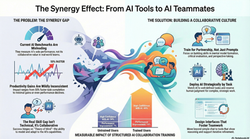
How AI is Shaping the Future of Human Collaboration
bottom of page