top of page
Home
Bio
Pricing
Merch
Podcast Network
Advertise with Us
Be Our Guest
Academy
Learning Catalog
Learners at a Glance
The ROI of Certification
Corporate L&D Solutions
Research
Research Initiatives
Nexus Institute
Catalyst Center
Adadptive Organization Lab
Future of Work Collective
Renaissance Project
Collaboration Form
Research Models and Tools
Research One Sheets
Research Snapshots
Research Videos
Research Briefs
Research Articles
Free Educational Resources
HCL Review
Contribute to the HCL Review
HCL Review Archive
HCL Review Slide Decks and Infographics
HCL Review Process
HCL Review Reach and Impact
HCI Press
From HCI Academic Press
From HCI Popular Press
Publish with HCI Press
Free OER Texts
Our Impact
Invest with HCI
Industry Recognition
Philanthropic Impact
Kiva Lending Impact
More
Use tab to navigate through the menu items.
The Evolution of Artificial Intelligence: From Large Language Models to Superintelligence and the Transformation of Work
NEXUS INSTITUTE FOR WORK AND AI
9h
22 min read
Algorithmic Anxiety in the Modern Workplace: Understanding and Addressing the Human Cost of AI Integration
NEXUS INSTITUTE FOR WORK AND AI
1d
28 min read
When Being Yourself Works—And When It Doesn't: How Culture Shapes Authentic Leadership
CATALYST CENTER FOR WORK INNOVATION
2d
18 min read
Leading the 6-Generation Workforce
NEXUS INSTITUTE FOR WORK AND AI
3d
21 min read
Verification-Centric Leadership: Governing Truth in the Age of Generative Abundance
NEXUS INSTITUTE FOR WORK AND AI
4d
13 min read
Making AI Work at Work: How Employee-Centered Implementation Practices Foster Meaningful Work and Performance
NEXUS INSTITUTE FOR WORK AND AI
5d
23 min read
Automation, Algorithms, and Beyond: Why Work Design Matters More Than Ever in a Digital World
NEXUS INSTITUTE FOR WORK AND AI
6d
33 min read
Reimagining Human Capital: Navigating Workforce Transformation in the Age of Artificial Intelligence
NEXUS INSTITUTE FOR WORK AND AI
May 9
26 min read
Credential Fluency: The Hiring Advantage in the Race for Skills—Or Why Most Companies Can't Recognize Talent When It Stares Them in the Face
CATALYST CENTER FOR WORK INNOVATION
May 8
27 min read
AI Agent Skills: Bridging the Gap Between Foundation Models and Real-World Performance
NEXUS INSTITUTE FOR WORK AND AI
May 7
17 min read
Human Capital Leadership Review
The Evolution of Artificial Intelligence: From Large Language Models to Superintelligence and the Transformation of Work
NEXUS INSTITUTE FOR WORK AND AI
9h
22 min read
Algorithmic Anxiety in the Modern Workplace: Understanding and Addressing the Human Cost of AI Integration
NEXUS INSTITUTE FOR WORK AND AI
1d
28 min read
Why Managing Digital Workers Requires the Same Discipline as Managing People
2d
7 min read
Being Polite to AI Improves Results for Majority of Office Workers
2d
4 min read
When Being Yourself Works—And When It Doesn't: How Culture Shapes Authentic Leadership
CATALYST CENTER FOR WORK INNOVATION
2d
18 min read
Trust in Hiring Process Eroding For Both Candidates and Employers, Employ Report Finds
3d
4 min read
Leading the 6-Generation Workforce
NEXUS INSTITUTE FOR WORK AND AI
3d
21 min read
How Self-Care Unlocks Lasting Success and Well-Being for Entrepreneurs
4d
5 min read
The AI Reckoning: 73% of Executives Report Underwhelming ROI from AI Efforts as Focus Shifts from Hype to High-Stakes Pressure Testing
4d
3 min read
1
2
3
4
5
HCL Review Research Videos
HCL Review Research Infographics
Blog: HCI Blog
Human Capital Leadership Review
Featuring scholarly and practitioner insights from HR and people leaders, industry experts, and researchers.
Human Capital Innovations
Play Video
Play Video
05:36
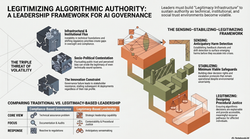
Humanizing Algorithmic Leadership
This research explores the rise of algorithmic leadership, a management style where computational systems and AI perform roles traditionally held by human managers. While these systems offer immense operational efficiency and scalability, they often lead to dehumanization by treating workers as data points and eroding their professional autonomy. To counter these negative effects, the research proposes a human-centered framework that prioritizes transparency, ethical governance, and the preservation of individual dignity. This approach advocates for augmentation rather than total replacement, positioning algorithms as collaborative tools that support human judgment. Ultimately, the research argues that sustainable success in the digital age requires balancing computational power with human-centric values to prevent a deficit in workforce trust and well-being.
Play Video
Play Video
24:54
A Debate about the Human-Centered Algorithm: Leadership and Dignity in the Digital Age
This research explores the rise of algorithmic leadership, a management style where computational systems and AI perform roles traditionally held by human managers. While these systems offer immense operational efficiency and scalability, they often lead to dehumanization by treating workers as data points and eroding their professional autonomy. To counter these negative effects, the research proposes a human-centered framework that prioritizes transparency, ethical governance, and the preservation of individual dignity. This approach advocates for augmentation rather than total replacement, positioning algorithms as collaborative tools that support human judgment. Ultimately, the research argues that sustainable success in the digital age requires balancing computational power with human-centric values to prevent a deficit in workforce trust and well-being. See Privacy Policy at https://art19.com/privacy and California Privacy Notice at https://art19.com/privacy#do-not-sell-my-info.
Play Video
Play Video
22:55
A Conversation about the Human-Centered Algorithm: Leadership and Dignity in the Digital Age
This research explores the rise of algorithmic leadership, a management style where computational systems and AI perform roles traditionally held by human managers. While these systems offer immense operational efficiency and scalability, they often lead to dehumanization by treating workers as data points and eroding their professional autonomy. To counter these negative effects, the research proposes a human-centered framework that prioritizes transparency, ethical governance, and the preservation of individual dignity. This approach advocates for augmentation rather than total replacement, positioning algorithms as collaborative tools that support human judgment. Ultimately, the research argues that sustainable success in the digital age requires balancing computational power with human-centric values to prevent a deficit in workforce trust and well-being. See Privacy Policy at https://art19.com/privacy and California Privacy Notice at https://art19.com/privacy#do-not-sell-my-info.
Play Video
Play Video
22:55
Algorithmic Leadership Without Dehumanization: Building Human-Centered Management Systems in the ...
Abstract: The proliferation of algorithmic management systems across contemporary organizations presents a fundamental paradox: while these systems enhance operational efficiency and scalability, they simultaneously risk eroding the human elements essential to sustainable organizational performance. This article examines how organizations can implement algorithmic leadership approaches that preserve human dignity, autonomy, and trust while leveraging computational capabilities. Drawing on interdisciplinary research spanning organizational behavior, human-computer interaction, and AI ethics, the analysis identifies critical tensions between efficiency and empathy, automation and agency, and control and empowerment. The article proposes a multi-dimensional framework encompassing augmented decision-making, dignity preservation, and relational transparency, supported by evidence-based organizational responses across multiple industries. Three forward-looking pillars—human-algorithm collaboration architectures, ethical governance ecosystems, and continuous learning infrastructures—provide guidance for building long-term organizational capability. The findings suggest that effective algorithmic leadership requires not merely technical sophistication but fundamental organizational redesign that positions algorithms as collaborative agents rather than replacement systems. Organizations that successfully navigate this transformation can achieve both performance optimization and workforce sustainability, creating digital work environments that remain productive, ethical, and fundamentally human. See Privacy Policy at https://art19.com/privacy and California Privacy Notice at https://art19.com/privacy#do-not-sell-my-info.
Play Video
Play Video
53:45
A Conversation about the Human-Centered Algorithm: Leadership and Dignity in the Digital Age
This research explores the rise of algorithmic leadership, a management style where computational systems and AI perform roles traditionally held by human managers. While these systems offer immense operational efficiency and scalability, they often lead to dehumanization by treating workers as data points and eroding their professional autonomy. To counter these negative effects, the research proposes a human-centered framework that prioritizes transparency, ethical governance, and the preservation of individual dignity. This approach advocates for augmentation rather than total replacement, positioning algorithms as collaborative tools that support human judgment. Ultimately, the research argues that sustainable success in the digital age requires balancing computational power with human-centric values to prevent a deficit in workforce trust and well-being. See Privacy Policy at https://art19.com/privacy and California Privacy Notice at https://art19.com/privacy#do-not-sell-my-info.
Play Video
Play Video
04:14
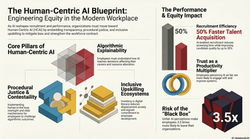
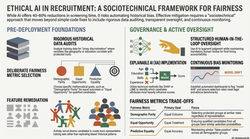
How Human Centered AI Can Transform Workforce Fairness
This video discusses the integration of artificial intelligence (AI) into human resources (HR), highlighting both its potential benefits and critical challenges. AI offers companies speed and efficiency in tasks like resume scanning and candidate evaluation, promising faster decisions and possibly reduced bias. However, the technology also raises serious concerns about fairness, transparency, and ethical use. Many employees distrust AI systems due to their opaque decision-making processes, often described as "black boxes." The core problem lies in algorithmic bias: since AI learns from historical data, any embedded past prejudices are amplified and perpetuated by AI at scale. Real-world examples, such as Amazon’s gender-biased resume screening and HireVue’s discriminatory facial expression analysis, reveal how flawed AI implementations can lead to unfair outcomes, legal repercussions, and damage to company reputations. Highlights ⚡ AI accelerates HR processes, scanning resumes and making decisions faster than humans. ⚖️ Algorithmic bias arises when AI learns from historically biased data, perpetuating unfairness. 🔍 Transparency and explainability are crucial to building trust in AI decision-making. 👥 Human oversight remains essential to catch errors and protect fairness in AI outcomes. 🚫 Notorious AI failures like Amazon and HireVue show real risks of biased AI in hiring. 💼 Investing in employee reskilling helps ease transitions and builds trust in AI adoption. 🌍 Human-centered AI prioritizes fairness, transparency, and collaboration between humans and machines. Key Insights 🤖 AI in HR offers unprecedented speed but risks amplifying bias: AI systems scan resumes and evaluate candidates at a velocity unmatched by humans, promising efficiency gains. However, these systems rely on historical data, which often contains biases related to gender, race, and other factors. This creates a feedback loop where AI not only replicates but intensifies discriminatory patterns. 🔒 Opaque "black box" AI erodes employee trust: Only about one-third of employees trust their employers to use AI ethically. The lack of transparency in AI decision-making processes causes anxiety and skepticism because affected individuals cannot understand or challenge decisions. This lack of interpretability hinders accountability and damages employee morale. Implementing explainable AI (XAI) mechanisms that elucidate how decisions are made is critical to restoring confidence. ⚖️ Fairness is multidimensional — beyond outcomes to include process and transparency: Unlike human judgment, which can be evaluated based on principles and context, AI fairness is mathematically defined but often narrowly focused on outcomes. True fairness requires transparency in the process and the right for individuals to know why decisions were made. This demands the inclusion of formal fairness metrics such as demographic parity or equal opportunity, but also procedural fairness through human review and stakeholder feedback. 🚨 Real-world AI failures highlight the consequences of ignoring bias: Amazon’s AI system penalized resumes mentioning women’s activities, demonstrating gender bias encoded in training data. HireVue’s use of facial expression analysis led to discrimination against people of color and disabled applicants. These examples underscore how unregulated AI deployment can cause reputational harm, legal liabilities, and erode trust in organizations. Algorithmic discrimination lawsuits in 2023 reflect growing regulatory scrutiny and financial consequences. 🧩 Human-in-the-loop models serve as a crucial safeguard: Integrating humans to review borderline or complex cases mitigates risks of unfair AI decisions. For instance, JPMorgan Chase’s practice of having human recruiters reassess candidates flagged by AI helps preserve talent that might otherwise be overlooked. This hybrid approach leverages AI efficiency while retaining human judgment and contextual understanding. 🛠️ Inclusive AI design and testing prevent bias before deployment: Microsoft’s Fairness Champions exemplify proactive bias detection by involving diverse teams to test AI systems prior to launch. Incorporating diverse perspectives and continuous monitoring ensures early identification of potential issues and alignment with ethical standards. This participatory design approach helps build AI systems that reflect societal values rather than reinforce prejudices. 📈 Reskilling and workforce investment foster equitable AI adoption: Companies like AT&T and Accenture demonstrate that preparing employees for AI-driven changes through retraining and job guarantees reduces fear of displacement and promotes fairness. This social investment creates a more resilient workforce and signals corporate commitment to employee well-being, which in turn enhances trust and acceptance of AI technologies.
Play Video
Play Video
04:31
The Algorithmic Glasshouse
This research explores the strategic necessity of human-centered AI in modern workplaces to ensure organizational fairness and maintain employee trust. As algorithms increasingly manage high-stakes decisions like hiring and promotions, the researcg argues that companies must prioritize transparency, explainability, and human oversight to mitigate bias and anxiety. The research emphasizes that a worker's sense of equity is deeply tied to their access to reskilling opportunities and the "humanness" of the technology’s implementation. By adopting participatory design and robust governance, organizations can transform AI from a tool of displacement into one of workforce augmentation. Ultimately, the research suggests that successful digital transformation requires a holistic approach that balances technical accuracy with ethical responsibility and psychological safety.
Play Video
Play Video
The Workplace Is the Disability: Rethinking Neurodiversity at Work, with Shaun Arora
In this HCI Webinar, I talk with Shaun Arora about what companies get wrong about neurodiversity. Shaun Arora seeks opportunities in the margins. As a coach, he propels leaders and their teams to thrive. Emerging leaders, founders, and technologists seek out Shaun’s lens to explore non-linear pathways for reducing daily friction as they grow their companies and their teams. While working within organizations as a coach, advisor, and COO, he has built the infrastructure and workflows that transform a company’s neurodiversity into a strength and asset.
HCL Review Articles
All Articles
Nexus Institute for Work and AI
Catalyst Center for Work Innovation
Adaptive Organization Lab
Work Renaissance Project
Research Briefs
Research Insights
Webinar Recaps
Book Reviews
Transformative Social impact
Search
Jun 26, 2025
5 min read
RESEARCH INSIGHTS
The Right Way to Give Negative Feedback to Your Manager
bottom of page