top of page
Home
Bio
Pricing
Merch
Podcast Network
Advertise with Us
Be Our Guest
Academy
Learning Catalog
Learners at a Glance
The ROI of Certification
Corporate L&D Solutions
Research
Research Initiatives
Nexus Institute
Catalyst Center
Adadptive Organization Lab
Future of Work Collective
Renaissance Project
Collaboration Form
Research Models and Tools
Research One Sheets
Research Snapshots
Research Videos
Research Briefs
Free Educational Resources
HCL Review
Contribute to the HCL Review
HCL Review Archive
HCL Review Slide Decks and Infographics
HCL Review Process
HCL Review Reach and Impact
HCI Press
From HCI Academic Press
From HCI Popular Press
Publish with HCI Press
Free OER Texts
Our Impact
Invest with HCI
Industry Recognition
Philanthropic Impact
Kiva Lending Impact
More
Use tab to navigate through the menu items.
Enrich, Don’t Extract: Why Selling AI as a Productivity Tool Backfires, and How Leaders Can Introduce AI as a Path to More Meaningful Work
NEXUS INSTITUTE FOR WORK AND AI
10 hours ago
29 min read
Bridging the Generational Divide: How Social Integration Transforms Age-Diverse Teams into High-Performing Assets
CATALYST CENTER FOR WORK INNOVATION
23 hours ago
27 min read
Out of the Shadows: Why Employees Are Using Unsanctioned AI at Work, and How Leaders Can Turn Hidden Experimentation Into Governed Capability
NEXUS INSTITUTE FOR WORK AND AI
2 days ago
30 min read
The Second Paycheck: Side Hustles, Moonlighting, and How Leaders Can Govern Multiple Jobholding Without Losing Trust
CATALYST CENTER FOR WORK INNOVATION
4 days ago
26 min read
The Benefits Breaking Point: Rising Health Costs, the GLP-1 Dilemma, and How Leaders Can Keep Coverage Affordable, Fair, and Worth Having
CATALYST CENTER FOR WORK INNOVATION
4 days ago
28 min read
Running on Empty: Leader Depletion, the Lukewarm Middle, and How Organizations Can Restore Leadership Capacity
CATALYST CENTER FOR WORK INNOVATION
5 days ago
34 min read
The Redesign Dividend: Why Most Organizations Still Aren't Getting Value From AI, and How Leaders Can Redesign Work for a Human-Agent Workforce
NEXUS INSTITUTE FOR WORK AND AI
6 days ago
33 min read
The Experience Advantage: Age-Inclusive AI Upskilling for the Longevity Workforce
NEXUS INSTITUTE FOR WORK AND AI
Nov 16
31 min read
Working in the Heat: Leading Workforces Through Rising Temperatures and Unsettled Heat Rules
CATALYST CENTER FOR WORK INNOVATION
Nov 15
32 min read
The Targeted Raise: Flat Pay Budgets, the Retreat From Across-the-Board Increases, and How Leaders Can Differentiate Pay Without Breaking Trust
CATALYST CENTER FOR WORK INNOVATION
Nov 15
31 min read
Human Capital Leadership Review
Delegate, Don't Abdicate: How to Build Accountability Without Micromanaging
ADAPTIVE ORGANIZATION LAB
1 hour ago
7 min read
Enrich, Don’t Extract: Why Selling AI as a Productivity Tool Backfires, and How Leaders Can Introduce AI as a Path to More Meaningful Work
NEXUS INSTITUTE FOR WORK AND AI
10 hours ago
29 min read
Bridging the Generational Divide: How Social Integration Transforms Age-Diverse Teams into High-Performing Assets
CATALYST CENTER FOR WORK INNOVATION
23 hours ago
27 min read
These States Are Paying Billions for Medical Mistakes
1 day ago
4 min read
Same Violation, Different Rulebook: New GCheck Report Finds Workplace Rules Bend Nearly Twice as Often for Top Performers
ADAPTIVE ORGANIZATION LAB
2 days ago
5 min read
Out of the Shadows: Why Employees Are Using Unsanctioned AI at Work, and How Leaders Can Turn Hidden Experimentation Into Governed Capability
NEXUS INSTITUTE FOR WORK AND AI
2 days ago
30 min read
The Second Paycheck: Side Hustles, Moonlighting, and How Leaders Can Govern Multiple Jobholding Without Losing Trust
CATALYST CENTER FOR WORK INNOVATION
4 days ago
26 min read
The Benefits Breaking Point: Rising Health Costs, the GLP-1 Dilemma, and How Leaders Can Keep Coverage Affordable, Fair, and Worth Having
CATALYST CENTER FOR WORK INNOVATION
4 days ago
28 min read
Running on Empty: Leader Depletion, the Lukewarm Middle, and How Organizations Can Restore Leadership Capacity
CATALYST CENTER FOR WORK INNOVATION
5 days ago
34 min read
1
2
3
4
5
HCL Review Research Videos
HCL Review Research Infographics
Blog: HCI Blog
Human Capital Leadership Review
Featuring scholarly and practitioner insights from HR and people leaders, industry experts, and researchers.
Human Capital Innovations
Play Video
Play Video
11:27
Architecting the Future Why AI Forces HR and IT to Converge
This research examines how advanced artificial intelligence is breaking down traditional barriers between human resources and information technology departments, creating an urgent need for co-ownership among corporate leaders. Because modern software agents frequently perform complex tasks historically handled by people, organizations must actively redesign work and establish joint governance rather than treating digital upgrades as isolated technical projects. Multiple industry studies reveal a widespread disconnect between chief human resources officers and chief information officers, which frequently leads to unmet financial expectations, employee insecurity, and inefficient AI deployments. To overcome these challenges, companies are encouraged to implement formal partnerships, establish unified data architectures, and foster dual fluency so that technology and people strategies evolve in tandem. Ultimately, successful enterprises will be those where leaders abandon isolated functional silos to reimagine workflows cooperatively and protect long-term workforce trust.
Play Video
Play Video
03:22
Architecting the Flow of Work
This research examines how advanced artificial intelligence is breaking down traditional barriers between human resources and information technology departments, creating an urgent need for co-ownership among corporate leaders. Because modern software agents frequently perform complex tasks historically handled by people, organizations must actively redesign work and establish joint governance rather than treating digital upgrades as isolated technical projects. Multiple industry studies reveal a widespread disconnect between chief human resources officers and chief information officers, which frequently leads to unmet financial expectations, employee insecurity, and inefficient AI deployments. To overcome these challenges, companies are encouraged to implement formal partnerships, establish unified data architectures, and foster dual fluency so that technology and people strategies evolve in tandem. Ultimately, successful enterprises will be those where leaders abandon isolated functional silos to reimagine workflows cooperatively and protect long-term workforce trust.
Play Video
Play Video
22:11
Commuting to Zoom: Why So Many Office Days Go Remote Anyway, and How Leaders Can Turn Presence In...
Abstract: Return-to-office policies were justified by the promise of collaboration, mentoring, and culture, yet new evidence suggests that many office days deliver little of that. A 2026 Federal Reserve Bank of New York staff report found that most workers were missing at least one teammate on their latest office day, nearly half had no in-person meetings, and many joined video calls from desks in the same building as their colleagues. This article synthesizes that report with research on hybrid work, collaboration networks, creativity, coattendance, meeting science, and early-career learning. It distinguishes presence (being in the building) from proximity (being near the people one works with) and identifies three leaks between them: uncoordinated attendance, organizational sprawl, and meeting culture. It then reviews five evidence-based responses: coordinating presence at the team level, retiring needlessly remote meetings, reducing sprawl through intentional gatherings, designing space for collaboration, and protecting proximity for newer employees. It closes with guidance for measuring proximity and building durable hybrid leadership capability.
Play Video
Play Video
36:23
A Conversation about Co-Owning the Future of Work
This research examines how advanced artificial intelligence is breaking down traditional barriers between human resources and information technology departments, creating an urgent need for co-ownership among corporate leaders. Because modern software agents frequently perform complex tasks historically handled by people, organizations must actively redesign work and establish joint governance rather than treating digital upgrades as isolated technical projects. Multiple industry studies reveal a widespread disconnect between chief human resources officers and chief information officers, which frequently leads to unmet financial expectations, employee insecurity, and inefficient AI deployments. To overcome these challenges, companies are encouraged to implement formal partnerships, establish unified data architectures, and foster dual fluency so that technology and people strategies evolve in tandem. Ultimately, successful enterprises will be those where leaders abandon isolated functional silos to reimagine workflows cooperatively and protect long-term workforce trust.
Play Video
Play Video
22:03
A Debate about Co-Owning the Future of Work
This research examines how advanced artificial intelligence is breaking down traditional barriers between human resources and information technology departments, creating an urgent need for co-ownership among corporate leaders. Because modern software agents frequently perform complex tasks historically handled by people, organizations must actively redesign work and establish joint governance rather than treating digital upgrades as isolated technical projects. Multiple industry studies reveal a widespread disconnect between chief human resources officers and chief information officers, which frequently leads to unmet financial expectations, employee insecurity, and inefficient AI deployments. To overcome these challenges, companies are encouraged to implement formal partnerships, establish unified data architectures, and foster dual fluency so that technology and people strategies evolve in tandem. Ultimately, successful enterprises will be those where leaders abandon isolated functional silos to reimagine workflows cooperatively and protect long-term workforce trust.
Play Video
Play Video
22:23
Co-Owning the Future of Work: Why AI Is Pulling HR and Technology Together, and How CHROs and CIO...
Abstract: Generative and agentic artificial intelligence (AI) are dissolving the long-standing boundary between the people function and the technology function. Recent surveys show that the two are rarely aligned: Gartner reports that only 38% of CHROs and CIOs share an understanding of how AI will affect work, IBM finds that 46% of organizations do not involve the CHRO when AI strategy is set, and Heidrick & Struggles finds that only one in four CHROs operates as an enterprise leader. This article examines why the HR–IT divide has become a strategic liability, what it costs organizations and employees, and which responses the evidence supports. Drawing on sociotechnical systems theory, strategic alignment research, technochange management, and more than a dozen organizational examples across biotechnology, healthcare, banking, consulting, education, manufacturing, software, and government, it proposes five evidence-based responses: formal shared ownership, work redesign before tool deployment, blended teams where structure fits strategy, governance of digital labor and human decision rights, and dual fluency for leaders. It closes with three foundations for long-term capability.
Play Video
Play Video
10:22
Beyond the Headcount Forecast
Artificial intelligence is rapidly altering job content faster than traditional headcount planning can accommodate, leaving the vast majority of organizations unprepared to integrate these technological shifts into their enterprise strategies. Strategic workforce planning must pivot from rigid job-based metrics toward dynamic, task-oriented frameworks that deconstruct roles into specific duties and workflows. Rather than rushing into premature downsizing that often damages institutional knowledge and employee trust, leaders should intentionally evaluate productivity gains through value capture decisions, internal mobility pathways, and scalable reskilling initiatives. Effective adaptation requires organizations to abandon obsolete annual forecasts in favor of continuous, cross-functional planning that aligns financial goals with human capital preservation. By establishing clear transition principles and fostering psychological safety, enterprises can successfully navigate technological disruption while safeguarding both operational quality and workforce stability.
Play Video
Play Video
03:36
AI Workforce Planning Playbook
Artificial intelligence is rapidly altering job content faster than traditional headcount planning can accommodate, leaving the vast majority of organizations unprepared to integrate these technological shifts into their enterprise strategies. Strategic workforce planning must pivot from rigid job-based metrics toward dynamic, task-oriented frameworks that deconstruct roles into specific duties and workflows. Rather than rushing into premature downsizing that often damages institutional knowledge and employee trust, leaders should intentionally evaluate productivity gains through value capture decisions, internal mobility pathways, and scalable reskilling initiatives. Effective adaptation requires organizations to abandon obsolete annual forecasts in favor of continuous, cross-functional planning that aligns financial goals with human capital preservation. By establishing clear transition principles and fostering psychological safety, enterprises can successfully navigate technological disruption while safeguarding both operational quality and workforce stability.
HCL Review Articles
All Articles
Nexus Institute for Work and AI
Catalyst Center for Work Innovation
Adaptive Organization Lab
Work Renaissance Project
Research Briefs
Research Insights
Webinar Recaps
Book Reviews
Transformative Social impact
Search
Nov 29, 2024
2 min read
WEBINAR RECAPS
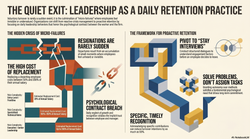
HCI Webinar Recap: The Retention Revolution, with Erica Keswin
bottom of page