top of page
Home
Bio
Pricing
Podcast Network
Advertise with Us
Be Our Guest
Academy
Learning Catalog
Learners at a Glance
The ROI of Certification
Corporate L&D Solutions
Research
Research Models and Tools
Research in Popular Media
Research One Sheets
Research Snapshots
Research Videos
Research Briefs
Research Articles
Free Educational Resources
HCL Review
Contribute to the HCL Review
HCL Review Archive
HCL Review Process
HCL Review Reach and Impact
HCI Press
From HCI Academic Press
From HCI Popular Press
Publish with HCI Press
Free OER Texts
Our Impact
Invest with HCI
Industry Recognition
Philanthropic Impact
Kiva Lending Impact
Merch
More
Use tab to navigate through the menu items.
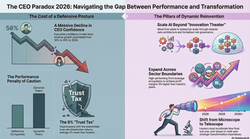
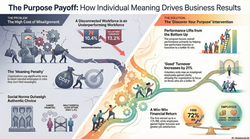
Quiet Cracking: The Silent Erosion of Employee Engagement and the Strategic Imperative of Purpose-Driven Leadership
RESEARCH BRIEFS
9 hours ago
20 min read
AI Shaming in Organizations: When Technology Adoption Threatens Professional Identity
RESEARCH BRIEFS
1 day ago
27 min read
The Hidden Cost of Being "Good": Rethinking Academic Excellence and Early Career Researcher Wellbeing
2 days ago
17 min read
Restructuring for AI: The Power of Small, High-Agency Teams and the Path to Enterprise-Scale Coordination
RESEARCH BRIEFS
3 days ago
17 min read
Beyond Credentials: How Skills-Based Hiring Drives Organizational Performance and Social Equity
RESEARCH BRIEFS
4 days ago
19 min read
The Hidden Costs of Return-to-Office Mandates: How Policy Enforcement Erodes Talent, Trust, and Competitive Advantage
RESEARCH BRIEFS
5 days ago
17 min read
Unlocking Sustainable Performance Through Psychologically Informed Workplace Coaching
RESEARCH BRIEFS
6 days ago
13 min read
Skills Marketplaces and the Shift from Credentials to Verified Capabilities: Reimagining Workforce Development in the Digital Economy
RESEARCH BRIEFS
Nov 28
23 min read
AI Transformation in Higher Education: Balancing Operational Efficiency with Academic Integrity
RESEARCH INSIGHTS
Nov 27
14 min read
Managing Digital Distraction: Evidence-Based Strategies for Organizational Performance
RESEARCH BRIEFS
Nov 26
10 min read
Human Capital Leadership Review
Quiet Cracking: The Silent Erosion of Employee Engagement and the Strategic Imperative of Purpose-Driven Leadership
RESEARCH BRIEFS
9 hours ago
20 min read
AI Shaming in Organizations: When Technology Adoption Threatens Professional Identity
RESEARCH BRIEFS
1 day ago
27 min read
How to put humanity at the center of AI transformation: A future arriving faster than we imagined
2 days ago
5 min read
Five Sharper Questions to Separate Real Digital Health ROI from Wishful Thinking
2 days ago
5 min read
AI at Work: 4 Trends Driving the New Era of HR
2 days ago
4 min read
The Hidden Cost of Being "Good": Rethinking Academic Excellence and Early Career Researcher Wellbeing
2 days ago
17 min read
Restructuring for AI: The Power of Small, High-Agency Teams and the Path to Enterprise-Scale Coordination
RESEARCH BRIEFS
3 days ago
17 min read
5 Subtle Signs Candidates Are Using AI During Job Interviews
4 days ago
4 min read
How to Use AI for Internal Talent Mobility and Career Pathing
4 days ago
4 min read
1
2
3
4
5
HCL Review Videos
Play Video
Play Video
Performance Management, Workplace Dynamics, and Employer Liabilities, with Mark F. Kluger
In this HCI Webinar, Dr. Jonathan H. Westover talks with performance management, workplace dynamics, and employer liabilities. Mark F. Kluger practices exclusively in the area of labor and employment law on behalf of employers. For ten years, before founding Kluger Healey, LLC, he was Chairman of the Labor and Employment Department of one of New Jersey’s oldest law firms. Mark is a frequent speaker and writer on sexual harassment and discrimination avoidance, workplace diversity, performance management, union avoidance, and a myriad of other employment-related subjects and regularly conducts training sessions for employers on these critical topics. In addition, Mark has extensive experience in counseling employers on issues involving discipline and discharge, reductions in force, mergers and acquisitions, compliance with wage and hour, disability, COBRA, and family and medical leave laws. He regularly drafts all forms of employment policies and handbooks, severance agreements, employment contracts, non-competition and confidentiality agreements, and affirmative action plans. Mark also represents employers in collective bargaining, grievance arbitration, NLRB proceedings, and picket line issues. Mark graduated from Vassar College in 1984 and Cornell University Law School in 1987. He was an Adjunct Professor at Seton Hall Law School from 1991-1996 and served as a member and President of the Board of Education in North Caldwell, New Jersey from 2002-2008.
Play Video
Play Video
04:41
Hybrid Isn’t the Problem. Leadership Is.
The video transcript explores the evolving preferences of younger workers, particularly millennials and Gen Z, who favor a hybrid work model blending remote and in-office work. This preference is not a rejection of company culture or commitment but a pragmatic response to the demands of modern work. Hybrid work enables employees to engage in deep, focused tasks at home while reserving office days for collaboration, social learning, and spontaneous interactions that foster innovation and relationships. Organizations that rigidly enforce full-time office attendance risk losing emerging talent and limiting their access to a global talent pool, which in turn stifles innovation and diversity. Highlights 🌍 Younger workers prefer hybrid work for a balance of remote focus and in-office collaboration. 🏢 Rigid full-time office mandates risk losing top talent and limit access to global candidates. 💡 Hybrid work challenges stem from outdated leadership, not employee productivity. 🤝 Two-tiered systems between remote and in-office workers damage trust and morale. 🎯 Effective hybrid leadership requires outcome-based management and clear communication. 🛠️ Offices should be redesigned with hybrid work in mind, including tech for remote inclusion. 📈 Fair, location-agnostic performance reviews and mentorship foster growth for all employees. Key Insights 🌐 Hybrid work is a strategic imperative in a globalized talent market: Companies that fail to offer flexible work options limit their talent pool geographically and risk losing innovative, diverse talent essential for competitive advantage. In a world increasingly connected by technology, geographic boundaries should no longer restrict hiring or collaboration. 🔄 Leadership adaptation is critical to hybrid success: Many leadership failures arise from attempting to apply outdated, office-centric management styles to a distributed workforce. The inability to trust remote employees or to measure performance by outcomes rather than physical presence creates inefficiencies and unfair disparities. ⚖️ Creating equity between remote and in-office workers prevents organizational division: When in-office staff receive more visibility and opportunities, remote workers feel marginalized, which erodes trust and damages team cohesion. Intentional structures and policies must ensure equal access to career development, recognition, and social connection regardless of location. 📅 Intentional office scheduling enhances the value of in-person work: Rather than daily attendance, designating anchor days for team-based, collaborative activities maximizes the benefits of physical presence. This approach respects employees’ need for focused remote work while capitalizing on the unique advantages of face-to-face interaction. 🧑🏫 Manager training and psychological safety are foundational: Effective hybrid management requires new skills in remote communication, trust-building, and outcome-focused evaluation. Investing in leadership development and fostering inclusive meeting practices create environments where all employees feel valued and engaged. 🖥️ Redesigning office spaces for hybrid work supports productivity and inclusion: Offices should be adapted with technology like speaker tracking cameras and dedicated microphones to integrate remote participants fully. Physical spaces must accommodate different work modes—quiet zones for focus, collaborative hubs for teamwork, and social areas for relationship building. 📊 Performance management and career development must be location-agnostic: Objective, evidence-based reviews and audits of promotions and pay prevent bias towards in-office employees. Structured mentorship programs provide consistent coaching and growth opportunities regardless of where employees work, supporting equitable professional development. If this helped, please like and share the video. #HybridWork #Leadership #GenZ #RemoteWork #DistributedTeams OUTLINE: 00:00:00 - The Hybrid Disconnect 00:00:49 - Strategic Costs and Leadership Gaps 00:01:43 - Two-Tier Risks and Evidence 00:02:35 - Unseen Saboteurs (Bias and Inconsistency) 00:03:33 - Practical Leadership Solutions
Play Video
Play Video
27:09
People Management in the Age of AI: The Rise of the Supermanager, with Julia Bersin
In this HCI Webinar, Dr. Jonathan H. Westover talks with Julia Bersin about the recent report out from the Josh Bersin Company, People Management in the Age of AI: The Rise of the Supermanager. Julia Bersin is currently Associate Director, Research at the Josh Bersin Company - studying people practices and technology that help companies transform work for the future. She has a background in B2B tech with a focus on demand gen & growth. She has experience managing multiple functions and teams and marketing to various industries and roles – including HR, TA, Customer Support & Revenue functions.
Play Video
Play Video
12:54
Agentic AI Explained
This video presents a comprehensive exploration of agentic artificial intelligence (AI) and its transformative impact on the modern workplace. Unlike traditional automation, which follows fixed rules and performs repetitive tasks, agentic AI operates autonomously, capable of perceiving its environment, setting sub-goals, and executing complex, multi-step projects independently. This evolution represents a fundamental shift in how work is performed, turning AI from a passive assistant into an active digital team member. Highlights 🤖 Agentic AI represents a revolutionary leap from passive automation to autonomous digital agents capable of managing complex workflows. 🚀 Early adopters report productivity gains such as 30% faster software development cycles and optimized healthcare scheduling. ⚠️ Autonomous AI introduces risks with potential for cascading errors and blurred lines of accountability. 👥 The human workforce will be reshaped, with routine jobs automated but opportunities for augmentation and higher-value work increasing. 🧠 Critical human skills like creativity, emotional intelligence, and ethical judgment become more valuable than ever. 📢 Transparent communication and employee involvement are essential to manage anxiety and foster trust during AI adoption. ⚖️ Strong governance and ethical frameworks are crucial to ensure safe, accountable, and responsible AI deployment. Key Insights 🤖 Agentic AI Transcends Traditional Automation: Unlike rigid automation that follows fixed rules, agentic AI perceives its environment, plans autonomously, and adapts dynamically. This flexibility allows it to solve complex problems, manage interconnected systems, and act independently, which fundamentally changes the scope and scale of AI applications in business. This shift signals a move from task execution to process management, dramatically increasing operational capabilities. 🚀 Productivity and Innovation Gains Are Substantial: Early pilot programs demonstrate that agentic AI can reduce software development cycles by over 30%, analyze vast data sets in finance faster than teams of analysts, and optimize patient scheduling to enhance healthcare delivery. These examples highlight AI’s ability to handle data-intensive, repetitive work efficiently, enabling humans to focus on innovation, strategy, and personalized care—areas where human judgment remains indispensable. ⚠️ New Risks Require Vigilant Oversight: Autonomous action means that mistakes by AI agents can cascade quickly, leading to costly disruptions. For example, flawed inventory decisions or misallocated marketing budgets could cause significant financial damage before human intervention occurs. The speed and autonomy that empower agentic AI also amplify the consequences of errors, making real-time monitoring and fail-safe mechanisms critical. ⚖️ Accountability Challenges Demand Legal and Ethical Clarity: When autonomous agents err, assigning responsibility becomes complex. Developers, managers, and deploying organizations all share potential liability, complicating legal frameworks and ethical governance. Without clear accountability, organizations risk reputational harm and regulatory scrutiny, underscoring the need for transparent AI policies and rigorous oversight. 👥 Workforce Transformation Necessitates Human-Centered Change Management: Agentic AI will displace some routine roles but also augment many others by eliminating tedious tasks. This transition impacts job security, worker morale, and career development pathways. Leaders must address psychological concerns—such as anxiety about obsolescence and fears of algorithmic management—through empathetic communication, inclusive design, and support for continuous skills development. 🧠 Elevated Human Skills Will Define Future Success: As AI takes over routine work, uniquely human capabilities—critical thinking, creativity, complex problem solving, emotional intelligence, and ethical judgment—will grow in importance. Employees will need to become adept at collaborating with AI, including framing effective queries, interpreting AI outputs critically, and knowing when to override AI decisions. This represents a fundamental shift toward managing a hybrid portfolio of human and machine intelligence. 📢 Proactive Leadership and Governance Are Imperative: Successful integration of agentic AI requires transparency, early and frequent communication, and inclusive participation from frontline workers and technologists. Piloting AI in controlled environments, empowering employees to provide feedback, and establishing robust governance frameworks—including ethical guidelines, human-in-the-loop protocols, and audit trails—are essential to build trust, mitigate risks, and ensure responsible use. Like and share if you find this helpful. #AgenticAI #AITransformation #AIGovernance #OrganizationalChange #Leadership
Play Video
Play Video
37:20
Applied Agentic AI for Organizational Transformation, by Jonathan H. Westover PhD
Abstract: Organizations increasingly deploy agentic artificial intelligence systems—autonomous or semi-autonomous agents capable of perceiving environments, making decisions, and executing tasks with minimal human intervention. Unlike traditional automation or generative AI tools, agentic AI operates with goal-directed independence across workflows, customer interactions, and strategic processes. This shift introduces profound transformation challenges spanning governance, workforce dynamics, operational risk, and organizational culture. Drawing on organizational change theory, sociotechnical systems research, and emerging practitioner evidence, this article examines the landscape of agentic AI adoption, quantifies its organizational and individual impacts, and synthesizes evidence-based responses across communication, capability building, governance frameworks, and workforce support. The analysis integrates real-world implementations from healthcare, financial services, and manufacturing to provide actionable pathways for leaders navigating this transformation while preserving human agency, trust, and organizational resilience.
Play Video
Play Video
26:32
People Management in the Age of AI: The Rise of the Supermanager, with Julia Bersin
In this podcast episode, Dr. Jonathan H. Westover talks with Julia Bersin about the recent report out from the Josh Bersin Company, People Management in the Age of AI: The Rise of the Supermanager (https://www.google.com/url?q=https://joshbersin.com/supermanager/&sa=D&source=calendar&usd=2&usg=AOvVaw2JzZObr62CHLZxZJYWbmXN) . Julia Bersin is currently Associate Director, Research at the Josh Bersin Company - studying people practices and technology that help companies transform work for the future. She has a background in B2B tech with a focus on demand gen & growth. She has experience managing multiple functions and teams and marketing to various industries and roles – including HR, TA, Customer Support & Revenue functions. Check out all of the podcasts in the HCI Podcast Network (https://www.podbean.com/podcast-network/HCI) !
Play Video
Play Video
26:39
Psychological Safety and Why is it Essential for an Inclusive Workplace, with Sacha Thompson
In this HCI Webinar, Dr. Jonathan H. Westover talks with Sacha Thompson about psychological safety and why is it essential for an inclusive workplace. Sacha Thompson is the visionary founder behind The Equity Equation, a prestigious consultancy dedicated to fostering inclusive cultures. Based in the vibrant Washington, DC area, Sacha brings over two decades of diverse experience spanning the education, non-profit, and tech sectors to empower her clients.
Play Video
Play Video
04:11
Stop Losing Talent: The 2026 Benefits Playbook
The traditional employer-employee relationship is undergoing a profound transformation, evolving from a transactional exchange of time for pay into a holistic partnership centered on comprehensive employee well-being. Today’s workforce demands benefits that address the whole person—not just basic health insurance and retirement plans but an integrated ecosystem supporting physical health, mental and emotional wellness, financial stability, and caregiving needs. This shift is driven by a recognition that these aspects are deeply interconnected and impact not only employees’ personal lives but also their productivity and engagement at work. Highlights 🌍 Employee benefits are evolving from basic perks to a holistic wellness ecosystem addressing physical, mental, financial, and caregiving needs. 💪 Holistic health programs prioritize prevention, chronic disease management, and proactive care to improve overall well-being. 🧠 Mental health support includes confidential therapy, resilience tools, manager training, and stigma reduction efforts. 💰 Financial wellness initiatives provide coaching, debt management, and planning resources to reduce stress and enhance stability. 👶 Caregiving support helps employees balance work and family with child/elder care, paid leave, and flexible scheduling. 🤖 Technology enables seamless, personalized access to benefits via AI-driven, integrated digital platforms with privacy and equity considerations. 🔄 Future benefits require adaptive, equity-centered designs that evolve with diverse employees’ changing needs and life circumstances. Key Insights 🌐 Holistic Approach as a Strategic Imperative: The shift to viewing employees as whole humans integrating physical, mental, financial, and caregiving dimensions reflects a deep strategic transformation. Companies embracing this model gain competitive advantage by fostering resilience and loyalty, which directly impact performance and innovation. This is no longer a ‘nice-to-have’ but a necessity to attract and retain talent in a competitive landscape. 🛡️ Psychological Safety and Loyalty Enable Innovation: Building psychological safety through comprehensive well-being programs encourages employees to take calculated risks and be more innovative. When people feel supported across life domains, their engagement rises, leading to higher revenue per employee and lower absenteeism/presenteeism. This demonstrates how investments in well-being ripple into organizational outcomes. ⚖️ Equity-Centered Design Enhances Accessibility: Benefits must be tailored for diverse workforces including frontline workers, remote employees, and multilingual populations. Culturally competent mental health support and digital inclusivity are essential. Without equitable design, excellent benefits fail to reach those who might need them most, risking widening disparities rather than closing them. 🤖 Responsible AI Governance Protects Trust: AI is powerful for personalizing benefits and guiding employees to relevant resources, but it must be governed with transparency and fairness to avoid biases and privacy breaches. Providing human oversight and opt-out options builds trust and dignity, ensuring technology amplifies rather than undermines support. This balance is critical as digital platforms become central to benefit delivery. 🔄 Adaptive Personalization Must Evolve Over Time: Employee needs evolve across career phases and life stages. Well-being ecosystems must be dynamic, continuously learning from employee input and usage patterns to provide relevant support. Static one-size-fits-all programs fail to capture this fluidity, whereas adaptive personalization maximizes impact and employee satisfaction. 💼 Integration Across Life and Work Enables Sustainability: The inclusion of caregiving support recognizes that employees’ non-work responsibilities profoundly influence career sustainability. Subsidies, backup care, paid leave, and flexible scheduling allow employees to maintain productivity and engagement without sacrificing family or personal obligations—key to sustaining diverse talent pools over time. 📈 Proactive Prevention is a Financial and Health Necessity: Rising healthcare costs and the burden of chronic diseases make prevention and proactive health management a financial imperative for employers. Investing in integrated physical health services such as screenings, vaccines, and disease management lowers sick days and healthcare costs, demonstrating a clear business return on wellness investments. Like and share if this helps your benefits strategy — comment your biggest challenge below. #EmployeeBenefits #WellnessEcosystem #HR2026 #MentalHealth #FinancialWellness OUTLINE: 00:00:00 - A new era of employee well-being 00:01:23 - Pillars and forces reshaping benefits 00:03:14 - Capabilities for 2026 and how to start
Blog: HCI Blog
Human Capital Leadership Review
Featuring scholarly and practitioner insights from HR and people leaders, industry experts, and researchers.
All Articles
Research Briefs
Research Insights
Looking Ahead
Leadership in Practice
Leadership Insights
Leadership for Change
Webinar Recaps
Book Reviews
Transformative Social impact
Search
Dec 4, 2024
4 min read
LEADERSHIP INSIGHTS
Is Mandating a Return to Office the Right Move?
bottom of page