top of page
Home
Bio
Pricing
Merch
Podcast Network
Advertise with Us
Be Our Guest
Academy
Learning Catalog
Learners at a Glance
The ROI of Certification
Corporate L&D Solutions
Research
Research Initiatives
Nexus Institute
Catalyst Center
Adadptive Organization Lab
Future of Work Collective
Renaissance Project
Collaboration Form
Research Models and Tools
Research One Sheets
Research Snapshots
Research Videos
Research Briefs
Free Educational Resources
HCL Review
Contribute to the HCL Review
HCL Review Archive
HCL Review Slide Decks and Infographics
HCL Review Process
HCL Review Reach and Impact
HCI Press
From HCI Academic Press
From HCI Popular Press
Publish with HCI Press
Free OER Texts
Our Impact
Invest with HCI
Industry Recognition
Philanthropic Impact
Kiva Lending Impact
More
Use tab to navigate through the menu items.
When Labor Scarcity Meets AI Disruption: Rethinking Talent Strategy in the 2030s
NEXUS INSTITUTE FOR WORK AND AI
19 hours ago
30 min read
Workplace Bullying and Cognitive Decline: A Public Health Crisis in the Making
CATALYST CENTER FOR WORK INNOVATION
2 days ago
30 min read
Bridging the Research-Practice Divide: Insights from HRD Scholars and Scholar-Practitioners
CATALYST CENTER FOR WORK INNOVATION
3 days ago
22 min read
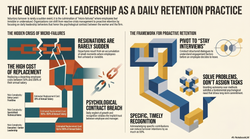
When Speaking Up Breaks Trust: Understanding Voice, Validation, and Voluntary Turnover in Modern Organizations
CATALYST CENTER FOR WORK INNOVATION
4 days ago
20 min read
Confronting Organizational Indifference to Truth: A Strategic Framework for Managing Workplace Bullshit
CATALYST CENTER FOR WORK INNOVATION
5 days ago
23 min read
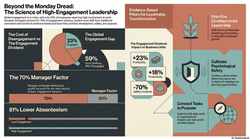
Work Engagement: Building Sustained Motivation and Well-Being in the Modern Workplace
CATALYST CENTER FOR WORK INNOVATION
6 days ago
39 min read
When Targets Pay the Price: The Troubling Job Security of Workplace Bullying Perpetrators
CATALYST CENTER FOR WORK INNOVATION
7 days ago
20 min read
The Strategic Imperative of Psychological Safety: Why High-Performing Organizations Cultivate Dissent
CATALYST CENTER FOR WORK INNOVATION
Sep 15
24 min read
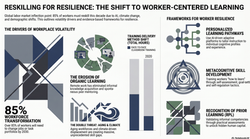
Reimagining Workforce Learning: Building Capability in an Era of Continuous Disruption
CATALYST CENTER FOR WORK INNOVATION
Sep 14
27 min read
AI Adoption and Employment Growth: Evidence from Enterprise Spending Data
NEXUS INSTITUTE FOR WORK AND AI
Sep 13
20 min read
Human Capital Leadership Review
The Missing Contract in Organizational Coaching: How Will Change Transfer to Work?
17 hours ago
6 min read
When Labor Scarcity Meets AI Disruption: Rethinking Talent Strategy in the 2030s
NEXUS INSTITUTE FOR WORK AND AI
19 hours ago
30 min read
Workplace Bullying and Cognitive Decline: A Public Health Crisis in the Making
CATALYST CENTER FOR WORK INNOVATION
2 days ago
30 min read
Bridging the Research-Practice Divide: Insights from HRD Scholars and Scholar-Practitioners
CATALYST CENTER FOR WORK INNOVATION
3 days ago
22 min read
INSEAD Launches Immersive AI Cases As Its AI-Powered Learning Portfolio Passes 40 Experiences
4 days ago
3 min read
When Speaking Up Breaks Trust: Understanding Voice, Validation, and Voluntary Turnover in Modern Organizations
CATALYST CENTER FOR WORK INNOVATION
4 days ago
20 min read
Employers and Universities Must Work Together to Close the AI Readiness Gap
5 days ago
3 min read
Confronting Organizational Indifference to Truth: A Strategic Framework for Managing Workplace Bullshit
CATALYST CENTER FOR WORK INNOVATION
5 days ago
23 min read
Work Engagement: Building Sustained Motivation and Well-Being in the Modern Workplace
CATALYST CENTER FOR WORK INNOVATION
6 days ago
39 min read
1
2
3
4
5
HCL Review Research Videos
HCL Review Research Infographics
Blog: HCI Blog
Human Capital Leadership Review
Featuring scholarly and practitioner insights from HR and people leaders, industry experts, and researchers.
Human Capital Innovations
Play Video
Play Video
51:54
A Conversation about the Dual-Edge Sword of Organizational AI Adoption
This research examines the psychological and operational impacts of integrating artificial intelligence into the modern workplace. It highlights a critical tension between increased organizational productivity and the heightened anxiety employees feel regarding job security and professional identity. The research argues that AI adoption triggers two divergent responses: an approach-oriented pathway that enhances autonomy and a withdrawal-oriented pathway driven by fear. To ensure a successful transformation, the research suggests that leaders must prioritize transparent communication, robust knowledge-sharing infrastructures, and human-centered design. Ultimately, the research posits that technological advancement must be paired with comprehensive employee support to foster a culture where both humans and machines can thrive.
Play Video
Play Video
03:38
Human Centered AI Strategy
This research examines the psychological and operational impacts of integrating artificial intelligence into the modern workplace. It highlights a critical tension between increased organizational productivity and the heightened anxiety employees feel regarding job security and professional identity. The research argues that AI adoption triggers two divergent responses: an approach-oriented pathway that enhances autonomy and a withdrawal-oriented pathway driven by fear. To ensure a successful transformation, the research suggests that leaders must prioritize transparent communication, robust knowledge-sharing infrastructures, and human-centered design. Ultimately, the research posits that technological advancement must be paired with comprehensive employee support to foster a culture where both humans and machines can thrive.
Play Video
Play Video
06:06
The Dual Edge Sword - The Psychology of AI Adoption
This research examines the psychological and operational impacts of integrating artificial intelligence into the modern workplace. It highlights a critical tension between increased organizational productivity and the heightened anxiety employees feel regarding job security and professional identity. The research argues that AI adoption triggers two divergent responses: an approach-oriented pathway that enhances autonomy and a withdrawal-oriented pathway driven by fear. To ensure a successful transformation, the research suggests that leaders must prioritize transparent communication, robust knowledge-sharing infrastructures, and human-centered design. Ultimately, the research posits that technological advancement must be paired with comprehensive employee support to foster a culture where both humans and machines can thrive.
Play Video
Play Video
23:27
A Debate about the Dual-Edge Sword of Organizational AI Adoption
This research examines the psychological and operational impacts of integrating artificial intelligence into the modern workplace. It highlights a critical tension between increased organizational productivity and the heightened anxiety employees feel regarding job security and professional identity. The research argues that AI adoption triggers two divergent responses: an approach-oriented pathway that enhances autonomy and a withdrawal-oriented pathway driven by fear. To ensure a successful transformation, the research suggests that leaders must prioritize transparent communication, robust knowledge-sharing infrastructures, and human-centered design. Ultimately, the research posits that technological advancement must be paired with comprehensive employee support to foster a culture where both humans and machines can thrive.
Play Video
Play Video
18:13
The Dual-Edge Sword: How Organizations Can Harness AI Adoption While Safeguarding Employee Wellbeing
Abstract: As artificial intelligence rapidly transforms workplace operations, organizations face a critical challenge: implementing AI systems in ways that enhance productivity while supporting employee psychological wellbeing and adaptive behaviors. This article synthesizes emerging research on organizational AI adoption, examining the dual motivational pathways through which AI integration influences employee responses. Drawing on recent empirical findings and practitioner insights, we explore how AI-supported autonomy can activate approach-oriented behaviors while AI anxiety may trigger avoidance responses, and identify knowledge-sharing infrastructure as a pivotal moderating mechanism. The analysis integrates organizational behavior theory with real-world implementation strategies, offering evidence-based guidance for leaders navigating AI transformation. Findings suggest that organizations must move beyond viewing AI adoption as purely a technical initiative, instead designing comprehensive support ecosystems that amplify positive motivational responses while mitigating anxiety-driven withdrawal. This framework provides actionable insights for building AI-ready organizational cultures that enhance both technological capability and human flourishing.
Play Video
Play Video
09:05
Architecting the AI Operated University
This research explores the strategic shift in higher education from simple generative AI chatbots to agentic AI systems capable of executing complex, autonomous workflows. These advanced tools address critical institutional challenges, such as enrollment declines and fiscal constraints, by automating multi-step administrative and student support tasks. While this technology offers significant efficiency gains and personalized student experiences, the author emphasizes that success requires robust governance frameworks, data infrastructure, and staff development. The research further examines how the workforce must adapt, shifting from routine data processing to high-touch human-centric roles and strategic oversight. Ultimately, the research argues that integrating autonomous agents is becoming an operational necessity for institutional sustainability in a competitive academic market.
Play Video
Play Video
03:08
The Agentic University
This research explores the strategic shift in higher education from simple generative AI chatbots to agentic AI systems capable of executing complex, autonomous workflows. These advanced tools address critical institutional challenges, such as enrollment declines and fiscal constraints, by automating multi-step administrative and student support tasks. While this technology offers significant efficiency gains and personalized student experiences, the author emphasizes that success requires robust governance frameworks, data infrastructure, and staff development. The research further examines how the workforce must adapt, shifting from routine data processing to high-touch human-centric roles and strategic oversight. Ultimately, the research argues that integrating autonomous agents is becoming an operational necessity for institutional sustainability in a competitive academic market.
Play Video
Play Video
01:00:18
A Conversation about the Strategic Imperative of Agentic AI in Higher Education
This research explores the strategic shift in higher education from simple generative AI chatbots to agentic AI systems capable of executing complex, autonomous workflows. These advanced tools address critical institutional challenges, such as enrollment declines and fiscal constraints, by automating multi-step administrative and student support tasks. While this technology offers significant efficiency gains and personalized student experiences, the author emphasizes that success requires robust governance frameworks, data infrastructure, and staff development. The research further examines how the workforce must adapt, shifting from routine data processing to high-touch human-centric roles and strategic oversight. Ultimately, the research argues that integrating autonomous agents is becoming an operational necessity for institutional sustainability in a competitive academic market.
HCL Review Articles
All Articles
Nexus Institute for Work and AI
Catalyst Center for Work Innovation
Adaptive Organization Lab
Work Renaissance Project
Research Briefs
Research Insights
Webinar Recaps
Book Reviews
Transformative Social impact
Search
Mar 10, 2025
5 min read
ADAPTIVE ORGANIZATION LAB
How to Tap Into Your Creative Genius at Work
bottom of page