top of page
Home
Bio
Pricing
Merch
Podcast Network
Advertise with Us
Be Our Guest
Academy
Learning Catalog
Learners at a Glance
The ROI of Certification
Corporate L&D Solutions
Research
Research Initiatives
Nexus Institute
Catalyst Center
Adadptive Organization Lab
Future of Work Collective
Renaissance Project
Collaboration Form
Research Models and Tools
Research One Sheets
Research Snapshots
Research Videos
Research Briefs
Research Articles
Free Educational Resources
HCL Review
Contribute to the HCL Review
HCL Review Archive
HCL Review Slide Decks and Infographics
HCL Review Process
HCL Review Reach and Impact
HCI Press
From HCI Academic Press
From HCI Popular Press
Publish with HCI Press
Free OER Texts
Our Impact
Invest with HCI
Industry Recognition
Philanthropic Impact
Kiva Lending Impact
More
Use tab to navigate through the menu items.
AI Displacement Risk in the Labor Market: Evidence, Exposure, and the Imperative for Adaptive Organizational Strategy
NEXUS INSTITUTE FOR WORK AND AI
5 hours ago
16 min read
AI as Augmentation: How Human Capital Shapes Technology's Impact on Productivity and Inequality
NEXUS INSTITUTE FOR WORK AND AI
1 day ago
21 min read
The Entry-Level Apocalypse: How AI Adoption Without Workforce Renewal Is Undermining Organizational Capacity
NEXUS INSTITUTE FOR WORK AND AI
2 days ago
24 min read
The Asymmetric Machine: What the 2026 AI Index Tells Us About Where We Actually Are
NEXUS INSTITUTE FOR WORK AND AI
5 days ago
23 min read
Organizational Theory as the Missing Foundation for Agentic AI Systems
CATALYST CENTER FOR WORK INNOVATION
6 days ago
24 min read
The AI Automation Paradox: Why Perfect Foresight Cannot Stop the Race to the Cliff
NEXUS INSTITUTE FOR WORK AND AI
Apr 16
20 min read
Beyond Replacement or Enhancement: How AI Transforms Work Through Simultaneous Automation and Augmentation
NEXUS INSTITUTE FOR WORK AND AI
Apr 15
27 min read
Building Innovation Ecosystems: A Comprehensive Framework for University Innovation Academies
CATALYST CENTER FOR WORK INNOVATION
Apr 14
25 min read
Integrating Workforce Readiness into Higher Education: A Strategic Framework for Comprehensive Alignment
CATALYST CENTER FOR WORK INNOVATION
Apr 13
26 min read
When Systems Fail Quietly: Why Organizations Miss Performance Degradation Until It's Too Late
CATALYST CENTER FOR WORK INNOVATION
Apr 12
25 min read
Human Capital Leadership Review
These Are The Most Employable Degrees in the Age of AI
3 hours ago
3 min read
Survey: CHRO Confidence Hits New High
3 hours ago
3 min read
Better Material Availability, Better Work-Life Balance
3 hours ago
4 min read
AI Displacement Risk in the Labor Market: Evidence, Exposure, and the Imperative for Adaptive Organizational Strategy
NEXUS INSTITUTE FOR WORK AND AI
5 hours ago
16 min read
Companies Are Sitting on Talent They Can’t See or Unlock, TalentLMS Finds
1 day ago
3 min read
AI as Augmentation: How Human Capital Shapes Technology's Impact on Productivity and Inequality
NEXUS INSTITUTE FOR WORK AND AI
1 day ago
21 min read
The Entry-Level Apocalypse: How AI Adoption Without Workforce Renewal Is Undermining Organizational Capacity
NEXUS INSTITUTE FOR WORK AND AI
2 days ago
24 min read
The Value of Online Credentials: Perceptions from Hiring Leaders
3 days ago
3 min read
Beyond Learning Outcomes: The Hidden Costs of AI in Education
NEXUS INSTITUTE FOR WORK AND AI
3 days ago
26 min read
1
2
3
4
5
HCL Review Research Videos
HCL Review Research Infographics
Blog: HCI Blog
Human Capital Leadership Review
Featuring scholarly and practitioner insights from HR and people leaders, industry experts, and researchers.
Human Capital Innovations
Play Video
Play Video
04:30
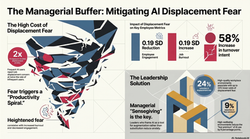
How Managers Can Ease AI Fears at Work
This video addresses the widespread concern about AI potentially replacing human jobs, emphasizing that the issue is far more complex than a simple human-versus-machine narrative. While many fear job loss due to AI, studies show only a small percentage of workers believe their specific roles are at immediate risk. The core of this concern lies not in the technology itself but in workplace culture and management approaches. AI’s true impact will be shaped by how organizations integrate it into the workforce and how leaders support their employees through the transition. Highlights 🤖 Only 3-4% of workers believe AI will eliminate their jobs soon, despite 75% fearing overall job reduction. 🔄 Frequent AI users experience higher job insecurity, illustrating the automation-augmentation paradox. 💼 Workplace culture and leadership influence AI acceptance more than the technology itself. 🛡️ Psychological safety and transparent communication reduce AI-related anxiety by nearly 25%. 🚀 Companies like Microsoft and Salesforce use hands-on AI workshops and reskilling programs to ease transitions. 🌱 Aligning AI with company values (e.g., Patagonia’s environmental mission) builds trust and purpose. 🤝 Inclusive, fair processes and employee involvement transform fear into confidence and engagement. Key Insights 🤔 The nuanced reality of AI job impact: Despite pervasive fears, only a small fraction of employees feel their jobs are imminently threatened by AI. This disconnect highlights the importance of distinguishing between generalized anxiety about technology and the specific risks to individual roles. It suggests that AI’s influence is more about job transformation than outright replacement, requiring employees to adapt rather than be displaced. ⚖️ Automation-Augmentation Paradox: Frequent exposure to AI tools makes workers more aware of AI’s capabilities, which paradoxically increases their anxiety about their own job security. This paradox reflects the blurring boundary between human and machine tasks, where employees question their unique value. Addressing this requires managers to emphasize human skills such as creativity and empathy that AI cannot replicate. 🏢 Culture outweighs code: The core reason AI triggers fear is not the technology itself but workplace culture. When employees feel secure, respected, and valued, AI is perceived as an assistant rather than a threat. Psychological safety—where workers can express confusion or make mistakes without fear—significantly reduces anxiety related to AI adoption and fosters a growth mindset. 🧑💼 Leadership’s critical role: Managers are pivotal in shaping how AI is integrated. Clear communication about AI’s purpose, how roles will evolve, and involving employees in the adoption process create trust and buy-in. Leaders who normalize experimentation and learning with AI help transform uncertainty into empowerment and innovation. 🔄 Reskilling and no-layoff commitments: Companies like Salesforce demonstrate that pairing AI adoption with strong commitments to reskilling and job security mitigates displacement fears. This strategy not only preserves morale but also turns AI into a catalyst for personal and professional growth, aligning workforce development with technological advancement. 🌍 Aligning AI with organizational values: Patagonia’s approach of linking AI adoption to its environmental mission underscores the importance of connecting technology initiatives with a company’s broader purpose. When AI is framed as a means to advance shared values, it builds organizational trust and motivates employees to embrace change. 🤝 Employee involvement and procedural justice: Inclusive processes that allow employees to participate in pilot programs, provide feedback, and co-create AI implementation foster ownership and reduce resistance. Procedural justice—fair, transparent, and consistent decision-making—builds trust and ensures that AI becomes a collaborative tool contributing to collective success rather than a source of fear.
Play Video
Play Video
03:30
The AI Sensemaking Prism
This research explores how organizational leadership and workplace culture influence employee anxiety regarding AI-driven job displacement. While frequent use of AI tools typically doubles a worker’s fear of being replaced, high-quality management practices—such as transparent communication, wellbeing support, and psychological safety—can significantly reduce this concern. The findings suggest that the way managers frame the transition determines whether staff view AI as a helpful tool for augmentation or a threat of substitution. When leaders prioritize respect and skill-building pathways, they mitigate negative outcomes like burnout and low engagement. Ultimately, the study concludes that managerial quality is a vital component of successful technology adoption, acting as a buffer that protects both worker mental health and organizational productivity.
Play Video
Play Video
19:09
Managers as Mediators: How Organizational Leadership Shapes Workers' Fear of AI Displacement
Abstract: Artificial intelligence adoption is reshaping work, yet workers' responses to these technologies depend not only on occupational exposure but critically on how organizations manage the transition. This article examines evidence from the Gallup Workforce Panel (2023–2026) demonstrating that managerial quality and workplace practices substantially moderate workers' fear of AI-driven job displacement. While only 3–4% of workers report their job is very likely to disappear within five years due to AI, concern rises sharply among frequent AI users. However, a one-standard-deviation increase in workplace quality associates with 13–24% lower odds of reporting displacement risk, and workers in high-wellbeing environments experience up to 9 percentage points less fear despite frequent AI use. These findings establish that organizational sensegiving—communicated through respect, wellbeing support, and cultural connectedness—shapes whether workers interpret AI as augmentation or substitution, with direct implications for engagement, burnout, and retention. See Privacy Policy at https://art19.com/privacy and California Privacy Notice at https://art19.com/privacy#do-not-sell-my-info.
Play Video
Play Video
48:27
A Conversation about Managing the Human Element of AI Displacement Risk
This research explores how organizational leadership and workplace culture influence employee anxiety regarding AI-driven job displacement. While frequent use of AI tools typically doubles a worker’s fear of being replaced, high-quality management practices—such as transparent communication, wellbeing support, and psychological safety—can significantly reduce this concern. The findings suggest that the way managers frame the transition determines whether staff view AI as a helpful tool for augmentation or a threat of substitution. When leaders prioritize respect and skill-building pathways, they mitigate negative outcomes like burnout and low engagement. Ultimately, the study concludes that managerial quality is a vital component of successful technology adoption, acting as a buffer that protects both worker mental health and organizational productivity. See Privacy Policy at https://art19.com/privacy and California Privacy Notice at https://art19.com/privacy#do-not-sell-my-info.
Play Video
Play Video
19:09
A Conversation about Managing the Human Element of AI Displacement Risk
This research explores how organizational leadership and workplace culture influence employee anxiety regarding AI-driven job displacement. While frequent use of AI tools typically doubles a worker’s fear of being replaced, high-quality management practices—such as transparent communication, wellbeing support, and psychological safety—can significantly reduce this concern. The findings suggest that the way managers frame the transition determines whether staff view AI as a helpful tool for augmentation or a threat of substitution. When leaders prioritize respect and skill-building pathways, they mitigate negative outcomes like burnout and low engagement. Ultimately, the study concludes that managerial quality is a vital component of successful technology adoption, acting as a buffer that protects both worker mental health and organizational productivity. See Privacy Policy at https://art19.com/privacy and California Privacy Notice at https://art19.com/privacy#do-not-sell-my-info.
Play Video
Play Video
20:36
The Future of Leadership Development, with Robert Hargrove
In this podcast episode, Dr. Jonathan H. Westover talks with Robert Hargrove the future of leadership development. Robert Hargrove is a globally recognized authority on leadership and coaching. As the founder of Masterful Coaching, he has dedicated his career to helping leaders unlock their full potential and achieve greatness. His innovative approach to coaching has made a lasting impact on the world of leadership development. See Privacy Policy at https://art19.com/privacy and California Privacy Notice at https://art19.com/privacy#do-not-sell-my-info.
Play Video
Play Video
21:58
A Debate about Managing the Human Element of AI Displacement Risk
This research explores how organizational leadership and workplace culture influence employee anxiety regarding AI-driven job displacement. While frequent use of AI tools typically doubles a worker’s fear of being replaced, high-quality management practices—such as transparent communication, wellbeing support, and psychological safety—can significantly reduce this concern. The findings suggest that the way managers frame the transition determines whether staff view AI as a helpful tool for augmentation or a threat of substitution. When leaders prioritize respect and skill-building pathways, they mitigate negative outcomes like burnout and low engagement. Ultimately, the study concludes that managerial quality is a vital component of successful technology adoption, acting as a buffer that protects both worker mental health and organizational productivity. See Privacy Policy at https://art19.com/privacy and California Privacy Notice at https://art19.com/privacy#do-not-sell-my-info.
Play Video
Play Video
22:51
How Employee Ownership Helps Our Committees Work Better, with Bret Boudreaux
In this HCI Webinar, I talk with Bret Boudreaux about How Employee Ownership Helps Our Committees Work Better. Bret Boudreaux Director of Recruitment and Retention at BL Companies — a multi-disciplinary, employee-owned firm offering services related to architecture, engineering, environmental, and land surveying. In his role, Bret oversees the sourcing, recruiting and hiring of Engineers, Architects, Environmental Scientists and Surveyors for all of BL's 19 locations, and works closely with the firm's Employee Owners on their own professional development and company-wide professional development programming. Bret is Chair of BL's Technical Development Committee and Past-Chair of the ESOP Communications Committee. He is also VP of Programming for the New England Chapter of The ESOP Association.
HCL Review Articles
All Articles
Nexus Institute for Work and AI
Catalyst Center for Work Innovation
Adaptive Organization Lab
Work Renaissance Project
Research Briefs
Research Insights
Webinar Recaps
Book Reviews
Transformative Social impact
Search
Jan 14
24 min read
RESEARCH BRIEFS
Cognitive Frameworks for Organizational Performance and Innovation
bottom of page