top of page
Home
Bio
Pricing
Merch
Podcast Network
Advertise with Us
Be Our Guest
Academy
Learning Catalog
Learners at a Glance
The ROI of Certification
Corporate L&D Solutions
Research
Research Initiatives
Nexus Institute
Catalyst Center
Adadptive Organization Lab
Future of Work Collective
Renaissance Project
Collaboration Form
Research Models and Tools
Research One Sheets
Research Snapshots
Research Videos
Research Briefs
Free Educational Resources
HCL Review
Contribute to the HCL Review
HCL Review Archive
HCL Review Slide Decks and Infographics
HCL Review Process
HCL Review Reach and Impact
HCI Press
From HCI Academic Press
From HCI Popular Press
Publish with HCI Press
Free OER Texts
Our Impact
Invest with HCI
Industry Recognition
Philanthropic Impact
Kiva Lending Impact
More
Use tab to navigate through the menu items.
Confronting Organizational Indifference to Truth: A Strategic Framework for Managing Workplace Bullshit
CATALYST CENTER FOR WORK INNOVATION
20 hours ago
23 min read
Work Engagement: Building Sustained Motivation and Well-Being in the Modern Workplace
CATALYST CENTER FOR WORK INNOVATION
2 days ago
39 min read
When Targets Pay the Price: The Troubling Job Security of Workplace Bullying Perpetrators
CATALYST CENTER FOR WORK INNOVATION
3 days ago
20 min read
The Strategic Imperative of Psychological Safety: Why High-Performing Organizations Cultivate Dissent
CATALYST CENTER FOR WORK INNOVATION
4 days ago
24 min read
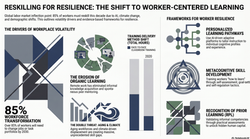
Reimagining Workforce Learning: Building Capability in an Era of Continuous Disruption
CATALYST CENTER FOR WORK INNOVATION
5 days ago
27 min read
AI Adoption and Employment Growth: Evidence from Enterprise Spending Data
NEXUS INSTITUTE FOR WORK AND AI
6 days ago
20 min read
When Leadership Vacancies Signal Organizational Distress: Moving Beyond the "Stronger Leader" Fallacy
CATALYST CENTER FOR WORK INNOVATION
7 days ago
19 min read
Beyond Payroll: How AI Automation Reshapes Job Design When Workers Enjoy Their Tasks
NEXUS INSTITUTE FOR WORK AND AI
Sep 11
18 min read
Why Peer Networks Drive AI Adoption More Than Leadership Mandates
NEXUS INSTITUTE FOR WORK AND AI
Sep 10
19 min read
When Professional Identity Becomes Professional Crisis: The Hidden Cost of Workplace Inauthenticity
CATALYST CENTER FOR WORK INNOVATION
Sep 9
22 min read
Human Capital Leadership Review
Employers and Universities Must Work Together to Close the AI Readiness Gap
17 hours ago
3 min read
Confronting Organizational Indifference to Truth: A Strategic Framework for Managing Workplace Bullshit
CATALYST CENTER FOR WORK INNOVATION
20 hours ago
23 min read
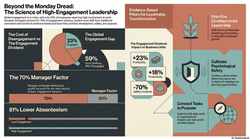
Work Engagement: Building Sustained Motivation and Well-Being in the Modern Workplace
CATALYST CENTER FOR WORK INNOVATION
2 days ago
39 min read
Managing Contractor Misclassification Risk as Your Business Scales
2 days ago
6 min read
Expert Warns: These Are The Tasks AI Shouldn't Do For Your Business Yet
3 days ago
2 min read
Harris Poll Survey: 70% of Gen Z Healthcare Workers Look to Leave as U.S. Projects Critical Healthcare Workforce Shortage
3 days ago
5 min read
When Targets Pay the Price: The Troubling Job Security of Workplace Bullying Perpetrators
CATALYST CENTER FOR WORK INNOVATION
3 days ago
20 min read
Report: AI Could Reshape the US Workforce in 4 Very Different Ways
4 days ago
3 min read
Millennials, Gen Z Agree AI Certifications Career-Changing
4 days ago
3 min read
1
2
3
4
5
HCL Review Research Videos
HCL Review Research Infographics
Blog: HCI Blog
Human Capital Leadership Review
Featuring scholarly and practitioner insights from HR and people leaders, industry experts, and researchers.
Human Capital Innovations
Play Video
Play Video
07:20
The Engagement Illusion - Why Fairness is an Operating Discipline
This research explores how organizational justice serves as a vital foundation for fostering employee engagement and job satisfaction through the development of affective commitment. By analyzing a study of service-sector workers in India alongside established theories like equity and social exchange, the research argues that fairness must be an operational discipline rather than a mere marketing campaign. To build a truly committed workforce, leaders are encouraged to implement explainable resource allocation, visible routes for employee voice, and respectful management practices. Real-world examples from organizations like Salesforce and the NHS illustrate that sustainable success requires accountable decision-making and the protection of worker autonomy. Ultimately, the research emphasizes that while perceived fairness emotionally attaches employees to their roles, it should be treated as a standard of dignity regardless of its financial impact.
Play Video
Play Video
03:18
The Fairness Blueprint
This research explores how organizational justice serves as a vital foundation for fostering employee engagement and job satisfaction through the development of affective commitment. By analyzing a study of service-sector workers in India alongside established theories like equity and social exchange, the research argues that fairness must be an operational discipline rather than a mere marketing campaign. To build a truly committed workforce, leaders are encouraged to implement explainable resource allocation, visible routes for employee voice, and respectful management practices. Real-world examples from organizations like Salesforce and the NHS illustrate that sustainable success requires accountable decision-making and the protection of worker autonomy. Ultimately, the research emphasizes that while perceived fairness emotionally attaches employees to their roles, it should be treated as a standard of dignity regardless of its financial impact.
Play Video
Play Video
21:02
Fairness That Employees Can Feel: Building Commitment, Engagement, and Satisfaction Through Every...
Abstract: Organizational fairness becomes consequential when employees experience it through decisions about pay, workload, advancement, voice, and interpersonal treatment. Building on Kaur and Gupta’s (2026) study of 275 service-sector employees in Punjab, India, this article examines affective commitment as a possible connection between organizational justice, employee engagement, and satisfaction. It distinguishes emotional attachment from obligation and dependence, explains the complementary contributions of established organizational theories, and evaluates the limits of cross-sectional mediation evidence. The article then develops a practitioner-oriented approach organized around equitable resource allocation, credible employee voice, respectful management, and predictable work design. Documented initiatives at Salesforce, NHS England, the Veterans Health Administration, and Gap illustrate different implementation approaches without implying that they establish the same psychological mechanism. The central argument is that organizations should treat fairness as an operating discipline rather than an engagement campaign. Sustainable progress requires accountable decision processes, safeguards for employee autonomy, and evaluation that separates perceived fairness, commitment, wellbeing, and business outcomes.
Play Video
Play Video
22:51
A Debate about Fairness That Employees Can Feel
This research explores how organizational justice serves as a vital foundation for fostering employee engagement and job satisfaction through the development of affective commitment. By analyzing a study of service-sector workers in India alongside established theories like equity and social exchange, the research argues that fairness must be an operational discipline rather than a mere marketing campaign. To build a truly committed workforce, leaders are encouraged to implement explainable resource allocation, visible routes for employee voice, and respectful management practices. Real-world examples from organizations like Salesforce and the NHS illustrate that sustainable success requires accountable decision-making and the protection of worker autonomy. Ultimately, the research emphasizes that while perceived fairness emotionally attaches employees to their roles, it should be treated as a standard of dignity regardless of its financial impact.
Play Video
Play Video
27:38
A Conversation about Fairness That Employees Can Feel
This research explores how organizational justice serves as a vital foundation for fostering employee engagement and job satisfaction through the development of affective commitment. By analyzing a study of service-sector workers in India alongside established theories like equity and social exchange, the research argues that fairness must be an operational discipline rather than a mere marketing campaign. To build a truly committed workforce, leaders are encouraged to implement explainable resource allocation, visible routes for employee voice, and respectful management practices. Real-world examples from organizations like Salesforce and the NHS illustrate that sustainable success requires accountable decision-making and the protection of worker autonomy. Ultimately, the research emphasizes that while perceived fairness emotionally attaches employees to their roles, it should be treated as a standard of dignity regardless of its financial impact.
Play Video
Play Video
Unlocking Innovation with "A Better Way" Framework, with Leslie Holman
In this HCI Webinar, I talk with Leslie Holman about unlocking innovation in your organization. Leslie Holman believes there is a better way to live, lead, and work—and she’s spent the last 13 years proving it. As the Owner & CEO of Pinnacle Performance Group, she leads a boutique consulting firm that helps organizations turn bold plans into recognized value. Prior to Pinnacle, Leslie spent many years watching companies who had strategies, but no way to execute on them. Enter Pinnacle, where her team partners with executives to ensure strategy becomes tangible, measurable outcomes across the business. Leslie’s deeper purpose took shape when she purchased Pinnacle with a vision to transform it into a living experiment in a more human, sustainable way of working. After years in corporate and consulting environments where excellence often demanded personal sacrifice, she set out to design a model where people could do meaningful, high-impact work without breaking themselves in the process. Today, Pinnacle operates as a whole-person, future-of-work laboratory—demonstrating that exceptional results come from honoring the full humanity of the people doing the work.
Play Video
Play Video
03:24
Engineering Systemic Candor
This research explores the complex organizational tension between maintaining anonymous reporting channels and fostering productive workplace communication. It argues that while identity protection is essential for psychological safety and encouraging employees to speak up, it should not excuse leadership from evaluating claims or providing actionable feedback. The research highlights how unstructured criticism can damage performance and morale if managers fail to distinguish between behavioral observations and personal judgments. To address this, the research suggests implementing differentiated reporting routes, such as those used by NASA or Toyota, to ensure accountability without sacrificing reporter security. Ultimately, the research advocates for a systemic approach where managers are responsible for fairly investigating concerns and facilitating skillful dialogue.
Play Video
Play Video
07:25
Accountable Candor - Engineering Systems for Employee Voice
This research explores the complex organizational tension between maintaining anonymous reporting channels and fostering productive workplace communication. It argues that while identity protection is essential for psychological safety and encouraging employees to speak up, it should not excuse leadership from evaluating claims or providing actionable feedback. The research highlights how unstructured criticism can damage performance and morale if managers fail to distinguish between behavioral observations and personal judgments. To address this, the research suggests implementing differentiated reporting routes, such as those used by NASA or Toyota, to ensure accountability without sacrificing reporter security. Ultimately, the research advocates for a systemic approach where managers are responsible for fairly investigating concerns and facilitating skillful dialogue.
HCL Review Articles
All Articles
Nexus Institute for Work and AI
Catalyst Center for Work Innovation
Adaptive Organization Lab
Work Renaissance Project
Research Briefs
Research Insights
Webinar Recaps
Book Reviews
Transformative Social impact
Search
Jan 8, 2025
7 min read
ADAPTIVE ORGANIZATION LAB
The Rise and Toll of the Blame Culture
bottom of page