top of page
Home
Bio
Pricing
Merch
Podcast Network
Advertise with Us
Be Our Guest
Academy
Learning Catalog
Learners at a Glance
The ROI of Certification
Corporate L&D Solutions
Research
Research Initiatives
Nexus Institute
Catalyst Center
Adadptive Organization Lab
Future of Work Collective
Renaissance Project
Collaboration Form
Research Models and Tools
Research One Sheets
Research Snapshots
Research Videos
Research Briefs
Research Articles
Free Educational Resources
HCL Review
Contribute to the HCL Review
HCL Review Archive
HCL Review Slide Decks and Infographics
HCL Review Process
HCL Review Reach and Impact
HCI Press
From HCI Academic Press
From HCI Popular Press
Publish with HCI Press
Free OER Texts
Our Impact
Invest with HCI
Industry Recognition
Philanthropic Impact
Kiva Lending Impact
More
Use tab to navigate through the menu items.
Navigating Institutional Complexity: How Context Shapes Talent Management Implementation in Small and Medium-Sized Enterprises
CATALYST CENTER FOR WORK INNOVATION
7 hours ago
40 min read
Where the Pipeline Breaks: AI, Early-Career Workforce Development, and the Future of Organizational Talent Strategy
NEXUS INSTITUTE FOR WORK AND AI
1 day ago
19 min read
The Psychological Architecture of Teacher Engagement: How Well-Being Shapes Professional Commitment Through Work Ethic
CATALYST CENTER FOR WORK INNOVATION
2 days ago
27 min read
The Rise of Job Stacking: Managing Multiple Remote Roles in the Post-Pandemic Workplace
CATALYST CENTER FOR WORK INNOVATION
3 days ago
22 min read
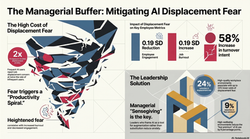
Managers as Mediators: How Organizational Leadership Shapes Workers' Fear of AI Displacement
NEXUS INSTITUTE FOR WORK AND AI
4 days ago
28 min read
When AI Becomes a Crutch: How Instant Help Erodes Human Capability and Persistence
NEXUS INSTITUTE FOR WORK AND AI
6 days ago
20 min read
When Algorithms Replace Credentials: Navigating Labor Commoditization in the AI Era
NEXUS INSTITUTE FOR WORK AND AI
6 days ago
19 min read
AI Agents and the Future of Work: How Early Adopters Are Building Competitive Moats Through Intelligent Collaboration
NEXUS INSTITUTE FOR WORK AND AI
Jun 29
22 min read
The Workforce AI Literacy Imperative: Building Competitive Advantage Through Evidence-Based Upskilling
NEXUS INSTITUTE FOR WORK AND AI
Jun 28
23 min read
Cognitive Surrender in the Age of AI: How Organizations Can Navigate the Rise of Artificial Reasoning
NEXUS INSTITUTE FOR WORK AND AI
Jun 27
19 min read
Human Capital Leadership Review
Why Your Failed AI Initiative Is Actually An Organizational Problem
27 minutes ago
7 min read
One-Third of Workers Struggle to Focus in the Office - but Experts Warn Home Working isn't the Answer
38 minutes ago
2 min read
Navigating Institutional Complexity: How Context Shapes Talent Management Implementation in Small and Medium-Sized Enterprises
CATALYST CENTER FOR WORK INNOVATION
7 hours ago
40 min read
Where the Pipeline Breaks: AI, Early-Career Workforce Development, and the Future of Organizational Talent Strategy
NEXUS INSTITUTE FOR WORK AND AI
1 day ago
19 min read
The Psychological Architecture of Teacher Engagement: How Well-Being Shapes Professional Commitment Through Work Ethic
CATALYST CENTER FOR WORK INNOVATION
2 days ago
27 min read
The Rise of Job Stacking: Managing Multiple Remote Roles in the Post-Pandemic Workplace
CATALYST CENTER FOR WORK INNOVATION
3 days ago
22 min read
The Silent Productivity Drain: Why Employees Stop Asking for IT Help
4 days ago
4 min read
America Works Launches “250 Hires Initiative” to Celebrate America 250 and Expand Workforce Opportunity Nationwide
4 days ago
2 min read
Managers as Mediators: How Organizational Leadership Shapes Workers' Fear of AI Displacement
NEXUS INSTITUTE FOR WORK AND AI
4 days ago
28 min read
1
2
3
4
5
HCL Review Research Videos
HCL Review Research Infographics
Blog: HCI Blog
Human Capital Leadership Review
Featuring scholarly and practitioner insights from HR and people leaders, industry experts, and researchers.
Human Capital Innovations
Play Video
Play Video
04:03
Module 2 - Strategic Change Architecture Slides Overview Video
In today's rapidly evolving business landscape, the need for trustworthy and transformative leadership has never been more crucial. We understand the pivotal role that leadership plays in driving organizational change and success. In this module introduction, we will explore the key traits of trustworthy leaders, delve into the seven practices for cultivating trustworthy leadership, examine various theories and models of change, and reflect on the value of service learning in the context of organizational transformation. In the face of constant change and uncertainty, the need for trustworthy and transformative leadership has never been more critical. By cultivating the key traits of trustworthy leaders and implementing the seven practices for fostering such leadership, organizations can unlock the full potential of their teams and drive sustainable, impactful change. Organizational change is a complex and multifaceted process, requiring a deep understanding of various theories and models, as well as a commitment to continuous learning and adaptation. By incorporating service-learning into change initiatives, we can further strengthen our teams, deepen our connection to the community, and ultimately achieve greater success.
Play Video
Play Video
06:20
Cultivating Trustworthy Leadership Transform Your Organization!
In today's rapidly evolving business landscape, the need for trustworthy and transformative leadership has never been more crucial. We understand the pivotal role that leadership plays in driving organizational change and success. In this module introduction, we will explore the key traits of trustworthy leaders, delve into the seven practices for cultivating trustworthy leadership, examine various theories and models of change, and reflect on the value of service learning in the context of organizational transformation. In the face of constant change and uncertainty, the need for trustworthy and transformative leadership has never been more critical. By cultivating the key traits of trustworthy leaders and implementing the seven practices for fostering such leadership, organizations can unlock the full potential of their teams and drive sustainable, impactful change. Organizational change is a complex and multifaceted process, requiring a deep understanding of various theories and models, as well as a commitment to continuous learning and adaptation. By incorporating service-learning into change initiatives, we can further strengthen our teams, deepen our connection to the community, and ultimately achieve greater success.
Play Video
Play Video
20:54
Module 2 Conversation Deep Dive - Why Your Organization Is A Conversation
In today's rapidly evolving business landscape, the need for trustworthy and transformative leadership has never been more crucial. We understand the pivotal role that leadership plays in driving organizational change and success. In this module introduction, we will explore the key traits of trustworthy leaders, delve into the seven practices for cultivating trustworthy leadership, examine various theories and models of change, and reflect on the value of service learning in the context of organizational transformation. In the face of constant change and uncertainty, the need for trustworthy and transformative leadership has never been more critical. By cultivating the key traits of trustworthy leaders and implementing the seven practices for fostering such leadership, organizations can unlock the full potential of their teams and drive sustainable, impactful change. Organizational change is a complex and multifaceted process, requiring a deep understanding of various theories and models, as well as a commitment to continuous learning and adaptation. By incorporating service-learning into change initiatives, we can further strengthen our teams, deepen our connection to the community, and ultimately achieve greater success.
Play Video
Play Video
06:36
Tackling Workplace Bullshit - The C R A P Strategy
This video explores the pervasive issue of workplace "bullshit," a term used to describe vague, jargon-filled, and insincere communication prevalent in many professional environments. Unlike lying, which involves knowingly presenting false information, bullshitting disregards the truth entirely and aims solely to impress or evade scrutiny. This subtle yet dangerous behavior corrodes trust, muddles communication, and hampers genuine understanding. The modern workplace, from startups to global corporations, has become a breeding ground for bullshit due to pressures to contribute in meetings, cultural norms that reward style over substance, and the amplification of empty talk through digital platforms like email and Slack. Highlights 🗣️ Workplace bullshit involves vague jargon and empty phrases that prioritize impressiveness over truth. 🎯 Bullshitting differs from lying in that the bullshitter is indifferent to truth; liars know the truth and hide it. 📉 Bullshit undermines trust, damages relationships, and makes productive work difficult. 💼 Modern pressures like compulsory opinions and digital communication amplify workplace bullshit. 🏢 Companies often reward style over substance, promoting bullshitting behaviors to leadership roles. 🔍 The CRAP framework—Comprehend, Recognize, Act, Prevent—offers a proactive method to combat bullshit. 🛡️ Creating a bullshit-resistant workplace requires top-down cultural change emphasizing clarity and honesty. Key Insights 🧠 Bullshit vs. Lying: Understanding the Distinction The video distinguishes bullshit from lies by explaining that liars have a relationship to truth—they deliberately obscure it—while bullshitters are indifferent to truth entirely. This distinction is critical because it means that bullshit is harder to detect and challenge since it lacks a factual basis to dispute directly. Bullshit relies on vague abstractions and impressiveness, making it a more insidious threat to workplace integrity. ⚠️ The Corrosive Impact of Bullshit on Organizational Trust Bullshit in the workplace doesn't merely annoy; it erodes the fundamental concept of truth. When employees are bombarded with buzzwords and vague claims, it creates confusion and cynicism. As facts become secondary to style and confidence, trust between colleagues diminishes, impeding collaboration and impairing decision-making. This corrosion of trust destabilizes organizational culture and reduces overall effectiveness. 📈 Modern Workplace Dynamics Fuel Bullshit Proliferation The pressure to contribute in every meeting, fear of silence being perceived as disengagement, and the dominance of digital communication platforms encourage employees to fill the vacuum with meaningless jargon. This environment nurtures bullshit because employees either feel compelled to speak without substance or to adopt the corporate buzzwords. Furthermore, technological tools like email and Slack serve as accelerants, rapidly spreading nonsense throughout organizations. 🏆 Perverse Incentives: Rewarding Style Over Substance The transcript notes that many companies unintentionally reward bullshitters by promoting those who sound impressive rather than those who provide clear, thoughtful insights. This incentive structure elevates loud voices and performance without substance, cultivating a culture where decision-making suffers. Such environments perpetuate a feedback loop, where bullshit expands because it is profitable for career advancement. 🔄 Successful Cultural Interventions Require Structural Changes The video provides real-world examples where companies like Amazon and Microsoft addressed bullshit by altering communication norms. Amazon’s ban on PowerPoint slides in favor of written memos forces clarity and evidence-based arguments. Microsoft’s focus on learning over posturing fosters an environment where honesty is prioritized. These examples highlight that clear communication policies and cultural shifts can significantly reduce bullshit. 🛠️ The CRAP Framework as a Practical Tool The four-stage CRAP framework—Comprehend, Recognize, Act, Prevent—offers an actionable protocol to identify and mitigate bullshit at an individual and organizational level. Comprehension ensures understanding of what bullshit looks and sounds like; recognition trains sensitivity to jargon and empty speech. Acting involves polite but firm challenges that demand clarity and evidence, while prevention entails establishing organizational cultures and policies that reward transparency and truth. 🌱 Leadership and Psychological Safety Are Key to Lasting Change To abolish bullshit from workplaces, leaders must foster psychological safety, allowing employees to question vague claims without fear of retaliation. Praising honesty, encouraging tough questions, and rejecting pointless meetings with unclear goals builds a culture where truth is valued.
Play Video
Play Video
03:08
Dismantling Organizational Bullshit
This research examines the pervasive issue of workplace bullshit, defined as communication made with a total indifference to the truth rather than a deliberate intent to lie. The research argues that this phenomenon flourishes during organizational crises and within roles that prioritize symbolic jargon over concrete facts, ultimately damaging decision-making and employee morale. To combat this, the research introduces the C.R.A.P. strategic framework, which encourages leaders to comprehend, recognize, act against, and prevent meaningless rhetoric. Proposed interventions include fostering critical thinking, implementing evidence-based management, and simplifying professional language to eliminate confusing acronyms. By shifting toward a truth-oriented culture, organizations can restore internal trust and improve overall performance.
Play Video
Play Video
04:35
Unlocking Work Engagement - Boosting Motivation & Well Being!
This research explores work engagement, a psychological state defined by an employee’s vigor, dedication, and absorption in their professional role. Drawing on the Job Demands-Resources theory, the research explains that providing workers with autonomy, feedback, and growth opportunities serves as the primary catalyst for this productive mindset. The research highlights significant organizational benefits, such as increased financial performance and innovation, alongside individual advantages like improved mental health and reduced burnout. Additionally, the research evaluates practical interventions like job crafting and examines how engagement persists or shifts within remote work environments and during periods of organizational change. Ultimately, the research advocates for a multilevel approach where leadership and culture work together to sustain a motivated and flourishing workforce.
Play Video
Play Video
02:41
Engagement Architecture
This research explores work engagement, a psychological state defined by an employee’s vigor, dedication, and absorption in their professional role. Drawing on the Job Demands-Resources theory, the research explains that providing workers with autonomy, feedback, and growth opportunities serves as the primary catalyst for this productive mindset. The research highlights significant organizational benefits, such as increased financial performance and innovation, alongside individual advantages like improved mental health and reduced burnout. Additionally, the research evaluates practical interventions like job crafting and examines how engagement persists or shifts within remote work environments and during periods of organizational change. Ultimately, the research advocates for a multilevel approach where leadership and culture work together to sustain a motivated and flourishing workforce.
Play Video
Play Video
24:15
Work Engagement: Building Sustained Motivation and Well-Being in the Modern Workplace
Abstract: Work engagement represents a positive, affective-motivational state characterized by vigor, dedication, and absorption. This state of well-being has emerged as a critical determinant of organizational effectiveness and employee health over the past two decades. This article synthesizes current evidence on work engagement, examining its conceptual foundations, temporal stability, and organizational impacts. The review explores key drivers across individual, job, and organizational levels, with particular attention to practical interventions that promote engagement. Evidence demonstrates that work engagement predicts enhanced performance, reduced absenteeism, greater organizational commitment, and improved mental and physical health. The article addresses engagement dynamics in contemporary contexts including remote work, organizational change, and diverse employment arrangements. Practical implications for organizational leaders and human resource professionals are discussed, alongside future research directions addressing measurement refinement, cultural considerations, and emerging workplace technologies. The evidence base confirms that work engagement benefits all stakeholders and can be cultivated through strategic investments in job resources, leadership practices, and employee-initiated behaviors. See Privacy Policy at https://art19.com/privacy and California Privacy Notice at https://art19.com/privacy#do-not-sell-my-info.
HCL Review Articles
All Articles
Nexus Institute for Work and AI
Catalyst Center for Work Innovation
Adaptive Organization Lab
Work Renaissance Project
Research Briefs
Research Insights
Webinar Recaps
Book Reviews
Transformative Social impact
Search
bottom of page