





The Weight We Choose to Carry

As a leader, there is a balance between supporting your team by taking on every challenge, and letting your team learn by doing. Unfortunately, I had the opportunity to divest some of my responsibilities to my leadership team this summer when my family received unexpected health news. It was a shock - of course, more personally impactful than professionally. We all have, or will at some point, experience moments like this. When life hits a leader with a solid punch to the gut, the responsibilities of day-to-day work take a backseat. For the first time, maybe in my entire career, I knew I couldn’t handle the weight of the work I’d been carrying.
Because of the situation at home, I had to take a step back, which is not my nature. But here's the part I didn't expect: the forced pause didn't just slow me down. It revealed how much of what I thought was essential was actually self-imposed.
The changes I had to make were largely tangible: I had to cancel eight weeks of planned travel; I had to cancel national speaking engagements I'd committed to months in advance and conferences I genuinely believed I couldn't miss.
When I canceled it all, my life got better.
That's a hard thing to admit when you've spent your entire career being the person who shows up everywhere, says yes to every opportunity, and too often measures progress by how full the calendar is.
Where is The Weight Actually Coming From?
My executive coach once told me: "Tom, you are awesome at climbing mountains, but you're climbing a mountain too small. You run up, slam a flag in it, and immediately start looking for the next one. Get yourself on a bigger mountain. One with a bigger purpose. One that takes a lifetime to climb."
I heard him when he said it, and I’ve made some gentle course corrections over the years, but I didn't really feel it until this summer. And perhaps there was another lesson buried in his advice that I wasn’t ready to hear at the time. Maybe the lesson wasn't simply to find a bigger mountain. Maybe it was to stop believing I had to climb every mountain that appeared in front of me.
That's what so many Type A leaders, founders, and business owners do. We've been externally motivated by achievement our entire lives. Hit the goal, scan the horizon, find the next peak. We become so good at carrying things that we stop asking whether we need to carry them at all.
Until something forces us to stop. And when you stop, you start to see things clearly.
I saw that most of what was draining me wasn't the work itself. It was everything I'd piled on top of the work because I thought I had to. The travel, the boards, the commitments that looked impressive but weren't moving anything meaningful forward.
I saw that the pressure I was feeling wasn't coming from my organization, my board, or my team. It was coming from me. And I saw something I wasn't expecting at all: I'm more excited about going deeper with the work I'm already doing than getting on another airplane to talk about it somewhere else.
Taking a Step Back to Move Forward
Sooner or later, every leader, founder, and business owner will face a season that completely upends the normal day-to-day. Something will happen that cuts you to your core, and you'll be expected to show up and lead.
The question isn't whether one of these seasons will come. It's what you'll let it teach you when it does. For me, the lesson was this: I put most of the weight I was carrying there myself. And I didn't need anyone's permission to set some of it down.
If you're in one of those seasons right now, grinding through something that nobody at work knows about and carrying more than you're letting on, perhaps there’s a question worth asking: How much of what you’re carrying actually needs to be carried, and how much have you simply convinced yourself is yours to carry?
I learned this summer that the world doesn’t fall apart when you put some of it down. My team got stronger, my work became more focused, and I became more present for the people who matter most, at work and in life. Sometimes you need to stop and take inventory of what you’re doing in order to figure out what you can let go.

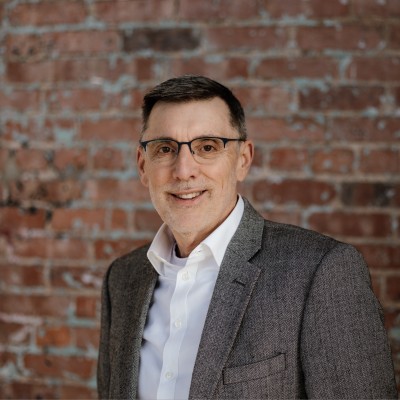
Thomas Ulbrich is the CEO of Goodwill Industries of Western New York, a $25 million organization that has grown more than 300% under his leadership. With over 30 years of experience building, scaling, and selling companies, he has spent more than a decade teaching entrepreneurship and mentoring business owners at the University at Buffalo School of Management. Tom works with owner-led companies navigating the transition from founder-dependent to scalable, leader-driven organizations. He speaks and writes on entrepreneurship, leadership, culture, and sustainable growth. Above all, he is a proud husband, father, and grandfather who believes the best leaders build things that outlast them.


