





Leadership Through Deliberate Skill Development

For the past five years, while leading students through my undergraduate Business Leadership Endeavor course sequence (BLE I, II, III), I conducted a study-designed to gauge progress against the sequence’s central premise: leadership is practiced, not merely learned. The leadership competency measured in this study, public speaking self-efficacy, was intentionally developed and tracked through repeated practice, feedback, and reflection. Public speaking self-efficacy is a belief in one’s ability and in one’s ability to take necessary actions to succeed (Bandura, 1977). Through pre- and post-surveys across the curriculum, we found that students demonstrated statistically significant growth in public speaking self-efficacy. While students entered with high baseline self-efficacy, repeated experiential practice consistently reinforced and elevated their belief in their ability to communicate effectively. Why did repeated opportunities to practice public speaking enhance student self-efficacy over time?
Leadership is neither a single trait nor developed through a single transformational experience. It is rather developed through the gradual accumulation of behaviors that become habits or second nature over time. Public speaking self-efficacy is just one piece of that puzzle.
Leadership development requires going beyond communication techniques and leadership theories. It must be understood through knowledge and strengthened through intentional practice. The concepts alone will not automatically translate into an ability to listen with empathy, communicate effectively, navigate conflict, provide constructive feedback, or inspire others toward a common purpose. It is the repeated experience, reflection, and application that build the leadership muscle. And like any muscle, it is built progressively—one skill at a time, one application at a time.
Why Skills Matter
Competencies or skills are usually assembled informally into two specific groups: hard skills and soft skills. Hard skills are defined as technical knowledge that is learned through work experience, education, or training. Soft skills, on the other hand, are usually identified as people skills and personal attributes that one possesses and behaviors that they display in problem-solving situations (Robles, 2012). Many researchers define soft skills as non-cognitive, personal attributes that influence behavior, including professionalism, attitudes, personality traits, socio-emotional factors, and interpersonal abilities such as emotional and social intelligence.
Soft skills are in demand. Today's graduates enter a workforce where technical expertise alone is no longer sufficient. Increasingly, employers seek individuals who can communicate effectively, collaborate across teams, solve complex problems, adapt to change, and build meaningful relationships. Soft skills are increasingly considered drivers of success in education and professional careers (Gutman & Schoon, 2013). Hosseinioun et al. (2025) conducted a study of more than 1,000 occupations and found that soft skills such as critical thinking and communication can determine how far workers advance in their careers. They argue that in an era of AI, it is easy to assume that technical skills will guarantee a lucrative career. However, their research has shown that skills such as collaboration, critical thinking, and adaptability may prove far more important to individuals and organizations.
It is evident that the more we prepare students with strong soft skills, the more successful they will be in the workforce. According to the National Business Education Association (NBEA), the shortage of soft skills confronting today's dynamic workforce goes beyond academic and occupational skills. Therefore, it is recommended to help potential employees develop not only technical competencies but also human-relation abilities (Policies Commission for Business and Economic Education [PCBEE], 2000). Soft skills have become extremely important across all occupations. Hiring individuals who possess these skills is instrumental for high-performing organizations seeking to retain a competitive edge (Glenn, 2008). Becoming job-ready involves acquiring not just knowledge and technical skills, but also learning how to work in teams, communicate effectively, and understand workplace culture (Trede, 2012).
If leadership is a mix of these interpersonal and behavioral skills, then an obvious question emerges: How do students intentionally develop them?
The answer begins with deliberate practice.
Simply telling students to become better communicators or collaborators is unlikely to change behavior. Like musicians, athletes, and surgeons, students develop complex skills through intentional practice rather than passive exposure.
Ericsson et al. (1993) define deliberate practice as highly structured, effortful activities whose explicit purpose is to improve performance—not simply to perform, work, or enjoy an activity. Deliberate practice requires setting specific goals that target weaknesses or areas for improvement rather than simply repeating familiar tasks. Learners must receive immediate, informative feedback so they can identify errors and adjust their performance. Deliberate practice also requires repetition with refinement, allowing learners to repeatedly perform similar tasks while continuously improving. Finally, deliberate practice is mentally demanding because its purpose is improvement rather than entertainment. Teachers and coaches play a critical role in deliberate practice. Effective deliberate practice is guided by someone who can identify weaknesses, design progressively challenging tasks, provide individualized feedback, and help learners develop more effective strategies. This is where teachers can play a pivotal role in designing their classroom as a skill-building hub. Their guidance and coaching can accelerate students' development beyond what they might achieve through self-directed learning.
The Missing Piece: Deliberate Skill Development (DSD)
While deliberate practice provides a powerful model for mastering individual skills, leadership presents a different challenge. Leadership is not a single competency that can be perfected in isolation. It is the integration of multiple social, emotional, and behavioral skills that must be developed together and applied across many different situations.
This realization led me to think beyond deliberate practice toward a broader developmental framework.
Building on the principles of deliberate practice, I propose Deliberate Skill Development (DSD) as a framework for intentionally developing these competencies through structured practice, feedback, reflection, authentic application, and habit formation.
Deliberate Skill Development is the intentional and systematic process of developing leadership by identifying essential soft skills, creating structured opportunities to practice those skills, providing meaningful feedback, encouraging reflection, and repeatedly applying those skills in authentic situations until they become habitual behaviors and, ultimately, part of an individual's leadership identity. Rather than focusing on mastering a single competency, DSD recognizes that leadership emerges through the continuous development and integration of multiple interpersonal, intrapersonal, and behavioral skills that can be intentionally practiced over time.
A framework has little value unless it changes what happens in the classroom. Rather than viewing leadership as a body of knowledge to be acquired, I have created a classroom environment that treats leadership as a collection of social, emotional, and behavioral skills that are intentionally developed through structured practice. Students are not passive recipients of leadership concepts; instead, they actively engage in learning, practicing, receiving feedback on, and reflecting upon leadership behaviors in authentic classroom experiences.
Leadership teaching in my classroom begins with the premise that world-class leadership starts with self-leadership. Before students can effectively influence others, they must first learn to manage themselves. Consequently, the foundation of the student learning experience is built around habits. Students identify behaviors that either support or hinder their personal and professional growth and intentionally work to strengthen positive habits through repeated practice. These foundational habits include time management, self-discipline, confidence, self-awareness, self-management, emotional regulation, professionalism, and career readiness. As students strengthen these habits, they progressively develop more complex interpersonal skills such as communication, teamwork, conflict management, relationship building, empathy, and accountability. This progression reflects the central premise of Deliberate Skill Development: leadership is built one behavior at a time, with each new competency strengthening the next.
Why This Matters
I have implemented this leadership teaching approach across all my courses, including Business Leadership Endeavor I, II, & III, Transformational Leadership, Pre-college Leadership Development, and Organizational Design.
Using a skill-testing lab approach, I design learning experiences that immerse students in exploring and practicing leadership skills through four developmental lenses: personal, student, professional, and community development. Every class session follows the Deliberate Skill Development cycle, meaning that from the moment students enter the room, they are actively engaged in leadership practices.
A typical session begins with students resetting their minds through a 15-minute written reflection based on a surprise prompt tied to their required reading. This establishes a clear cognitive baseline, immediately engaging them in critical thinking and self-awareness before diving into the core material. Following this grounding exercise, students explore the significance of a key concept through a brief, research-backed micro-lecture, where direct instruction is kept to a minimum to preserve as much hands-on time as possible. From there, students immediately transition into putting the concept into action. Whether through dynamic small-group activities or real-life, pre-planned simulations, they actively practice presenting, active listening, giving and receiving constructive feedback, and taking the initiative to challenge themselves. By moving through this deliberate cycle in every single session, students practice core leadership skills continuously—often without even realizing that these repeated behaviors are steadily transforming into subconscious, lifelong habits. The practice does not stop here, though. It extends beyond the classroom, where students connect with outside perspectives, create personal practice routines, and sometimes bring the real-life experiences back to the next class to reflect and receive feedback. A typical course ends with an award-winning Ted Talk where each student shares their leadership growth with their peers.
This final milestone directly highlights the core findings of my self-efficacy research study. The self-efficacy confidence students developed in public speaking was never the goal. It was one visible indicator of a much broader developmental process. What is fascinating about the study results is that the total instruction and practice time across each course sequence is approximately 30 hours in the semester. When the findings from the five-year study are viewed through the lens of Deliberate Skill Development, the results become more understandable. Students did not become more confident simply because they grew older or spent more time in college. Their self-efficacy confidence increased because they repeatedly practiced a specific leadership behavior, received meaningful feedback, reflected on their experiences, and applied what they learned over time. Even though the total practice time was shorter, consistency was the key.
Leadership does not emerge naturally through experience. Experience certainly matters, but experience alone does not guarantee development. Students can participate in teams, complete projects, and give presentations without intentionally improving the underlying skills those experiences require.
Deliberate Skill Development offers a different approach. It intentionally designs experiences that require students to practice specific competencies consistently, receive feedback, reflect on their performance, and apply those lessons repeatedly until new behaviors become habits.
Teachers therefore play a pivotal role in designing learning environments that function as skill-building laboratories rather than simply places where leadership theories are discussed. Their guidance, coaching, and feedback accelerate students' development and help transform isolated experiences into meaningful opportunities for growth.
Leadership is not a single technical skill, but the integration of multiple social, emotional, and behavioral competencies developed over time. Communication, teamwork, empathy, accountability, professionalism, self-awareness, and confidence are not innate qualities reserved for a select few. They are learnable behaviors that can be intentionally cultivated through deliberate practice.
Ultimately, Deliberate Skill Development shifts our understanding of leadership education. Rather than asking whether leadership can be taught, it asks a different question: How intentionally are we designing opportunities for students to practice leadership?
Bibliography
Bandura, A. Self-efficacy: Toward a unifying theory of behavioral change. Psychological Review; 1977; 84, 2 pp. 191-215. [DOI: https://dx.doi.org/10.1037/0033-295X.84.2.191]
Ericsson, K. A., Krampe, R. T., & Tesch-Römer, C. (1993). The role of deliberate practice in the acquisition of expert performance. Psychological Review, 100(3), 363–406. https://doi.org/10.1037/0033-295X.100.3.363
Glenn, J. L. (2008, April). The "new" customer service model: Customer advocate, company ambassador. Business Education Forum, 62(4), 7–13.
Gutman, L. M., & Schoon, I. (2013). The Impact of Non-Cognitive Skills on Outcomes for Young People. Education Endowment Foundation, London.
Hosseinioun, M., Neffke, F., Youn, H., & Zhang, L. (2025, August 26). Soft Skills Matter Now More Than Ever, According to New Research. Harvard Business Review (Reprint H08VGH).
Policies Commission for Business and Economic Education. (2000, October). This We Believe About Teaching Soft Skills: Human Relations, Self-Management, and Workplace Enhancement (Statement No. 67). Retrieved from http://www.nbea.org/curriculum/no67.html
Trede, F. (2012). Role of work-integrated learning in developing professionalism and professional identity. Asia-Pacific Journal of Cooperative Education, 13(3), 159–167

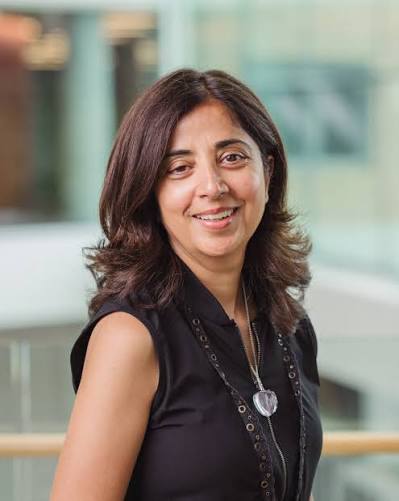
Rubab Jafry O’Connor is a Distinguished Service Professor of Management at Tepper School of Business where she has created and teaches a unique three-year leadership development course sequence called Business Leadership Endeavor to undergraduate business students. Her other teaching experiences include Organizational Behavior at Tepper School of Business, Organizational Development at Heinz School of Policy and Management, Leadership and Organizations at University of Pittsburgh, Leadership and Budget Financial Management at Duquesne University and Leadership and Organizational Behavior at ICN Business School, France. Her research interests include transformational leadership, student development, confidence, and public speaking. Prior to teaching, Rubab has held many management roles including academic advising, career consulting for both undergrads and MBAs nationally and internationally. Rubab’s other work experiences include investment banking in credit marketing and as a Research Assistant for United Nations Development Program (UNDP), NY. Rubab holds a Doctor of Education degree with a concentration in Management from University of Pittsburgh, and Master of Policy and Management with a concentration in Management from Carnegie Mellon University.


