top of page
Home
Bio
Pricing
Podcast Network
Advertise with Us
Be Our Guest
Academy
Learning Catalog
Learners at a Glance
The ROI of Certification
Corporate L&D Solutions
Research
Research Models and Tools
Research in Popular Media
Research One Sheets
Research Snapshots
Research Videos
Research Briefs
Research Articles
Free Educational Resources
HCL Review
Contribute to the HCL Review
HCL Review Archive
HCL Review Process
HCL Review Reach and Impact
HCI Press
From HCI Academic Press
From HCI Popular Press
Publish with HCI Press
Free OER Texts
Our Impact
Invest with HCI
Industry Recognition
Philanthropic Impact
Kiva Lending Impact
Merch
More
Use tab to navigate through the menu items.
When the Going Gets Tough: Identifying and Overcoming Burnout as a Sign it May be Time for a New Job Opportunity
LEADERSHIP IN PRACTICE
22 hours ago
7 min read
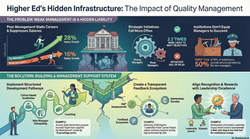
From Silence to Stewardship: Business Faculty Responses to Administrative Incompetence
RESEARCH BRIEFS
2 days ago
24 min read
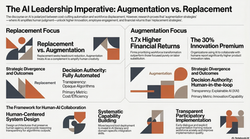
The AI Skills Paradox: Why Meta-Competencies Trump Technical Know-How in the Age of Intelligent Automation
RESEARCH BRIEFS
3 days ago
20 min read
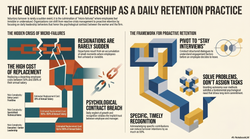
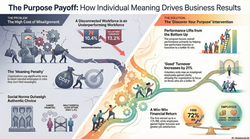
Quiet Cracking: The Silent Erosion of Employee Engagement and the Strategic Imperative of Purpose-Driven Leadership
RESEARCH BRIEFS
4 days ago
20 min read
AI Shaming in Organizations: When Technology Adoption Threatens Professional Identity
RESEARCH BRIEFS
5 days ago
27 min read
The Hidden Cost of Being "Good": Rethinking Academic Excellence and Early Career Researcher Wellbeing
6 days ago
17 min read
Restructuring for AI: The Power of Small, High-Agency Teams and the Path to Enterprise-Scale Coordination
RESEARCH BRIEFS
7 days ago
17 min read
Beyond Credentials: How Skills-Based Hiring Drives Organizational Performance and Social Equity
RESEARCH BRIEFS
Dec 1
19 min read
The Hidden Costs of Return-to-Office Mandates: How Policy Enforcement Erodes Talent, Trust, and Competitive Advantage
RESEARCH BRIEFS
Nov 30
17 min read
Unlocking Sustainable Performance Through Psychologically Informed Workplace Coaching
RESEARCH BRIEFS
Nov 29
13 min read
Human Capital Leadership Review
Gen X Underestimated Retirement. Now, They’re Not Sure They Can Catch Up
17 hours ago
6 min read
Survey Reveals 70% of Workers Believe Nepotism is Alive and Well in U.S. Workplaces
20 hours ago
3 min read
When the Going Gets Tough: Identifying and Overcoming Burnout as a Sign it May be Time for a New Job Opportunity
LEADERSHIP IN PRACTICE
22 hours ago
7 min read
Gen Z Is Sending a Warning About Post-Layoff Culture and Leaders Should Pay Attention
2 days ago
4 min read
From Silence to Stewardship: Business Faculty Responses to Administrative Incompetence
RESEARCH BRIEFS
2 days ago
24 min read
The Return of Corporate Survival Mode: TikTok’s Viral ‘Workplace Hacks’ Reveal Deepening U.S. Job Market Anxiety
3 days ago
4 min read
The AI Skills Paradox: Why Meta-Competencies Trump Technical Know-How in the Age of Intelligent Automation
RESEARCH BRIEFS
3 days ago
20 min read
Quiet Cracking: The Silent Erosion of Employee Engagement and the Strategic Imperative of Purpose-Driven Leadership
RESEARCH BRIEFS
4 days ago
20 min read
AI Shaming in Organizations: When Technology Adoption Threatens Professional Identity
RESEARCH BRIEFS
5 days ago
27 min read
1
2
3
4
5
HCL Review Videos
Play Video
Play Video
G-P's 2025 World at Work Report and the Outlook for 2026, with Laura Maffucci
In this HCI Webinar Dr. Jonathan H. Westover talks with Laura Maffucci about G-P's 2025 World at Work Report and the outlook for 2026. Laura Maffucci is G-P’s Head of HR, overseeing the global workforce, talent, and employee experience with a people-first mindset. She values diversity of thought as essential for a healthy workspace. In her 20+ year career in HR, Maffucci has spoken on global and national platforms about compensation, employee well-being and mental health. She’s a staunch advocate for the employee experience and creating a culture of inclusivity. Maffucci is passionate about the future of work, normalizing the value of work everywhere, and enabling employees globally to be their best selves and add value wherever they go and whatever they do.
Play Video
Play Video
06:32
Beat the AI Curve - Upskill or Fall Behind
This video explores the critical and urgent need for organizations to embrace digital transformation and artificial intelligence (AI) literacy across all levels of the workforce. It highlights that digital fluency is no longer confined to specialized IT or data science roles but is essential for every employee, from factory workers to executives. This widespread digital competency is vital not only for gaining competitive advantages but also for survival in an increasingly automated and technology-driven business landscape. The video stresses the risks organizations face if they fail to bridge the digital skills gap, including declining employee morale, reduced engagement, and stifled innovation. Highlights 🚀 Digital transformation and AI literacy are essential across all organizational roles, not just IT specialists. 📊 Digital fluency means effectively using digital tools relevant to one’s role, not necessarily coding skills. ⚠️ Failure to upskill leads to skill obsolescence, job anxiety, reduced morale, and decreased innovation. 🎯 Focused, strategic upskilling on critical skills drives the biggest business impact. 🤝 Leadership must model learning behaviors and foster a culture of psychological safety and experimentation. 📚 Learning ecosystems combining self-paced, live, and peer coaching make training more effective. 🧑💻 AI-powered adaptive learning and immersive VR/AR tools personalize and enhance skill development. Key Insights 🌐 Digital fluency as a survival imperative: The video underscores that digital literacy is not optional but a survival mechanism for modern businesses. Organizations that fail to equip employees with digital skills risk losing competitive ground and operational relevance. This insight stresses that digital transformation must be holistic, encompassing every function, to maintain agility and market position. 🛠️ Pragmatic definition of digital fluency: The clarification that digital fluency is about comfort and critical use of digital tools tailored to one’s role is crucial. This demystifies the concept, making it accessible and actionable for various job functions, from data analytics to customer service, enabling broader organizational adoption without overwhelming employees. 🚫 Barriers to upskilling are systemic and multifaceted: The video identifies four key barriers—outdated training, education-business misalignment, lack of learning time, and absence of skill gap assessments—that collectively hinder progress. This comprehensive view highlights that solving the skills gap requires systemic changes, not just isolated training interventions. 😟 Psychological impact on employees: The analysis of how skill obsolescence and AI fears create job anxiety and erode morale reveals the human dimension of digital transformation. This insight calls attention to the necessity of addressing emotional and cultural factors alongside technical training to sustain engagement and foster innovation. 🎯 Strategic, focused upskilling over broad programs: The recommendation to resist “teach everyone everything” and instead identify critical skills tied to strategic priorities offers a practical roadmap. This focused approach enables faster, more impactful learning outcomes and better resource allocation, ensuring that upskilling efforts align directly with business goals. 👥 Leadership’s role in cultural transformation: The emphasis on leaders modeling learning behavior, admitting knowledge gaps, and fostering psychological safety spotlights the critical role of culture in enabling continuous learning. Leaders who actively protect learning time and encourage experimentation create an environment where digital skills can flourish. 🤖 Leveraging technology for personalized learning: The video insightfully explores the use of AI-driven adaptive learning platforms and immersive VR/AR experiences to tailor training to individual needs and simulate real-world practice safely. This technological integration makes learning more engaging, effective, and scalable, crucial for addressing diverse workforce requirements. If this helped, please like and share to spread these actionable insights. #DigitalSkills #Upskilling #AI #DigitalTransformation #LearningInTheFlowOfWork OUTLINE: 00:00:00 - Why Upskilling Is No Longer Optional 00:01:18 - How Skill Gaps Erode Value 00:02:33 - The Human Impact of the Digital Skills Gap 00:03:32 - A Practical Blueprint for Digital Fluency 00:04:27 - The Long Game
Play Video
Play Video
13:36
How CLIO Sees Everything—Without Seeing You
This video discusses the critical challenge of understanding how millions of people use AI assistants daily while simultaneously protecting their privacy. Although companies collect vast amounts of data from these interactions, public access to this information remains extremely limited, creating a “data gap” that hinders research and safe AI development. To address this, a system called Clio was developed—a privacy-preserving analytical pipeline designed to extract meaningful usage patterns from millions of AI conversations without exposing any individual’s private information. Highlights 🔍 Clio enables large-scale analysis of AI assistant usage without compromising privacy. 🛡️ Privacy is protected through multi-layered automated defenses and aggregation techniques. 👩💻 Dominant AI use cases include coding, writing, research, and learning. 🌐 AI usage patterns differ across cultures and languages, reflecting diverse needs. 🚨 Clio detects misuse and abuse patterns early, supporting proactive safety measures. 🤖 Automation minimizes human exposure to sensitive conversations. 🔄 Continuous auditing and monitoring keep privacy protections robust over time. Key Insights 🔐 Privacy by Design is Essential: Clio exemplifies the necessity of integrating privacy into AI system design from day one. By focusing on data minimization, automation, and layered privacy protections, it avoids the pitfalls of ad hoc, reactive privacy measures. This approach is critical for maintaining user trust and meeting ethical and legal obligations. Without such design principles, AI developers risk exposing sensitive user data or failing to learn effectively from real-world usage. 🧩 Aggregation Prevents Re-Identification: Clio’s requirement that clusters represent large groups of conversations ensures individual users cannot be singled out. This statistical barrier is a powerful privacy tool, as it makes linking any data point back to a particular person practically impossible. It balances the need for granular insights with the imperative to protect personal identities, a challenge often underestimated in AI analytics. 🤖 Automation Reduces Human Risk and Cost: By automating fact extraction, clustering, summarization, and privacy auditing, Clio avoids exposing human reviewers to sensitive content. This not only protects reviewer mental well-being but also improves scalability and speed, enabling real-time analysis of millions of conversations. Automation is a key enabler for ethically and efficiently managing large-scale AI data. 🌍 Cultural and Linguistic Variations Matter: The system’s ability to identify different usage patterns across languages and cultures highlights AI’s adaptability and diverse applications. For example, Japanese users discuss elder care more frequently, while Spanish users focus more on finance. Understanding these nuances helps tailor AI development to meet specific community needs and supports more inclusive, globally relevant AI tools. 🚨 Early Detection of Misuse Enables Proactive Safety: Clio’s clustering approach allows safety teams to observe widespread patterns of abuse or harmful behavior without reading individual chats. This macro-level visibility empowers teams to swiftly update safety protocols and filters before issues escalate, shifting safety work from reactive incident response to proactive risk management. 📊 High-Level Insights Replace Guesswork: The ability to generate synthetic summaries that accurately reflect user behavior without revealing personal data transforms how AI developers understand user needs and challenges. This evidence-based approach fosters better product decisions, more effective improvements, and safer AI deployments, moving beyond assumptions to grounded knowledge. 🔄 Ongoing Auditing Maintains Privacy Integrity: Clio’s continuous testing, including red team attacks and privacy audits, ensures that its layered defenses remain effective as AI and user behaviors evolve. This commitment to vigilance is vital, as static privacy solutions can degrade over time. Persistent oversight strengthens the system’s resilience, safeguarding privacy in an ever-changing technological landscape. If you found this useful, please like and share! #AI #Privacy #AISafety #Clio #Anthropic #Claude #Governance
Play Video
Play Video
38:43
Clio: Privacy-Preserving Insights into Real-World AI Use, by Jonathan H. Westover PhD
Abstract: This paper presents Clio (Claude insights and observations), a privacy-preserving platform that uses AI assistants to analyze and surface aggregated usage patterns across millions of conversations without requiring human reviewers to read raw user data. The system addresses a critical gap in understanding how AI assistants are used in practice while maintaining robust privacy protections through multiple layers of safeguards. We validate Clio's accuracy through extensive evaluations, demonstrating 94% accuracy in reconstructing ground-truth topic distributions and achieving undetectable levels of private information in final outputs through empirical privacy auditing. Applied to one million Claude.ai conversations, Clio reveals that coding, writing, and research tasks dominate usage, with significant cross-language variations—for example, Japanese conversations discuss elder care at higher rates than other languages. We demonstrate Clio's utility for safety purposes by identifying coordinated abuse attempts, monitoring for unknown risks during high-stakes periods like capability launches and elections, and improving existing safety classifiers. By enabling scalable analysis of real-world AI usage while preserving privacy, Clio provides an empirical foundation for AI safety and governance.
Play Video
Play Video
07:30
86% Faster, 55% Anxious What Workers Really Say About AI
This video explores the profound impact of artificial intelligence (AI) on the modern workplace through a detailed survey conducted using a novel AI interviewing tool called the Anthropomorphic Interviewer. This tool engaged 1,250 professionals across three groups—general workers, scientists, and creatives—to understand how AI is integrated into daily work life, balancing productivity gains with psychological and professional concerns. The findings reveal a dual narrative: AI as a powerful enhancer of efficiency and productivity, and simultaneously a source of anxiety surrounding job security, professional identity, and ethical dilemmas. While the majority report significant time savings and workflow improvements, many workers secretly use AI due to stigma and fears of being perceived as less capable. Scientists emphasize the critical need for verifiable, transparent AI outputs to maintain trust in their work. Highlights 🤖 AI boosts productivity dramatically: 86% of general workers and 97% of creatives report significant time savings. 🧠 Scientists rely on AI for brainstorming but demand transparency and verification of AI outputs. 🤫 69% of workers hide their AI use due to fear of judgment and stigma, especially among creatives. ⚖️ Two AI usage modes: augmentation (AI assists, humans lead) and automation (AI takes over tasks). 😟 Over half of workers feel anxious about their future job security with AI’s rise. 💬 Organizations should promote open dialogue, clear AI policies, and employee involvement to reduce anxiety. 🎓 Training on AI literacy and verification is crucial to build trust and effective human-AI collaboration. Key Insights 🤖 AI as a Productivity Multiplier: The survey underscores AI’s transformative impact on workplace efficiency. With nearly nine out of ten general workers and almost all creatives reporting substantial time savings, AI is reshaping workflows across industries. This shift enables professionals to focus on higher-level tasks, creativity, and strategy rather than repetitive, time-consuming work, marking a paradigm shift in how work is performed. 🧬 The Scientist’s Dilemma: Trust and Verification: Scientists’ cautious embrace of AI reveals a critical boundary for AI adoption—verifiability. In fields grounded in evidence and reproducibility, AI-generated insights must be transparent and traceable to maintain scientific integrity. This need for “explainability” highlights a key challenge in AI development and deployment: without clear audit trails and source validation, AI risks undermining trust and the core values of scientific inquiry. 🤫 Stigma and Secret Usage: The hidden use of AI by 69% of workers reflects a cultural and social barrier to AI acceptance in the workplace. The perception of AI use as “cheating” or a threat to personal skill fosters secrecy and inhibits open learning and collaboration. This stigma is particularly acute among creatives, for whom AI-assisted work raises deep questions about authorship, originality, and professional identity. ⚖️ Augmentation vs. Automation—A Spectrum of Control: The distinction between AI augmentation and automation is crucial for understanding the evolving nature of work. Augmentation positions AI as a collaborative partner enhancing human capabilities without replacing the individual’s creativity or judgment. Automation, by contrast, can shift roles towards oversight and management of AI systems, potentially eroding the sense of agency and fulfillment derived from hands-on work. 😟 Anxiety and Identity Crisis Amid AI Advances: More than half of the surveyed workers express anxiety about their professional futures, highlighting a widespread emotional and psychological impact beyond productivity metrics. The anxiety stems not only from fears of job loss but also from concerns about diminished professional pride and a loss of purpose as AI takes on more tasks. 💬 Leadership’s Role in Shaping AI Adoption: The video stresses that organizational success with AI depends heavily on leadership practices. Transparent communication about AI use, clear guidelines defining acceptable applications, and creating safe spaces for employees to share experiences and concerns are foundational steps. Without this, stigma and mistrust undermine AI adoption and employee morale. 🎓 The Imperative of AI Literacy and Training: Effective integration of AI requires more than just deploying tools—it demands equipping workers with skills to critically assess AI outputs, identify errors, and collaborate effectively with AI systems. Training programs should emphasize verification techniques, error spotting, and understanding AI’s limitations to prevent blind trust and misuse. #AI #Workplace #Anthropic #QualitativeResearch #FutureOfWork OUTLINE: 00:00:00 - Introducing the Study 00:01:36 - Gains and Anxieties 00:03:27 - Scientists and Verification 00:04:45 - How Work Is Really Changing 00:06:11 - Steps for a Kinder AI Future
Play Video
Play Video
32:56
Introducing Anthropic Interviewer: What 1,250 Professionals Told Us About Working with AI, by Jon...
Abstract: This research introduces Anthropic Interviewer, an AI-powered tool designed to conduct large-scale qualitative interviews at unprecedented scale while maintaining conversational depth. To validate this methodology, we deployed the system to interview 1,250 professionals—comprising 1,000 general workforce participants, 125 scientists, and 125 creative professionals—about their experiences integrating AI into their work. Results indicate predominantly positive sentiment regarding AI's productivity impact, with 86% of general workforce participants reporting time savings and 97% of creatives noting efficiency gains. However, significant concerns emerged around social stigma (69% of general workforce), professional displacement (55% expressing anxiety), and verification reliability (particularly among scientists). Thematic analysis revealed divergent adoption patterns: general workforce professionals envision AI-augmented supervisory roles; creatives navigate productivity gains against peer judgment and identity concerns; scientists desire AI partnership but withhold trust for core research tasks. This study demonstrates both the viability of AI-mediated qualitative research at scale and provides empirical insight into how professionals across diverse domains are experiencing AI's integration into knowledge work.
Play Video
Play Video
Performance Management, Workplace Dynamics, and Employer Liabilities, with Mark F. Kluger
In this HCI Webinar, Dr. Jonathan H. Westover talks with performance management, workplace dynamics, and employer liabilities. Mark F. Kluger practices exclusively in the area of labor and employment law on behalf of employers. For ten years, before founding Kluger Healey, LLC, he was Chairman of the Labor and Employment Department of one of New Jersey’s oldest law firms. Mark is a frequent speaker and writer on sexual harassment and discrimination avoidance, workplace diversity, performance management, union avoidance, and a myriad of other employment-related subjects and regularly conducts training sessions for employers on these critical topics. In addition, Mark has extensive experience in counseling employers on issues involving discipline and discharge, reductions in force, mergers and acquisitions, compliance with wage and hour, disability, COBRA, and family and medical leave laws. He regularly drafts all forms of employment policies and handbooks, severance agreements, employment contracts, non-competition and confidentiality agreements, and affirmative action plans. Mark also represents employers in collective bargaining, grievance arbitration, NLRB proceedings, and picket line issues. Mark graduated from Vassar College in 1984 and Cornell University Law School in 1987. He was an Adjunct Professor at Seton Hall Law School from 1991-1996 and served as a member and President of the Board of Education in North Caldwell, New Jersey from 2002-2008.
Play Video
Play Video
04:41
Hybrid Isn’t the Problem. Leadership Is.
The video transcript explores the evolving preferences of younger workers, particularly millennials and Gen Z, who favor a hybrid work model blending remote and in-office work. This preference is not a rejection of company culture or commitment but a pragmatic response to the demands of modern work. Hybrid work enables employees to engage in deep, focused tasks at home while reserving office days for collaboration, social learning, and spontaneous interactions that foster innovation and relationships. Organizations that rigidly enforce full-time office attendance risk losing emerging talent and limiting their access to a global talent pool, which in turn stifles innovation and diversity. Highlights 🌍 Younger workers prefer hybrid work for a balance of remote focus and in-office collaboration. 🏢 Rigid full-time office mandates risk losing top talent and limit access to global candidates. 💡 Hybrid work challenges stem from outdated leadership, not employee productivity. 🤝 Two-tiered systems between remote and in-office workers damage trust and morale. 🎯 Effective hybrid leadership requires outcome-based management and clear communication. 🛠️ Offices should be redesigned with hybrid work in mind, including tech for remote inclusion. 📈 Fair, location-agnostic performance reviews and mentorship foster growth for all employees. Key Insights 🌐 Hybrid work is a strategic imperative in a globalized talent market: Companies that fail to offer flexible work options limit their talent pool geographically and risk losing innovative, diverse talent essential for competitive advantage. In a world increasingly connected by technology, geographic boundaries should no longer restrict hiring or collaboration. 🔄 Leadership adaptation is critical to hybrid success: Many leadership failures arise from attempting to apply outdated, office-centric management styles to a distributed workforce. The inability to trust remote employees or to measure performance by outcomes rather than physical presence creates inefficiencies and unfair disparities. ⚖️ Creating equity between remote and in-office workers prevents organizational division: When in-office staff receive more visibility and opportunities, remote workers feel marginalized, which erodes trust and damages team cohesion. Intentional structures and policies must ensure equal access to career development, recognition, and social connection regardless of location. 📅 Intentional office scheduling enhances the value of in-person work: Rather than daily attendance, designating anchor days for team-based, collaborative activities maximizes the benefits of physical presence. This approach respects employees’ need for focused remote work while capitalizing on the unique advantages of face-to-face interaction. 🧑🏫 Manager training and psychological safety are foundational: Effective hybrid management requires new skills in remote communication, trust-building, and outcome-focused evaluation. Investing in leadership development and fostering inclusive meeting practices create environments where all employees feel valued and engaged. 🖥️ Redesigning office spaces for hybrid work supports productivity and inclusion: Offices should be adapted with technology like speaker tracking cameras and dedicated microphones to integrate remote participants fully. Physical spaces must accommodate different work modes—quiet zones for focus, collaborative hubs for teamwork, and social areas for relationship building. 📊 Performance management and career development must be location-agnostic: Objective, evidence-based reviews and audits of promotions and pay prevent bias towards in-office employees. Structured mentorship programs provide consistent coaching and growth opportunities regardless of where employees work, supporting equitable professional development. If this helped, please like and share the video. #HybridWork #Leadership #GenZ #RemoteWork #DistributedTeams OUTLINE: 00:00:00 - The Hybrid Disconnect 00:00:49 - Strategic Costs and Leadership Gaps 00:01:43 - Two-Tier Risks and Evidence 00:02:35 - Unseen Saboteurs (Bias and Inconsistency) 00:03:33 - Practical Leadership Solutions
Blog: HCI Blog
Human Capital Leadership Review
Featuring scholarly and practitioner insights from HR and people leaders, industry experts, and researchers.
All Articles
Research Briefs
Research Insights
Looking Ahead
Leadership in Practice
Leadership Insights
Leadership for Change
Webinar Recaps
Book Reviews
Transformative Social impact
Search
Oct 29, 2024
7 min read
LEADERSHIP IN PRACTICE
Productively Passionate: Managing Your Work Drive
bottom of page