top of page
Home
Bio
Pricing
Merch
Podcast Network
Advertise with Us
Be Our Guest
Academy
Learning Catalog
Learners at a Glance
The ROI of Certification
Corporate L&D Solutions
Research
Research Initiatives
Nexus Institute
Catalyst Center
Adadptive Organization Lab
Future of Work Collective
Renaissance Project
Collaboration Form
Research Models and Tools
Research One Sheets
Research Snapshots
Research Videos
Research Briefs
Free Educational Resources
HCL Review
Contribute to the HCL Review
HCL Review Archive
HCL Review Slide Decks and Infographics
HCL Review Process
HCL Review Reach and Impact
HCI Press
From HCI Academic Press
From HCI Popular Press
Publish with HCI Press
Free OER Texts
Our Impact
Invest with HCI
Industry Recognition
Philanthropic Impact
Kiva Lending Impact
More
Use tab to navigate through the menu items.
Beyond the Office Walls: Workplace Bullying as Public Health
CATALYST CENTER FOR WORK INNOVATION
6 hours ago
30 min read
Mobility, Not Scarcity: Why Employers Hold the Keys to the AI-Era Workforce Reallocation
NEXUS INSTITUTE FOR WORK AND AI
1 day ago
23 min read
The Flexibility Paradox: Why Searching More Broadly for Work Can Narrow Unemployed Jobseekers' Prospects
CATALYST CENTER FOR WORK INNOVATION
2 days ago
17 min read
Mind the Gap: Why Understanding AI Error Boundaries Is the Key to Unlocking Human-AI Team Performance
NEXUS INSTITUTE FOR WORK AND AI
3 days ago
24 min read
The Creative Advantage: How Organizations Can Future-Proof Their Workforce by Investing in Creativity
CATALYST CENTER FOR WORK INNOVATION
4 days ago
16 min read
Different Speeds, Different Strategies: Mapping AI Adoption Across Career Areas to Prioritize Workforce Preparation
NEXUS INSTITUTE FOR WORK AND AI
5 days ago
24 min read
Quitting Is Contagious: How Turnover Contagion Spreads Through Teams and What Leaders Can Do About It
CATALYST CENTER FOR WORK INNOVATION
6 days ago
19 min read
The Rehiring Trap: Why AI-Era Workforce Strategy Must Shift from Automation to Amplification
NEXUS INSTITUTE FOR WORK AND AI
Oct 9
25 min read
Remote Work, Loneliness, and the Leadership Deficit: Moving Beyond the Return-to-Office Debate
CATALYST CENTER FOR WORK INNOVATION
Oct 8
27 min read
Direct Lines to Loyalty: Why Generation Z's Commitment Is Built in the Daily Experience of Work
CATALYST CENTER FOR WORK INNOVATION
Oct 7
29 min read
Human Capital Leadership Review
Beyond the Office Walls: Workplace Bullying as Public Health
CATALYST CENTER FOR WORK INNOVATION
6 hours ago
30 min read
How to Build an Inclusive Recognition Program for Global Teams
1 day ago
5 min read
Halloween at Work: Three Spooky Creatures Haunting Teams This Season
ADAPTIVE ORGANIZATION LAB
1 day ago
3 min read
Before the Litigation Takes Over: Using Neutral Analysis as a Strategic Business Tool
ADAPTIVE ORGANIZATION LAB
1 day ago
6 min read
Study Reveals America's Top States for Working From Home
CATALYST CENTER FOR WORK INNOVATION
1 day ago
2 min read
The First Jobs AI Glasses Could Make Way Easier
NEXUS INSTITUTE FOR WORK AND AI
1 day ago
4 min read
Josh Bersin Company Research Explains The Multiagent Management Rules to Deliver Safe, Reliable AI
NEXUS INSTITUTE FOR WORK AND AI
1 day ago
3 min read
Mobility, Not Scarcity: Why Employers Hold the Keys to the AI-Era Workforce Reallocation
NEXUS INSTITUTE FOR WORK AND AI
1 day ago
23 min read
The Flexibility Paradox: Why Searching More Broadly for Work Can Narrow Unemployed Jobseekers' Prospects
CATALYST CENTER FOR WORK INNOVATION
2 days ago
17 min read
1
2
3
4
5
HCL Review Research Videos
HCL Review Research Infographics
Blog: HCI Blog
Human Capital Leadership Review
Featuring scholarly and practitioner insights from HR and people leaders, industry experts, and researchers.
Human Capital Innovations
Play Video
Play Video
Being More Human in the Hiring Process, with Kristina Wright
In this HCI Webinar, I talk with Kristina Wright about being more human in the hiring process. Kristina Wright is a senior leader in higher education and career development, dedicated to ensuring every student has an accessible path to a fulfilling career. As the Director of Career & Professional Development at the Gies College of Business, she leads an integrated team focused on implementing the Career Ecosystem Framework—a structured model that moves beyond "career everywhere" as a concept by embedding career readiness across curriculum, student experiences, and employer partnerships. Under her leadership, classroom integration has expanded by 60%, curriculum has been aligned with labor market insights, and equitable access to career education has been scaled to serve all 3,900 students. With a data-informed, innovative approach that leverages AI resources, competency-based learning, and deep corporate engagement, Kristina is reshaping how institutions prepare students for the evolving world of work.
Play Video
Play Video
03:21
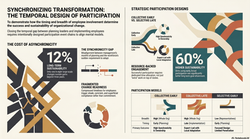
Governing Enterprise Change Capacity
Organizations are currently experiencing an unprecedented wave of continuous restructuring driven by financial pressures, strategic shifts, and the integration of artificial intelligence, which has created a widespread workplace phenomenon known as **change fatigue**. This cumulative operational load severely damages **employee well-being, trust in management, and overall retention**, often leading to heightened stress, cynicism, and unexpected turnover among remaining staff. To counteract these negative outcomes without halting necessary business evolution, leaders must adopt **evidence-based strategies** such as treating corporate initiatives as a managed portfolio, actively involving staff in redesigns, and ensuring transparent communication. Furthermore, organizations need to **apply procedural justice**, empower middle managers to act as effective sensemakers, and intentionally protect periods of stability and recovery. Ultimately, sustainable organizational adaptation requires treating **human change capacity** as a finite resource that must be carefully paced and supported rather than perpetually drained.
Play Video
Play Video
09:27
Correcting the Professional Misconception - The Systems Science
Organizations are currently experiencing an unprecedented wave of continuous restructuring driven by financial pressures, strategic shifts, and the integration of artificial intelligence, which has created a widespread workplace phenomenon known as **change fatigue**. This cumulative operational load severely damages **employee well-being, trust in management, and overall retention**, often leading to heightened stress, cynicism, and unexpected turnover among remaining staff. To counteract these negative outcomes without halting necessary business evolution, leaders must adopt **evidence-based strategies** such as treating corporate initiatives as a managed portfolio, actively involving staff in redesigns, and ensuring transparent communication. Furthermore, organizations need to **apply procedural justice**, empower middle managers to act as effective sensemakers, and intentionally protect periods of stability and recovery. Ultimately, sustainable organizational adaptation requires treating **human change capacity** as a finite resource that must be carefully paced and supported rather than perpetually drained.
Play Video
Play Video
25:16
Change Without End: Why Perpetual Restructuring Is Exhausting Workforces and Eroding Trust, and H...
Abstract: Organizations have entered a period of near-continuous restructuring, driven by cost pressure, artificial intelligence, and shifting strategy. Recent global surveys indicate that roughly a third of workers affected by change say they experienced more change in the past year than before, that nearly four in ten employees report a reorganization in the past twelve months, and that trust in top management has fallen year over year. This article examines change fatigue, the perception that too much change is happening too fast, as a distinct and measurable workplace risk. Drawing on longitudinal health studies, meta-analytic and review evidence on job insecurity and change reactions, and documented organizational examples across technology, retail, pharmaceuticals, banking, health care, and automotive manufacturing, it shows how cumulative change load erodes well-being, commitment, and trust. It then outlines five evidence-based responses: governing change as a portfolio, involving employees and adapting plans, applying procedural justice, equipping managers as sensemakers, and protecting recovery and stability anchors. It closes with three long-term capabilities for sustainable adaptation.
Play Video
Play Video
56:27
A Conversation about Surviving Perpetual Organizational Restructuring
Organizations are currently experiencing an unprecedented wave of continuous restructuring driven by financial pressures, strategic shifts, and the integration of artificial intelligence, which has created a widespread workplace phenomenon known as change fatigue. This cumulative operational load severely damages employee well-being, trust in management, and overall retention, often leading to heightened stress, cynicism, and unexpected turnover among remaining staff. To counteract these negative outcomes without halting necessary business evolution, leaders must adopt evidence-based strategies such as treating corporate initiatives as a managed portfolio, actively involving staff in redesigns, and ensuring transparent communication. Furthermore, organizations need to apply procedural justice, empower middle managers to act as effective sensemakers, and intentionally protect periods of stability and recovery. Ultimately, sustainable organizational adaptation requires treating human change capacity as a finite resource that must be carefully paced and supported rather than perpetually drained.
Play Video
Play Video
21:26
A Debate about Surviving Perpetual Organizational Restructuring
Organizations are currently experiencing an unprecedented wave of continuous restructuring driven by financial pressures, strategic shifts, and the integration of artificial intelligence, which has created a widespread workplace phenomenon known as change fatigue. This cumulative operational load severely damages employee well-being, trust in management, and overall retention, often leading to heightened stress, cynicism, and unexpected turnover among remaining staff. To counteract these negative outcomes without halting necessary business evolution, leaders must adopt evidence-based strategies such as treating corporate initiatives as a managed portfolio, actively involving staff in redesigns, and ensuring transparent communication. Furthermore, organizations need to apply procedural justice, empower middle managers to act as effective sensemakers, and intentionally protect periods of stability and recovery. Ultimately, sustainable organizational adaptation requires treating human change capacity as a finite resource that must be carefully paced and supported rather than perpetually drained.
Play Video
Play Video
11:36
Retention by Design - Engineering the High Training Equilibrium
Stay-or-pay contracts, which require employees to repay training costs or bonuses if they leave their jobs prematurely, have become heavily contested tools for worker retention across multiple industries. These agreements function similarly to noncompete clauses by restricting worker mobility, predominantly impacting early-career and lower-wage personnel through employer-driven debt. In response to these practices, multiple states including California, Connecticut, New York, and Colorado have enacted strict regulatory bans or limitations, exposing companies to significant legal and reputational risks for aggressive enforcement. Rather than relying on punitive clawbacks that suppress wages and limit worker voice, organizations should pivot toward investment-based strategies such as upfront education benefits, earn-in retention incentives, and clear internal career pathways. Ultimately, leaders can achieve superior and more sustainable organizational outcomes by fostering job embeddedness through genuine development rather than financial restraint.
Play Video
Play Video
03:16
From Restraint to Investment
Stay-or-pay contracts, which require employees to repay training costs or bonuses if they leave their jobs prematurely, have become heavily contested tools for worker retention across multiple industries. These agreements function similarly to noncompete clauses by restricting worker mobility, predominantly impacting early-career and lower-wage personnel through employer-driven debt. In response to these practices, multiple states including California, Connecticut, New York, and Colorado have enacted strict regulatory bans or limitations, exposing companies to significant legal and reputational risks for aggressive enforcement. Rather than relying on punitive clawbacks that suppress wages and limit worker voice, organizations should pivot toward investment-based strategies such as upfront education benefits, earn-in retention incentives, and clear internal career pathways. Ultimately, leaders can achieve superior and more sustainable organizational outcomes by fostering job embeddedness through genuine development rather than financial restraint.
HCL Review Articles
All Articles
Nexus Institute for Work and AI
Catalyst Center for Work Innovation
Adaptive Organization Lab
Work Renaissance Project
Research Briefs
Research Insights
Webinar Recaps
Book Reviews
Transformative Social impact
Search
Nov 17, 2024
3 min read
ADAPTIVE ORGANIZATION LAB
Why Quiet Firing Hurts Organizations and Leaders
bottom of page