top of page
Home
Bio
Pricing
Merch
Podcast Network
Advertise with Us
Be Our Guest
Academy
Learning Catalog
Learners at a Glance
The ROI of Certification
Corporate L&D Solutions
Research
Research Initiatives
Nexus Institute
Catalyst Center
Adadptive Organization Lab
Future of Work Collective
Renaissance Project
Collaboration Form
Research Models and Tools
Research One Sheets
Research Snapshots
Research Videos
Research Briefs
Research Articles
Free Educational Resources
HCL Review
Contribute to the HCL Review
HCL Review Archive
HCL Review Slide Decks and Infographics
HCL Review Process
HCL Review Reach and Impact
HCI Press
From HCI Academic Press
From HCI Popular Press
Publish with HCI Press
Free OER Texts
Our Impact
Invest with HCI
Industry Recognition
Philanthropic Impact
Kiva Lending Impact
More
Use tab to navigate through the menu items.
The Centaur Organization: Designing Human–AI Collaboration for Decision Quality in Knowledge Work
NEXUS INSTITUTE FOR WORK AND AI
26 minutes ago
19 min read
Work Fulfillment in the Hybrid Era: Designing Organizational Strategies to Support Generation Z Employees Through Flexibility, Balance, and Engagement
CATALYST CENTER FOR WORK INNOVATION
1 day ago
23 min read
Algorithmic Leadership Without Dehumanization: Building Human-Centered Management Systems in the Digital Age
NEXUS INSTITUTE FOR WORK AND AI
2 days ago
32 min read
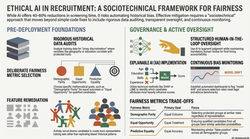
Advancing Workforce Fairness Through Human-Centered AI: Strategic Imperatives for Organizations in the Age of Algorithmic Decision-Making
NEXUS INSTITUTE FOR WORK AND AI
3 days ago
21 min read
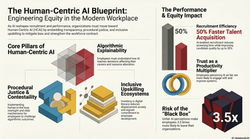
Human-Centric AI and Employment Equity: Building Fairness into the Future of Work
NEXUS INSTITUTE FOR WORK AND AI
4 days ago
22 min read
When Span of Control Becomes Span of Chaos: Meta's Retreat from AI-Managed Mega-Teams and What It Means for Organizational Design
NEXUS INSTITUTE FOR WORK AND AI
5 days ago
17 min read
The Agency Gap in AI-Assisted Higher Education: When Learner Control Shapes Reflective Practice and Critical Thinking
NEXUS INSTITUTE FOR WORK AND AI
6 days ago
33 min read
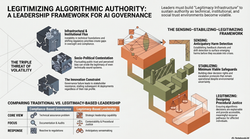
Who Legitimizes the AI Algorithm? Leadership, Volatility, and the Governance of Algorithmic Authority
NEXUS INSTITUTE FOR WORK AND AI
Jul 21
22 min read
When AI Joins the Org Chart: The Hidden Costs of Anthropomorphizing Artificial Intelligence at Work
NEXUS INSTITUTE FOR WORK AND AI
Jul 20
29 min read
The New Frontier of Workplace Monitoring: Emotional Surveillance and Its Implications for Organizations
CATALYST CENTER FOR WORK INNOVATION
Jul 19
23 min read
Human Capital Leadership Review
The Centaur Organization: Designing Human–AI Collaboration for Decision Quality in Knowledge Work
NEXUS INSTITUTE FOR WORK AND AI
26 minutes ago
19 min read
Work Fulfillment in the Hybrid Era: Designing Organizational Strategies to Support Generation Z Employees Through Flexibility, Balance, and Engagement
CATALYST CENTER FOR WORK INNOVATION
1 day ago
23 min read
Algorithmic Leadership Without Dehumanization: Building Human-Centered Management Systems in the Digital Age
NEXUS INSTITUTE FOR WORK AND AI
2 days ago
32 min read
Advancing Workforce Fairness Through Human-Centered AI: Strategic Imperatives for Organizations in the Age of Algorithmic Decision-Making
NEXUS INSTITUTE FOR WORK AND AI
3 days ago
21 min read
Human-Centric AI and Employment Equity: Building Fairness into the Future of Work
NEXUS INSTITUTE FOR WORK AND AI
4 days ago
22 min read
Why Your AI Strategy Will Fail Without the Right Leadership
5 days ago
6 min read
Hogan Assessments Acquires Convogo to Advance Talent Insights with AI
5 days ago
2 min read
Gravity Launches First All-Purpose Sustainability Agent
5 days ago
3 min read
When Span of Control Becomes Span of Chaos: Meta's Retreat from AI-Managed Mega-Teams and What It Means for Organizational Design
NEXUS INSTITUTE FOR WORK AND AI
5 days ago
17 min read
1
2
3
4
5
HCL Review Research Videos
HCL Review Research Infographics
Blog: HCI Blog
Human Capital Leadership Review
Featuring scholarly and practitioner insights from HR and people leaders, industry experts, and researchers.
Human Capital Innovations
Play Video
Play Video
04:34
Remote Work Loneliness - Beyond the Office Debate
The widespread debate about whether remote work causes loneliness misses the core issue: loneliness is rooted in emotional disconnection, not physical location. People can feel isolated in both office and remote settings if meaningful relationships and trust aren’t cultivated. The pandemic exposed pre-existing cracks in work culture, highlighting how productivity pressures and weak company cultures long preceded remote work as causes of disconnect. Returning to the office alone won’t solve loneliness; instead, organizations must foster intentional connection strategies that combine flexibility with genuine relationship-building. Technology, including AI and video tools, can facilitate connection but must be used thoughtfully to avoid deepening isolation. Effective leadership and purposeful policies play a crucial role in shaping a culture of belonging. The future of work depends on balancing trust, empathy, and communication to create workplaces where people feel truly connected regardless of where they work. Highlights 🏠 Loneliness is about lack of emotional connection, not just working remotely 🤝 Meaningful relationships at work require trust and genuine interaction 📉 Pre-pandemic work culture already left many workers feeling isolated 💸 Loneliness has high costs for companies—including productivity loss and turnover 💻 Technology can connect or isolate, depending on how it’s used 🧑💼 Leadership is key in fostering engagement and a culture of belonging 🔄 The future of work requires intentional connection plus flexibility, not one or the other Key Insights 🌐 Loneliness transcends physical workspace: Emotional distance causes loneliness regardless of being at home or in an office. The root issue is the absence of trusted confidants and deep social bonds, not location. This reframes the problem from “remote vs office” to “how do we build genuine human connection?” 🏢 Office culture was never a loneliness cure: Even before remote work became widespread, about 40% of American workers felt lonely at work. The office environment frequently prioritized productivity over interpersonal connection, leading to many workers feeling invisible despite physical proximity. This historical context shows loneliness is endemic and complex, predating the pandemic and remote work trends. 🔄 The pandemic exposed, not created, loneliness: Remote work revealed underlying cultural issues—pressure, lack of psychological safety, and superficial connections. Instead of “escaping colleagues,” employees escaped toxic or stressful environments. The “connection debt” from months of isolation cannot be erased just by returning to the office; deliberate efforts are needed. 📉 Loneliness costs are tangible and significant: Beyond emotional tolls, loneliness translates to billions lost through reduced productivity, higher turnover, and burnout. Organizations must view connection not as a “nice-to-have” but as a business imperative crucial for workforce stability and performance. 🤖 Technology is a double-edged sword for connection: Tools like video calls and AI chat can facilitate collaboration and reveal colleagues’ lives beyond tasks, but over-reliance on AI can degrade human bonds by replacing organic interactions. Meaningful tech usage means setting guidelines to make meetings purposeful and using digital tools to complement—not substitute—human relationships. 👥 Intentional design makes connection a strategic priority: Leading companies, such as Atlassian and Dropbox, rethink office time as dedicated for collaboration and relationship-building, not just attendance. Virtual initiatives like Microsoft’s “virtual commute” and buddy systems for onboarding demonstrate small, purposeful steps to foster belonging regardless of work location. 🙌 Leadership is the linchpin of connection: Managers who prioritize employee well-being, encourage informal interactions, and model vulnerability build trust and engagement. Training leaders to recognize disengagement and proactively foster connection results in measurable improvements in retention and team satisfaction, especially in hybrid and remote contexts. 🔑 The future of work balances flexibility with connection: It is not an either/or choice between freedom and friendship. A sustainable, human-centered work culture requires both autonomy and intentional social bonds, enabled through empathetic leadership, purposeful technology use, and workplace policies that prioritize belonging as much as productivity. This comprehensive understanding shifts the narrative from blaming remote work for loneliness to recognizing that meaningful workplace connection depends on culture, leadership, and strategic design—elements that transcend location and define the future of work.
Play Video
Play Video
05:46
Module 12: The Expanding Circle - Rethinking Corporate Stakeholders
The corporate landscape is undergoing a profound demographic and ethical transformation that demands a redefinition of leadership strategies. By 2050, the U.S. workforce will experience significant shifts, including a decline in the white workforce from 81% to 75% and a doubling of the Hispanic workforce to 30%. These changes create both opportunities and challenges, requiring companies to move beyond mere regulatory compliance toward a framework of recognition and respect for diverse stakeholders. This evolution is best understood through a three-ring stakeholder model. The innermost ring focuses on a company’s internal workforce demographics and inclusion efforts. The middle ring addresses the broader economic implications of corporate policies, particularly income inequality and wage stagnation affecting the middle class. The outer ring encompasses ethical responsibilities toward non-human stakeholders, research ethics, and environmental sustainability. Success in this new corporate paradigm hinges on integrating these rings into a unified strategy. Diversity and inclusion not only improve organizational performance but also bolster the middle class, whose economic health sustains broader market stability. Ethical innovation in research and sustainability further depends on this economic foundation. Ultimately, the modern corporate leader must manage this intricate system with foresight and ethical rigor to ensure long-term viability in a globalized economy.
Play Video
Play Video
07:09
Module 7: Loyalty vs. Accountability -The Limits of the Employment Contract
The traditional model of employee loyalty, grounded in mutual institutional trust and defined benefit pensions, has fundamentally transformed with the shift to defined contribution retirement plans like 401(k)s and 403(b)s. Today, employee loyalty is no longer an implicit, reciprocal arrangement but a legally enforced duty that mandates employees prioritize their employer’s interests, primarily through the duty of loyalty under common law. This duty requires employees to avoid actions that harm their employer’s interests, particularly regarding confidentiality, intellectual property, and corporate stability. Key legal tools such as non-disclosure agreements (NDAs), non-compete clauses, and non-solicitation agreements enforce this loyalty by guarding trade secrets, restricting competitive engagement, and protecting client bases. Moreover, employers impose behavioral codes and social media policies to maintain a respectful and brand-consistent work environment. Employees' loyalty extends beyond office walls and working hours, including their digital presence. However, this legal duty is not absolute. Federal laws override corporate loyalty when illegal activities are involved, such as insider trading and bribery, which are prosecuted due to their harmful impact on market integrity. Additionally, laws forbidding pay secrecy protect employees’ rights to salary transparency. Most notably, whistleblowing serves as a critical legal exception, empowering employees to report unlawful corporate conduct despite personal risks, supported by laws like the False Claims Act which incentivizes reporting through financial rewards. Ultimately, while employees must protect their employers' interests, their loyalty is conditional and subservient to legal and ethical obligations to uphold systemic truth and public welfare.
Play Video
Play Video
Responding to the Recent Retreat from Corporate DEI Initiatives, with Jim Fielding
In this HCI Webinar, Dr. Jonathan H. Westover talks with Jim Fielding about the recent retreat from corporate DEI initiatives. Jim Fielding, a proud Ohio native and Indiana University Hoosier, started his career on the department store floor. Over the next 30 years, he would lead some of the world’s most beloved media and retail brands, including The Gap, Disney, Claire’s, Dreamworks, and 20th Century Fox. Jim is known for his ability to combine storytelling and product merchandising into unforgettable consumer experiences. As culture builder and talent spotter, he has recruited and trained global leaders in a variety of disciplines and at all levels. Today, Jim spends his time and talents on independent media, entrepreneurship, higher education, and philanthropy. He’s a Partner at Archer Gray, an independent media company inspiring change through storytelling and innovative brand collaborations. Jim is also the founder of the boutique consultancy, Intersected Stories, and proudly serves as part-time Executive-In-Residence for IU Ventures and The Office of Diversity, Equity, and Inclusion. He is also an active angel investor and advisor to early stage startups and their founders. Jim has been active in philanthropy for over 25 years, serving on the boards of charitable organizations like Make-A-Wish, GLSEN, Kidspace Children’s Museum, and the American Red Cross. He was recognized by the Walt Disney Company as Executive Volunteer of the year in 2011. More recently, Jim has become a vocal advocate for LGBTQ+ rights and social justice. Jim currently lives in Atlanta, Georgia with his partner, Joseph, and their dogs, Cricket and Olive. In the summers, you will find him lounging lakeside in Northern Michigan.
Play Video
Play Video
02:18
The Relational Blueprint
This research challenges the notion that remote work is the direct cause of employee loneliness, suggesting instead that a lack of relational infrastructure is the true culprit. While some link digital work to mental health struggles, the author argues that physical location matters less than intentional design and managerial support. Emerging artificial intelligence tools can further isolate staff unless they are integrated into collaborative workflows rather than used as human replacements. To combat disconnection, organizations should invest in structured rituals, meaningful gatherings, and leadership training tailored for hybrid environments. Ultimately, the research advocates for a strategic approach that prioritizes human connection and psychological safety regardless of where a person works.
Play Video
Play Video
20:00
A Conversation about Designing Connection in the Remote Work Era
This research challenges the notion that remote work is the direct cause of employee loneliness, suggesting instead that a lack of relational infrastructure is the true culprit. While some link digital work to mental health struggles, the author argues that physical location matters less than intentional design and managerial support. Emerging artificial intelligence tools can further isolate staff unless they are integrated into collaborative workflows rather than used as human replacements. To combat disconnection, organizations should invest in structured rituals, meaningful gatherings, and leadership training tailored for hybrid environments. Ultimately, the research advocates for a strategic approach that prioritizes human connection and psychological safety regardless of where a person works. See Privacy Policy at https://art19.com/privacy and California Privacy Notice at https://art19.com/privacy#do-not-sell-my-info.
Play Video
Play Video
20:00
Remote Work, Loneliness, and the Leadership Deficit: Moving Beyond the Return-to-Office Debate
Abstract: Recent research linking remote work to increased loneliness has reignited debates about workplace location policies, with some organizational leaders viewing office mandates as solutions to employee wellbeing challenges. However, this framing misdiagnoses both the problem and its remedies. This article examines evidence on remote work, social connection, and mental health, distinguishing correlation from causation and identifying the true drivers of workplace disconnection. Drawing on organizational psychology, workplace design research, and emerging evidence on technology-mediated work, we argue that loneliness stems not from physical location but from systematic underinvestment in relational infrastructure, compounded by efficiency-maximizing practices that erode connection opportunities. Evidence-based organizational responses include deliberate connection design, hybrid work optimization, manager capability building, and purposeful technology deployment. Organizations that treat flexible work as a strategic capability rather than a policy accommodation—investing in belonging, psychological safety, and human-centered work design—can deliver both flexibility and connection. The article concludes that sustainable solutions require moving beyond location mandates toward comprehensive approaches that restore relational density across all work contexts. See Privacy Policy at https://art19.com/privacy and California Privacy Notice at https://art19.com/privacy#do-not-sell-my-info.
Play Video
Play Video
20:23
A Debate about Designing Connection in the Remote Work Era
This research challenges the notion that remote work is the direct cause of employee loneliness, suggesting instead that a lack of relational infrastructure is the true culprit. While some link digital work to mental health struggles, the author argues that physical location matters less than intentional design and managerial support. Emerging artificial intelligence tools can further isolate staff unless they are integrated into collaborative workflows rather than used as human replacements. To combat disconnection, organizations should invest in structured rituals, meaningful gatherings, and leadership training tailored for hybrid environments. Ultimately, the research advocates for a strategic approach that prioritizes human connection and psychological safety regardless of where a person works. See Privacy Policy at https://art19.com/privacy and California Privacy Notice at https://art19.com/privacy#do-not-sell-my-info.
HCL Review Articles
All Articles
Nexus Institute for Work and AI
Catalyst Center for Work Innovation
Adaptive Organization Lab
Work Renaissance Project
Research Briefs
Research Insights
Webinar Recaps
Book Reviews
Transformative Social impact
Search
Aug 7, 2025
5 min read
NEXUS INSTITUTE FOR WORK AND AI
Applying a Futurist Lens to People Development
bottom of page