top of page
Home
Bio
Pricing
Merch
Podcast Network
Advertise with Us
Be Our Guest
Academy
Learning Catalog
Learners at a Glance
The ROI of Certification
Corporate L&D Solutions
Research
Research Initiatives
Nexus Institute
Catalyst Center
Adadptive Organization Lab
Future of Work Collective
Renaissance Project
Collaboration Form
Research Models and Tools
Research One Sheets
Research Snapshots
Research Videos
Research Briefs
Research Articles
Free Educational Resources
HCL Review
Contribute to the HCL Review
HCL Review Archive
HCL Review Slide Decks and Infographics
HCL Review Process
HCL Review Reach and Impact
HCI Press
From HCI Academic Press
From HCI Popular Press
Publish with HCI Press
Free OER Texts
Our Impact
Invest with HCI
Industry Recognition
Philanthropic Impact
Kiva Lending Impact
More
Use tab to navigate through the menu items.
Navigating Institutional Complexity: How Context Shapes Talent Management Implementation in Small and Medium-Sized Enterprises
CATALYST CENTER FOR WORK INNOVATION
10 hours ago
40 min read
Where the Pipeline Breaks: AI, Early-Career Workforce Development, and the Future of Organizational Talent Strategy
NEXUS INSTITUTE FOR WORK AND AI
1 day ago
19 min read
The Psychological Architecture of Teacher Engagement: How Well-Being Shapes Professional Commitment Through Work Ethic
CATALYST CENTER FOR WORK INNOVATION
2 days ago
27 min read
The Rise of Job Stacking: Managing Multiple Remote Roles in the Post-Pandemic Workplace
CATALYST CENTER FOR WORK INNOVATION
3 days ago
22 min read
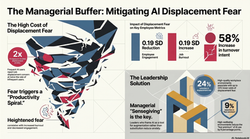
Managers as Mediators: How Organizational Leadership Shapes Workers' Fear of AI Displacement
NEXUS INSTITUTE FOR WORK AND AI
4 days ago
28 min read
When AI Becomes a Crutch: How Instant Help Erodes Human Capability and Persistence
NEXUS INSTITUTE FOR WORK AND AI
6 days ago
20 min read
When Algorithms Replace Credentials: Navigating Labor Commoditization in the AI Era
NEXUS INSTITUTE FOR WORK AND AI
6 days ago
19 min read
AI Agents and the Future of Work: How Early Adopters Are Building Competitive Moats Through Intelligent Collaboration
NEXUS INSTITUTE FOR WORK AND AI
Jun 29
22 min read
The Workforce AI Literacy Imperative: Building Competitive Advantage Through Evidence-Based Upskilling
NEXUS INSTITUTE FOR WORK AND AI
Jun 28
23 min read
Cognitive Surrender in the Age of AI: How Organizations Can Navigate the Rise of Artificial Reasoning
NEXUS INSTITUTE FOR WORK AND AI
Jun 27
19 min read
Human Capital Leadership Review
Why Your Failed AI Initiative Is Actually An Organizational Problem
3 hours ago
7 min read
One-Third of Workers Struggle to Focus in the Office - but Experts Warn Home Working isn't the Answer
3 hours ago
2 min read
Navigating Institutional Complexity: How Context Shapes Talent Management Implementation in Small and Medium-Sized Enterprises
CATALYST CENTER FOR WORK INNOVATION
10 hours ago
40 min read
Where the Pipeline Breaks: AI, Early-Career Workforce Development, and the Future of Organizational Talent Strategy
NEXUS INSTITUTE FOR WORK AND AI
1 day ago
19 min read
The Psychological Architecture of Teacher Engagement: How Well-Being Shapes Professional Commitment Through Work Ethic
CATALYST CENTER FOR WORK INNOVATION
2 days ago
27 min read
The Rise of Job Stacking: Managing Multiple Remote Roles in the Post-Pandemic Workplace
CATALYST CENTER FOR WORK INNOVATION
3 days ago
22 min read
The Silent Productivity Drain: Why Employees Stop Asking for IT Help
4 days ago
4 min read
America Works Launches “250 Hires Initiative” to Celebrate America 250 and Expand Workforce Opportunity Nationwide
4 days ago
2 min read
Managers as Mediators: How Organizational Leadership Shapes Workers' Fear of AI Displacement
NEXUS INSTITUTE FOR WORK AND AI
4 days ago
28 min read
1
2
3
4
5
HCL Review Research Videos
HCL Review Research Infographics
Blog: HCI Blog
Human Capital Leadership Review
Featuring scholarly and practitioner insights from HR and people leaders, industry experts, and researchers.
Human Capital Innovations
Play Video
Play Video
03:26
Architecting Fluid Organizations
This research examines how artificial intelligence is forcing a fundamental redesign of organizational structures and traditional work models. The research argues that companies must move beyond simple automation to develop adaptive designs that integrate human judgment with autonomous agentic systems. Key strategies involve merging technology and human resource functions, implementing new performance metrics, and creating flexible talent models that include freelancers and AI agents. Success depends on proactive leadership that fosters psychological safety while clearly defining the unique value of human workers. Ultimately, the research suggests that organizations must prioritize continuous learning and structural fluidity to remain competitive in an era of rapid technological transformation.
Play Video
Play Video
05:02
AI's Impact on Organizational Design - Navigating the Future of Work
The evolution of automation from mechanical robots on factory floors to Agentic AI handling complex cognitive tasks marks a transformative era in the workplace. AI now performs creative, judgment-based work such as drafting legal briefs, coding, and managing marketing campaigns. This shift demands a comprehensive redesign of organizational structures, workflows, and workforce skills. Traditional rigid hierarchies are giving way to agile, interdisciplinary teams combining data scientists, AI specialists, HR professionals, frontline workers, freelancers, and AI agents. Leading companies—such as JP Morgan Chase, University (Univer), and Walmart—demonstrate the benefits of AI integration, which include efficiency gains, reduced bias, and enhanced focus on strategic and creative tasks. Highlights 🤖 Automation has evolved from factory robots to AI performing cognitive, creative tasks. 👥 Workplaces are shifting from hierarchies to agile, cross-functional teams that include AI agents. 💼 Companies like JP Morgan Chase and Walmart showcase successful AI-driven organizational redesign. 🎓 Massive investment in reskilling and continuous learning is crucial for workforce adaptation. 🤝 Employee involvement and clear communication reduce resistance to AI-driven change. 💡 AI complements human creativity, judgment, and empathy—it does not replace them. 🌍 The future of work depends on blending AI’s strengths with human expertise to create resilient organizations. Key Insights 🤖 Agentic AI transforms the nature of work by automating cognitive, not just manual, tasks: Unlike early automation centered around mechanical labor, AI now undertakes tasks requiring creativity, legal reasoning, and strategic thinking. This represents a fundamental shift requiring organizations to rethink roles and capabilities in terms of human-AI collaboration. 🧩 Agile, cross-functional teams integrating diverse roles enable effective AI use: Teams that combine data scientists, AI specialists, HR personnel, frontline workers, freelancers, and AI systems foster a dynamic ecosystem where AI handles routine data-driven activities, freeing humans to focus on high-value judgment and emotional intelligence. This structural redesign enhances adaptability and innovation. 📈 Practical AI integration leads to substantial productivity gains, exemplified by industry leaders: JP Morgan Chase’s use of AI to review loan agreements saves hundreds of thousands of staff hours, while Walmart’s reskilling initiatives transform employee capabilities. These real-world examples affirm that AI’s value lies not only in automation but in strategic workflow redesign and human capital investment. 📚 Reskilling and continuous learning extend beyond technical training to emphasize uniquely human skills: The rising demand for creativity, problem solving, leadership, and emotional intelligence means that future workforce development must be holistic. Partnerships with universities and online education platforms play a pivotal role in providing accessible, relevant learning pathways. 🛠️ Human-centered change management mitigates anxiety and resistance to AI adoption: Open communication from leadership about AI strategies, involvement of workers in redesigning jobs, and fostering empathy transform turbulence into engagement. Empowered employees adopt change enthusiastically, becoming active contributors to innovation rather than passive recipients of disruption. ⚖️ Balancing AI’s computational power with human empathy and ethics is essential: AI excels at data processing, pattern recognition, and repetitive tasks but lacks the capacity for moral judgment, creativity, and emotional connection. Successful organizations recognize this complementarity and design workflows that harness AI’s advantages while valuing deeply human qualities. 🌟 Leadership plays a critical role in shaping AI’s impact by articulating vision, supporting lifelong learning, and redesigning reward systems: To unlock AI’s full potential, leaders must foster an environment where collaboration between humans and machines is rewarded and where employees see clear future opportunities. This visionary management transforms AI from a source of anxiety into a strategic asset for organizational resilience and growth.
Play Video
Play Video
23:58
A Debate about Architecting the Future: Organizational Design in the AI Era
This research examines how artificial intelligence is forcing a fundamental redesign of organizational structures and traditional work models. The research argues that companies must move beyond simple automation to develop adaptive designs that integrate human judgment with autonomous agentic systems. Key strategies involve merging technology and human resource functions, implementing new performance metrics, and creating flexible talent models that include freelancers and AI agents. Success depends on proactive leadership that fosters psychological safety while clearly defining the unique value of human workers. Ultimately, the research suggests that organizations must prioritize continuous learning and structural fluidity to remain competitive in an era of rapid technological transformation. See Privacy Policy at https://art19.com/privacy and California Privacy Notice at https://art19.com/privacy#do-not-sell-my-info.
Play Video
Play Video
53:13
A Conversation about Architecting the Future: Organizational Design in the AI Era
This research examines how artificial intelligence is forcing a fundamental redesign of organizational structures and traditional work models. The research argues that companies must move beyond simple automation to develop adaptive designs that integrate human judgment with autonomous agentic systems. Key strategies involve merging technology and human resource functions, implementing new performance metrics, and creating flexible talent models that include freelancers and AI agents. Success depends on proactive leadership that fosters psychological safety while clearly defining the unique value of human workers. Ultimately, the research suggests that organizations must prioritize continuous learning and structural fluidity to remain competitive in an era of rapid technological transformation. See Privacy Policy at https://art19.com/privacy and California Privacy Notice at https://art19.com/privacy#do-not-sell-my-info.
Play Video
Play Video
22:23
A Conversation about Architecting the Future: Organizational Design in the AI Era
This research examines how artificial intelligence is forcing a fundamental redesign of organizational structures and traditional work models. The research argues that companies must move beyond simple automation to develop adaptive designs that integrate human judgment with autonomous agentic systems. Key strategies involve merging technology and human resource functions, implementing new performance metrics, and creating flexible talent models that include freelancers and AI agents. Success depends on proactive leadership that fosters psychological safety while clearly defining the unique value of human workers. Ultimately, the research suggests that organizations must prioritize continuous learning and structural fluidity to remain competitive in an era of rapid technological transformation. See Privacy Policy at https://art19.com/privacy and California Privacy Notice at https://art19.com/privacy#do-not-sell-my-info.
Play Video
Play Video
22:23
Organizational Design in the Age of AI: Navigating the Structural Transformation of Work
Abstract: The integration of artificial intelligence into organizational systems presents unprecedented challenges to traditional organizational structures, roles, and talent models. As AI agents become capable of performing knowledge work at scale, organizations face pressure to redesign fundamental elements including departmental boundaries, employment relationships, partnership ecosystems, and leadership capabilities. This article examines the organizational consequences of AI adoption, drawing on organizational theory, change management research, and emerging practitioner evidence. It explores how AI disrupts conventional job architectures, necessitates new cross-functional integration patterns, and demands novel approaches to talent acquisition and development. The analysis identifies evidence-based organizational responses including structural integration strategies, new performance metrics, talent diversification models, and capability-building frameworks. Organizations that proactively redesign structures, invest in human capabilities, and cultivate adaptive leadership practices will be better positioned to capture value from AI while maintaining organizational cohesion and employee engagement during this fundamental transition. See Privacy Policy at https://art19.com/privacy and California Privacy Notice at https://art19.com/privacy#do-not-sell-my-info.
Play Video
Play Video
04:03
Module 2 - Strategic Change Architecture Slides Overview Video
In today's rapidly evolving business landscape, the need for trustworthy and transformative leadership has never been more crucial. We understand the pivotal role that leadership plays in driving organizational change and success. In this module introduction, we will explore the key traits of trustworthy leaders, delve into the seven practices for cultivating trustworthy leadership, examine various theories and models of change, and reflect on the value of service learning in the context of organizational transformation. In the face of constant change and uncertainty, the need for trustworthy and transformative leadership has never been more critical. By cultivating the key traits of trustworthy leaders and implementing the seven practices for fostering such leadership, organizations can unlock the full potential of their teams and drive sustainable, impactful change. Organizational change is a complex and multifaceted process, requiring a deep understanding of various theories and models, as well as a commitment to continuous learning and adaptation. By incorporating service-learning into change initiatives, we can further strengthen our teams, deepen our connection to the community, and ultimately achieve greater success.
Play Video
Play Video
06:20
Cultivating Trustworthy Leadership Transform Your Organization!
In today's rapidly evolving business landscape, the need for trustworthy and transformative leadership has never been more crucial. We understand the pivotal role that leadership plays in driving organizational change and success. In this module introduction, we will explore the key traits of trustworthy leaders, delve into the seven practices for cultivating trustworthy leadership, examine various theories and models of change, and reflect on the value of service learning in the context of organizational transformation. In the face of constant change and uncertainty, the need for trustworthy and transformative leadership has never been more critical. By cultivating the key traits of trustworthy leaders and implementing the seven practices for fostering such leadership, organizations can unlock the full potential of their teams and drive sustainable, impactful change. Organizational change is a complex and multifaceted process, requiring a deep understanding of various theories and models, as well as a commitment to continuous learning and adaptation. By incorporating service-learning into change initiatives, we can further strengthen our teams, deepen our connection to the community, and ultimately achieve greater success.
HCL Review Articles
All Articles
Nexus Institute for Work and AI
Catalyst Center for Work Innovation
Adaptive Organization Lab
Work Renaissance Project
Research Briefs
Research Insights
Webinar Recaps
Book Reviews
Transformative Social impact
Search
Dec 21, 2025
15 min read
RESEARCH BRIEFS
Nested Learning: A New Paradigm for Adaptive AI Systems
bottom of page