top of page
Home
Bio
Pricing
Merch
Podcast Network
Advertise with Us
Be Our Guest
Academy
Learning Catalog
Learners at a Glance
The ROI of Certification
Corporate L&D Solutions
Research
Research Initiatives
Nexus Institute
Catalyst Center
Adadptive Organization Lab
Future of Work Collective
Renaissance Project
Collaboration Form
Research Models and Tools
Research One Sheets
Research Snapshots
Research Videos
Research Briefs
Free Educational Resources
HCL Review
Contribute to the HCL Review
HCL Review Archive
HCL Review Slide Decks and Infographics
HCL Review Process
HCL Review Reach and Impact
HCI Press
From HCI Academic Press
From HCI Popular Press
Publish with HCI Press
Free OER Texts
Our Impact
Invest with HCI
Industry Recognition
Philanthropic Impact
Kiva Lending Impact
More
Use tab to navigate through the menu items.
Direct Lines to Loyalty: Why Generation Z's Commitment Is Built in the Daily Experience of Work
CATALYST CENTER FOR WORK INNOVATION
22 hours ago
29 min read
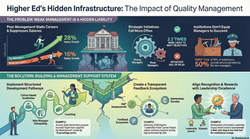
The Inflection Point: How Tenure Shapes Academic Research Trajectories and Organizational Strategy
CATALYST CENTER FOR WORK INNOVATION
3 days ago
16 min read
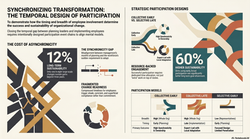
The Architecture of Work Is Collapsing. Most Organizations Are Still Building Ladders.
CATALYST CENTER FOR WORK INNOVATION
3 days ago
24 min read
Navigating the Evolving Landscape of Human Reliance on Generative AI
NEXUS INSTITUTE FOR WORK AND AI
4 days ago
26 min read
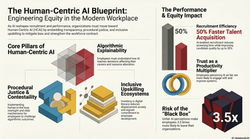
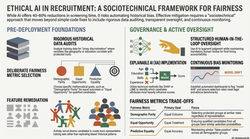
Mitigating Algorithmic Bias in AI-Powered Recruitment: A Practitioner's Guide to Ethical Implementation
NEXUS INSTITUTE FOR WORK AND AI
5 days ago
21 min read
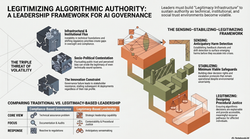
Leading Algorithmic Authority: Why Ethical AI Governance Depends on Legitimacy Infrastructure, Not Compliance Checklists
NEXUS INSTITUTE FOR WORK AND AI
6 days ago
17 min read
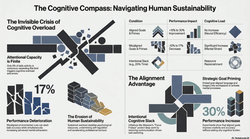
When the Machine Is Ready but the Mind Is Not: Designing Organizations for Human Capacity in the Age of AI
NEXUS INSTITUTE FOR WORK AND AI
Sep 30
26 min read
When Talking Trash About Your Terrible Boss Actually Helps Your Team: The Surprising Organizational Benefits of Leader-Targeted Gossip
CATALYST CENTER FOR WORK INNOVATION
Sep 29
23 min read
The Ratio of Labor to Tech: Navigating Structural Workforce Contraction and AI Adoption in an Era of Dual Disruption
NEXUS INSTITUTE FOR WORK AND AI
Sep 28
23 min read
When Organizations Hire Change Agents They Don't Intend to Support: The Institutional Absorption of Reform Mandates
CATALYST CENTER FOR WORK INNOVATION
Sep 27
26 min read
Human Capital Leadership Review
Adult Learners: Avoiding the Pitfalls of Returning to Study
WORK RENAISSANCE PROJECT
20 hours ago
2 min read
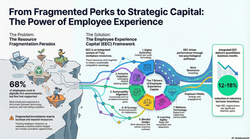
Direct Lines to Loyalty: Why Generation Z's Commitment Is Built in the Daily Experience of Work
CATALYST CENTER FOR WORK INNOVATION
22 hours ago
29 min read
Survey: CHRO Confidence Remains in Positive Territory, But Continues to Inch Down
NEXUS INSTITUTE FOR WORK AND AI
2 days ago
4 min read
Why Authenticity Is Becoming Marketing's Scarce Advantage in the AI Era
NEXUS INSTITUTE FOR WORK AND AI
2 days ago
3 min read
New Study Reveals Which US Jobs Have the Most Fun After Work
RESEARCH INSIGHTS
2 days ago
4 min read
The Death of SaaS Has Been Greatly Exaggerated, and Workday is Proof
NEXUS INSTITUTE FOR WORK AND AI
2 days ago
3 min read
The Inflection Point: How Tenure Shapes Academic Research Trajectories and Organizational Strategy
CATALYST CENTER FOR WORK INNOVATION
3 days ago
16 min read
Office Workers "Career Cushioning" in Case They Lose Their Jobs
RESEARCH INSIGHTS
3 days ago
3 min read
What Happens After Someone Speaks Up?
ADAPTIVE ORGANIZATION LAB
3 days ago
4 min read
1
2
3
4
5
HCL Review Research Videos
HCL Review Research Infographics
Blog: HCI Blog
Human Capital Leadership Review
Featuring scholarly and practitioner insights from HR and people leaders, industry experts, and researchers.
Human Capital Innovations
Play Video
Play Video
37:34
From Rainmaker to Architect of Your Business, with Bradley Hamner
In this HCI Webinar, I talk with Bradley Hamner about moving from from rainmaker to architect of your business. Bradley is the founder and CEO of BlueprintOS, creator of The S.C.A.L.E. Assessment, author of S.C.A.L.E, and host of the Above The Business Podcast. He guides small business owners doing between $300K to $3M in annual revenue to transition from being the Rainmaker – where everything depends on them – to becoming the Architect of a scalable, self-sustaining, and profitable business. The ultimate outcome? Business owners have a successful business that creates the freedom and flexibility they desired from the start.
Play Video
Play Video
46:32
A Conversation about Minding the Gap: Understanding AI Error Boundaries
When organizations deploy artificial intelligence to assist with high-stakes choices, high standalone accuracy does not automatically guarantee superior team results. Instead, successful collaboration relies heavily on human mental models, which represent a user's internal grasp of where an algorithm succeeds and where it fails. To optimize team performance, developers must focus on the learnability of error boundaries, prioritizing system simplicity, predictability, and manageable task complexity over raw metrics alone. Furthermore, managing model updates carefully ensures that sudden modifications do not disrupt established trust or compromise collaborative effectiveness. Ultimately, organizations must treat human-AI coordination as a continuous process rather than a static deployment challenge.
Play Video
Play Video
12:42
The Accuracy Trap - Why Better ML Models Break Human Teams
When organizations deploy artificial intelligence to assist with high-stakes choices, high standalone accuracy does not automatically guarantee superior team results. Instead, successful collaboration relies heavily on human mental models, which represent a user's internal grasp of where an algorithm succeeds and where it fails. To optimize team performance, developers must focus on the learnability of error boundaries, prioritizing system simplicity, predictability, and manageable task complexity over raw metrics alone. Furthermore, managing model updates carefully ensures that sudden modifications do not disrupt established trust or compromise collaborative effectiveness. Ultimately, organizations must treat human-AI coordination as a continuous process rather than a static deployment challenge.
Play Video
Play Video
03:23
Mapping AI Error Boundaries
When organizations deploy artificial intelligence to assist with high-stakes choices, high standalone accuracy does not automatically guarantee superior team results. Instead, successful collaboration relies heavily on human mental models, which represent a user's internal grasp of where an algorithm succeeds and where it fails. To optimize team performance, developers must focus on the learnability of error boundaries, prioritizing system simplicity, predictability, and manageable task complexity over raw metrics alone. Furthermore, managing model updates carefully ensures that sudden modifications do not disrupt established trust or compromise collaborative effectiveness. Ultimately, organizations must treat human-AI coordination as a continuous process rather than a static deployment challenge.
Play Video
Play Video
22:53
Mind the Gap: Why Understanding AI Error Boundaries Is the Key to Unlocking Human-AI Team Perform...
Abstract: Organizations increasingly deploy artificial intelligence to augment human decision-making in high-stakes domains, yet mounting evidence reveals that AI accuracy alone does not reliably translate into superior human-AI team outcomes. This article examines the critical but underexplored role of human mental models—specifically, users' understanding of when and where an AI system errs—in shaping the effectiveness of AI-advised decision-making. Drawing on foundational experimental research by Bansal, Nushi, Kamar, Lasecki, et al. (2019), the article unpacks three properties of AI systems and tasks—error boundary parsimony, stochasticity, and task dimensionality—that determine how readily humans learn to complement an AI teammate. Evidence-based organizational responses are presented, spanning system design, explainability strategy, update governance, and workforce development. The article concludes with forward-looking pillars for building durable human-AI collaboration capability, arguing that practitioners must optimize not only for what the AI gets right, but for how predictably humans can learn what it gets wrong.
Play Video
Play Video
21:12
A Debate about Minding the Gap: Understanding AI Error Boundaries
When organizations deploy artificial intelligence to assist with high-stakes choices, high standalone accuracy does not automatically guarantee superior team results. Instead, successful collaboration relies heavily on human mental models, which represent a user's internal grasp of where an algorithm succeeds and where it fails. To optimize team performance, developers must focus on the learnability of error boundaries, prioritizing system simplicity, predictability, and manageable task complexity over raw metrics alone. Furthermore, managing model updates carefully ensures that sudden modifications do not disrupt established trust or compromise collaborative effectiveness. Ultimately, organizations must treat human-AI coordination as a continuous process rather than a static deployment challenge.
Play Video
Play Video
54:11
A Conversation about the Flexibility Paradox in Job Searching
This research explores the flexibility paradox, a counter-intuitive phenomenon where unemployed individuals who cast a wide net during their job search frequently face diminished re-employment prospects and lower job quality. Although policymakers and career experts routinely urge jobseekers to embrace flexibility regarding pay, skills, and commuting distances, empirical research demonstrates that hiring managers often penalize applicants whose backgrounds deviate from rigid person-job fit criteria. Consequently, flexible candidates who eventually secure employment frequently experience severe underemployment, job dissatisfaction, and higher turnover rates. To resolve this tension, the source advocates for skills-based hiring, structured onboarding, and targeted career counseling that prioritizes precision and long-term match quality over blind search breadth. Ultimately, building a sustainable labor market requires employers and institutions to recognize transferable capabilities rather than punishing jobseekers for exploring unconventional career paths.
Play Video
Play Video
10:33
Anatomy of a Bad Match - The Flexibility Paradox
This research explores the flexibility paradox, a counter-intuitive phenomenon where unemployed individuals who cast a wide net during their job search frequently face diminished re-employment prospects and lower job quality. Although policymakers and career experts routinely urge jobseekers to embrace flexibility regarding pay, skills, and commuting distances, empirical research demonstrates that hiring managers often penalize applicants whose backgrounds deviate from rigid person-job fit criteria. Consequently, flexible candidates who eventually secure employment frequently experience severe underemployment, job dissatisfaction, and higher turnover rates. To resolve this tension, the source advocates for skills-based hiring, structured onboarding, and targeted career counseling that prioritizes precision and long-term match quality over blind search breadth. Ultimately, building a sustainable labor market requires employers and institutions to recognize transferable capabilities rather than punishing jobseekers for exploring unconventional career paths.
HCL Review Articles
All Articles
Nexus Institute for Work and AI
Catalyst Center for Work Innovation
Adaptive Organization Lab
Work Renaissance Project
Research Briefs
Research Insights
Webinar Recaps
Book Reviews
Transformative Social impact
Search
May 27, 2025
5 min read
RESEARCH INSIGHTS
Cultivating Inner Drive: Turning Aversions into Alignments
bottom of page