top of page
Home
Bio
Pricing
Podcast Network
Advertise with Us
Be Our Guest
Academy
Learning Catalog
Learners at a Glance
The ROI of Certification
Corporate L&D Solutions
Research
Research Initiatives
Nexus Institute
Catalyst Center
Adadptive Organization Lab
Future of Work Collective
Renaissance Project
Collaboration Form
Research Models and Tools
Research One Sheets
Research Snapshots
Research Videos
Research Briefs
Research Articles
Free Educational Resources
HCL Review
Contribute to the HCL Review
HCL Review Archive
HCL Review Slide Decks and Infographics
HCL Review Process
HCL Review Reach and Impact
HCI Press
From HCI Academic Press
From HCI Popular Press
Publish with HCI Press
Free OER Texts
Our Impact
Invest with HCI
Industry Recognition
Philanthropic Impact
Kiva Lending Impact
Merch
More
Use tab to navigate through the menu items.
Human Agency in AI-Augmented Work: Building Meaningful Control in the Age of Intelligent Systems
NEXUS INSTITUTE FOR WORK AND AI
12 hours ago
21 min read
Institutional Distrust in the Age of AI: Evidence-Based Organizational Responses to Eroding Public Confidence
NEXUS INSTITUTE FOR WORK AND AI
1 day ago
20 min read
From Classrooms to Cognitive Cauldrons: Reimagining Education as the Formation of Sovereign Minds
RESEARCH INSIGHTS
2 days ago
22 min read
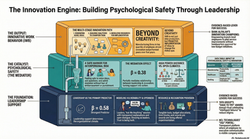
Authentic Leadership as a Catalyst for Innovation: How Trust, Knowledge Flow, and Organizational Agility Drive Innovative Work Behavior
CATALYST CENTER FOR WORK INNOVATION
3 days ago
21 min read
Artificial Intelligence and the Return of Foundational Skills: Why Human Capital Determines AI Impact
NEXUS INSTITUTE FOR WORK AND AI
4 days ago
25 min read
A Shorter Workweek as Economic Infrastructure: Managing AI-Driven Labor Displacement Through Work-Time Policy
NEXUS INSTITUTE FOR WORK AND AI
5 days ago
18 min read
Dynamic Behavior Readiness Systems: A Multi-State Framework for Sustainable Organizational Performance
ADAPTIVE ORGANIZATION LAB
6 days ago
21 min read
Human-Centric Skills in the New Economy: Evidence, Gaps, and Strategic Imperatives for Organizations
Mar 28
26 min read
Navigating AI Displacement Threats: Evidence-Based Strategies for Organizational Resilience and Employee Creativity
NEXUS INSTITUTE FOR WORK AND AI
Mar 27
17 min read
People Don't Follow Strategy—They Follow Structure: Why Organizational Design Drives Adaptation More Than Culture or Incentives
CATALYST CENTER FOR WORK INNOVATION
Mar 26
24 min read
Human Capital Leadership Review
Human Agency in AI-Augmented Work: Building Meaningful Control in the Age of Intelligent Systems
NEXUS INSTITUTE FOR WORK AND AI
12 hours ago
21 min read
1.76 Million Layoffs in December; Some States Hit 2.5x Harder than Others
1 day ago
4 min read
Institutional Distrust in the Age of AI: Evidence-Based Organizational Responses to Eroding Public Confidence
NEXUS INSTITUTE FOR WORK AND AI
1 day ago
20 min read
Synchrony Named No. 1 Best Company to Work For in the U.S., Powered by a High-Trust Culture that Fuels Innovation
2 days ago
5 min read
New Data: The Countries Where One Job No Longer Covers the Basics
2 days ago
4 min read
60% of Corporate America Hasn’t Moved Beyond Early AI Adoption—Yet
2 days ago
3 min read
Worker AI Usage in Daily Tasks
2 days ago
3 min read
72% of Workers Say AI Is Giving Phishing a Dangerous New Edge, Sagiss Managed Security Survey Finds
2 days ago
2 min read
From Classrooms to Cognitive Cauldrons: Reimagining Education as the Formation of Sovereign Minds
RESEARCH INSIGHTS
2 days ago
22 min read
1
2
3
4
5
HCL Review Research Videos
Human Capital Innovations
Play Video
Play Video
03:41
55,000 Jobs Cut for AI What Tech Won’t Tell You
The technology sector in 2026 is experiencing a profound and fundamental transformation, marked not merely by cyclical layoffs but by a strategic reallocation of capital and priorities driven predominantly by the rapid expansion of artificial intelligence (AI) infrastructure. Over 90,000 tech jobs have been cut this year alone, representing a 43% increase in daily layoffs compared to 2025. Major companies like Oracle, Amazon, and Block are aggressively downsizing large segments of their workforce while simultaneously investing billions in AI-related capital expenditures, especially in AI compute and data centers. Highlights 🤖 Over 90,000 tech jobs cut in 2026, a 43% increase in layoffs from 2025. 💰 Tech capital expenditures nearly double in 2026, focused heavily on AI infrastructure. 📉 AI inference costs have dropped 280-fold in two years, transforming AI into core infrastructure. ⚙️ Massive automation reshapes software development, customer support, and marketing. 🏢 Layoffs risk loss of institutional knowledge and disrupt client relationships. 😟 Employee anxiety and workload increase, stifling creativity and innovation. 📚 Reskilling and continuous learning are critical for adapting to the AI-driven economy. Key Insights 🤖 Strategic Shift from Human to Machine Capital: The tech industry is undergoing a fundamental realignment where AI and machine-based systems replace human labor to optimize cost structures and operational efficiency. This shift reflects a new economic logic prioritizing automation as a core enterprise asset rather than a supplementary tool, indicating how deeply AI is embedded in the future of work and business models. 💸 Capital Expenditure vs. Workforce Reduction: The paradox of simultaneous massive capital investment alongside large-scale layoffs illustrates a deliberate reallocation of resources. Companies are choosing to invest heavily in AI compute infrastructure while shrinking labor forces, signaling a long-term bet on technology-driven productivity gains over traditional human-centric business operations. 📉 Collapse in AI Operational Costs as a Catalyst: The dramatic reduction in AI inference costs—by nearly 280 times—has been the main enabler for widespread AI adoption. This cost decline shifts AI from an experimental luxury to an indispensable, scalable infrastructure, accelerating enterprise AI integration at a pace previously unseen. 🧩 Human Capital Risks and Organizational Resilience: While automation offers immediate financial benefits, the loss of skilled human employees presents hidden risks. Institutional knowledge, client relationships, and organizational culture suffer, potentially weakening a company’s ability to innovate and respond to future challenges. This tension highlights the complexity of balancing cost-cutting with sustaining long-term organizational health. 😰 Psychological and Social Impact on Employees: The layoffs not only reduce workforce numbers but create a stressful environment for remaining employees. Increased workloads, job insecurity, and fear of further cuts undermine creativity and morale, which are critical for innovation in the tech sector. This psychosocial dimension is a key factor often overlooked in purely financial analyses. 🌍 Broader Economic and Social Consequences: Beyond individual companies, mass layoffs in tech impact local economies and exacerbate inequalities. The widening skill gap between AI specialists and other workers risks deepening societal divisions. This underscores the need for corporate and policy-level interventions to support displaced workers and foster inclusive growth. 📚 Importance of Transparent Communication and Reskilling: Successful navigation of this AI-driven transition requires clear communication about organizational changes, generous severance and benefits for affected workers, and robust investment in reskilling programs. Emphasizing continuous learning and internal mobility can help both companies and employees adapt to the rapidly evolving technological landscape, ensuring a more sustainable AI integration.
Play Video
Play Video
03:46
The AI Pivot
This research examines a significant shift in the technology sector known as the "great AI pivot," where major corporations are simultaneously reducing human headcounts and increasing automation investments. Research indicates that companies like Amazon, Meta, and Oracle are liquidating thousands of roles to reallocate capital toward artificial intelligence infrastructure, signaling a structural transformation rather than a temporary economic correction. This transition carries substantial risks for both organizational health and individual wellbeing, including the loss of institutional knowledge and severe psychological distress for displaced workers. To mitigate these negative impacts, the research advocates for evidence-based leadership strategies such as transparent communication, fair procedural justice, and robust reskilling programs. Ultimately, the analysis suggests that long-term corporate resilience depends on redefining the psychological contract between employers and employees to prioritize continuous learning and human-AI collaboration.
Play Video
Play Video
21:18
A Debate about the Great AI Pivot: Restructuring Workforces for Automation Infrastructure
This research examines a significant shift in the technology sector known as the "great AI pivot," where major corporations are simultaneously reducing human headcounts and increasing automation investments. Research indicates that companies like Amazon, Meta, and Oracle are liquidating thousands of roles to reallocate capital toward artificial intelligence infrastructure, signaling a structural transformation rather than a temporary economic correction. This transition carries substantial risks for both organizational health and individual wellbeing, including the loss of institutional knowledge and severe psychological distress for displaced workers. To mitigate these negative impacts, the research advocates for evidence-based leadership strategies such as transparent communication, fair procedural justice, and robust reskilling programs. Ultimately, the analysis suggests that long-term corporate resilience depends on redefining the psychological contract between employers and employees to prioritize continuous learning and human-AI collaboration. See Privacy Policy at https://art19.com/privacy and California Privacy Notice at https://art19.com/privacy#do-not-sell-my-info.
Play Video
Play Video
09:56
The Great AI Pivot: How Tech Giants Are Restructuring Workforces to Fund Automation Infrastructure
Abstract: In early 2026, major technology companies announced workforce reductions exceeding 55,000 positions while simultaneously committing $650 billion toward artificial intelligence infrastructure investments. This paper examines the organizational strategies, human consequences, and evidence-based responses to what industry observers term "the great AI pivot"—a fundamental restructuring where corporations systematically reduce human headcount to fund automation capabilities. Drawing on organizational behavior research, workforce transformation studies, and recent industry developments at Amazon, Meta, Oracle, Block, and Atlassian, this analysis explores how technology leaders are navigating the tension between operational efficiency and workforce stability. The paper evaluates consequences for organizational performance and employee wellbeing, then presents evidence-based intervention frameworks spanning transparent communication, procedural justice, capability building, and strategic workforce planning. Finally, it proposes long-term organizational capabilities for managing technology-driven workforce transitions while maintaining psychological contracts, distributed leadership structures, and continuous learning systems that balance automation benefits with human capital preservation. See Privacy Policy at https://art19.com/privacy and California Privacy Notice at https://art19.com/privacy#do-not-sell-my-info.
Play Video
Play Video
09:56
A Conversation about the Great AI Pivot: Restructuring Workforces for Automation Infrastructure
This research examines a significant shift in the technology sector known as the "great AI pivot," where major corporations are simultaneously reducing human headcounts and increasing automation investments. Research indicates that companies like Amazon, Meta, and Oracle are liquidating thousands of roles to reallocate capital toward artificial intelligence infrastructure, signaling a structural transformation rather than a temporary economic correction. This transition carries substantial risks for both organizational health and individual wellbeing, including the loss of institutional knowledge and severe psychological distress for displaced workers. To mitigate these negative impacts, the research advocates for evidence-based leadership strategies such as transparent communication, fair procedural justice, and robust reskilling programs. Ultimately, the analysis suggests that long-term corporate resilience depends on redefining the psychological contract between employers and employees to prioritize continuous learning and human-AI collaboration. See Privacy Policy at https://art19.com/privacy and California Privacy Notice at https://art19.com/privacy#do-not-sell-my-info.
Play Video
Play Video
09:56
A Conversation about the Great AI Pivot: Restructuring Workforces for Automation Infrastructure
This research examines a significant shift in the technology sector known as the "great AI pivot," where major corporations are simultaneously reducing human headcounts and increasing automation investments. Research indicates that companies like Amazon, Meta, and Oracle are liquidating thousands of roles to reallocate capital toward artificial intelligence infrastructure, signaling a structural transformation rather than a temporary economic correction. This transition carries substantial risks for both organizational health and individual wellbeing, including the loss of institutional knowledge and severe psychological distress for displaced workers. To mitigate these negative impacts, the research advocates for evidence-based leadership strategies such as transparent communication, fair procedural justice, and robust reskilling programs. Ultimately, the analysis suggests that long-term corporate resilience depends on redefining the psychological contract between employers and employees to prioritize continuous learning and human-AI collaboration. See Privacy Policy at https://art19.com/privacy and California Privacy Notice at https://art19.com/privacy#do-not-sell-my-info.
Play Video
Play Video
How Companies Can Operationalize Agility for All Teams, with Juan Betancourt
In this HCI Webinar, I talk with Juan Betancourt about how companies can operationalize agility for all teams. Juan Betancourt, CEO of Humantelligence, is a visionary leader with a lifelong commitment to reshaping the business landscape for the better. Having observed the limitations of conventional human capital management systems during his time in the software industry, Juan recognized a need for innovation. It was this realization that led him to Humantelligence, where he saw the potential to revolutionize productivity, motivation, and employee retention while making it accessible to all. With a track record of revitalizing global brands like Puma and overseeing the US division of Décathlon, Juan's expertise is unmatched. A Harvard economics graduate with an MBA from The Wharton School, Juan is committed to making work better for all and actively engages in community leadership roles.
Play Video
Play Video
03:52
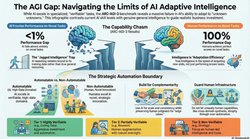
Navigating the AI Unknown
This research examines ARC-AGI-3, a 2026 benchmark designed to test an AI’s ability to solve novel problems without prior training or instructions. While current frontier models excel at specialized tasks within their training data, they struggle significantly with the "unknown unknowns" presented in this interactive test, whereas humans succeed easily. The research argues that true artificial general intelligence is defined by the efficiency of acquiring new skills rather than just performing learned tasks. Because of this intelligence gap, organizations are advised to automate only verifiable domains while relying on human judgment for strategic and creative roles. Ultimately, the research suggests that while AI is a powerful tool for structured work, it still lacks the flexible adaptability inherent to human cognition.
HCL Review Research Infographics
Blog: HCI Blog
Human Capital Leadership Review
Featuring scholarly and practitioner insights from HR and people leaders, industry experts, and researchers.
HCL Review Articles
All Articles
Nexus Institute for Work and AI
Catalyst Center for Work Innovation
Adaptive Organization Lab
Work Renaissance Project
Research Briefs
Research Insights
Webinar Recaps
Book Reviews
Transformative Social impact
Search
Jan 26
23 min read
RESEARCH BRIEFS
How Behavioral Science Can Improve the Return on AI Investments
bottom of page