top of page
Home
Bio
Pricing
Merch
Podcast Network
Advertise with Us
Be Our Guest
Academy
Learning Catalog
Learners at a Glance
The ROI of Certification
Corporate L&D Solutions
Research
Research Initiatives
Nexus Institute
Catalyst Center
Adadptive Organization Lab
Future of Work Collective
Renaissance Project
Collaboration Form
Research Models and Tools
Research One Sheets
Research Snapshots
Research Videos
Research Briefs
Research Articles
Free Educational Resources
HCL Review
Contribute to the HCL Review
HCL Review Archive
HCL Review Slide Decks and Infographics
HCL Review Process
HCL Review Reach and Impact
HCI Press
From HCI Academic Press
From HCI Popular Press
Publish with HCI Press
Free OER Texts
Our Impact
Invest with HCI
Industry Recognition
Philanthropic Impact
Kiva Lending Impact
More
Use tab to navigate through the menu items.
Algorithmic Leadership Without Dehumanization: Building Human-Centered Management Systems in the Digital Age
NEXUS INSTITUTE FOR WORK AND AI
22 hours ago
32 min read
Advancing Workforce Fairness Through Human-Centered AI: Strategic Imperatives for Organizations in the Age of Algorithmic Decision-Making
NEXUS INSTITUTE FOR WORK AND AI
2 days ago
21 min read
Human-Centric AI and Employment Equity: Building Fairness into the Future of Work
NEXUS INSTITUTE FOR WORK AND AI
3 days ago
22 min read
When Span of Control Becomes Span of Chaos: Meta's Retreat from AI-Managed Mega-Teams and What It Means for Organizational Design
NEXUS INSTITUTE FOR WORK AND AI
4 days ago
17 min read
The Agency Gap in AI-Assisted Higher Education: When Learner Control Shapes Reflective Practice and Critical Thinking
NEXUS INSTITUTE FOR WORK AND AI
5 days ago
33 min read
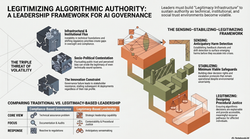
Who Legitimizes the AI Algorithm? Leadership, Volatility, and the Governance of Algorithmic Authority
NEXUS INSTITUTE FOR WORK AND AI
6 days ago
22 min read
When AI Joins the Org Chart: The Hidden Costs of Anthropomorphizing Artificial Intelligence at Work
NEXUS INSTITUTE FOR WORK AND AI
7 days ago
29 min read
The New Frontier of Workplace Monitoring: Emotional Surveillance and Its Implications for Organizations
CATALYST CENTER FOR WORK INNOVATION
Jul 19
23 min read
Building Human-AI Fit: Evidence-Based Strategies for Adaptive Performance in AI-Augmented Work
NEXUS INSTITUTE FOR WORK AND AI
Jul 18
20 min read
Organizational Design Meets Agentic AI: Why Multi-Agent Systems Need Management Theory
NEXUS INSTITUTE FOR WORK AND AI
Jul 17
25 min read
Human Capital Leadership Review
Algorithmic Leadership Without Dehumanization: Building Human-Centered Management Systems in the Digital Age
NEXUS INSTITUTE FOR WORK AND AI
22 hours ago
32 min read
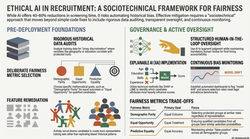
Advancing Workforce Fairness Through Human-Centered AI: Strategic Imperatives for Organizations in the Age of Algorithmic Decision-Making
NEXUS INSTITUTE FOR WORK AND AI
2 days ago
21 min read
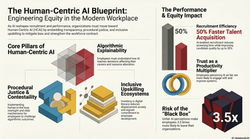
Human-Centric AI and Employment Equity: Building Fairness into the Future of Work
NEXUS INSTITUTE FOR WORK AND AI
3 days ago
22 min read
Why Your AI Strategy Will Fail Without the Right Leadership
4 days ago
6 min read
Hogan Assessments Acquires Convogo to Advance Talent Insights with AI
4 days ago
2 min read
Gravity Launches First All-Purpose Sustainability Agent
4 days ago
3 min read
When Span of Control Becomes Span of Chaos: Meta's Retreat from AI-Managed Mega-Teams and What It Means for Organizational Design
NEXUS INSTITUTE FOR WORK AND AI
4 days ago
17 min read
Stop Buying AI and Start Building Human Capability
5 days ago
8 min read
The Agency Gap in AI-Assisted Higher Education: When Learner Control Shapes Reflective Practice and Critical Thinking
NEXUS INSTITUTE FOR WORK AND AI
5 days ago
33 min read
1
2
3
4
5
HCL Review Research Videos
HCL Review Research Infographics
Blog: HCI Blog
Human Capital Leadership Review
Featuring scholarly and practitioner insights from HR and people leaders, industry experts, and researchers.
Human Capital Innovations
Play Video
Play Video
04:54
Module 5: The Universalist’s Dilemma
The negotiation between the Dutch West India Company and the Lape tribe in 1626 over Manhattan exemplifies how deeply business transactions are embedded in cultural worldviews and ethical assumptions. This interaction, often simplified as a land purchase, actually reveals incompatible conceptions of property and labor rooted in distinct cultural histories. The core message is that commerce is never culturally neutral; business ethics are shaped by local traditions, historical contexts, and evolving societal values. As companies expand globally, they face the dilemma of whether to adapt to local ethical standards or uphold universal principles. Ethical business practices evolve over time, influenced by socioeconomic systems like mercantilism, industrialization, and the information age, each bringing new challenges—from resource exploitation to worker rights to data privacy. In today’s era of global consumerism and economic globalization, corporate boundaries blur cultural ethics, leading to acculturation and the risk of ethical collapse without a coherent integrative framework. Modern organizations must balance profit with social responsibility and environmental stewardship under a dual mandate. To achieve this, they should seek universal values that transcend geography, time, and religion, transforming abstract ethical principles into concrete actions that promote social good across all stakeholder levels. The ultimate goal is not to erase cultural diversity but to synthesize the best ethical practices into a unifying global business model.
Play Video
Play Video
05:33
Module 6: The Macro-Economic Disconnect: Evaluating "Fairness" in the Modern Workplace
The American labor market primarily operates on the principle of at-will employment, allowing either party—employer or employee—to terminate working relationships at almost any time. However, this legal structure is bounded by federal regulations aimed at protecting workers from extreme abuses. Key laws such as the Occupational Safety and Health Act (OSHA), the Equal Employment Opportunity Commission (EEOC) mandates, and the Worker Adjustment and Retraining Notification (WARN) Act impose minimum standards on workplace safety, discrimination, and mass layoffs, respectively. While these laws establish a legal baseline for employer behavior, ethical employment practices require going beyond mere compliance. One critical ethical issue surrounds fair compensation. Although nominal wages have risen steadily over time, real wages adjusted for inflation have stagnated since the late 1960s, reflecting a sharp divergence from soaring worker productivity. This disconnect is largely attributed to the decline of union power over recent decades, shifting the burden of fair wage setting onto employers’ ethical judgment. Paralleling this, workplace surveillance has proliferated under permissive laws like the Electronic Communications Privacy Act (ECPA), allowing employers to monitor digital communications extensively, often justified by loose “business purpose” exceptions. Ultimately, businesses face the challenge of balancing legal compliance with ethical responsibility. True fairness encompasses not only safe and discrimination-free workplaces but also equitable compensation reflective of productivity and respect for employee privacy. Ethical leadership invites employers to recognize employees as invested stakeholders, moving beyond the restrictive at-will and high-surveillance employment models allowed by law.
Play Video
Play Video
02:34
Module 14: Slides Overview Video - The Future Workplace
The future of work is undergoing a profound transformation driven by shifts in workplace location models, flexible scheduling, and the evolving nature of labor. Modern businesses face a complex landscape where traditional norms like the 9-to-5 office routine and centralized workplace campuses are being challenged by hyperdistributed telecommuting and digital labor markets. Leaders must skillfully navigate these changes by mastering three core dimensions: location, time, and labor. Each presents unique opportunities and ethical challenges. On the location front, the tug-of-war between hyperdistributed telecommuting and centralized mega campuses highlights distinct trade-offs. Telecommuting maximizes efficiency and cost savings while supporting productivity and retention, but risks ethnic pitfalls like employer bias and employee privacy invasion. Conversely, centralized campuses foster collaboration and cultural integration by merging life and work but raise ethical dilemmas around employee autonomy and time monopolization. Time is being redefined beyond rigid schedules through structural flexibility methods such as flex time and job sharing, helping employees achieve better work-life balance. Labor itself is evolving due to the platform economy and industrial automation. While gig work and AI bring new efficiencies, they also complicate employment benefits, fairness, and necessitate responsible retraining initiatives. Ultimately, successful organizations of the future will function as cohesive, ethical ecosystems—governing with equity, fostering flexibility, and investing in human capital to thrive in a borderless and technologically augmented landscape.
Play Video
Play Video
02:08
Module 13: Slides Overview Video - Industry Ethics Diagnostic
This video explores the multifaceted ethical challenges embedded within four major industries: startups, advertising, insurance, and health care. Each sector faces distinct structural tensions where profit motives intersect with human vulnerability, posing ongoing ethical dilemmas. Startup culture is driven by high-risk entrepreneurship, shaped largely by founders’ personal traits and the pressure to succeed amid frequent failures. Advertising confronts an ethical balancing act between informing consumers and exploiting psychological susceptibilities to promote excessive consumption. The insurance industry struggles with illegal practices like geographic discrimination and wrestles with responsibility division between private insurers and public entities in disaster relief. Health care in the U.S. exemplifies complexity and ethical friction due to soaring costs, multifaceted payment systems, and disparities relative to global models like single-payer systems. Understanding these ethical fault lines is critical for achieving more just and responsible organizational behavior across industries.
Play Video
Play Video
02:15
Module 7: Slides Overview Video - The Ethics Blueprint
This video presents a comprehensive framework titled the "Blueprint of Trust," designed to guide professionals, HR leaders, and management through the complex landscape of employee ethics, loyalty, and legal responsibilities. The core premise is that business ethics operates as a balanced ecosystem, where individual integrity and self-management serve as the foundation for protecting the broader organizational environment. The framework highlights a paradigm shift from traditional defined-benefit loyalty models toward a modern reciprocal loyalty model expressed through mutual contribution and shared success. Central to this is the development of emotional intelligence (EQ), which prioritizes self-awareness, self-management, empathy, and social skills to harmonize diverse workplace personalities. A diagnostic matrix categorizes risks to workplace atmosphere based on internal or external actors and varying motives spanning from routine professional friction to criminal behavior. The legal safeguards against these threats are addressed through a "contractual shield matrix," employing tools such as non-compete agreements, non-solicitation clauses, and nondisclosure agreements (NDAs) to protect company assets. These protections differentiate between trade secrets—guarded by loyalty and secrecy duties—and intellectual property, defended by formal federal registration. Market distortions like insider trading and bribery are flagged as illegal and monitored under international laws, notably the Foreign Corrupt Practices Act (FCPA). On communication fronts, the video discusses evolving legal dynamics around employee expressions, noting that while social media complaints are generally unprotected, salary transparency is increasingly recognized as a legal right. When ethics violations arise, there is a clear escalation path from normal workplace criticism to whistleblowing, culminating in possible government lawsuits through the QETAM provision. The video concludes with a "compliance dashboard" focusing on key ethical threats such as corruption, conflicts of interest, cybersecurity, and workplace respect, emphasizing that an ethical culture demands proactive management beyond mere codes of conduct. Ultimately, integrity grows from the individual level outward, scaling up to influence the entire market.
Play Video
Play Video
01:34
Module 12: Slides Overview Video - Ethical Enterprise Blueprint
This video presents a comprehensive strategic framework for organizations centered on three integrated pillars: human capital and inclusion, economic fairness, and ethical stewardship. It emphasizes that modern business success depends on effectively managing these areas within a holistic ethical ecosystem. Despite increasing workforce diversity in the US, significant inclusion gaps persist in technical and leadership roles. Achieving true inclusion requires not only diverse recruitment but also practical accommodations and an inclusive culture driven by management. The economic pillar highlights rising wealth inequality and a shrinking middle class, threatening long-term stability. Companies can combat these trends through policies such as fair minimum wages and internal pay equity audits, especially regarding gender compensation. Ethical stewardship extends beyond corporate social responsibility to encompass sustainability in sectors like food and agriculture, integrating social welfare and natural resource management. It also calls for innovation in research ethics, advocating alternatives to traditional animal testing, including in vitro methods and advanced imaging. Ultimately, the blueprint asserts that these three pillars—human capital and inclusion, economic fairness, and ethical stewardship—are deeply interconnected and must be operationalized together for organizations to thrive in the 21st century.
Play Video
Play Video
21:26
Module 14 Debate Deep Dive - Empowerment or Control in Modern Work
The discussion explores the profound transformations reshaping modern work, emphasizing how new work patterns—telecommuting, workplace campuses, gig economy models, and robotics/AI—dismantle traditional boundaries between personal and professional life. While technological advances offer undeniable benefits like increased flexibility, efficiency, diversity, and reduced environmental impact, they also introduce significant vulnerabilities. These include managerial overreach, digital surveillance, erosion of work-life balance, and diminished worker protections. Telecommuting enables remote collaboration and access to talent without geographic constraints, yet it increases isolation and fosters digital monitoring that undermines autonomy. Innovative workplace campuses offer amenities to boost productivity but risk subsuming employees’ lives into corporate ecosystems, blurring boundaries and intensifying control. Flexible organizational structures, such as job sharing and flex time, empower workers if equitably managed. Conversely, the gig economy provides access to flexible income but often strips workers of traditional benefits, leaving them vulnerable under opaque algorithmic control. The most radical shift—automation and AI—threatens to replace many human roles entirely, creating urgent challenges around retraining and workforce inclusion. Despite divergent perspectives on whether these shifts herald genuine empowerment or intensified exploitation, both participants agree on the critical need for clear management policies and ethical frameworks to govern evolving employment relationships. The central question remains: in a world without traditional boundaries, are we building bridges toward flexibility and empowerment or invisible cages of control?
Play Video
Play Video
19:22
Module 13 Debate Deep Dive - Individual Ethics Versus Structural Market Pressures
This debate explores the tension between individual ethical responsibility and systemic structural interventions within foundational modern professions such as startups, advertising, insurance, and healthcare. It examines how market pressures, survival instincts, and profit motives shape ethical conduct in ways that sometimes conflict with public good, especially for vulnerable populations. On one side, the argument emphasizes individual accountability—highlighting entrepreneurs' personal sacrifice, resilience, and responsibility, coupled with structured market contracts and consumer discretion—as the primary engine of ethical business. This view holds that market mechanisms, if well-regulated and supported with balanced incentives, promote innovation and shared responsibility among buyers and sellers. Conversely, the opposing perspective stresses the systemic forces and mathematical realities underlying industries like insurance and healthcare, where profit-driven actuarial algorithms and hyper-competitive survival pressures often produce unethical outcomes such as redlining, unaffordable care, and exploitative advertising. Here, strong state-level safeguards and public-private partnerships are deemed essential to protect vulnerable communities, impose ethical boundaries, and ensure equitable outcomes that markets alone cannot guarantee. Both positions acknowledge the complex interplay between micro-level entrepreneurial culture and macro-level systemic structures. The conversation traces how ethical responsibility scales from a founder's character to multi-payer healthcare systems, concluding that neither individual accountability nor government intervention is sufficient alone. Instead, a nuanced hybrid framework—one that preserves innovation and market incentives while mandating fairness and social protection—is the most ethically robust approach to contemporary business challenges.
HCL Review Articles
All Articles
Nexus Institute for Work and AI
Catalyst Center for Work Innovation
Adaptive Organization Lab
Work Renaissance Project
Research Briefs
Research Insights
Webinar Recaps
Book Reviews
Transformative Social impact
Search
Aug 7, 2025
5 min read
NEXUS INSTITUTE FOR WORK AND AI
Applying a Futurist Lens to People Development
bottom of page