top of page
Home
Bio
Pricing
Merch
Podcast Network
Advertise with Us
Be Our Guest
Academy
Learning Catalog
Learners at a Glance
The ROI of Certification
Corporate L&D Solutions
Research
Research Initiatives
Nexus Institute
Catalyst Center
Adadptive Organization Lab
Future of Work Collective
Renaissance Project
Collaboration Form
Research Models and Tools
Research One Sheets
Research Snapshots
Research Videos
Research Briefs
Free Educational Resources
HCL Review
Contribute to the HCL Review
HCL Review Archive
HCL Review Slide Decks and Infographics
HCL Review Process
HCL Review Reach and Impact
HCI Press
From HCI Academic Press
From HCI Popular Press
Publish with HCI Press
Free OER Texts
Our Impact
Invest with HCI
Industry Recognition
Philanthropic Impact
Kiva Lending Impact
More
Use tab to navigate through the menu items.
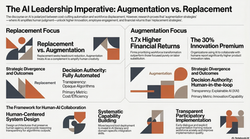
Frontier AI Research vs. Boardroom Dogma: Why the Labor-Replacement Narrative Misreads the Evidence
NEXUS INSTITUTE FOR WORK AND AI
14 hours ago
29 min read
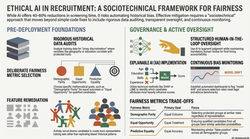
Embedding Fairness into AI Governance: A Practitioner's Guide to Lifecycle-Based Bias Mitigation
NEXUS INSTITUTE FOR WORK AND AI
2 days ago
23 min read
The Centaur Organization: Designing Human–AI Collaboration for Decision Quality in Knowledge Work
NEXUS INSTITUTE FOR WORK AND AI
3 days ago
19 min read
Work Fulfillment in the Hybrid Era: Designing Organizational Strategies to Support Generation Z Employees Through Flexibility, Balance, and Engagement
CATALYST CENTER FOR WORK INNOVATION
4 days ago
23 min read
Algorithmic Leadership Without Dehumanization: Building Human-Centered Management Systems in the Digital Age
NEXUS INSTITUTE FOR WORK AND AI
5 days ago
32 min read
Advancing Workforce Fairness Through Human-Centered AI: Strategic Imperatives for Organizations in the Age of Algorithmic Decision-Making
NEXUS INSTITUTE FOR WORK AND AI
6 days ago
21 min read
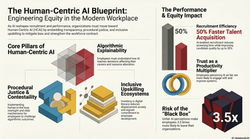
Human-Centric AI and Employment Equity: Building Fairness into the Future of Work
NEXUS INSTITUTE FOR WORK AND AI
7 days ago
22 min read
When Span of Control Becomes Span of Chaos: Meta's Retreat from AI-Managed Mega-Teams and What It Means for Organizational Design
NEXUS INSTITUTE FOR WORK AND AI
Jul 23
17 min read
The Agency Gap in AI-Assisted Higher Education: When Learner Control Shapes Reflective Practice and Critical Thinking
NEXUS INSTITUTE FOR WORK AND AI
Jul 22
33 min read
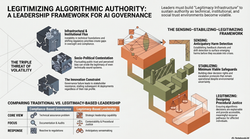
Who Legitimizes the AI Algorithm? Leadership, Volatility, and the Governance of Algorithmic Authority
NEXUS INSTITUTE FOR WORK AND AI
Jul 21
22 min read
Human Capital Leadership Review
Frontier AI Research vs. Boardroom Dogma: Why the Labor-Replacement Narrative Misreads the Evidence
NEXUS INSTITUTE FOR WORK AND AI
14 hours ago
29 min read
ZipRecruiter Finds That as AI Adoption Rises, So Does Hiring
1 day ago
2 min read
G&A Partners’ SMB Readiness Report Reveals Disconnect Between Business Confidence and Decisions
2 days ago
4 min read
Workera Introduces Proctored Assessments to Power High-stakes Hiring Decisions
2 days ago
3 min read
Embedding Fairness into AI Governance: A Practitioner's Guide to Lifecycle-Based Bias Mitigation
NEXUS INSTITUTE FOR WORK AND AI
2 days ago
23 min read
Utah Ranks Tenth With a Risk Score of 74.7 as 71,850 Gig Workers Paid No Self-Employment Tax
2 days ago
5 min read
‘AI Is an HR Challenge First’: The Human Firewall Could Make or Break Adoption
2 days ago
4 min read
Companies Slash Employee Training Budgets by $126K as AI Budgets Soar
2 days ago
4 min read
The Centaur Organization: Designing Human–AI Collaboration for Decision Quality in Knowledge Work
NEXUS INSTITUTE FOR WORK AND AI
3 days ago
19 min read
1
2
3
4
5
HCL Review Research Videos
HCL Review Research Infographics
Blog: HCI Blog
Human Capital Leadership Review
Featuring scholarly and practitioner insights from HR and people leaders, industry experts, and researchers.
Human Capital Innovations
Play Video
Play Video
09:12
The Substitution Fallacy - Why AI Layoffs Are Backfiring
This research examines the backfire effect of premature AI-driven layoffs, revealing that many organizations are now forced to rehire for roles they once thought were obsolete. Research shows that over 30% of managers have reinstated positions after discovering that algorithms cannot replicate essential human judgment, institutional knowledge, and emotional intelligence. The research argues that executives often prioritize technological hype over rigorous capability assessments, leading to operational failures and diminished customer satisfaction. To recover, companies must shift from a strategy of human substitution to one of complementarity, where AI augments rather than replaces expert staff. Ultimately, the research serves as both a critique of hasty automation and a guide for rebuilding organizational trust and resilience.
Play Video
Play Video
08:27
The AI Productivity Paradox: Augmentation vs. Automation
In this episode, the hosts tackle one of the biggest misconceptions in corporate America today: that AI is primarily a tool for cutting white-collar jobs. Drawing from recent research on frontier AI firms and labor economics data, they unpack why the "AI will replace workers" narrative is not only wrong, but potentially damaging to companies betting their futures on it. The conversation explores surprising findings about how AI is actually being deployed in organizations—not as a replacement for human workers, but as a powerful augmentation tool. Sarah breaks down the hidden costs of AI implementation that go far beyond software licensing, while Marcus shares eye-opening case studies of companies that got their AI strategy right (and wrong). They discuss why "workforce redesign" rather than workforce reduction is the real opportunity, and what it means to thoughtfully combine human expertise with machine capabilities. If your organization is navigating AI adoption—or if you're simply curious about what AI really means for the future of knowledge work—this episode offers a refreshing, evidence-based perspective that challenges the hype.
Play Video
Play Video
03:11
Architecting GenAI Value
This research explores why generative artificial intelligence has yet to produce significant economic productivity gains despite widespread corporate adoption. The research argues that simply giving employees AI tools fails because it ignores measurement complexities, hidden costs, and the risk of quality degradation known as "workslop." To capture real value, organizations must move away from focusing on individual task speed and instead prioritize comprehensive process redesign. This transformation requires specialized training, rigorous quality governance, and a shift in leadership mindset toward long-term capability building. Ultimately, the research suggests that AI's potential is only realized when it is deeply integrated into reimagined workflows rather than treated as a simple plug-and-play solution.
Play Video
Play Video
22:55
A Debate about Bridging the GenAI Productivity Gap through Organizational Redesign
This research explores why generative artificial intelligence has yet to produce significant economic productivity gains despite widespread corporate adoption. The research argues that simply giving employees AI tools fails because it ignores measurement complexities, hidden costs, and the risk of quality degradation known as "workslop." To capture real value, organizations must move away from focusing on individual task speed and instead prioritize comprehensive process redesign. This transformation requires specialized training, rigorous quality governance, and a shift in leadership mindset toward long-term capability building. Ultimately, the research suggests that AI's potential is only realized when it is deeply integrated into reimagined workflows rather than treated as a simple plug-and-play solution. See Privacy Policy at https://art19.com/privacy and California Privacy Notice at https://art19.com/privacy#do-not-sell-my-info.
Play Video
Play Video
27:41
A Conversation about Bridging the GenAI Productivity Gap through Organizational Redesign
This research explores why generative artificial intelligence has yet to produce significant economic productivity gains despite widespread corporate adoption. The research argues that simply giving employees AI tools fails because it ignores measurement complexities, hidden costs, and the risk of quality degradation known as "workslop." To capture real value, organizations must move away from focusing on individual task speed and instead prioritize comprehensive process redesign. This transformation requires specialized training, rigorous quality governance, and a shift in leadership mindset toward long-term capability building. Ultimately, the research suggests that AI's potential is only realized when it is deeply integrated into reimagined workflows rather than treated as a simple plug-and-play solution. See Privacy Policy at https://art19.com/privacy and California Privacy Notice at https://art19.com/privacy#do-not-sell-my-info.
Play Video
Play Video
27:41
Why GenAI Productivity Gains Remain Elusive: Rethinking Value Creation in the Age of Artificial I...
Abstract: Despite substantial organizational investment in generative artificial intelligence, measurable productivity improvements remain difficult to capture. This article examines why individual-focused GenAI deployment strategies consistently underdeliver on business value, drawing on organizational research, implementation evidence, and economic data. Analysis reveals that achieving meaningful productivity gains requires fundamentally different approaches than simply distributing AI tools to employees. Key barriers include inadequate training segmentation, measurement complexity, unaccounted token costs, quality degradation ("workslop"), and the absence of end-to-end process redesign. The evidence suggests that organizations pursuing transformational value from GenAI must shift from individual productivity narratives to comprehensive organizational redesign, embedding AI capabilities within reimagined workflows while maintaining rigorous quality standards. This synthesis offers practitioners a research-informed framework for realistic expectations and strategic investment decisions in generative AI adoption. See Privacy Policy at https://art19.com/privacy and California Privacy Notice at https://art19.com/privacy#do-not-sell-my-info.
Play Video
Play Video
59:03
A Conversation about Bridging the GenAI Productivity Gap through Organizational Redesign
This research explores why generative artificial intelligence has yet to produce significant economic productivity gains despite widespread corporate adoption. The research argues that simply giving employees AI tools fails because it ignores measurement complexities, hidden costs, and the risk of quality degradation known as "workslop." To capture real value, organizations must move away from focusing on individual task speed and instead prioritize comprehensive process redesign. This transformation requires specialized training, rigorous quality governance, and a shift in leadership mindset toward long-term capability building. Ultimately, the research suggests that AI's potential is only realized when it is deeply integrated into reimagined workflows rather than treated as a simple plug-and-play solution. See Privacy Policy at https://art19.com/privacy and California Privacy Notice at https://art19.com/privacy#do-not-sell-my-info.
Play Video
Play Video
24:59
Responding to the Recent Retreat from Corporate DEI Initiatives, with Jim Fielding
In this HCI Webinar, Dr. Jonathan H. Westover talks with Jim Fielding about the recent retreat from corporate DEI initiatives. Jim Fielding, a proud Ohio native and Indiana University Hoosier, started his career on the department store floor. Over the next 30 years, he would lead some of the world’s most beloved media and retail brands, including The Gap, Disney, Claire’s, Dreamworks, and 20th Century Fox. Jim is known for his ability to combine storytelling and product merchandising into unforgettable consumer experiences. As culture builder and talent spotter, he has recruited and trained global leaders in a variety of disciplines and at all levels. Today, Jim spends his time and talents on independent media, entrepreneurship, higher education, and philanthropy. He’s a Partner at Archer Gray, an independent media company inspiring change through storytelling and innovative brand collaborations. Jim is also the founder of the boutique consultancy, Intersected Stories, and proudly serves as part-time Executive-In-Residence for IU Ventures and The Office of Diversity, Equity, and Inclusion. He is also an active angel investor and advisor to early stage startups and their founders. Jim has been active in philanthropy for over 25 years, serving on the boards of charitable organizations like Make-A-Wish, GLSEN, Kidspace Children’s Museum, and the American Red Cross. He was recognized by the Walt Disney Company as Executive Volunteer of the year in 2011. More recently, Jim has become a vocal advocate for LGBTQ+ rights and social justice. Jim currently lives in Atlanta, Georgia with his partner, Joseph, and their dogs, Cricket and Olive. In the summers, you will find him lounging lakeside in Northern Michigan.
HCL Review Articles
All Articles
Nexus Institute for Work and AI
Catalyst Center for Work Innovation
Adaptive Organization Lab
Work Renaissance Project
Research Briefs
Research Insights
Webinar Recaps
Book Reviews
Transformative Social impact
Search
Apr 21, 2025
6 min read
CATALYST CENTER FOR WORK INNOVATION
Tips for Acing Your First Job Interview
bottom of page