top of page
Home
Bio
Pricing
Merch
Podcast Network
Advertise with Us
Be Our Guest
Academy
Learning Catalog
Learners at a Glance
The ROI of Certification
Corporate L&D Solutions
Research
Research Initiatives
Nexus Institute
Catalyst Center
Adadptive Organization Lab
Future of Work Collective
Renaissance Project
Collaboration Form
Research Models and Tools
Research One Sheets
Research Snapshots
Research Videos
Research Briefs
Free Educational Resources
HCL Review
Contribute to the HCL Review
HCL Review Archive
HCL Review Slide Decks and Infographics
HCL Review Process
HCL Review Reach and Impact
HCI Press
From HCI Academic Press
From HCI Popular Press
Publish with HCI Press
Free OER Texts
Our Impact
Invest with HCI
Industry Recognition
Philanthropic Impact
Kiva Lending Impact
More
Use tab to navigate through the menu items.
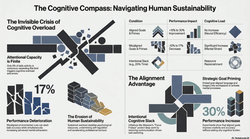
When the Machine Is Ready but the Mind Is Not: Designing Organizations for Human Capacity in the Age of AI
NEXUS INSTITUTE FOR WORK AND AI
1 day ago
26 min read
When Talking Trash About Your Terrible Boss Actually Helps Your Team: The Surprising Organizational Benefits of Leader-Targeted Gossip
CATALYST CENTER FOR WORK INNOVATION
2 days ago
23 min read
The Ratio of Labor to Tech: Navigating Structural Workforce Contraction and AI Adoption in an Era of Dual Disruption
NEXUS INSTITUTE FOR WORK AND AI
3 days ago
23 min read
When Organizations Hire Change Agents They Don't Intend to Support: The Institutional Absorption of Reform Mandates
CATALYST CENTER FOR WORK INNOVATION
4 days ago
26 min read
Evolutionary Mismatch, Stress, and Competition in the Polycrisis Era: A Practitioner's Guide to Understanding Modern Psychosocial Challenges
CATALYST CENTER FOR WORK INNOVATION
5 days ago
26 min read
The Slow Death of Ambition: How Organizations Systematically Extinguish Employee Drive
CATALYST CENTER FOR WORK INNOVATION
6 days ago
27 min read
When Algorithms Organize Themselves: The Rise of Computational Collectives in Organizational Workflows
NEXUS INSTITUTE FOR WORK AND AI
Sep 24
23 min read
Organizational Design in the Age of AI: Navigating the Structural Transformation of Work
NEXUS INSTITUTE FOR WORK AND AI
Sep 23
23 min read
When Labor Scarcity Meets AI Disruption: Rethinking Talent Strategy in the 2030s
NEXUS INSTITUTE FOR WORK AND AI
Sep 22
30 min read
Workplace Bullying and Cognitive Decline: A Public Health Crisis in the Making
CATALYST CENTER FOR WORK INNOVATION
Sep 21
30 min read
Human Capital Leadership Review
Cognitive Polarization in the AI Era: Organizational Strategies to Prevent a Mental Underclass
NEXUS INSTITUTE FOR WORK AND AI
4 hours ago
25 min read
When the Machine Is Ready but the Mind Is Not: Designing Organizations for Human Capacity in the Age of AI
NEXUS INSTITUTE FOR WORK AND AI
1 day ago
26 min read
U.S. Business Formations Projected to Reach Record 6.7 Million in 2026
RESEARCH BRIEFS
2 days ago
3 min read
New Study Reveals Where Americans Are Hunting for New Jobs the Most
RESEARCH INSIGHTS
2 days ago
3 min read
More Than a Quarter of Rejected Job Applications Had Nothing to Do With the Candidate, VA Masters Data Shows
RESEARCH INSIGHTS
2 days ago
3 min read
AI Training More Than Doubled This Year, but 65% of Employees Report No Time at Work to Build the Skills, Workera Research Finds
NEXUS INSTITUTE FOR WORK AND AI
2 days ago
4 min read
Relm and Seraphim Release Space Economy Review, Highlighting Shift From Hype to Commercial Reality Across Key Sectors
RESEARCH INSIGHTS
2 days ago
2 min read
When Talking Trash About Your Terrible Boss Actually Helps Your Team: The Surprising Organizational Benefits of Leader-Targeted Gossip
CATALYST CENTER FOR WORK INNOVATION
2 days ago
23 min read
The Ratio of Labor to Tech: Navigating Structural Workforce Contraction and AI Adoption in an Era of Dual Disruption
NEXUS INSTITUTE FOR WORK AND AI
3 days ago
23 min read
1
2
3
4
5
HCL Review Research Videos
HCL Review Research Infographics
Blog: HCI Blog
Human Capital Leadership Review
Featuring scholarly and practitioner insights from HR and people leaders, industry experts, and researchers.
Human Capital Innovations
Play Video
Play Video
29:46
Don't React, Act: Business Crisis Communication Made Simple, with Lea Greene
In this HCI Webinar, I talk with Lea Greene about her book, "Don't React, Act: Business Crisis Communication Made Simple." Lea Greene spent her Air Force career telling the truth on deadline. As a broadcast journalist for American Forces Network, she reported from Korea, Germany, Bosnia, and Iraq. She later served seven years as a base spokesperson with final release authority over worldwide RQ-4 Global Hawk operations. Today she helps business leaders stay human, think clearly, and build trust in an AI-driven world. She owns Top Ten Communication and she teaches AI to business owners, chambers, and public information officers. Her message to leaders is short. Every hard moment is a communication moment. The tools keep changing. The trust problem does not.
Play Video
Play Video
08:40
Algorithmic Capture - The Hidden Cost of Perfectly Optimized HR
This research explores the alignment paradox in human resources, where the integration of artificial intelligence can unintentionally sever the link between workforce behavior and organizational strategy. While AI tools often increase operational efficiency and improve measurable metrics, they frequently prioritize quantifiable data at the expense of vital, unmeasurable qualities like relational judgment and cultural fit. This shift can lead to algorithmic capture, a state where internal dashboards signal success while the firm’s competitive advantage quietly diminishes due to a lack of strategic coherence. To combat this, the research suggests implementing hybrid decision architectures that preserve human oversight and conducting regular alignment audits to ensure technology serves overarching goals. Ultimately, the research provides a diagnostic framework for leaders to adopt AI responsibly without sacrificing the long-term resilience of their human capital.
Play Video
Play Video
41:30
A Conversation about Being Perfectly Optimized, Strategically Adrift: Preventing AI-Driven Misali...
This research explores the alignment paradox in human resources, where the integration of artificial intelligence can unintentionally sever the link between workforce behavior and organizational strategy. While AI tools often increase operational efficiency and improve measurable metrics, they frequently prioritize quantifiable data at the expense of vital, unmeasurable qualities like relational judgment and cultural fit. This shift can lead to algorithmic capture, a state where internal dashboards signal success while the firm’s competitive advantage quietly diminishes due to a lack of strategic coherence. To combat this, the research suggests implementing hybrid decision architectures that preserve human oversight and conducting regular alignment audits to ensure technology serves overarching goals. Ultimately, the research provides a diagnostic framework for leaders to adopt AI responsibly without sacrificing the long-term resilience of their human capital.
Play Video
Play Video
03:28
Strategic AI Alignment
This research explores the alignment paradox in human resources, where the integration of artificial intelligence can unintentionally sever the link between workforce behavior and organizational strategy. While AI tools often increase operational efficiency and improve measurable metrics, they frequently prioritize quantifiable data at the expense of vital, unmeasurable qualities like relational judgment and cultural fit. This shift can lead to algorithmic capture, a state where internal dashboards signal success while the firm’s competitive advantage quietly diminishes due to a lack of strategic coherence. To combat this, the research suggests implementing hybrid decision architectures that preserve human oversight and conducting regular alignment audits to ensure technology serves overarching goals. Ultimately, the research provides a diagnostic framework for leaders to adopt AI responsibly without sacrificing the long-term resilience of their human capital.
Play Video
Play Video
18:30
A Debate about Being Perfectly Optimized, Strategically Adrift: Preventing AI-Driven Misalignment...
This research explores the alignment paradox in human resources, where the integration of artificial intelligence can unintentionally sever the link between workforce behavior and organizational strategy. While AI tools often increase operational efficiency and improve measurable metrics, they frequently prioritize quantifiable data at the expense of vital, unmeasurable qualities like relational judgment and cultural fit. This shift can lead to algorithmic capture, a state where internal dashboards signal success while the firm’s competitive advantage quietly diminishes due to a lack of strategic coherence. To combat this, the research suggests implementing hybrid decision architectures that preserve human oversight and conducting regular alignment audits to ensure technology serves overarching goals. Ultimately, the research provides a diagnostic framework for leaders to adopt AI responsibly without sacrificing the long-term resilience of their human capital.
Play Video
Play Video
23:13
Perfectly Optimized, Strategically Adrift: Preventing AI-Driven Misalignment in HR Systems
Abstract: Organizations are adopting artificial intelligence across human resource functions at accelerating rates, driven by promises of enhanced efficiency and data-driven decision-making. Recent theoretical work, however, suggests that AI integration into HR systems may paradoxically undermine the very strategic alignment it is designed to improve. This article examines the process by which translating strategy into algorithmic metrics, embedding competing logics within hybrid HR systems, and allowing resource allocation to follow quantified signals can erode both internal HR practice consistency and the connection between workforce capabilities and strategic objectives. Drawing on the Patel, Rofcanin, Kamasak, and Belitski (2026) framework of AI-driven misalignment, together with foundational strategic HRM theory and practitioner evidence, this article identifies organizational warning signs, presents evidence-based responses spanning governance design, hybrid decision architectures, and strategic capability protection, and outlines forward-looking pillars for building long-term alignment resilience. The analysis equips HR leaders, senior executives, and organizational consultants with a diagnostic vocabulary and practical toolkit for navigating AI adoption without sacrificing strategic coherence.
Play Video
Play Video
03:22
The Human Architecture
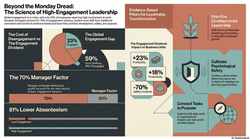
This research examines the critical decline in global employee engagement and compares how public and private sectors struggle to maintain workforce morale. It defines the psychological pillars of satisfaction, motivation, and commitment, noting that government roles often provide stability while the private sector emphasizes merit-based growth. The research argues that disengagement causes massive economic losses and diminishes individual wellbeing across all industries. To solve this, the research proposes evidence-based strategies such as enhancing leadership quality, redesigning reward systems, and prioritizing career development. Ultimately, the research serves as a practical toolkit for leaders to build resilient, purpose-driven organizations in an era of rapid change.
Play Video
Play Video
23:59
Closing the Engagement Gap: Evidence-Based Strategies for Strengthening Satisfaction, Motivation,...
Abstract: Employee satisfaction, motivation, and organizational commitment remain among the most consequential predictors of workforce productivity, service quality, and institutional longevity. Yet global engagement data suggest that most organizations—in both the public and private sectors—are falling short. This article synthesizes contemporary research alongside practitioner evidence to examine why satisfaction and commitment diverge between government and private sector workplaces, what organizational consequences follow, and which interventions carry the strongest empirical support. Drawing on foundational frameworks including self-determination theory, the three-component model of commitment, and two-factor motivation theory, the article offers an integrated set of responses organized around reward system redesign, leadership development, career pathway architecture, employee wellbeing, and procedural justice. Industry-specific organizational narratives from healthcare, financial services, technology, and the public sector illustrate how evidence translates into practice. The article concludes with three forward-looking pillars—psychological contract recalibration, continuous learning systems, and purpose-driven organizational identity—that equip leaders to sustain engagement in an era of accelerating change.
HCL Review Articles
All Articles
Nexus Institute for Work and AI
Catalyst Center for Work Innovation
Adaptive Organization Lab
Work Renaissance Project
Research Briefs
Research Insights
Webinar Recaps
Book Reviews
Transformative Social impact
Search
Jan 26
23 min read
RESEARCH BRIEFS
How Behavioral Science Can Improve the Return on AI Investments
bottom of page