top of page
Home
Bio
Pricing
Merch
Podcast Network
Advertise with Us
Be Our Guest
Academy
Learning Catalog
Learners at a Glance
The ROI of Certification
Corporate L&D Solutions
Research
Research Initiatives
Nexus Institute
Catalyst Center
Adadptive Organization Lab
Future of Work Collective
Renaissance Project
Collaboration Form
Research Models and Tools
Research One Sheets
Research Snapshots
Research Videos
Research Briefs
Research Articles
Free Educational Resources
HCL Review
Contribute to the HCL Review
HCL Review Archive
HCL Review Slide Decks and Infographics
HCL Review Process
HCL Review Reach and Impact
HCI Press
From HCI Academic Press
From HCI Popular Press
Publish with HCI Press
Free OER Texts
Our Impact
Invest with HCI
Industry Recognition
Philanthropic Impact
Kiva Lending Impact
More
Use tab to navigate through the menu items.
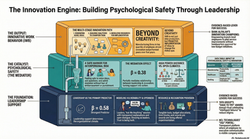
Unlocking Organizational Ambidexterity: How Strategic HR Practices Fuel Employee Creativity in Healthcare
CATALYST CENTER FOR WORK INNOVATION
4 hours ago
22 min read
When the Loop Becomes the System: Rethinking Human Control in High-Velocity AI Environments
NEXUS INSTITUTE FOR WORK AND AI
1 day ago
21 min read
When the Cliff Becomes the Ground: Strategic Portfolio Transformation in U.S. Higher Education
CATALYST CENTER FOR WORK INNOVATION
2 days ago
20 min read
When AI Meets Command-and-Control: Why Traditional Hierarchies Are Failing the Intelligence Revolution
NEXUS INSTITUTE FOR WORK AND AI
3 days ago
24 min read
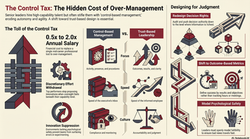
The Control Tax: How Managing by Oversight Costs Senior Leaders Their Strongest Talent
CATALYST CENTER FOR WORK INNOVATION
4 days ago
17 min read
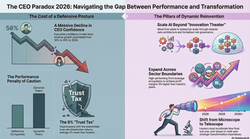
Leading Through Uncertainty: How CEOs Navigate the Dual Challenge of AI Transformation and Stakeholder Trust
NEXUS INSTITUTE FOR WORK AND AI
5 days ago
26 min read
The Evolution of Artificial Intelligence: From Large Language Models to Superintelligence and the Transformation of Work
NEXUS INSTITUTE FOR WORK AND AI
6 days ago
22 min read
Algorithmic Anxiety in the Modern Workplace: Understanding and Addressing the Human Cost of AI Integration
NEXUS INSTITUTE FOR WORK AND AI
May 15
28 min read
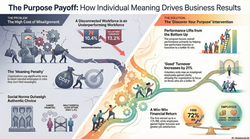
When Being Yourself Works—And When It Doesn't: How Culture Shapes Authentic Leadership
CATALYST CENTER FOR WORK INNOVATION
May 14
18 min read
Leading the 6-Generation Workforce
NEXUS INSTITUTE FOR WORK AND AI
May 13
21 min read
Human Capital Leadership Review
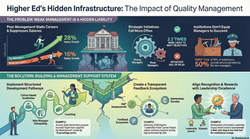
Why Mid-Level Management Training Must Evolve in 2026
2 hours ago
4 min read
Unlocking Organizational Ambidexterity: How Strategic HR Practices Fuel Employee Creativity in Healthcare
CATALYST CENTER FOR WORK INNOVATION
4 hours ago
22 min read
Gen Z Workers Most Worried about AI Job Disruption, New Survey Reveals
1 day ago
4 min read
When the Loop Becomes the System: Rethinking Human Control in High-Velocity AI Environments
NEXUS INSTITUTE FOR WORK AND AI
1 day ago
21 min read
How to Save Time and Boost Efficiency with Smart Business Apps
2 days ago
4 min read
AI Can Make Images in Seconds, but Artist Doddz Says It Still Cannot Replace Emotion
2 days ago
5 min read
The AI Readiness Problem Isn't Talent Scarcity — It's Organizational Design
2 days ago
5 min read
Contrario Launches After Reaching $6M Annualized Revenue and Paying $1M+ to Recruiters in Under Six Months
2 days ago
3 min read
Josh Bersin Company Defines New HR Taxonomy for Frontline Workers, to Improve Hiring, Pay, Retention, and Management
2 days ago
4 min read
1
2
3
4
5
HCL Review Research Videos
HCL Review Research Infographics
Blog: HCI Blog
Human Capital Leadership Review
Featuring scholarly and practitioner insights from HR and people leaders, industry experts, and researchers.
Human Capital Innovations
Play Video
Play Video
26:51
Neurodiversity in the Workplace, with Shea Belsky
In this HCI Webinar, I talk with Shea Belsky about neurodiversity in the workplace. Shea Belsky is an autistic self-advocate. He is a Tech Lead II at HubSpot, and the former Chief Technology Officer of Mentra. Shea brings several unique perspectives to the discussion on neurodiversity: He is the manager of neurodivergent & neurotypical employees, has reported to neurodivergent & neurotypical managers, and has advocated for the needs and wellbeing of all who seek to be heard and understood in the workplace. Shea has championed neurodiversity for organizations like Novartis, the College Autism Summit, Northeastern University, in addition to being featured in Forbes and the New York Post. He also hosts his own podcast, Autistic Techie, empowering neurodivergent self advocates to feel more confident in the workplace and ready to take on the day to day challenges of their job. He's excited to share his perspectives on neurodiversity and how to be a meaningful ally and advocate!
Play Video
Play Video
05:05
AI Enabled Insourcing - The Future of Corporate Strategy
This video explores the transformative impact of AI-enabled insourcing on business operations, highlighting the experience of Sarah, a marketing manager at a shoe company. Traditionally reliant on outside agencies for marketing tasks such as ads, social media, and videos, Sarah’s team struggled to capture the company’s unique spirit and faced inefficiencies. With AI tools, Sarah and her small team now generate creative content quickly and authentically in-house, bypassing the need for large external agencies. This shift from outsourcing to insourcing is not limited to marketing but is sweeping across various industries including legal and software development. AI acts as a productivity multiplier, enabling individuals and small teams to perform the work of many more, faster and at a lower cost. Companies retain control over their brand, speed up workflows, and build proprietary knowledge internally, gaining competitive advantages. AI is not replacing jobs but evolving roles, turning employees into strategic thinkers who supervise and refine AI outputs. This leads to enhanced job satisfaction, continuous learning, and more resilient organizations. The video frames AI-enabled insourcing as a revolutionary approach to work, empowering teams and reshaping how businesses operate. Highlights 🤖 AI empowers small teams to perform work that once required large agencies, increasing speed and authenticity. 💡 Insourcing with AI retains creative control and unique company knowledge inside the business. ⏱️ AI drastically reduces turnaround times, enabling rapid iteration and pivoting on projects. 💰 Companies save significant costs by replacing outsourcing with AI-powered in-house teams. 📈 AI boosts productivity across fields like marketing, legal, and software development. 🎯 Employees shift from routine tasks to strategic roles, enhancing job satisfaction and creativity. 🔄 This represents a fundamental shift in work culture, fostering continuous learning and adaptability. Key Insights 🤖 AI as a Productivity Multiplier: AI technology allows individuals and small teams to accomplish tasks that previously required large teams or external agencies. For example, a marketing manager can now generate more campaign ideas in an hour than an agency could in a week. This multiplication of output not only increases efficiency but also democratizes creativity, enabling companies to innovate faster without the overhead of large external collaborations. 🔄 Shift from Outsourcing to Insourcing: Historically, businesses outsourced non-core functions to specialized firms for efficiency and cost savings. AI-enabled insourcing flips this model by bringing work back inside the company, enhancing speed, control, and proprietary knowledge. This shift is strategic, as it allows companies to own their processes and insights rather than sharing them with external vendors who may serve competitors. 💡 Retention of Brand Authenticity and Expertise: Outsourcing often risks diluting a brand’s unique identity because external agencies may lack deep understanding of the company’s culture and values. By insourcing creative work with AI tools, companies keep the “magic of the brand” in-house, producing work that is more aligned with company values and customer expectations. This alignment builds stronger brand equity and competitive advantage. ⏱️ Speed and Agility in Business Operations: AI enables rapid content creation, legal analysis, and software development, compressing timelines from weeks to hours or minutes. This increased velocity allows businesses to quickly respond to market changes, launch campaigns, or address legal risks, creating a more agile and responsive organization. Faster decision-making cycles lead to better market fit and customer responsiveness. 💰 Cost Efficiency and Resource Optimization: By leveraging AI, companies reduce reliance on expensive agencies and consultants, saving substantial budgets. The ability to produce high-quality work internally with fewer people not only cuts costs but optimizes resource allocation. These financial savings can be reinvested in innovation, training, or other strategic priorities, enhancing overall business health. 👥 Transformation of Employee Roles: AI does not simply replace jobs but transforms them. Employees evolve from performing repetitive tasks to becoming AI supervisors, strategic thinkers, and creative directors who refine AI-generated outputs. This shift requires new skills, such as AI literacy and critical thinking, fostering a culture of continuous learning and employee empowerment. The role of human talent becomes more focused on creativity, judgment, and decision-making.
Play Video
Play Video
02:52
The Augmented Enterprise
This research explores a strategic shift in corporate operations, where organizations are increasingly insourcing functions like legal services, marketing, and software development. By leveraging artificial intelligence, small internal teams can now achieve the high-volume output previously only possible through external agencies or vendors. This transition allows companies to capture productivity gains directly and build proprietary institutional knowledge rather than allowing those benefits to diffuse across a vendor’s client base. The research outlines a structured framework for transition, emphasizing that success requires phased implementation, intentional AI literacy training, and a focus on long-term competitive differentiation. Ultimately, the research argues that AI-enabled insourcing enhances organizational agility and cost efficiency, transforming traditional "make-or-buy" logic into a driver of sustainable internal capability.
Play Video
Play Video
23:43
The Strategic Shift: How AI-Enabled Insourcing Is Reshaping Corporate Capability Building
Abstract: Organizations are reconsidering the traditional boundaries between outsourced and in-house capabilities as artificial intelligence tools dramatically amplify individual and team productivity. This article examines an emerging strategic pattern in which large enterprises selectively insource previously outsourced functions—spanning legal services, marketing operations, and software development—to capture AI-driven efficiency gains directly rather than paying vendors whose productivity improvements diffuse across multiple clients. Drawing on organizational economics, resource-based view theory, and early practitioner insights, this analysis explores the drivers, implementation pathways, and strategic implications of AI-enabled insourcing. Evidence suggests this shift represents not wholesale vendor replacement but rather strategic recalibration of make-or-buy decisions, allowing organizations to build differentiated capabilities, reduce costs, and retain competitive advantages internally. The article provides frameworks for determining which functions to insource, managing phased transitions, and balancing internal capability development with selective vendor partnerships in an AI-augmented operating environment. See Privacy Policy at https://art19.com/privacy and California Privacy Notice at https://art19.com/privacy#do-not-sell-my-info.
Play Video
Play Video
23:43
A Conversation about the Strategic Shift: AI-Enabled Insourcing and Corporate Capability Building
This research explores a strategic shift in corporate operations, where organizations are increasingly insourcing functions like legal services, marketing, and software development. By leveraging artificial intelligence, small internal teams can now achieve the high-volume output previously only possible through external agencies or vendors. This transition allows companies to capture productivity gains directly and build proprietary institutional knowledge rather than allowing those benefits to diffuse across a vendor’s client base. The research outlines a structured framework for transition, emphasizing that success requires phased implementation, intentional AI literacy training, and a focus on long-term competitive differentiation. Ultimately, the research argues that AI-enabled insourcing enhances organizational agility and cost efficiency, transforming traditional "make-or-buy" logic into a driver of sustainable internal capability. See Privacy Policy at https://art19.com/privacy and California Privacy Notice at https://art19.com/privacy#do-not-sell-my-info.
Play Video
Play Video
21:51
A Debate about the Strategic Shift: AI-Enabled Insourcing and Corporate Capability Building
This research explores a strategic shift in corporate operations, where organizations are increasingly insourcing functions like legal services, marketing, and software development. By leveraging artificial intelligence, small internal teams can now achieve the high-volume output previously only possible through external agencies or vendors. This transition allows companies to capture productivity gains directly and build proprietary institutional knowledge rather than allowing those benefits to diffuse across a vendor’s client base. The research outlines a structured framework for transition, emphasizing that success requires phased implementation, intentional AI literacy training, and a focus on long-term competitive differentiation. Ultimately, the research argues that AI-enabled insourcing enhances organizational agility and cost efficiency, transforming traditional "make-or-buy" logic into a driver of sustainable internal capability. See Privacy Policy at https://art19.com/privacy and California Privacy Notice at https://art19.com/privacy#do-not-sell-my-info.
Play Video
Play Video
26:30
Neurodiversity in the Workplace, with Shea Belsky
In this podcast episode, Dr. Jonathan H. Westover talks with Shea Belsky about neurodiversity in the workplace. Shea Belsky is an autistic self-advocate. He is a Tech Lead II at HubSpot, and the former Chief Technology Officer of Mentra. Shea brings several unique perspectives to the discussion on neurodiversity: He is the manager of neurodivergent & neurotypical employees, has reported to neurodivergent & neurotypical managers, and has advocated for the needs and wellbeing of all who seek to be heard and understood in the workplace. Shea has championed neurodiversity for organizations like Novartis, the College Autism Summit, Northeastern University, in addition to being featured in Forbes and the New York Post. He also hosts his own podcast, Autistic Techie, empowering neurodivergent self advocates to feel more confident in the workplace and ready to take on the day to day challenges of their job. He's excited to share his perspectives on neurodiversity and how to be a meaningful ally and advocate! https://www.amazon.com/Brainstorm-Guide-Neurodivergent-Talent-Future/dp/1394388772 https://autistic-techie.com/ https://www.linkedin.com/in/sheabelsky/ See Privacy Policy at https://art19.com/privacy and California Privacy Notice at https://art19.com/privacy#do-not-sell-my-info.
Play Video
Play Video
55:15
A Conversation about the Strategic Shift: AI-Enabled Insourcing and Corporate Capability Building
This research explores a strategic shift in corporate operations, where organizations are increasingly insourcing functions like legal services, marketing, and software development. By leveraging artificial intelligence, small internal teams can now achieve the high-volume output previously only possible through external agencies or vendors. This transition allows companies to capture productivity gains directly and build proprietary institutional knowledge rather than allowing those benefits to diffuse across a vendor’s client base. The research outlines a structured framework for transition, emphasizing that success requires phased implementation, intentional AI literacy training, and a focus on long-term competitive differentiation. Ultimately, the research argues that AI-enabled insourcing enhances organizational agility and cost efficiency, transforming traditional "make-or-buy" logic into a driver of sustainable internal capability. See Privacy Policy at https://art19.com/privacy and California Privacy Notice at https://art19.com/privacy#do-not-sell-my-info.
HCL Review Articles
All Articles
Nexus Institute for Work and AI
Catalyst Center for Work Innovation
Adaptive Organization Lab
Work Renaissance Project
Research Briefs
Research Insights
Webinar Recaps
Book Reviews
Transformative Social impact
Search
Dec 5, 2023
4 min read
Ethical Leadership: Building Trust Through Principled Actions
bottom of page