top of page
Home
Bio
Pricing
Podcast Network
Advertise with Us
Be Our Guest
Academy
Learning Catalog
Learners at a Glance
The ROI of Certification
Corporate L&D Solutions
Research
Research Initiatives
Nexus Institute
Catalyst Center
Adadptive Organization Lab
Future of Work Collective
Renaissance Project
Collaboration Form
Research Models and Tools
Research One Sheets
Research Snapshots
Research Videos
Research Briefs
Research Articles
Free Educational Resources
HCL Review
Contribute to the HCL Review
HCL Review Archive
HCL Review Slide Decks and Infographics
HCL Review Process
HCL Review Reach and Impact
HCI Press
From HCI Academic Press
From HCI Popular Press
Publish with HCI Press
Free OER Texts
Our Impact
Invest with HCI
Industry Recognition
Philanthropic Impact
Kiva Lending Impact
Merch
More
Use tab to navigate through the menu items.
When AI Assistance Becomes Cognitive Overload: Understanding and Managing "Brain Fry" in the Modern Workplace
NEXUS INSTITUTE FOR WORK AND AI
16 hours ago
12 min read
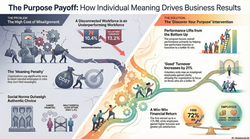
Discovering Purpose at Work: How Individual Meaning Transforms Organizational Performance
ADAPTIVE ORGANIZATION LAB
2 days ago
23 min read
Crossing Gender Boundaries: How Social Media Reshapes Workplace Networks and Drives Job Satisfaction
RESEARCH BRIEFS
3 days ago
9 min read
The Enduring Currency of Curiosity: Preparing the Next Generation for an AI-Shaped Labor Market
NEXUS INSTITUTE FOR WORK AND AI
4 days ago
13 min read
Transforming Talent Acquisition: Evidence-Based Strategies for Optimizing Organizational Hiring and Onboarding
NEXUS INSTITUTE FOR WORK AND AI
5 days ago
19 min read
From Resilience to Thriving: Rebuilding Workplace Culture Through Agency and Connection
RESEARCH BRIEFS
6 days ago
18 min read
The Empowering Role of Empathy: How Connecting with Others Bolsters Leadership Success
CATALYST CENTER FOR WORK INNOVATION
7 days ago
7 min read
Navigating the Emotional Demands of Higher Education Leadership: Evidence-Based Strategies for Sustainability
RESEARCH BRIEFS
Mar 4
22 min read
Managing Emotional Uncertainty: Five Leadership Traits That Drive Decisive Action
RESEARCH BRIEFS
Mar 3
24 min read
Understanding Self-Awareness: More Than a Buzzword
CATALYST CENTER FOR WORK INNOVATION
Mar 2
6 min read
Human Capital Leadership Review
Nearly One in Five Managers Have Lost Multiple Team Members Due to RTO Mandates, New Data Reveals
2 hours ago
4 min read
1 in 3 Organizations Rehire for More than HALF of AI-Led Layoffs, Finds New Report
2 hours ago
4 min read
Why Growth Starts With the Right People, Habits and Mindset
2 hours ago
6 min read
AI Users Fall Into 5 Productivity Personality Types – Which One Are You?
2 hours ago
5 min read
The Invisible Architecture of Transformation: What Leaders Must See to Lead Change Well
6 hours ago
4 min read
When AI Assistance Becomes Cognitive Overload: Understanding and Managing "Brain Fry" in the Modern Workplace
NEXUS INSTITUTE FOR WORK AND AI
16 hours ago
12 min read
Expert Explains: Lean Teams Are Beating Large Departments on Speed and Output
1 day ago
4 min read
Study Reveals the U.S. Burnout Capitals for Executives Based on Search Data
1 day ago
3 min read
Discovering Purpose at Work: How Individual Meaning Transforms Organizational Performance
ADAPTIVE ORGANIZATION LAB
2 days ago
23 min read
1
2
3
4
5
HCL Review Research Videos
Human Capital Innovations
Play Video
Play Video
03:40
Architecting Human AI Integration
This research examines the evolutionary path of artificial intelligence, tracing its growth from reactive language models to autonomous agents and hypothetical superintelligence. The research highlights how these technological shifts redefine the division of labor, offering significant productivity boosts while simultaneously triggering concerns regarding job displacement and worker wellbeing. To address these disruptions, Westover advocates for human-centered organizational strategies, such as transparent communication, proactive reskilling, and participatory design. By fostering hybrid intelligence architectures, businesses can balance technological efficiency with the preservation of meaningful human contribution. Ultimately, the research serves as a strategic roadmap for navigating the complex integration of AI into the modern workforce.
Play Video
Play Video
04:41
AI’s Next Leap - What It Means for Your Job
AI’s Next Leap What It Means for Your Job Explore the rapid evolution of AI—from Large Language Models (LLMs) to agentic and multi-agent systems, AGI, and the prospect of superintelligence—and what it means for jobs, skills, and organizational design. We break down Dr. Jonathan H. Westover’s evidence-based framework on productivity gains, coordination risks, workforce wellbeing, and practical responses: transparent rollout, reskilling, human-AI teaming, governance, and long-term readiness. Perfect for leaders, HR pros, and knowledge workers who want clear, actionable insights on preparing for AI-driven work transformation. If you found this useful, please like and share to help others navigate the future of work. #AI #LLM #AGI #FutureOfWork #HumanAI OUTLINE: 00:00:00 - Understanding the Stages of AI 00:01:07 - How AI is Remodeling the Tasks We Do 00:02:01 - Gains, Risks, and Quality Control 00:02:58 - Workforce Wellbeing in an AI-Driven World 00:03:47 - A Practical Roadmap for Companies and Workers
Play Video
Play Video
23:03
The Future of Social Impact Investing: Trends and Opportunities, with Shahar Botzer
In this HCI Webinar, I talk with with Shahar Botzer about the future of social impact investing and current trends and opportunities. Shahar Botzer is co-founder and managing partner at Good Company, an early-stage VC fund with a mission to back bold entrepreneurs who solve the world’s biggest challenges for people and the planet. They invest in software-driven innovations in Digital Health, Education, Energy, Circular Economy, and Agriculture because they believe these are the domains where technology can rewrite the future.
Play Video
Play Video
24:28
The Definitive Guide to Corporate Learning, with Jordan Hammerstad
In this HCI Webinar, I talk with Jordan Hammerstad about the new report out from the Josh Bersin company, The Definitive Guide to Corporate Learning. Jordan Hammerstad is Associate Director of Research at The Josh Bersin Company, where she leads the L&D Roundtable—an executive forum driving corporate learning innovation. Passionate about the intersection of behavioral sciences and the workplace, she pursued a bachelor's degree in neuroscience before obtaining her master's in human resources. As a certified HR practitioner, Jordan brings experience from multiple industries, including commercial real estate, higher education, industrial automation, retail, and transportation. Her research focuses on learning and development—notably dynamic skilling, performance enablement, and AI-first corporate learning transformations.
Play Video
Play Video
58:42
A Conversation about the AI Evolution: Architectural Shifts and the Future of Work
This conversation examines the evolutionary path of artificial intelligence, tracing its growth from reactive language models to autonomous agents and hypothetical superintelligence. They highlight how these technological shifts redefine the division of labor, offering significant productivity boosts while simultaneously triggering concerns regarding job displacement and worker wellbeing. To address these disruptions, they advocate for human-centered organizational strategies, such as transparent communication, proactive reskilling, and participatory design. By fostering hybrid intelligence architectures, businesses can balance technological efficiency with the preservation of meaningful human contribution. Ultimately, the research serves as a strategic roadmap for navigating the complex integration of AI into the modern workforce. See Privacy Policy at https://art19.com/privacy and California Privacy Notice at https://art19.com/privacy#do-not-sell-my-info.
Play Video
Play Video
24:08
The Evolution of Artificial Intelligence: From Large Language Models to Superintelligence and the...
Abstract: Artificial intelligence is evolving through distinct architectural stages—from large language models (LLMs) to agentic systems, multi-agent frameworks, and hypothetical artificial general intelligence (AGI) and superintelligence—each with profound implications for human-AI integration and work design. This article synthesizes evidence from computer science, organizational behavior, and workforce studies to map these developmental stages and their organizational consequences. Drawing on recent deployments across healthcare, professional services, and manufacturing, we examine how each AI paradigm shift reshapes job content, skill demands, and human-machine collaboration models. The analysis reveals that while current LLM and agentic systems demonstrate measurable productivity gains (15-40% in knowledge work tasks), they simultaneously create new coordination challenges, skill adjacencies, and questions about human agency in increasingly autonomous systems. We propose a capability-building framework emphasizing hybrid intelligence architectures, dynamic role design, and continuous learning systems to prepare organizations for successive waves of AI advancement while preserving meaningful human contribution and wellbeing. See Privacy Policy at https://art19.com/privacy and California Privacy Notice at https://art19.com/privacy#do-not-sell-my-info.
Play Video
Play Video
24:08
A Conversation about the AI Evolution: Architectural Shifts and the Future of Work
This conversation examines the evolutionary path of artificial intelligence, tracing its growth from reactive language models to autonomous agents and hypothetical superintelligence. They highlight how these technological shifts redefine the division of labor, offering significant productivity boosts while simultaneously triggering concerns regarding job displacement and worker wellbeing. To address these disruptions, they advocate for human-centered organizational strategies, such as transparent communication, proactive reskilling, and participatory design. By fostering hybrid intelligence architectures, businesses can balance technological efficiency with the preservation of meaningful human contribution. Ultimately, the research serves as a strategic roadmap for navigating the complex integration of AI into the modern workforce. See Privacy Policy at https://art19.com/privacy and California Privacy Notice at https://art19.com/privacy#do-not-sell-my-info.
Play Video
Play Video
04:22
CEO Playbook Beat Short Term Pressure, Win Long Term
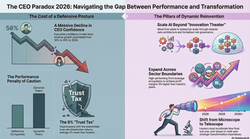
In today’s fast-evolving business environment, effective leadership requires mastering two essential tools: the microscope and the telescope. The microscope focuses on immediate, urgent challenges such as supply chain disruptions, inflation, and cyber threats, while the telescope provides a long-range view of transformative trends including AI, the low-carbon transition, and shifting geopolitics. Leaders must continuously shift between managing pressing short-term risks and cultivating a strategic long-term vision. Despite rising anxiety and defensive tendencies among CEOs—manifested in cost-cutting, risk aversion, and delaying investments—dynamic reinvention is the superior path. Organizations that embrace bold, strategic bets and transformative initiatives outperform those that cling to caution. Highlights 🔬 Leaders need the microscope to manage immediate threats like supply chain disruptions and cyber risks. 🔭 The telescope enables leaders to anticipate and shape future trends such as AI and climate transition. ⚖️ Balancing urgent short-term pressures with long-term vision is crucial for sustainable success. 🚀 Dynamic reinvention through bold strategic bets outperforms cautious defense strategies. 🤖 Building an enterprise-wide AI foundation is essential for competitive advantage. 🌍 Embedding climate risk and opportunity into business decisions is becoming a material imperative. 🤝 Trust in data, AI fairness, climate impact, and workforce commitments underpins long-term resilience. Key Insights 🔬 Microscope vs. Telescope Leadership: The metaphor of the microscope and telescope encapsulates the dual focus leaders must maintain—addressing immediate operational crises while simultaneously envisioning and preparing for transformative shifts. This duality is not just a conceptual framework but a practical leadership imperative, as neglecting either focus risks organizational failure. Immediate problems demand vigilance, but long-term success requires strategic foresight. 📉 CEO Confidence and Defensive Posture: The sharp decline in global CEO confidence reflects heightened uncertainty driven by geopolitical tensions, inflation, and cyber threats. This anxiety often leads to defensive tactics like cost-cutting and risk avoidance, which may safeguard short-term stability but hinder growth and innovation. This insight highlights the need for leaders to resist reflexive defensiveness and instead embrace calculated risks. 🚀 Dynamic Reinvention as a Growth Driver: Firms that proactively reinvent themselves by making bold strategic moves, investing in transformative technologies like AI, and exploring new markets consistently achieve higher growth and profitability. This underscores that in volatile environments, the greatest risk is inertia. Organizations must transition from a reactive posture to an offensive, opportunity-driven mindset. 🤖 Enterprise-wide AI Foundation: Many organizations experiment with AI pilots but fail to scale. Treating AI as a core enterprise capability involves cleaning and integrating data, establishing robust systems, and embedding AI into workflows. This foundational work is critical to unlocking AI’s transformative potential rather than relegating it to isolated experiments. 🌐 Cross-sector Expansion: Traditional industry boundaries are blurring, enabling companies to leverage their unique strengths to enter adjacent or entirely new sectors. For example, retailers moving into healthcare or financial firms becoming cloud providers illustrates the growing importance of ecosystem thinking and platform business models. Strategic sector expansion can unlock new revenue streams and competitive moats. 🌿 Climate Integration in Strategy: Climate change represents both a significant risk and an opportunity. Embedding climate considerations into all decision-making processes—from risk management to market exploration—ensures that organizations can mitigate vulnerabilities while capitalizing on emerging green markets. This dual approach positions companies for resilience and relevance in a rapidly decarbonizing economy. 🤝 Building Trust as a Strategic Asset: Long-term success depends on cultivating trust regarding data privacy, AI fairness, climate impact, and workforce practices. Stakeholders increasingly demand transparency and accountability in these areas. Organizations that proactively build and protect trust create durable reputational capital, foster stakeholder loyalty, and reduce regulatory and social risks. If this helped, please like and share the video. #Leadership #AI #CEO #BusinessStrategy #Innovation #ClimateRisk OUTLINE: 00:00:00 - Microscope vs Telescope 00:00:42 - The Confidence Crisis and the Reinvention Imperative 00:01:40 - Five Frontiers for Long-Term Victory 00:02:40 - Practical Steps for Strategic Action 00:03:27 - Balancing the Now and the Next
Blog: HCI Blog
Human Capital Leadership Review
Featuring scholarly and practitioner insights from HR and people leaders, industry experts, and researchers.
HCL Review Research Infographics
HCL Review Articles
All Articles
Nexus Institute for Work and AI
Catalyst Center for Work Innovation
Adaptive Organization Lab
Work Renaissance Project
Research Briefs
Research Insights
Webinar Recaps
Book Reviews
Transformative Social impact
Search
Nov 17, 2024
3 min read
ADAPTIVE ORGANIZATION LAB
Why Quiet Firing Hurts Organizations and Leaders
bottom of page