top of page
Home
Bio
Pricing
Podcast Network
Advertise with Us
Be Our Guest
Academy
Learning Catalog
Learners at a Glance
The ROI of Certification
Corporate L&D Solutions
Research
Research Initiatives
Nexus Institute
Catalyst Center
Adadptive Organization Lab
Future of Work Collective
Renaissance Project
Collaboration Form
Research Models and Tools
Research One Sheets
Research Snapshots
Research Videos
Research Briefs
Research Articles
Free Educational Resources
HCL Review
Contribute to the HCL Review
HCL Review Archive
HCL Review Slide Decks and Infographics
HCL Review Process
HCL Review Reach and Impact
HCI Press
From HCI Academic Press
From HCI Popular Press
Publish with HCI Press
Free OER Texts
Our Impact
Invest with HCI
Industry Recognition
Philanthropic Impact
Kiva Lending Impact
Merch
More
Use tab to navigate through the menu items.
When AI Assistance Becomes Cognitive Overload: Understanding and Managing "Brain Fry" in the Modern Workplace
NEXUS INSTITUTE FOR WORK AND AI
21 hours ago
12 min read
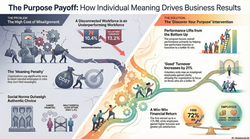
Discovering Purpose at Work: How Individual Meaning Transforms Organizational Performance
ADAPTIVE ORGANIZATION LAB
2 days ago
23 min read
Crossing Gender Boundaries: How Social Media Reshapes Workplace Networks and Drives Job Satisfaction
RESEARCH BRIEFS
3 days ago
9 min read
The Enduring Currency of Curiosity: Preparing the Next Generation for an AI-Shaped Labor Market
NEXUS INSTITUTE FOR WORK AND AI
4 days ago
13 min read
Transforming Talent Acquisition: Evidence-Based Strategies for Optimizing Organizational Hiring and Onboarding
NEXUS INSTITUTE FOR WORK AND AI
5 days ago
19 min read
From Resilience to Thriving: Rebuilding Workplace Culture Through Agency and Connection
RESEARCH BRIEFS
6 days ago
18 min read
The Empowering Role of Empathy: How Connecting with Others Bolsters Leadership Success
CATALYST CENTER FOR WORK INNOVATION
7 days ago
7 min read
Navigating the Emotional Demands of Higher Education Leadership: Evidence-Based Strategies for Sustainability
RESEARCH BRIEFS
Mar 4
22 min read
Managing Emotional Uncertainty: Five Leadership Traits That Drive Decisive Action
RESEARCH BRIEFS
Mar 3
24 min read
Understanding Self-Awareness: More Than a Buzzword
CATALYST CENTER FOR WORK INNOVATION
Mar 2
6 min read
Human Capital Leadership Review
Nearly One in Five Managers Have Lost Multiple Team Members Due to RTO Mandates, New Data Reveals
6 hours ago
4 min read
1 in 3 Organizations Rehire for More than HALF of AI-Led Layoffs, Finds New Report
6 hours ago
4 min read
Why Growth Starts With the Right People, Habits and Mindset
7 hours ago
6 min read
AI Users Fall Into 5 Productivity Personality Types – Which One Are You?
7 hours ago
5 min read
The Invisible Architecture of Transformation: What Leaders Must See to Lead Change Well
11 hours ago
4 min read
When AI Assistance Becomes Cognitive Overload: Understanding and Managing "Brain Fry" in the Modern Workplace
NEXUS INSTITUTE FOR WORK AND AI
21 hours ago
12 min read
Expert Explains: Lean Teams Are Beating Large Departments on Speed and Output
2 days ago
4 min read
Study Reveals the U.S. Burnout Capitals for Executives Based on Search Data
2 days ago
3 min read
Discovering Purpose at Work: How Individual Meaning Transforms Organizational Performance
ADAPTIVE ORGANIZATION LAB
2 days ago
23 min read
1
2
3
4
5
HCL Review Research Videos
Human Capital Innovations
Play Video
Play Video
26:08
Hidden Tensions between U.S. Employers and Employees, with Matthew Dietly
In this podcast episode, Dr. Jonathan H. Westover talks with Matthew Dietly about the hidden tensions between U.S. employers and employees. Throughout a career spanning management consulting, agency strategy, and digital strategy at a major tech firm, Matthew Dietly has developed a multifaceted approach to helping brands achieve profitable growth through innovative products, services, and experiences. This diverse background has equipped him with expertise across digital transformation, product innovation, customer experience, and growth strategy. Dietly's methodology centers on human-centricity and mutual value creation, consistently asking: Who is the target audience? How can we create value for them? How do we ensure profitability and sustainability? This philosophy has proven effective across varied industries, geographies, and contexts. Beyond professional pursuits, Dietly thrives on collaborative problem-solving with passionate teams. Personal time is spent playing games and exploring parks with his young daughter, hitting the golf course and ski slopes, and following baseball. See Privacy Policy at https://art19.com/privacy and California Privacy Notice at https://art19.com/privacy#do-not-sell-my-info.
Play Video
Play Video
23:09
The Future of Social Impact Investing: Trends and Opportunities, with Shahar Botzer
In this HCI Webinar, I talk with with Shahar Botzer about the future of social impact investing and current trends and opportunities. Shahar Botzer is co-founder and managing partner at Good Company, an early-stage VC fund with a mission to back bold entrepreneurs who solve the world’s biggest challenges for people and the planet. They invest in software-driven innovations in Digital Health, Education, Energy, Circular Economy, and Agriculture because they believe these are the domains where technology can rewrite the future.
Play Video
Play Video
03:40
Architecting Human AI Integration
This research examines the evolutionary path of artificial intelligence, tracing its growth from reactive language models to autonomous agents and hypothetical superintelligence. The research highlights how these technological shifts redefine the division of labor, offering significant productivity boosts while simultaneously triggering concerns regarding job displacement and worker wellbeing. To address these disruptions, Westover advocates for human-centered organizational strategies, such as transparent communication, proactive reskilling, and participatory design. By fostering hybrid intelligence architectures, businesses can balance technological efficiency with the preservation of meaningful human contribution. Ultimately, the research serves as a strategic roadmap for navigating the complex integration of AI into the modern workforce.
Play Video
Play Video
04:41
AI’s Next Leap - What It Means for Your Job
This video explores the evolving landscape of artificial intelligence (AI) and its transformative impact on work, highlighting the stages of AI development, practical applications, associated risks, and the human-centered strategies needed for successful integration. It begins by explaining that AI is a progression rather than a single invention, with current widespread use centered around large language models (LLMs) that automate routine cognitive tasks such as drafting emails, summarizing documents, and coding. The emergence of more autonomous AI systems, including multi-agent workflows and eventually artificial general intelligence (AGI), signals increasing complexity and capability, demanding long-term strategic planning. Highlights 🤖 AI is a progressive evolution, not a single invention, reshaping cognitive work across industries. 💡 Large Language Models automate routine tasks, enabling humans to focus on strategic and interpersonal skills. 🏥 In healthcare, AI acts as a collaborator, enhancing diagnostic accuracy and patient care quality. ⚠️ AI productivity gains come with risks such as hallucinations and flawed outputs, necessitating human oversight. 💼 Early-career routine tasks are diminishing, creating challenges for skill development and career ladders. 🧠 AI integration impacts worker well-being, requiring transparency, psychological safety, and collaborative framing. 📈 Leadership must emphasize augmentation, reskilling, ethical use, and co-creation for successful AI adoption. Key Insights 🤖 AI as an Evolutionary Process: AI development is a continuum from simple language models to complex multi-agent systems and speculative superintelligence. This trajectory indicates that organizations and societies must adopt a long-term, adaptive approach to governance, regulation, and workforce planning, rather than viewing AI as a one-off technological shift. Understanding these stages helps contextualize current AI capabilities and prepares stakeholders for future challenges. 🧩 Recomposition of Jobs, Not Replacement: Rather than wholesale job loss, AI tends to recompose roles by automating routine, pattern-based cognitive tasks. This shift demands that workers develop higher-order skills such as strategic thinking, expertise, and emotional intelligence. The disappearance of entry-level routine work, however, threatens traditional pathways for gaining experience, which calls for proactive redesign of mentorship and training programs by organizations to sustain career development. 🩺 Sector-Specific Augmentation: AI’s impact varies by industry. In healthcare, AI image analysis matches or outperforms human accuracy, transforming radiologists into expert collaborators focused on complex decision-making and patient interaction. In finance and consulting, AI handles data processing and idea generation, while humans provide interpretive insight and strategic counsel. This sectoral nuance underscores the importance of tailoring AI integration strategies to domain-specific workflows and human roles. ⚠️ Risks in Generative AI Outputs: Generative AI models are prone to hallucinations—producing plausible but incorrect information—and their outputs depend heavily on the quality of training data. These vulnerabilities highlight that speed and scale must not trump accuracy. Human-in-the-loop processes involving expert review, skepticism, and iterative validation are critical to ensuring AI tools deliver reliable and ethical outcomes, especially in high-stakes environments. 🧠 Complex Well-being Implications: While AI can reduce drudgery and enhance job satisfaction by freeing workers for creative and interpersonal tasks, it simultaneously triggers anxiety about displacement and skill obsolescence. New oversight roles can lead to vigilance fatigue and cognitive burnout. Leaders must therefore prioritize psychological safety, transparent communication, and frame AI as a collaborative partner to mitigate negative emotional impacts and foster resilience during transitions. 🔄 Leadership and Culture are Key to AI Success: Effective AI integration depends heavily on leadership that communicates clearly about AI’s augmentative role rather than cost-cutting. Investments in reskilling must go beyond superficial prompt engineering to include critical thinking, creativity, and empathy. Leaders should encourage experimentation through safe sandboxes, involve frontline workers in co-creation, and establish clear accountability frameworks to balance automation with human judgment. If you found this useful, please like and share to help others navigate the future of work. #AI #LLM #AGI #FutureOfWork #HumanAI OUTLINE: 00:00:00 - Understanding the Stages of AI 00:01:07 - How AI is Remodeling the Tasks We Do 00:02:01 - Gains, Risks, and Quality Control 00:02:58 - Workforce Wellbeing in an AI-Driven World 00:03:47 - A Practical Roadmap for Companies and Workers
Play Video
Play Video
24:28
The Definitive Guide to Corporate Learning, with Jordan Hammerstad
In this HCI Webinar, I talk with Jordan Hammerstad about the new report out from the Josh Bersin company, The Definitive Guide to Corporate Learning. Jordan Hammerstad is Associate Director of Research at The Josh Bersin Company, where she leads the L&D Roundtable—an executive forum driving corporate learning innovation. Passionate about the intersection of behavioral sciences and the workplace, she pursued a bachelor's degree in neuroscience before obtaining her master's in human resources. As a certified HR practitioner, Jordan brings experience from multiple industries, including commercial real estate, higher education, industrial automation, retail, and transportation. Her research focuses on learning and development—notably dynamic skilling, performance enablement, and AI-first corporate learning transformations.
Play Video
Play Video
58:42
A Conversation about the AI Evolution: Architectural Shifts and the Future of Work
This conversation examines the evolutionary path of artificial intelligence, tracing its growth from reactive language models to autonomous agents and hypothetical superintelligence. They highlight how these technological shifts redefine the division of labor, offering significant productivity boosts while simultaneously triggering concerns regarding job displacement and worker wellbeing. To address these disruptions, they advocate for human-centered organizational strategies, such as transparent communication, proactive reskilling, and participatory design. By fostering hybrid intelligence architectures, businesses can balance technological efficiency with the preservation of meaningful human contribution. Ultimately, the research serves as a strategic roadmap for navigating the complex integration of AI into the modern workforce. See Privacy Policy at https://art19.com/privacy and California Privacy Notice at https://art19.com/privacy#do-not-sell-my-info.
Play Video
Play Video
24:08
The Evolution of Artificial Intelligence: From Large Language Models to Superintelligence and the...
Abstract: Artificial intelligence is evolving through distinct architectural stages—from large language models (LLMs) to agentic systems, multi-agent frameworks, and hypothetical artificial general intelligence (AGI) and superintelligence—each with profound implications for human-AI integration and work design. This article synthesizes evidence from computer science, organizational behavior, and workforce studies to map these developmental stages and their organizational consequences. Drawing on recent deployments across healthcare, professional services, and manufacturing, we examine how each AI paradigm shift reshapes job content, skill demands, and human-machine collaboration models. The analysis reveals that while current LLM and agentic systems demonstrate measurable productivity gains (15-40% in knowledge work tasks), they simultaneously create new coordination challenges, skill adjacencies, and questions about human agency in increasingly autonomous systems. We propose a capability-building framework emphasizing hybrid intelligence architectures, dynamic role design, and continuous learning systems to prepare organizations for successive waves of AI advancement while preserving meaningful human contribution and wellbeing. See Privacy Policy at https://art19.com/privacy and California Privacy Notice at https://art19.com/privacy#do-not-sell-my-info.
Play Video
Play Video
24:08
A Conversation about the AI Evolution: Architectural Shifts and the Future of Work
This conversation examines the evolutionary path of artificial intelligence, tracing its growth from reactive language models to autonomous agents and hypothetical superintelligence. They highlight how these technological shifts redefine the division of labor, offering significant productivity boosts while simultaneously triggering concerns regarding job displacement and worker wellbeing. To address these disruptions, they advocate for human-centered organizational strategies, such as transparent communication, proactive reskilling, and participatory design. By fostering hybrid intelligence architectures, businesses can balance technological efficiency with the preservation of meaningful human contribution. Ultimately, the research serves as a strategic roadmap for navigating the complex integration of AI into the modern workforce. See Privacy Policy at https://art19.com/privacy and California Privacy Notice at https://art19.com/privacy#do-not-sell-my-info.
Blog: HCI Blog
Human Capital Leadership Review
Featuring scholarly and practitioner insights from HR and people leaders, industry experts, and researchers.
HCL Review Research Infographics
HCL Review Articles
!
Widget Didn’t Load
Check your internet and refresh this page.
If that doesn’t work, contact us.
bottom of page