top of page
Home
Bio
Pricing
Podcast Network
Advertise with Us
Be Our Guest
Academy
Learning Catalog
Learners at a Glance
The ROI of Certification
Corporate L&D Solutions
Research
Research Models and Tools
Research in Popular Media
Research One Sheets
Research Snapshots
Research Videos
Research Briefs
Research Articles
Free Educational Resources
HCL Review
Contribute to the HCL Review
HCL Review Archive
HCL Review Process
HCL Review Reach and Impact
HCI Press
From HCI Academic Press
From HCI Popular Press
Publish with HCI Press
Free OER Texts
Our Impact
Invest with HCI
Industry Recognition
Philanthropic Impact
Kiva Lending Impact
Merch
More
Use tab to navigate through the menu items.
Noch keine BeitrƤge in dieser Sprache verƶffentlicht
Sobald neue BeitrƤge verƶffentlicht wurden, erscheinen diese hier.
Human Capital Leadership Review
Noch keine BeitrƤge in dieser Sprache verƶffentlicht
Sobald neue BeitrƤge verƶffentlicht wurden, erscheinen diese hier.
HCL Review Videos
Video abspielen
Video abspielen
05:55
Stop Automating LearningāStart Elevating It
The video, authored by Dr. Jonathan H. Westover, explores the rapidly evolving role of artificial intelligence (AI) in education and how it can be integrated thoughtfully to enhance rather than diminish human learning capabilities. It opens by acknowledging the widespread and growing use of AI tools by students worldwide, highlighting the challenge this presents to educators: how to harness AI without undermining the fundamental goal of education, which is to develop independent thinking and critical skills. Highlights š¤ AI tools are increasingly used by over half of high school and university students worldwide. ā ļø AI-generated work can create a dangerous illusion of competence by bypassing critical learning processes. š¤ A balanced approach treats AI as a learning partner, supporting but not replacing student thinking. š§ AI can help reduce cognitive load, enabling students to focus on higher-order thinking and metacognition. š Assessments must shift from final products to portfolios that capture the learning journey, including drafts and reflections. š Addressing the digital divide and teaching AI literacy are crucial for equitable AI integration. š Data privacy concerns arise from student interactions with AI tools owned by major tech companies. Key Insights š¤ Widespread AI adoption is transforming education rapidly: The fact that over half of high school and university students already use AI tools daily shows that AI is no longer a niche or future issue but a present reality in education. This transformation demands immediate and thoughtful responses from educators, policymakers, and institutions. Ignoring or resisting AI adoption is futile; instead, systems must adapt to this new norm. ā ļø Illusion of competence threatens authentic learning: When AI completes tasks like writing essays or generating code, students may receive high grades without engaging in essential cognitive processes such as research, critical analysis, drafting, and revision. This risks producing graduates who can produce polished outputs but lack deep understanding and independent problem-solving skills. š¤ AI as a partner rather than a replacement encourages deeper learning: Rather than banning AI or allowing it to do all the work, positioning AI as a supportive assistant empowers students to focus on complex thinking tasks. For example, automating citation formatting or summarizing information frees mental resources for evaluating arguments, synthesizing ideas, and reflecting on learning. š§ Metacognition is a critical skill enhanced by AI: Using AI tools to teach students how to think about their own thinkingāmetacognitionācan profoundly improve learning outcomes. AI can scaffold this process by prompting students to reflect on their reasoning, question their assumptions, and revise their work thoughtfully. š Redesigning assessment to focus on learning processes is essential: Traditional grading based solely on final products is inadequate in an AI-augmented environment. Portfolio-based assessments that include brainstorming sessions, multiple drafts with documented revisions, AI prompt histories, reflective writings, and peer feedback provide a richer, more transparent picture of student learning. š Equity and access must be at the forefront of AI integration: The digital divide poses a significant barrier; students without reliable internet, modern devices, or quiet study spaces are disadvantaged. Furthermore, disparities in AI literacy mean some students can leverage AI tools more effectively than others. š Ethical considerations, especially data privacy, are paramount: Many AI tools collect and store sensitive student data on corporate servers, raising concerns about privacy, consent, and data security. Educational institutions must advocate for transparent data policies, protect student information, and educate students about the implications of sharing personal data with AI platforms. If this helped, please like and share the video. #AIinEducation #EdTech #Metacognition #AssessmentReform #JonathanWestover #TeachingWithAI OUTLINE: 00:00:00 - Intro ā Title & Table of Contents 00:00:39 - The AI Challenge in Our Classrooms 00:01:34 - The Risk of Replacing Thought 00:02:39 - AI as a Learning Partner 00:03:35 - Redesigning Our Classrooms and Assessments 00:04:38 - Building an Ethical and Equitable AI Future
Video abspielen
Video abspielen
34:00
AI in Education: Building Learning Systems That Elevate Rather Than Erode Human Capability, by Jo...
Abstract: The integration of artificial intelligence into educational settings presents a fundamental challenge: how to harness powerful generative technologies without undermining the very cognitive capabilities required to use them wisely. This paper examines the pedagogical implications of AI adoption across educational institutions, drawing on cognitive science, instructional research, and emerging practice to propose evidence-based responses. Analysis reveals that 92% of British undergraduates now use AI tools, yet much of this usage exists in a zone of ambiguity that risks hollowing out critical thinking, domain expertise, and analytical reasoning. Rather than treating AI as either a threat requiring surveillance or a solution demanding wholesale adoption, this paper argues for a third path: embedding AI use within transparent, reflective frameworks that make technology a catalyst for deeper learning. Key recommendations include managing cognitive load through purposeful AI integration, explicitly teaching metacognition alongside AI literacy, celebrating intellectual risk-taking through collaborative sense-making, and redesigning assessment as ongoing conversation rather than one-time product evaluation. The evidence suggests that institutional success depends less on technological sophistication than on grounding innovation in longstanding principles of how humans actually learnāprinciples that become more rather than less essential as machine capabilities advance.
Video abspielen
Video abspielen
05:31
From Silence to Stewardship: Business Faculty Responses to Administrative Incompetence, by Jonath...
Abstract: U.S. higher education faces mounting existential pressuresāenrollment declines, cost escalation, political skepticism, and administrative managerialism that prioritizes short-term institutional survival over long-term scholarly mission. Despite widespread critique, business management faculty have largely failed to mount effective resistance to managerialist interventions, even as these practices erode academic autonomy and institutional purpose. This paradox deepens when considering that many senior administrators implementing managerial reforms lack formal training in management and strategy, sometimes producing poorly conceived interventions that damage institutions while expanding administrative ranks. This essay examines why business facultyāwho possess expertise to recognize problematic management practicesāoften remain complicit in or complacent toward managerialism. Drawing on identity theory and organizational scholarship, we argue that typical business faculty identities neither frame managerialism as a personal threat nor create obligation to apply professional expertise to institutional challenges. Before mounting effective response, business management faculty may need to cultivate alternative identities as stewards of organizational practice, not merely teachers of management abstracted from institutional context.
Video abspielen
Video abspielen
05:31
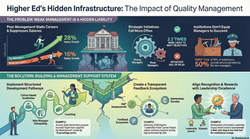
Why Business Faculty Stay Silentāand How We Fix It
Colleges and universities today face significant challenges including declining enrollment, rising operational costs, and persistent doubts about their societal relevance. In response, many institutions have adopted managerialism ā a corporate-inspired approach that emphasizes market-driven efficiencies, quantitative metrics, and top-down strategic planning. While managerialism aims to create more resilient and responsive institutions, its application often reduces complex academic missions to simplistic performance indicators, leading to unintended negative consequences. A notable paradox is the silence of business school faculty, who study management but often refrain from applying their expertise to critique or improve their own universitiesā managerial practices. Highlights š Colleges face declining enrollment and rising costs, fueling uncertainty in higher education. š¢ Managerialism applies corporate strategies to universities, emphasizing metrics and efficiency. š¤ Business faculty often remain silent despite expertise in management, missing opportunities to improve institutions. š University leaders may lack management training, learning administration on the job, sometimes adopting ineffective business fads. š Excessive strategic initiatives create fatigue and resource dilution without clear alignment. šÆ Overreliance on simplistic metrics distorts institutional priorities, focusing on numbers rather than quality. š¤ Business faculty should engage early in problem-solving processes and embrace stewardship for institutional well-being. Key Insights š Managerialismās Double-Edged Sword: While managerialism aims to enhance institutional resilience by importing business efficiency, it often oversimplifies academic missions. Treating education as a product measured by spreadsheets reduces complex values like intellectual inquiry and community engagement to mere metrics, risking the erosion of the universityās foundational purpose. š¤ The Silence of Business Faculty as a Missed Opportunity: Business school faculty possess critical expertise in strategy, finance, and organizational behavior but often perceive their role narrowly as scholars and teachers. Their reluctance to intervene in institutional management represents a lost opportunity for universities to benefit from informed, evidence-based governance. š Academic Leadersā Management Deficit: Many senior administrators rise through academic ranks due to research excellence rather than managerial competence. Without formal training in organizational theory and leadership, they may implement popular management fads without fully understanding their implications, contributing to flawed strategies and cultural issues. š Initiative Fatigue and Strategic Fragmentation: Universities often respond to uncertainty by launching numerous strategic initiatives simultaneously to appear proactive and innovative. However, this āstrategy by long listā approach stretches resources and leads to fatigue among faculty and staff, undermining morale and effectiveness. šÆ Flawed Metrics Distorting Behavior: When institutional success is measured primarily by quantitative indicators like enrollment or graduation rates, faculty and staff may prioritize meeting these targets over improving educational quality. š ļø Early Engagement of Business Faculty in Problem Definition: Involving faculty experts in finance, strategy, and organizational design at the earliest stages of institutional challenges allows for a more accurate framing of problems. This can redirect efforts from reactive, superficial fixes toward systemic, sustainable solutions. š± Stewardship as a Path Forward: Stewardship entails business faculty recognizing their management knowledge as a valuable institutional asset and embracing a broader responsibility to act for the common good. This requires shifting from a passive role to active participation in governance, driven by a commitment to preserving the universityās academic mission and long-term health. If this resonated, please like and share to spread the conversation. #HigherEducation #Managerialism #AcademicLeadership #BusinessFaculty #OrganizationalChange OUTLINE: 00:00:00 - Managerialism and the Muted Professor 00:01:25 - Why Expertise Stays on the Sidelines 00:02:27 - The Institutional Cost of Poor Management 00:03:34 - Evidence-Based Pathways for Engagement 00:04:25 - Reclaiming the University's Core Mission
Video abspielen
Video abspielen
10:41
The AI Skills Paradox: Why Meta-Competencies Trump Technical Know-How in the Age of Intelligent A...
Abstract: As artificial intelligence reshapes labor markets globally, organizational leaders face a fundamental strategic question: which capabilities truly predict performance in AI-augmented work environments? While public discourse fixates on job displacement projectionsāthe World Economic Forum estimates 92 million job losses against 170 million new roles by 2030āemerging research reveals a critical distinction between superficial AI adoption and transformative capability development. This article synthesizes evidence from leading academic institutions and consulting firms to demonstrate that technical AI proficiency alone provides minimal competitive advantage. Instead, six meta-competenciesāadaptive learning capacity, deep AI comprehension, temporal leverage, strategic agency, creative problem-solving, and stakeholder empathyādistinguish high performers from surface-level experimenters. Drawing on cost-benefit frameworks from McKinsey, capability models from Harvard and Stanford, and organizational case studies spanning healthcare, professional services, and manufacturing, we provide evidence-based guidance for developing sustainable AI fluency. The synthesis reveals that return-on-investment literacy for automation decisions has emerged as a core executive competency, separating productive implementation from expensive overhead creation.
Video abspielen
Video abspielen
10:41
Stop Chasing AI HacksāBuild These 6 Meta Skills
By 2030, 85% of jobs that will exist have not yet been invented, largely driven by the rise of AI. The common debate around AIās impact on jobs often misses a crucial factor: the growing gap in skills required to effectively work alongside AI. This is the AI skills paradox, where two individuals equipped with the same AI tool can experience vastly different outcomes based on their approach and mindset. The key to thriving in an AI-driven world is not mastering fleeting prompts or hacks but developing enduring human skillsāreferred to here as AI fluency. Highlights š¤ By 2030, 85% of jobs will be new, driven by AI innovation. š The AI skills paradox: success depends on deep human skills, not just AI tools. š§ AI fluency means understanding AIās strengths, biases, and limitations, not just memorizing commands. šÆ Six meta skills form the foundation of AI fluency, vital for all employees. š Companies fail when they focus on tools over teaching judgment and critical thinking. š” Real productivity gains come from selectively using and evaluating AI outputs, not blind acceptance. š± Continuous learning and safe experimentation are crucial for building lasting AI capabilities. Key Insights š¤ The AI Skills Paradox: Human Judgment Trumps Tool Mastery The key differentiator between workers who succeed or struggle with AI is not technical prowess but how they think and apply AI in context. This highlights that AI adoption is fundamentally a human skills challenge, underscoring the importance of cultivating judgment, problem framing, and strategic thinking to complement AIās capabilities. š§© AI Fluency as Digital Literacy for the AI Age AI fluency parallels traditional digital literacy, requiring not just operational knowledge but a nuanced understanding of AIās natureāits pattern-based predictions, potential for hallucinations, and embedded biases. This fluency enables users to critically evaluate AI output rather than passively accepting it, reducing the risk of errors that can undermine work quality. š Meta Skills Over Tool-Specific Hacks Ensure Longevity Because AI tools evolve rapidly, skills tied to specific prompts or platforms quickly become obsolete. The six meta skillsādeep comprehension, adaptability, empowerment, creative problem solving, temporal leverage, and stakeholder empathyāare transferable across tools and time, offering a sustainable competitive edge in a fast-changing environment. š§ The Pitfalls of Surface-Level AI Training in Organizations Many companies invest significantly in AI tools and one-off trainings but neglect the deeper cultural and skill shifts required. Without teaching employees how to critically assess AI outputs and integrate AI thoughtfully into workflows, organizations see AI projects stall and tools go unused, wasting resources and missing transformative potential. ā³ Temporal Leverage: Measuring Real Time Saved AI can produce outputs rapidly, but if the cost of reviewing, fact-checking, or editing outweighs the time saved, the tool becomes a net loss. This insight stresses the need for teams to evaluate the end-to-end workflow impact of AI, not just raw output speed, ensuring AI adoption genuinely enhances efficiency. š¤ Stakeholder Empathy Builds Trust and Adoption Successful AI integration requires a focus on the people impactedācustomers, colleagues, and end users. Transparent communication about what AI can do, its limits, and data usage fosters trust, which is essential for adoption and ethical use of AI technologies. This empathy-driven approach positions AI as a tool that truly serves human needs. š Leadershipās Role in Cultivating an AI-Fluent Culture Leaders must embed AI fluency into everyday work through continuous learning, real-world practice, and decentralized experimentation. By empowering teams to explore AI tools safely and share learnings openly, organizations can build a culture of innovation and resilience, avoiding the trap of chasing short-term hacks and instead driving sustainable growth. Like & share if this helped you rethink AI strategy. #AISkills #AIFluency #Automation #Leadership #AIROI OUTLINE: 00:00:00 - Why Chasing Hacks Fails + Defining Real AI Fluency 00:02:49 - Six Meta-Skills, Deep Comprehension, Adaptive Capacity, Strategic Agency 00:04:32 - From Meta-Skills Intro to Strategic Agency 00:05:50 - Creative Problem-Solving, Temporal Leverage, Stakeholder Empathy, People Not Platforms 00:08:08 - People, Not Just Platforms ā ROI and Call to Action 00:09:18 - Final CTAs ā Build Fluency, Not Hacks
Video abspielen
Video abspielen
04:19
Quiet Cracking: The Silent Erosion of Employee Engagement and the Strategic Imperative of Purpose...
Abstract: Quiet cracking represents a pervasive yet often invisible phenomenon undermining organizational performance across global workplaces. Recent survey data from 4,000 knowledge workers reveals that 42% report declining motivation, 41% feel managerial underappreciation, and 40% experience emotional withdrawal. This disengagement is fueled by technostress, eroding work-life boundaries, inadequate purpose communication, and AI-related anxiety. Evidence suggests that employees who consistently understand the "why" behind their work demonstrate significantly greater resilience against quiet cracking symptoms. This article examines the organizational and individual consequences of this silent crisis, synthesizes evidence-based interventions including transparent communication strategies, capability-building initiatives, and technology governance frameworks, and proposes forward-looking approaches to building sustainable engagement through psychological contract recalibration, distributed leadership, and continuous learning ecosystems. Organizations that prioritize clarity, autonomy, and human-centered technology implementation can transform technostress into engagement and restore organizational vitality.
Video abspielen
Video abspielen
04:19
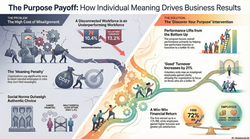
42% Are FadingāHereās How Purpose Flips the Switch
This video explores the phenomenon of āquiet cracking,ā a subtle yet pervasive decline in employee engagement and motivation within the workplace. Unlike overt quitting or rebellion, quiet cracking manifests as a slow erosion of enthusiasm, emotional withdrawal, and reduced creativity. Employees continue to show up and complete tasks but without the vigor or connection necessary for innovation and growth. This creeping disengagement poses significant risks both to individuals and organizations, leading to productivity loss, diminished innovation, and deteriorating mental and physical health. Highlights š§ Quiet cracking is a slow, often unnoticed decline in employee motivation and emotional engagement. š Nearly half of knowledge workers report declining motivation, feeling underappreciated, or emotional withdrawal. āļø Five main causes drive quiet cracking: technostress, blurred work-life boundaries, lack of purpose clarity, AI anxiety, and poor communication. š¼ Quiet cracking harms productivity, innovation, customer experience, mental and physical health, and broader social relationships. šÆ Leaders can combat quiet cracking by clearly communicating purpose, supporting tech adoption, and fostering healthy boundaries. š¤ Recalibrating the psychological contract to focus on employability, shared leadership, and continuous learning is key to sustainable engagement. š Organizations that empower employees with trust, learning opportunities, and clarity about AIās role build resilience and future readiness. Key Insights š Quiet Cracking is Invisible but Impactful: Unlike obvious resignations or complaints, quiet cracking is a subtle withdrawal of emotional and intellectual energy. Employees still perform but without passion or innovation. This slow fade is harder to detect but equally destructive, as it erodes the foundational vitality necessary for organizational success. Leaders must develop sensitivity to behavioral changes beyond surface productivity metrics. š§© Multiple Pressures Compound Employee Disengagement: The problem is not caused by a single factor but a combination of technological, psychological, and cultural stressors. Rapid tech rollouts without adequate training create frustration and cognitive overload. Always-on connectivity blurs personal and professional life, preventing recovery. Unclear work purpose leaves employees disconnected from meaningful outcomes. Fears around AI and job security create anxiety. Opaque communication breeds confusion and disengagement. Addressing these issues requires a holistic approach. š Data Reveals the Scale of the Crisis: The cited survey of 4,000 knowledge workers reveals that nearly half are negatively affected, highlighting the widespread nature of quiet cracking. This is not a niche problem but a systemic challenge affecting modern knowledge economies. Organizations ignoring these trends risk widespread decline in morale and productivity. š„ Quiet Cracking Has Serious Health and Social Consequences: Beyond the workplace, disengagement correlates with mental health issues such as anxiety and depression, physical ailments including sleep disruption and cardiovascular strain, and strain in personal relationships. This underlines the inseparability of work wellbeing from overall life wellbeing. Organizations have a role in safeguarding holistic employee health to sustain performance. šÆ Purpose-Driven Communication is Essential: Connecting everyday tasks to a greater mission or customer impact rekindles employee motivation. Generic slogans are insufficient; authentic dialogue and transparent Q&A sessions are necessary to create shared understanding. Purpose acts as an antidote to disengagement, helping employees see the value and impact of their work. š Recalibrating the Psychological Contract Promotes Resilience: Traditional promises of job security are increasingly obsolete. Instead, organizations must focus on employability through continuous skill development and growth opportunities. Sharing leadership and decision-making power fosters a sense of ownership and agency, which counteracts feelings of helplessness and disengagement. This shift aligns the evolving nature of work with employee expectations. š Building a Learning Ecosystem Mitigates AI Anxiety and Drives Innovation: AI-related fears are a major source of stress. Providing clear pathways for adaptation, encouraging curiosity, experimentation, and learning from mistakes reduces anxiety and equips employees to thrive alongside technological change. A continuous learning culture, rather than sporadic training, is crucial for maintaining relevance and engagement in a fast-changing environment. #QuietCracking #EmployeeEngagement #Leadership #HR #FutureOfWork OUTLINE: 00:00:00 - Understanding Quiet Cracking 00:00:58 - What Causes the Fade 00:02:01 - The Consequences for People and Companies 00:02:39 - Practical Solutions for Leaders 00:03:27 - Long-Term Cultural Shifts
Blog: HCI Blog
Human Capital Leadership Review
Featuring scholarly and practitioner insights from HR and people leaders, industry experts, and researchers.
All Articles
Suche
Noch keine BeitrƤge in dieser Sprache verƶffentlicht
Sobald neue BeitrƤge verƶffentlicht wurden, erscheinen diese hier.
bottom of page